
'%20id='ico-down'%20stroke='%23000000'%20stroke-width='1.5'%3e%3cg%20transform='translate(1092.250000,%20254.750000)'%3e%3cpolyline%20id='Path-2-Copy-4'%20transform='translate(5.500000,%202.750000)%20scale(1,%20-1)%20rotate(-180.000000)%20translate(-5.500000,%20-2.750000)%20'%20points='0%200%205.5%205.5%2011%200'%3e%3c/polyline%3e%3c/g%3e%3c/g%3e%3c/g%3e%3c/svg%3e)


Working
Labor Law
Vacation days in the Netherlands for expats
Employees in the Netherlands get statutory paid annual leave based on their weekly working hours, not a flat national day count. Public holidays and holiday allowance follow different rules, so they should not be treated as extra vacation days.



If you are comparing Dutch annual leave with paid time off, or PTO, systems elsewhere, the confusion usually starts when your contract shows days, your leave tracker shows hours, and your payslip mentions vakantiegeld, or holiday allowance.
This guide explains the legal minimum, extra leave from a contract or collectieve arbeidsovereenkomst, or CAO, expiry rules, public holidays, and other leave types.
Key takeaways
- Statutory leave is 4 times your weekly working hours each year.
- A 40-hour schedule gives 160 hours, often 20 days, but part-time and compressed schedules scale differently.
- Extra days usually come from your contract, employee handbook, or CAO, not from the legal minimum alone.
- Public holidays are separate from annual leave and are not automatic paid days off.
- Statutory days usually expire 6 months after year-end, while additional days usually last 5 years.
- Vakantiegeld, or holiday allowance, is at least 8% extra pay and does not increase your leave balance.
Wise for holiday spending abroad
Planning your next getaway? Wise helps expats hold multiple currencies and spend around the world using real exchange rates and low transparent fees. Avoid foreign transaction markups, convert seamlessly between currencies, and make every vacation euro go further on your trips abroad.

How many vacation days do employees get in the Netherlands?
In the Netherlands, annual leave starts with your weekly hours, then increases only if your contract or CAO adds more.
Statutory leave: the legal minimum
According to Government.nl, the legal minimum is 4 times the number of hours you work per week. These statutory leave days are wettelijke vakantiedagen. A 40-hour week gives 160 hours a year, a 36-hour week gives 144 hours, and a 24-hour part-time week gives 96 hours.
If your employer tracks time off in hours, that is normal. Statutory leave also keeps building during sickness and during some statutory leave types, including maternity-related leave, though some unpaid leave arrangements work differently. If you report sick during approved vacation, those sick days should normally be registered as sick days instead.
On your contract or leave tracker, confirm your weekly hours, whether the balance is shown in hours or days, and whether statutory and additional leave are split.
Additional leave from your contract or CAO
Anything above the legal minimum is additional leave, or bovenwettelijke vakantiedagen. It often comes from your employment contract, employee handbook, or a collectieve arbeidsovereenkomst, or CAO, which is a collective labor agreement.
CAO vacation days in the Netherlands can vary a lot between employers. If your paperwork refers to a sector agreement, the wider rules under Dutch employment law help explain why a CAO can override a simple line in your contract. Check your documents before assuming a standard number applies.

How do vacation days accrue and expire?
Leave builds up over time, and many employees lose days by mixing up statutory and additional balances.
How accrual works for part-time, changing, and zero-hour schedules
Part-time workers get a proportional equivalent of full-time paid leave in the Netherlands, usually tracked in hours. If you join midyear, leave is prorated for the part of the year you work, and if your hours change, your balance should change too. Zero-hour workers also accrue leave, but the contract or CAO should explain how the hours are calculated.
Quick examples:
- 40 hours a week = 160 leave hours a year
- 36 hours a week = 144 leave hours a year
- 24 hours a week = 96 leave hours a year
If your schedule is irregular, verify the math in your leave system, on your payslip, or in written policy rather than guessing from a five-day week.

When unused days expire or can be paid out
Unused vacation days in the Netherlands do not all expire on the same date.
- Statutory days usually expire on July 1 of the year after they were earned.
- Additional days usually expire 5 years after the end of the year in which they were accrued.
- The 6-month rule may not apply if you were reasonably unable to take leave.
- Statutory leave is generally not paid out during employment, but any unused balance must be settled when your job ends.
How do you request leave and when can it be refused?
Start by checking your remaining balance, then follow your employer’s booking system, handbook, or team calendar. Request popular periods early, especially summer weeks, school breaks, and any company-wide closure periods in your sector.
An employer may object only if your absence would cause serious business problems, not just because the timing is inconvenient. In practice, objections should be prompt and in writing, and Business.gov.nl says employers can object within 2 weeks of the request.
Before you submit the request, confirm your balance, check whether public holidays are booked separately, use the format your employer requires, and keep written confirmation.
Are public holidays, holiday allowance, and vacation days the same thing?
No. These terms are often mixed together, but Dutch employment practice treats them as separate rights or benefits.
Public holidays and paid time off
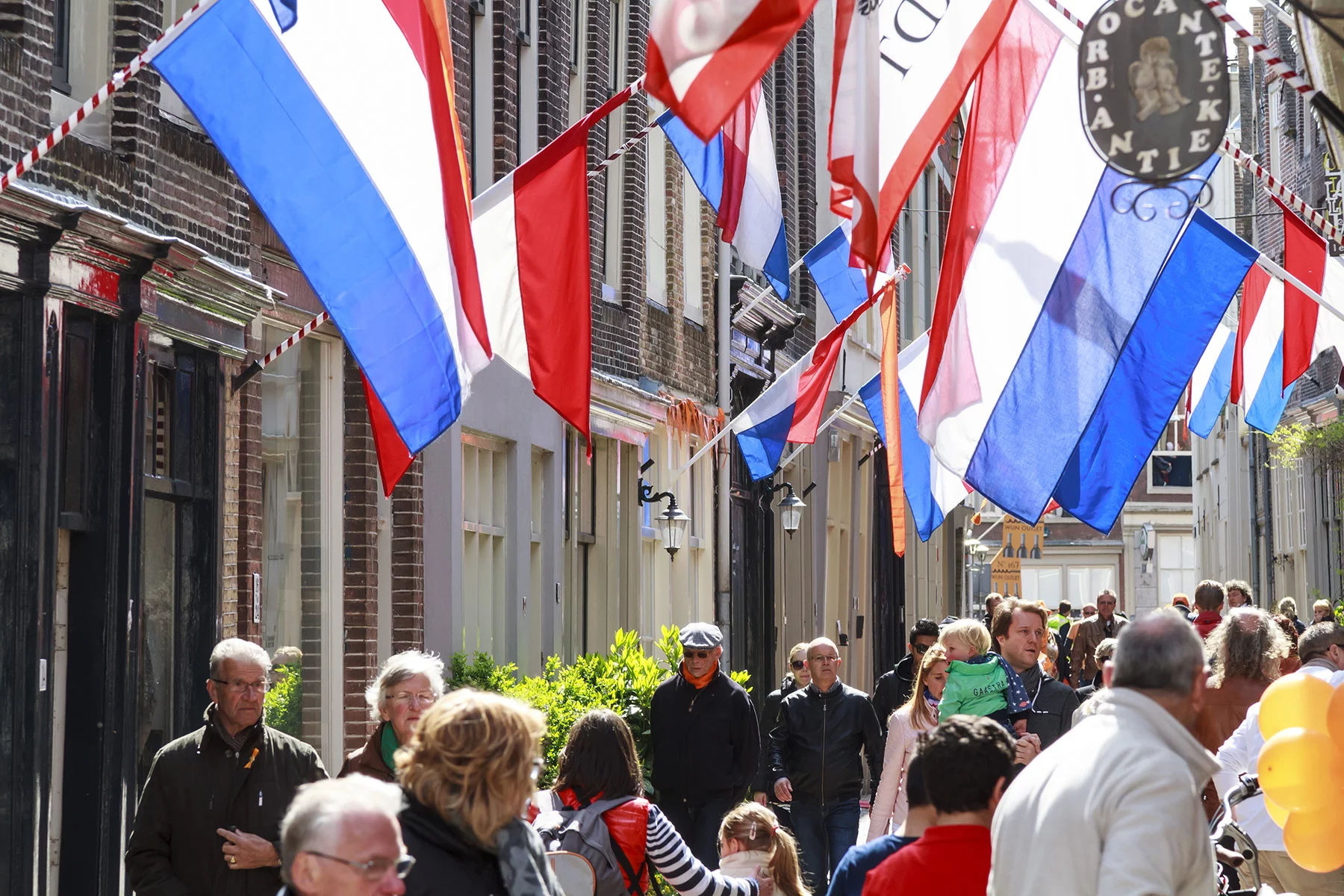
Many expats expect public holidays in the Netherlands to work like built-in PTO. They do not.
- Vacation days come from your annual leave balance.
- Public holidays are dates on the national calendar.
- Public holidays in the Netherlands are not automatic paid time off, and whether you get the day off depends on your contract, employer policy, or CAO.
Liberation Day is often handled separately in CAOs or employer policy.
Holiday allowance versus paid leave
Holiday allowance, or vakantiegeld, is money, not time off. According to Business.gov.nl, employees are entitled to at least 8% holiday allowance, usually paid once a year, often in May or June unless another written arrangement applies.
This should appear separately on your payslip or in your contract. If your contract says 25 vacation days plus 8% vakantiegeld, you still have 25 days off, not 25 days plus extra leave created by the allowance.
What other leave of absence is available in the Netherlands?
Annual leave is only one part of Dutch time off rules, so it helps to separate it from other leave types.
Statutory family and care leave
These rights are separate from annual leave, and your CAO or contract may top up pay or add conditions. UWV is the Dutch Employee Insurance Agency.
| Leave type | Separate from annual leave? | Pay basics | Where to check |
|---|---|---|---|
| Parental leave | Yes | Some weeks may be paid, others unpaid | UWV, CAO, contract |
| Maternity, partner, and adoption leave | Yes | Payment depends on the leave type and statutory scheme | UWV, contract |
| Short-term and long-term care leave | Yes | Short-term is partly paid, long-term is usually unpaid | Government.nl, CAO |
| Emergency leave | Yes | Salary usually continues for the urgent absence | Employer policy, CAO |
Do not assume full pay for every leave type, and do not let annual leave rules stand in for family leave rules.
Special, emergency, and unpaid leave
Special or extraordinary leave can cover things like a funeral, moving house, a doctor visit, or an exam, but the details usually come from your CAO, company policy, or contract rather than one fixed national rule. Unpaid leave is also not a general automatic right.
If you are a sponsored worker and are considering a longer break, check the employment, salary-threshold, and immigration impact separately with your HR team, the Dutch immigration service, or a qualified adviser. Also be careful not to treat proposed bereavement reforms as current law unless they are verified as in force.
How to check what applies in your situation
To confirm what applies to you, compare the general rules with your own documents.
Read your contract, CAO, and leave tracker in this order
Check your weekly hours and whether your employer records leave in hours or days.
Read the annual leave clause for statutory and additional leave.
Confirm whether a CAO applies to your role or sector.
See whether public holidays are listed separately from vacation days.
Check expiry dates, carry-over, and holiday allowance on your tracker, handbook, or payslip.
Planning a trip abroad with your time off
Before you book, check when your holiday allowance is paid, whether any public holidays actually reduce the number of vacation days you need to request, and what your current balance says today. If you are budgeting for a trip, it can also help to review the cost of living in the Netherlands so you know how far your leave budget needs to stretch.

FAQ
Frequently asked questions about vacation days in the Netherlands
How many statutory holiday days do you get in the Netherlands? 
Statutory holiday days equal 4 times your weekly working hours each year. A 40-hour week gives 160 hours, often 20 days, while a 24-hour part-time schedule gives 96 hours. Any extra days usually come from your contract or CAO.
Do public holidays count as paid time off in the Netherlands?
Not automatically. Whether you get a public holiday off with pay usually depends on your employer, your contract, or your CAO.
What happens to unused vacation days in the Netherlands?
Statutory days usually expire 6 months after the end of the year in which you earned them, while additional days usually last 5 years. When employment ends, unused annual leave must generally be paid out.
Can your employer refuse annual leave in the Netherlands?
An employer can object if approving the leave would cause serious business problems. The objection should follow the formal process, be prompt, and be given in writing.
What is the difference between vakantiedagen and vakantiegeld in the Netherlands?
Vakantiedagen means vacation days, while vakantiegeld means holiday allowance paid as money. Holiday allowance does not create extra leave days.
Sources
Expatica’s experts are all about providing the most up to date and accurate information. All guides are fact checked, and whenever we use external sources (like government websites or research papers) we’ll make a note of them here so you can check them out too.
- Legal minimum, accrual, zero-hour contracts, and holiday hours during sickness and statutory leave; checked 18 September 2026., Taking holiday hours | Government.nl
- Official public holiday dates and the rule on whether employees are entitled to a day off., Which days are official public holidays in the Netherlands? | Government.nl
- Overview of statutory leave and special leave; checked 18 September 2026., What types of leave are there? | Government.nl
- Care-leave basics and holiday accrual during care leave; checked 18 September 2026., Applying for care leave | Government.nl
- Statutory and additional leave, expiry periods, and payout rules; checked 18 September 2026., Holiday entitlement | Business.gov.nl
- Part-time and zero-hour treatment, leave requests, sickness during leave, and carry-over; checked 18 September 2026., Statutory holidays: what you need to know | Business.gov.nl
- Minimum holiday allowance and usual payment timing; checked 18 September 2026., Paying holiday allowance to your staff | Business.gov.nl
- Statutory, special, and unpaid leave and the role of CAOs and contracts; checked 18 September 2026., Leave schemes in the Netherlands | Business.gov.nl
- Underlying Dutch Civil Code provisions on annual leave and holiday entitlement., Dutch Civil Code, Book 7 | Wetten.overheid.nl
- Legal framework for maternity, partner, parental, adoption, and care leave., Work and Care Act | Wetten.overheid.nl
Related Articles


Editor's picks
 Secondary schools in the NetherlandsWe explain the complex secondary school system in the Netherlands, including the three public streams and various international options.
 Where to live in the Netherlands: the best cities for expatsAlthough Amsterdam is typically the number one hub for expats, there are plenty of other cities in the Netherlands worth your while.
 Higher education in the Netherlands: a guide to Dutch universitiesThe Netherlands is home to some of the world's top universities. Learn all about the different subjects available at Dutch institutions.
Did you find this guide helpful?