'%20id='ico-down'%20stroke='%23000000'%20stroke-width='1.5'%3e%3cg%20transform='translate(1092.250000,%20254.750000)'%3e%3cpolyline%20id='Path-2-Copy-4'%20transform='translate(5.500000,%202.750000)%20scale(1,%20-1)%20rotate(-180.000000)%20translate(-5.500000,%20-2.750000)%20'%20points='0%200%205.5%205.5%2011%200'%3e%3c/polyline%3e%3c/g%3e%3c/g%3e%3c/g%3e%3c/svg%3e)




'%20fill='%23000000'%3e%3cg%20id='icons'%20transform='translate(56.000000,%20160.000000)'%3e%3cpath%20d='M144,7339%20L140,7339%20L140,7332.001%20C140,7330.081%20139.153,7329.01%20137.634,7329.01%20C135.981,7329.01%20135,7330.126%20135,7332.001%20L135,7339%20L131,7339%20L131,7326%20L135,7326%20L135,7327.462%20C135,7327.462%20136.255,7325.26%20139.083,7325.26%20C141.912,7325.26%20144,7326.986%20144,7330.558%20L144,7339%20L144,7339%20Z%20M126.442,7323.921%20C125.093,7323.921%20124,7322.819%20124,7321.46%20C124,7320.102%20125.093,7319%20126.442,7319%20C127.79,7319%20128.883,7320.102%20128.883,7321.46%20C128.884,7322.819%20127.79,7323.921%20126.442,7323.921%20L126.442,7323.921%20Z%20M124,7339%20L129,7339%20L129,7326%20L124,7326%20L124,7339%20Z'%20id='linkedin-[%23161]'%3e%3c/path%3e%3c/g%3e%3c/g%3e%3c/g%3e%3c/svg%3e)
'%20fill='%23000000'%3e%3cg%20id='icons'%20transform='translate(56.000000,%20160.000000)'%3e%3cpath%20d='M335.821282,7259%20L335.821282,7250%20L338.553693,7250%20L339,7246%20L335.821282,7246%20L335.821282,7244.052%20C335.821282,7243.022%20335.847593,7242%20337.286884,7242%20L338.744689,7242%20L338.744689,7239.14%20C338.744689,7239.097%20337.492497,7239%20336.225687,7239%20C333.580004,7239%20331.923407,7240.657%20331.923407,7243.7%20L331.923407,7246%20L329,7246%20L329,7250%20L331.923407,7250%20L331.923407,7259%20L335.821282,7259%20Z'%20id='facebook-[%23176]'%3e%3c/path%3e%3c/g%3e%3c/g%3e%3c/g%3e%3c/svg%3e)

Residents aged 40 and over contribute to the system, although eligibility for care benefits depends on age, care needs, and certification.
Unlike routine medical cover under Japan’s healthcare system, long-term care insurance focuses on help with daily living, from home-based support to residential care. Understanding how it works before you need it can make the application process, care costs, and available services much easier to navigate.
This guide is for general information only, not medical, legal, financial, or insurance advice. Rules and access can vary by municipality, income, and care-need level.
Table of contents
- Key takeaways
- How long-term care insurance fits into Japan’s healthcare system
- Who pays into long-term care insurance in Japan?
- How to apply and get assessed for long-term care support
- What long-term care insurance in Japan covers
- When private health insurance can help
- Managing healthcare-related costs across borders
- Useful sources
Cigna Global
Enjoy peace of mind while living in Japan with Cigna Global’s long-term international health insurance plans (12+ months). Get tailored coverage, direct billing with many providers, complex case management, and global care on demand, with access to a global network of 2.4 million hospitals and healthcare professionals.

Key takeaways
- Residents aged 40 and over generally pay premiums, but access to benefits depends on age, eligibility, and an official assessment of care needs.
- Care services are generally available to certified people aged 65+, while those aged 40–64 qualify only when their care needs involve specified age-related diseases.
- Public insurance can cover approved home, community, and facility-based care, but copayments and some accommodation, food, and other expenses may remain.
- A private policy may provide additional medical cover depending on its terms, but it does not replace Japan’s statutory long-term care insurance system.
- Check your municipality’s rules, care level, and copayment rate first. If you need to move money internationally to cover eligible care expenses, services such as Wise may help with currency conversion or transfers, but they have no role in approving care or insurance claims.
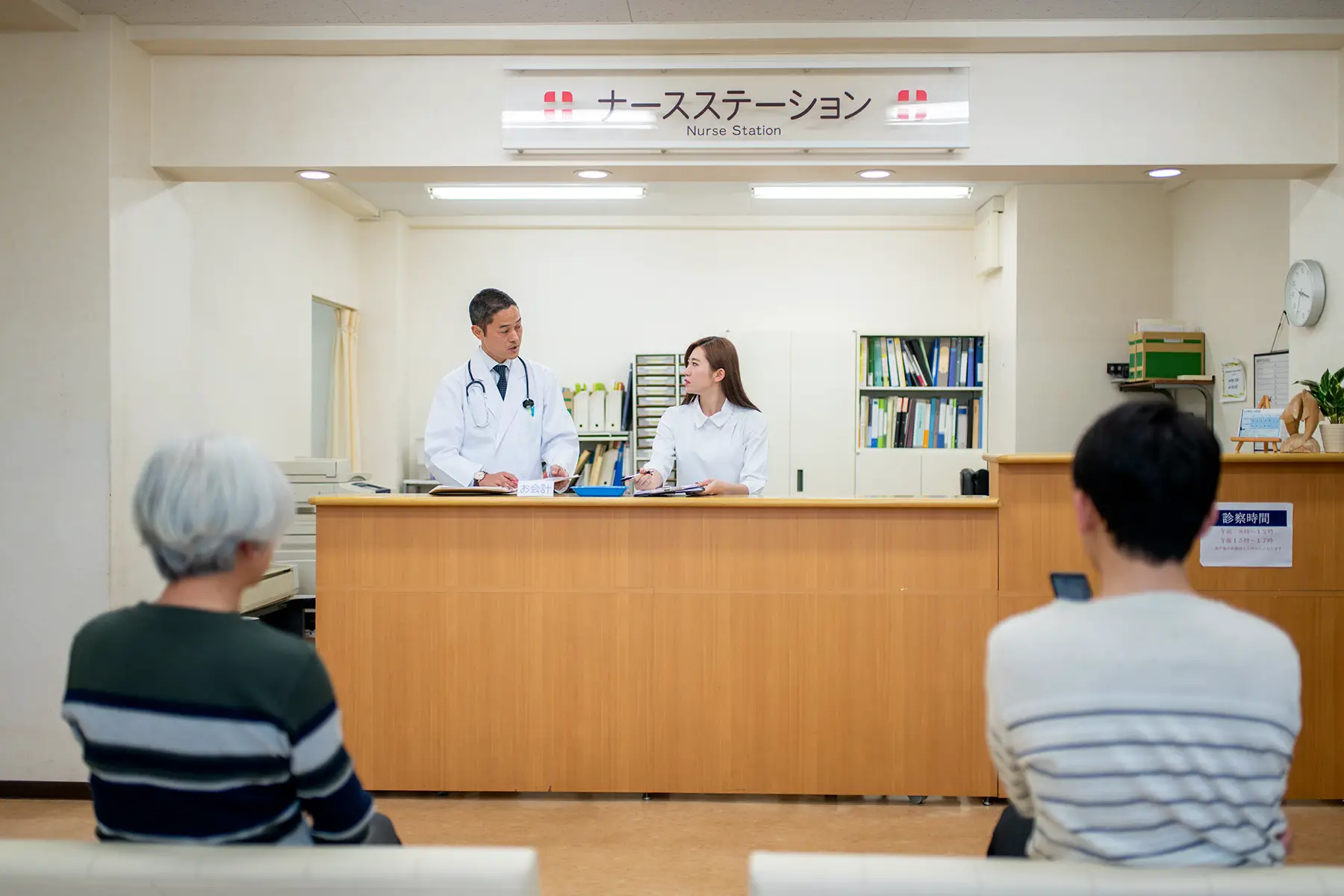
How long-term care insurance fits into Japan’s healthcare system
The most important thing to remember is that long-term care insurance in Japan is separate from both public and private health insurance.
Public health insurance, long-term care insurance, and private insurance compared
| Insurance type | Who pays in and who can use it | What it usually covers | Gaps to check |
|---|---|---|---|
| Public health insurance | Most eligible residents are enrolled through an employment-based scheme or National Health Insurance | Doctor visits, hospital treatment, tests, prescriptions, and other medical care | Copayments, exclusions, and non-covered treatments |
| Long-term care insurance | People aged 40+ generally contribute. People aged 65+ can qualify according to assessed care needs; those aged 40–64 can qualify when their need for care results from specified conditions | Care support at home, in the community, or in facilities | Copayments, meals, accommodation, some extras, and services outside the care plan |
| Private health insurance | People who choose a policy pay premiums and receive benefits according to its terms | Depending on the policy, benefits may include payments for hospitalization, surgery, or specified treatments, or broader international medical cover | Exclusions, waiting periods, benefit limits, eligible treatments, and provider restrictions |
Why this distinction matters for expats and families
For an older expat, the key question is whether they need treatment, daily support, or both. An adult child abroad often ends up coordinating paperwork and bills, while a spouse in Japan may need to work out whether to contact a medical provider, insurer, or municipal long-term care office first.
Mistakes to avoid include:
- Assuming private insurance automatically covers long-term care.
- Treating hospital treatment and daily support as the same benefit.
- Waiting until hospital discharge to ask the municipality about available care support.

Who pays into long-term care insurance in Japan?
Age and your medical insurance arrangements both matter. A common source of confusion is assuming that paying into the system means you can automatically use its services later, but contribution rules and eligibility for care are related, not identical.
When expats start paying and how premiums are collected
People generally enter Japan’s long-term care insurance (kaigo hoken) system from age 40, although those aged 40–64 must enrol in a medical insurance scheme. The collection of premiums depends on whether you are 40 to 64 or 65 and over.
- Employer-linked health insurance, age 40 to 64: premium collection through medical insurance, and employers generally share the cost.
- National Health Insurance, age 40 to 64: the long-term care contribution forms as part of your National Health Insurance premiums.
- Age 65+: your municipality collects the long-term care insurance premium. Depending on your circumstances, it may be deducted from pension payments or collected directly.
If you are unsure who pays long-term care insurance in Japan in your case, check your payslip, municipal paperwork, or pension deduction notice.
Who can claim services and the 40-64 specified disease rule
People aged 65 and over can usually access services once they are certified as needing long-term care or support. People aged 40–64 can qualify only when their need for care or support results from one of Japan’s 16 specified diseases, so check the current rules with MHLW long-term care insurance overview or your municipal office.
In practice, that means a 72-year-old parent who now needs help bathing or moving safely at home can apply for assessment regardless of cause. A 52-year-old resident may need the same level of help, but the condition causing that need must fall within the specified-disease rules before they can receive long-term care insurance benefits.
How to apply and get assessed for long-term care support
If you need long-term care support, your municipality is usually the place to start rather than a private insurer. The process generally moves from application and assessment to certification and, if you qualify, care planning.
The care-need certification process
- Apply locally: apply for certification through your municipal office. Some Community General Support Centers (chiiki hōkatsu shien sentā) can also accept applications.
- Take the assessment: an assessor interviews the applicant and usually their family about physical and mental condition, mobility, daily activities, and the support they need.
- Doctor’s opinion: the municipality asks the applicant’s doctor to provide a written opinion about their medical condition and physical and mental health.
- Certification decision: a certification committee reviews the assessment and doctor’s opinion. The municipality then determines whether the applicant is not certified, Support Level 1–2, or Care Level 1–5.
- Start the care plan: if you qualify, the next step is to plan the appropriate covered services. Who helps prepare the plan depends partly on your certification level and the services you need.
Bring ID and insurance papers, and use the MHLW long-term care service public information system to confirm the right office and local options before you visit.

Care levels, care managers, and choosing services
Japan has two support levels and five care levels. Support Levels 1–2 are aimed more at maintaining independence and preventing greater care needs, while Care Levels 1–5 reflect progressively greater long-term care needs. Your certified level also affects the benefit limit for covered home-based services.
For people using home-based long-term care services, a care manager can help assess needs, coordinate providers, and prepare a care plan. People certified at a support level follow a preventive care-planning route, while people entering a care facility generally apply to the facility itself.
Routine treatment remains separate and may involve Japanese doctors and GPs.

Writer
Gary Buswell
Insider Tip
If an older parent is starting to struggle with shopping, bathing, medication, or getting around safely, you do not have to wait for a hospital admission to ask for help. Contacting the local Community General Support Center early can help you understand the assessment process, local services, and care-planning options before a situation becomes urgent.
What long-term care insurance in Japan covers
Japan’s long-term care insurance system is primarily service-based rather than a general cash benefit. What you can use depends on your certified care needs, care plan, and local service availability, so it helps to separate covered support from costs you may still have to pay yourself.
Home, community, and facility services
| Service type | What it can include | What it means in practice |
|---|---|---|
| Home services | Home-visit personal care, home-visit nursing, equipment rental, rehabilitation | Help with bathing, dressing, mobility, and safer living at home |
| Day and short-stay services | Day care, day rehabilitation, respite-style short stays | Daytime supervision, meals, social contact, and short breaks for family carers |
| Community and facility services | Group homes, community-based services, and longer-stay facilities | More structured or ongoing support when someone’s needs become difficult to manage at home |
For example, an older expat approved for home-visit care may get help with washing and mobility at home, while family still handles appointments and decisions. Availability varies locally, and medical treatment may still be provided separately through hospitals in Japan or other healthcare providers.
What is not covered and what you may still pay
Being approved for long-term care does not mean every related expense is covered. Users generally pay part of the cost of covered services themselves, while accommodation, meals, personal expenses, and some additional services can fall outside the standard insurance benefit.
Check these points before assuming a cost is included:
- Copayments, which vary by age and income band.
- Meals and accommodation in facilities.
- Transport, personal items, and some extras outside the care plan.
- Services above the approved ceiling or outside the certified level
- Unpaid family time, because the system is not a cash benefit for family carers.
The long-term care system also does not replace emergency services in Japan when someone needs urgent medical attention.
If money is tight or you need broader welfare support, check social security in Japan. If a relative overseas is helping with bills, keep the practical arrangements for sending money separate from the process of getting care approved.
When private health insurance can help
Private health insurance and long-term care insurance solve different problems. Private cover may help with medical treatment, outpatient care, access to direct billing at participating providers, multilingual support, or treatment outside Japan, depending on the policy. However, it should not be treated as a substitute for Japan’s statutory long-term care insurance system.
How Cigna and Allianz Care may fit alongside Japan’s public systems
Cigna and Allianz Care are examples of expat-oriented international health insurers offering plans aimed at expats and globally mobile people. Depending on the plan and where it is available, features can include outpatient cover, multilingual assistance, direct billing or settlement arrangements, and wider international or family cover.
These benefits supplement medical cover rather than replace Japan’s public long-term care insurance (kaigo hoken).
Before choosing a plan, check:
- waiting periods
- exclusions
- pre-existing condition rules
- provider networks
- Claims procedures
- how rehabilitation and therapy are covered
If you are buying insurance locally in Japan, you can also consult Japan’s Financial Services Agency list of licensed financial institutions and check who is actually underwriting and selling the policy.
Writer
Gary Buswell
Insider Tip
If your immediate concern is navigating healthcare in Japan rather than paying for future care needs, start by checking whether a private plan gives you access to English-language support, outpatient treatment, and direct billing at hospitals you are likely to use. Long-term care insurance serves a different purpose, so compare the two separately rather than assuming one policy covers both.
If you want to compare expat medical plans side by side, get health insurance quotes in Japan.
Managing healthcare-related costs across borders
Even with structured public cover, expats may still need to move money across borders for prescriptions, care fees, medical travel, or support from adult children abroad. That is a payment issue rather than an insurance issue, and it helps to keep the two separate.
Wise can help when you need to send money internationally to your bank account in Japan (with currency conversion to JPY), reimburse a family member, or pay a clinic, pharmacy, or care provider that accepts bank transfer. Always confirm how the provider wants to be paid first, as payment methods may include domestic bank transfer, card, or cash.
Wise is not an insurance provider, does not approve care, and does not guarantee reimbursement or lower medical costs. If you plan to use Wise, check current route transfer limits, fees, and exchange rates before sending.
Wise Payments Japan is licensed as Type 1 & 2 Fund Transfer Service Provider and registered to the Kanto Local Finance Bureau.
FAQ
Frequently Asked Questions about long-term care insurance in Japan
Is long-term care insurance mandatory in Japan? 
Generally, yes. Residents aged 65 and over are covered by the statutory long-term care insurance system, while people aged 40 to 64 are covered if they are enrolled in a Japanese medical insurance scheme. For ages 40 to 64, premiums are generally collected alongside medical insurance premiums; from 65, municipalities collect long-term care insurance premiums separately, often through pension deductions.
Can foreigners get long-term care insurance in Japan?
Yes. Foreign residents can be covered by Japan’s long-term care insurance system if they meet the relevant residence and insurance conditions. Access to services depends on care certification and, for people aged 40 to 64, whether the need for care results from one of the specified diseases rather than nationality alone.
What age do you start paying long-term care insurance in Japan?
People generally start paying long-term care insurance premiums at 40 if they are enrolled in Japan’s medical insurance system. However, people aged 40 to 64 can receive long-term care services only when their need for care or support results from a specified disease; from age 65, this restriction no longer applies.
Does private insurance replace long-term care insurance in Japan?
No. Private health insurance may help with broader medical cover, outpatient treatment, or direct billing depending on the policy, but it does not replace Japan’s statutory long-term care insurance system where that applies.
Useful sources
(accessed 22 August 2026)
- Ministry of Health, Labour and Welfare: Long-Term Care Insurance System for the official English overview of insured persons, premiums, service types, copayments, and the application route.
- MHLW long-term care service public information system for local providers, community general support centres, and service searches.
- Japan Health Policy NOW: Long-term Care Insurance for clear English background on how the system is designed and administered.
- JMA Journal: The Long-Term Care Insurance System in Japan: Past, Present, and Future for expert context on why the system exists and how community-based care is evolving.
- Financial Services Agency: List of licensed financial institutions for checking insurer legitimacy in Japan.