


Online, you’ll find plenty of corporate tax tables that list a lot of numbers, but lack crucial explanations. In this guide, we’ll focus on the kinds of situations expats, investors, freelancers, and foreign business owners are most likely to face in Italy.
Use this guide in order: identify the payment type, check the domestic starting point, test treaty or EU relief, then confirm whether you need direct relief, a refund, or a commercialista, (an Italian chartered tax professional).
Key takeaways
Start here if you want the quickest practical view.
- Dividends, interest, royalties, and some other payments do not all follow the same rule, even when the payer is Italian.
- The domestic starting point is often 26% for many dividends and interest payments, and 30% for royalties, but that is not always the final result.
- Withholding on payments to non-residents can be reduced or removed by a treaty or EU rule, but only if the conditions and paperwork are in place.
- For freelance or professional fees, classification matters first. You need to check whether Italy treats the payment as self-employment income, professional fees, or another income category.
- If too much tax has already been withheld, direct relief and refund claims are different routes, and the refund process is usually slower and more document-heavy.
Wise for managing Italian income and tax payments in euros
- Wise for managing Italian income and tax payments in euros
- Hold while you wait: Keep funds in supported currencies during a refund claim
- Pay in EUR: Convert and send euros for Italian payments, fees shown upfront

No commitment required
What withholding tax means in Italy
Withholding tax is simply tax taken off a payment before the money reaches you. In Italy, readers will often see it called ritenuta alla fonte, which means tax withheld at source. The person or business that withholds and pays that tax over to the authorities is the sostituto d’imposta, or withholding agent.
When people look into withholding tax in Italy, they usually need more than a definition. They want to know which rate applies to dividends, interest, royalties, or non-resident payments, and whether that rate is final.
The answer changes with the income type, the recipient’s residence, and whether the recipient is an individual, a sole trader, or a company. Italy’s tax year generally runs from 1 January to 31 December, and a withheld amount is not always the same as the final Italian tax due.
- Withholding tax: Tax deducted before payment is made to you.
- Final tax position: The amount you actually end up owing after domestic rules, treaty rules, credits, or refunds are applied.
- Beneficial owner: The person or company entitled to the income for its own benefit, not just acting as an intermediary.
- Permanent establishment or fixed base: A sufficient business presence in Italy that can change how cross-border business income is taxed.
When Italy applies withholding tax to non-residents
Italy does not have one single withholding rule for every foreign recipient. The first job is to classify the payment correctly, because dividends, loan interest, royalties, and professional fees can follow different paths. Before you look up a rate, make sure you know whether the income is passive investment income or business income.
Shareholders, lenders, licensors, and freelancers can all be paid by an Italian counterparty, but their tax treatment is not the same. The real question is whether the payment is income sourced from Italy, who is receiving it, and whether the income is linked to an Italian permanent establishment or fixed base.
Identify the payer. Is the payment coming from an Italian company, bank, client, or other Italian withholding agent?
Identify the income type. Check whether the payment is a dividend, interest, royalty, professional fee, or another category.
Check residence and status. Confirm where the recipient is tax resident and whether the recipient is an individual, a company, or a transparent entity such as a partnership.
Test the Italian link. Check whether the income is attributable to an Italian permanent establishment or fixed base, because that can block treaty relief or change the taxing route.
Dividends, interest, and royalties
These three categories form the core of most Italy withholding tax rates information, because they are the ones most reference pages compare. Professional guidance on Italy dividend withholding tax, Italy interest withholding tax, and Italy royalty withholding tax usually starts with domestic rates and then moves to treaty or EU reductions.
If you are an expat investor receiving a dividend from an Italian company, the first withheld amount may be only the starting point. The same is true for interest and royalties. The final result can depend on beneficial ownership, treaty residence, and, in some corporate cases, EU eligibility.
| Income type | Common domestic starting point | What can change it | What to verify |
| Dividends | Often 26% | Treaty rate, EU or EEA rule, or EU parent-subsidiary exemption in qualifying cases | Residence, beneficial ownership, shareholding conditions |
| Interest | Often 26% | Treaty rate, domestic exemption, or EU interest and royalties exemption in qualifying cases | Instrument type, residence, group relationship |
| Royalties | Often 30% | Treaty rate or EU interest and royalties exemption in qualifying cases | Income type, beneficial ownership, treaty article |
Freelance or professional fees and other payments
Freelance fee rules differ from dividend and interest rules because classification comes first. The answer depends on how the payment is treated under Italian rules and under the relevant treaty.
If you invoice an Italian client from abroad, do not assume the payment is automatically free from Italian withholding or automatically taxable in Italy. A specific check is usually needed on the income category, the treaty article, and whether your work creates an Italian fixed base or other taxable presence.
- Confirm how the Italian payer is classifying the fee.
- Look at the treaty article for independent personal services, business profits, or other income, depending on the treaty wording.
- Find out whether any part of the work is linked to an Italian fixed base or permanent establishment.
- Ask whether the payer wants treaty paperwork before payment, not after.
- If the analysis is unclear, get local advice before the invoice is paid.

What rates and reductions should readers check first?
Start with the domestic rate, then test any reduction. That is how most professional references handle Italy withholding tax rates, and it is the safest way for readers to use them too.
An Italian payer may apply the domestic rate first if the paperwork for a reduced rate is not ready. That is why a correct rate table and a complete document pack matter equally. For broader residence and filing context, it also helps to understand Taxes for expats in Italy.
Domestic rates that readers will see most often
Common domestic references used in professional Italy withholding tax guidance include 26% on many dividends and interest payments, and 30% on royalties. For royalties, the effective burden can differ because the domestic rule is often applied to only part of the gross amount, so the headline percentage does not always tell the full story. You may also see special references, such as 12.5% on some government bond interest, but this isn’t the default rate applied to most expats.
Not every rate applies to every recipient. Some EU or EEA corporate cases can use reduced or zero rates, and some interest instruments follow special rules. Treat these figures as a screening tool, then verify the legal route before you rely on them.
| Income type | Common domestic rate | Common reduction path | Key condition | Where to verify |
| Dividends | 26% | Treaty rate, 1.2% EU or EEA corporate route in some cases, or EU exemption | Beneficial owner status and corporate conditions | Treaty text, payer, official forms |
| Interest | 26% | Treaty rate, domestic exemption for some instruments, or EU exemption | Income type and recipient status | Treaty text, payer, official forms |
| Royalties | 30% | Treaty rate or EU exemption | Payment must actually qualify as royalties | Treaty text and payment contract |
| Other income, including some professional fees | Depends on classification | Treaty relief or refund route | Fixed base or Italian taxable presence question | Treaty text and local advice |
How tax treaties and EU rules can change the result
Double tax treaties, or convenzioni contro le doppie imposizioni, can cap or remove Italian withholding in qualifying cases. EU rules can also matter for certain group-company payments. The Parent-Subsidiary Directive supports withholding relief on qualifying cross-border dividend flows inside the EU, while the Interest and Royalties Directive can support exemption on qualifying EU group payments of interest and royalties.
That does not mean relief applies automatically. Italy tax treaty withholding relief usually depends on the treaty article, your tax residence, beneficial ownership, and whether the income is connected with an Italian permanent establishment or fixed base. For freelancers, older treaties can also use different article wording, which is why country-by-country checking matters.
- Read the exact treaty text, not just a summary table.
- Confirm that the recipient is the beneficial owner of the income.
- Check minimum holding and holding-period conditions where EU rules are relevant.
- Consider anti-abuse rules and whether the income is attributable to an Italian permanent establishment or fixed base.
How to claim treaty relief or a refund
Follow the same basic steps whether you expect relief at source or a refund. First identify the treaty and income type. Then decide whether the reduced rate can be applied before payment, or whether you will need to reclaim excess tax after payment. Direct relief can help cash flow because less tax is withheld upfront. Refunds can take longer and may tie up money you needed elsewhere. Do not assume an Italian payer must grant the reduced rate automatically.
Identify the treaty and article. Match the payment to the right treaty article, such as dividends, interest, royalties, business profits, or other income.
Confirm the eligibility tests. Check tax residence, beneficial ownership, and whether an Italian permanent establishment or fixed base blocks relief.
Gather the documents early. A residence certificate issued after payment may still help with a refund, but it is usually less efficient than having the paperwork ready before payment.
Ask whether relief can be applied at source. In some cases, and if the withholding agent agrees, the official Italian forms can be used for direct application of the treaty benefit.
If too much tax was withheld, prepare the refund route. As of September 2026, Agenzia delle Entrate says refund claims should be filed within 48 months from the date the tax was paid or withheld at source.
Documents and forms to gather
Getting the paperwork right often causes as many problems as the tax rule itself. The Italian Revenue Agency, Agenzia delle Entrate, publishes Forms A, B, C, and D for treaty relief or refund requests covering dividends, interest, royalties, and other income.
Readers should still verify current form use before acting, because the official pages can change. The agency also says there is no strict obligation to use those forms, but they show the information it expects. Depending on the country involved, you may also need translations, payer statements, or an electronically verifiable residence certificate.
Key documents to organize include:
- A current tax residence certificate from the foreign tax authority
- Proof of beneficial ownership, where relevant
- Payment statements showing the gross amount and tax withheld
- Full payer details and the payment contract or statement
- The relevant Italian official form or equivalent document requested by Agenzia delle Entrate
Deadlines, certificates, and where to verify
Because a refund route is often slower than direct relief, and usually needs more evidence, it is better to sort the paperwork before payment where possible.
The official resources to start with are the treaty forms and FAQ pages of the Italian Revenue Agency, Agenzia delle Entrate, and the treaty list published by the Ministry of Economy and Finance, Ministero dell’Economia e delle Finanze.
A foreign tax authority may issue the residence certificate on its own form rather than on the Italian form. Agenzia delle Entrate’s FAQ says that can be acceptable, as long as the certificate proves the beneficiary’s treaty residence for the relevant period or date and, if issued electronically, its validity can be checked.
- Make sure the treaty forms and instructions are current before payment.
- Confirm the live treaty text on the Ministry site, not on a copied summary.
- Check whether your foreign residence certificate needs translation, period wording, or electronic validation.
- Work out whether your case needs direct relief, a refund claim, or full return filing in Italy.

Common mistakes for expats and cross-border businesses
Withholding tax in Italy can often go wrong before anyone files a form. The problem is usually an assumption, not a hidden tax rule. Readers may use one withholding rate for every payment type, or they may apply a corporate answer to a freelance case.
Delays are another common issue. A payer who does not have enough evidence may default to the domestic rate. This is not automatically wrong, but it can push you into a longer refund process.
- Assuming one Italy withholding tax rate covers dividends, royalties, service fees, and payroll
- Confusing payroll withholding with passive-income or treaty withholding
- Relying on a summary page without checking the treaty article and official forms
- Overlooking beneficial ownership, permanent establishment, or fixed base questions

Expatica Content Editor
Connor Glaze
Insider Tip
Ask for your tax residence certificate well before payment is due. Some tax authorities issue it slowly, and an Italian payer may default to the domestic rate if the paperwork is missing.
Managing tax payments and spending across countries
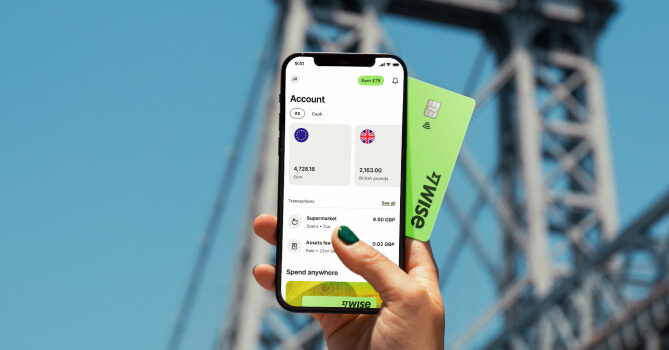
Tax compliance and money movement are separate issues, but they often collide in real life. You may need to move money into euros for a tax bill, convert funds from another currency while you wait for a refund, or manage spending across more than one country during the process. If you also need Italian tax ID context for forms or access, the codice fiscale is often part of the wider admin picture.
If you need a practical way to hold and convert multiple currencies while managing Italian tax-related cash flow, a free-to-open Wise account can help you hold and convert supported currencies and spend with a card in many countries. Note that this does not change your tax treatment, and is not a substitute for professional tax advice.
FAQ
Frequently asked questions about withholding tax in Italy
What is the withholding tax rate in Italy? 
There is no single withholding tax rate in Italy for every situation. Italy withholding tax rates depend on the income type, so dividends, interest, royalties, and some professional fees can all start from different rules. Use the rates table above as a first screen, then verify the treaty or EU route before you rely on it.
Can a tax treaty reduce withholding tax in Italy?
Yes, treaties can reduce or remove Italian withholding in some cases, but it is not automatic. You usually need to prove tax residence and beneficial ownership, and you need to check the exact treaty article rather than relying on a generic summary.
Does Italy withhold tax on freelance fees paid to non-residents?
Withholding tax on freelance fees in Italy can apply in some cases, but the answer depends on how the income is classified and whether the treaty leaves Italy any taxing right. You also need to check whether the work creates an Italian fixed base or other taxable presence, so avoid absolute assumptions.
How do you claim a refund of excess withholding tax in Italy?
If too much tax has been withheld, you may need to use the Italian withholding tax refund route with official forms and proof of residence and withholding. Check the current Agenzia delle Entrate forms and instructions before acting, because the paperwork and timing matter as much as the treaty rate itself.
Sources
Expatica’s experts are all about providing the most up to date and accurate information. All guides are fact checked, and whenever we use external sources (like government websites or research papers) we’ll make a note of them here so you can check them out too.
- Conventions for the avoidance of double taxation, Agenzia delle Entrate
- Answers to frequently asked questions, Agenzia delle Entrate
- Council Directive 2011/96/EU, European Union
- Council Directive 2003/49/EC, European Union
- Italy Corporate – Withholding taxes, Worldwide Tax Summaries
- Global tax guide to doing business in Italy, Dentons
- Conventions for the avoidance of double taxation, Dipartimento delle Finanze


