'%20id='ico-down'%20stroke='%23000000'%20stroke-width='1.5'%3e%3cg%20transform='translate(1092.250000,%20254.750000)'%3e%3cpolyline%20id='Path-2-Copy-4'%20transform='translate(5.500000,%202.750000)%20scale(1,%20-1)%20rotate(-180.000000)%20translate(-5.500000,%20-2.750000)%20'%20points='0%200%205.5%205.5%2011%200'%3e%3c/polyline%3e%3c/g%3e%3c/g%3e%3c/g%3e%3c/svg%3e)




This guide explains what expats may need to apply, how to compare costs, which warning signs to watch for, and what to consider if approval looks unlikely.
Key takeaways
- Online loans are available to expats, but lenders usually favor applicants with Italian residence, provable income, and a solid document trail.
- Document requirements vary by lender; expect to provide identification and evidence of your income, and check whether the lender requires proof of residence, a codice fiscale, or an account for repayments
- TAEG shows the broader yearly cost of the loan, so it is usually more useful than TAN when you compare offers.
- Common blockers include short residence history, foreign income that is hard to verify, temporary work, and too many recent applications.
- Check that the bank or intermediary appears in official Bank of Italy registers, and ask for the SECCI before you sign.
Can expats get online loans in Italy?
Yes. Expats can apply for personal loans online in Italy, but approval depends on the lender’s eligibility rules and assessment of your ability to repay. Lenders may ask for evidence of income and check existing borrowing or repayment history.
Approval is subject to lender assessment, identity checks, affordability checks, and credit review. Before applying, check whether you can provide:
- The identity, tax and residence documents the lender requires
- Evidence of employment, self-employment income or pension income
- An account the lender can use to pay out the loan and collect repayments
Ask the lender which documents and account details it accepts before submitting a full application.

Senior Writer
Gary Buswell
Insider Tip
If you earn income abroad or have recently moved to Italy, ask whether the lender accepts your income documents and residence status. That can help you avoid applying for a loan whose stated requirements you cannot meet.
Resident status, permit rules, and common lender limits
Requirements vary by provider. A lender may ask an EU citizen for evidence of their Italian address and income, while a non-EU applicant may also need to provide a valid residence permit (permesso di soggiorno). Check the lender’s published criteria, including any rules about how long a permit must remain valid.
Recent arrivals and non-residents should check eligibility before applying; an online application does not mean the loan is available to every applicant.
Which loan types appear online in Italy?
Three types you may encounter are a:
- Prestito personale (a personal loan that is not tied to a specific purchase)
- Prestito finalizzato (targeted credit linked to a particular purchase)
- Cessione del quinto (a loan repaid through deductions from an eligible employee’s salary or a pensioner’s pension).
For a cessione del quinto, the repayment instalment cannot exceed one fifth of the relevant monthly income (the English translation is roughly “fifth transfer”).
A prestito personale may suit a general cash need, while a prestito finalizzato is linked to the item or service you are buying. If you qualify for a cessione del quinto, compare its total cost with other offers; deductions from salary or pension do not automatically make it cheaper or easier to obtain.
What you need before you apply
Check the lender’s account requirements before applying. You will usually need to provide bank details for the loan payment and repayments, but whether the lender accepts your particular IBAN or requires an existing account relationship depends on its rules.
If you find that you need an Italian bank account, research the best bank accounts for non-residents in Italy to help you make your decision.
Ask the lender whether it accepts foreign income, documents issued abroad, digital proof of address and your intended IBAN. If you lack a document, check which alternatives it will accept before submitting a full application. That quick check can help you avoid applying before you know the lender’s requirements.
Document checklist for employees and pensioners
The lender may ask for:
- A valid identity document, such as a passport or accepted national ID card
- Your codice fiscale or health card showing it
- Proof of Italian residence or address, if required
- Recent payslips or pension statements, plus any other income documents it specifies
- Bank account details and, in some cases, recent statements
- Contact details
If you are missing any required documents, ask whether temporary proof of address or digital copies are accepted. Bear in mind that each lender determines what proof it accepts and may reject temporary or digital documents.
Extra proof for freelancers, self-employed readers, and foreign income
Self-employed applicants may need tax returns and other records showing their activity and income. If you earn income abroad, ask whether the lender accepts it and what evidence or translations it requires.
A lender may need more information to assess income that varies from month to month, but the documents and decision will depend on your circumstances and its lending criteria.
How lenders assess online loan applications in Italy
Lenders assess whether you can repay the loan and verify the information in your application. They may consider your:
- Income
- Regular expenses
- Existing debts
- Credit history
- Identity
- Residence status
A good salary alone does not guarantee approval.
Italy does not have one public credit score that automatically carries over from another country. If you have borrowed abroad, ask the lender whether it can consider that history and what evidence it accepts.
| Factor | What lenders check | What it means for expats |
| Income | Payslips, pension slips, tax returns, and contract type | Regular Italian income is usually easier to assess than new or foreign income |
| Existing commitments | Loan repayments and other financial obligations | High monthly commitments can reduce your room to borrow |
| Credit data | Records in CRIF and other systems the lender consults, including previous applications and repayment history | Having little Italian credit history does not mean you have missed payments, but gives the lender less local information |
| Identity and residency | Address, tax ID, permit, and bank details | Inconsistent or missing details can delay an online application |
CRIF, the Centrale dei Rischi, and affordability checks
Many lenders use data from private credit bureaus such as CRIF, which records information about credit applications, loans and repayments supplied by participating lenders. Lenders may also check the Bank of Italy’s Centrale dei Rishi, which records amounts owed to intermediaries (e.g., banks or financial companies) above €30,000.
The lender will also assess whether the proposed repayments fit your finances. Limited Italian credit history is not the same as a record of missed payments, though the lender may ask for more evidence before deciding.
Why an application may be declined
Possible reasons include:
- Insufficient evidence of income
- Existing commitments that make the repayments unaffordable
- Missing or inconsistent documents
- Residence and employment circumstances that do not meet the lender’s criteria
Foreign income may require additional verification. If you are unsure whether your documents or income qualify, check the lender’s requirements before making a full application. Credit applications can be recorded in private credit information systems, so it is sensible to avoid submitting several applications without first checking basic eligibility.
How to compare online loan offers safely
When you compare online lenders in Italy, look beyond the advertised rate. Ask for the SECCI (Standard European Consumer Credit Information) document before you sign, and compare offers for the same loan amount, repayment term and insurance choices.
TAN, TAEG, fees, and optional insurance
| Term | What it means | Does it affect total cost? | What to verify |
| Tasso Annuo Nominale (TAN) | The nominal interest rate on the loan | Yes, but only part of it | Use it to understand interest, not the full price |
| Tasso Annuo Effettivo Globale (TAEG) | The broader yearly cost measure | Yes, this is the main comparison number | Check it across offers with the same amount and term |
| Fees | Setup, collection, or admin charges | Usually yes | See whether they are compulsory and included in TAEG |
| Optional insurance | Cover added to the loan | Sometimes | Confirm whether it is really optional and what happens if you refuse it |
The TAEG is usually the most useful single rate for comparing similar offers, but read the SECCI for the amount you would repay and for costs that may fall outside the quoted rate, such as optional services or charges for late payment.
Senior Writer
Gary Buswell
Insider Tip
If an ad says zero rate, check both the TAN and TAEG, then check the SECCI for any other amounts you would have to pay.
Where to find the SECCI and how to verify an authorized lender
Consumer credit rules generally cover loans from €200 to €75,000 for personal rather than professional purposes. For credit within their scope, you should receive the SECCI free of charge before signing.
The Bank of Italy’s consumer credit guide also explains rights including withdrawal within 14 days and early repayment. Different rules can apply outside that scope.
Before uploading sensitive documents, check the lender in the official Bank of Italy registers. If a credit broker or financial agent is involved, check its status in the OAM registers. Be cautious if someone pressures you to act immediately or will not provide clear information about the lender and costs.
What to do if you do not qualify yet
A rejected loan application does not necessarily rule out borrowing later. The next step depends on the reason: missing documents may be straightforward to address, while insufficient income, existing debts or a poor credit record may take longer to resolve.
Lower-risk next steps before you reapply
- Ask the lender whether it can explain the refusal. If it relied on a credit database, ask which one was consulted and check your record for errors.
- Check that your identity, address, employment and income documents are complete and consistent.
- Review your budget and existing repayments before deciding how much you can afford to borrow.
- Compare a smaller loan or another suitable product, using the SECCI to check its total cost and repayment terms.
- Avoid submitting several applications in quick succession. If your income is new or temporary, consider waiting until you can provide a longer record.
Managing money from abroad
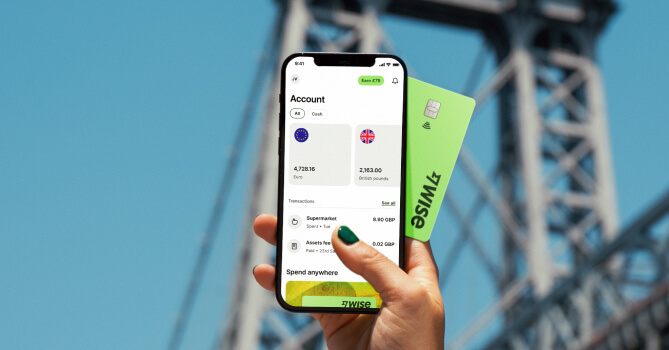
If you are paid from abroad or move savings between countries, a Wise account can help you hold EUR and other supported currencies, receive eligible payments, and check exchange rates and fees before converting or transferring money. Check the available account details and any receiving fees for your currency.
FAQ
Frequently asked questions about online loans in Italy
Can a foreigner get an online loan in Italy without permanent residency? 
Possibly. Permanent residence is not a universal requirement, but lenders set their own eligibility rules. They will assess your residence status, income, existing financial commitments and ability to repay. Ask the lender which documents it accepts before applying.
What documents do I need for an online loan in Italy?
Most lenders ask for photo ID, codice fiscale, proof of address, income proof, and bank details. If you are self-employed or paid from abroad, you may also need extra tax records or statements.
Do Italian lenders check CRIF for online loans?
Some lenders consult CRIF’s credit information system; others may use different credit databases. They also assess whether you can afford the repayments. Having little Italian credit history may make it harder to demonstrate a repayment record, but it does not automatically mean refusal.
Can freelancers get an online loan in Italy?
Yes, but freelancers usually face extra scrutiny. Lenders may ask for partita IVA records, tax returns, longer statements, and proof of regular income.
What is the difference between TAN and TAEG in Italy?
TAN is the nominal interest rate. TAEG is the broader total-cost measure, so it is usually better for comparing offers, especially alongside the SECCI.
Useful resources
It is general information, not financial, legal, or tax advice; provider details were last checked on 22 September 2026, so confirm current terms before applying.