





Most Monaco residents pay no personal income tax, but residency paperwork, VAT, social charges, and home-country rules still matter. That is why Monaco’s low-tax reputation can be accurate and still incomplete. If you are considering Monaco for work, retirement, or a longer stay, this guide explains how Monaco tax residency works, what Monaco still taxes, and what to check before acting.
This guide is for general information only, not tax, legal, immigration, or financial advice.
Key takeaways
- Most residents do not pay Monaco personal income tax, but French nationals are a key exception under the France-Monaco convention.
- Monaco does not generally levy a wealth tax, annual property tax, or council tax.
- Monaco still applies VAT, leasehold duty on registered rentals, and inheritance or gift tax on Monaco-situs assets (meaning assets located in Monaco, such as property there).
- Living in Monaco for immigration purposes and proving Monaco tax residency are separate steps.
- Moving to Monaco does not automatically end tax filing or reporting duties elsewhere.
Wise for managing money when moving to Monaco
- Convert to EUR for rent deposits, setup costs, and daily spending.
- Send international transfers between accounts with pricing shown upfront.
- Keep a clear record of what you moved for budgeting and paperwork.

No commitment required
How Monaco’s tax system works at a glance
Monaco’s reputation comes from what it does not usually tax at the personal level. For most residents, there is no general Monaco income tax, no wealth tax, and no annual property or council tax equivalent.
Day-to-day life is not untaxed. Monaco still applies VAT under a regime aligned with France, charges leasehold duty on registered tenancies, taxes Monaco-situs inheritances and gifts, and levies business taxes in some cases. Monaco’s rules also do not override the tax rules of the country you leave.
| Tax type | Usually applies? | Key note |
|---|---|---|
| Personal income tax | Usually no for most residents | French nationals are a key exception, and other countries may still tax you |
| Wealth tax | No general levy | Monaco does not levy a general wealth tax |
| Annual property or council tax | No general annual levy | Buying or renting can still trigger transaction costs or duties |
| Inheritance and gifts | Yes, in some cases | Applies to Monaco-situs assets, with rates based on family relationship |
| VAT, leasehold duty, business profit tax | Often yes | VAT follows France, leasehold duty applies to tenancies, and some businesses pay profit tax |
Who can become a tax resident in Monaco?
For most expats, the practical starting point is residency, not tax planning. Anyone aged 16 or over who wants to live in Monaco for more than three months a year, or set up home there, generally needs a Monaco residence permit.
Nationality matters because the visa path is not the same for everyone. EEA nationals do not follow the same pre-arrival visa process as non-EEA nationals, while British nationals are treated as third-country nationals under Monaco’s current guidance.
- Secure accommodation in Monaco, as an owner, tenant, through a company structure that owns the home, or with qualifying hosted accommodation.
- Show financial resources, such as salary, pension, business income, support from a relative or partner, or a Monaco bank reference. Official guidance says the level judged sufficient can depend on the Monaco bank providing that reference.
- Prepare criminal record evidence from the countries where you lived in the previous five years.
- If you are from outside the EEA, sort out the long-stay visa route first, usually through the French consular network, before applying for the permit.
Residence permit and tax residence certificate
Apply for the residence permit if you plan to live in Monaco for more than three months or settle there.
Use the permit to show you are authorised to live in Monaco, but do not treat it as automatic proof of tax residence.
Apply separately for a tax residence certificate if a bank, foreign tax authority, or counterparty needs formal proof.
The tax certificate is generally available to foreign residents with a valid residence permit who meet Monaco’s applicable residence criteria. These may be based on having your principal or habitual place of stay in Monaco, your home there where applicable, or the main centre of your activities there. Principal or habitual stay means at least 183 days a year in Monaco, or fewer than 183 days if you spend more time in Monaco than in any other country. The current fixed issuance fee is €600, and the certificate is valid for one year.
In practice, the second document is often the one that matters when you are proving where you are mainly resident for tax purposes.

Taxes individuals need to understand
For most people, the main attraction is simple: Monaco income tax does not generally apply to residents who are genuinely established in the Principality. That can matter to salaried movers, retirees, business owners, and people living off investments, but it is only one part of the picture.
In practice, the zero-income-tax rule answers only the local Monaco question. It does not remove transaction costs, indirect taxes, or tax ties elsewhere. French nationals are a major exception under the France-Monaco convention and should not assume the same result as most other residents.
- VAT on many purchases and services
- Leasehold duty and lease registration if you rent
- Registration duties, notary fees, and financing costs if you buy
- Inheritance planning for Monaco-situs assets
- Home-country tax and reporting obligations
Example: a British employee who becomes genuinely resident in Monaco may find that Monaco does not charge local income tax on salary, but they still need to test whether they have broken UK tax residence and whether any UK-source income, gains, or reporting duties continue.
Inheritance tax, VAT, and leasehold duty
- Monaco inheritance and gift tax is about situs, meaning the location of the asset. Official guidance says Monaco-situs assets can fall within the tax regardless of the deceased person’s domicile, residence, or nationality.
- Rates depend on the relationship. On the official Monaco page, transfers between parents and children or spouses are at 0%, while transfers between unrelated people can reach 16%.
- Monaco VAT follows the same basis and rates as France, so consumption taxes still form part of everyday life and some property transactions.
- Tenancy agreements are subject to 1% leasehold duty on the rent and related costs for the relevant occupation period, and the lease should be registered within three months of signing.
- For longer leases, Monaco allows three-year instalment treatment in some cases.
Business taxes and social contributions in Monaco
If you plan to work, hire staff, or run a company, the business side matters as much as your personal tax position.
| Topic | Who it affects | What to verify |
|---|---|---|
| Business profit tax | Companies carrying out industrial or commercial activity with more than 25% of turnover outside Monaco | Check current scope, filing duties, and whether your revenue mix trips the threshold |
| VAT | Businesses making taxable supplies, including some property transactions | Monaco follows French VAT rules and procedures |
| Employer social contributions | Employers and salaried workers | Verify current categories, salary ceilings, and employer versus employee costs before budgeting |
| Self-employed social cover | Independent workers authorised in Monaco | Official schemes are compulsory and contribution methods differ from employee schemes |
Payroll still carries social contributions. Monaco’s official health and social insurance pages show that employee and self-employed cover is funded through contributions, but current rates and thresholds should be checked at publication because they vary by scheme and status.
Why home-country taxes can still matter after you move
Monaco’s local rules only cover half of the picture. Your old country may still care about where you are resident, whether you have fully left, what income still arises there, and what accounts or assets you must keep reporting.
The answer depends on your own system. A US citizen can still face US filing duties after moving because US rules are citizenship-based. A UK mover may need to prove non-residence under HMRC tests, while a Canadian departure can raise residence and departure-tax questions. For country-specific examples, Expatica’s guides on filing US taxes abroad, filing UK taxes abroad, and filing Canadian taxes abroad show how different the follow-up rules can be.

- Tax residence and departure rules
- Pensions, dividends, rental income, or capital gains still sourced in the old country
- Overseas account reporting, asset disclosures, or beneficial ownership filings
- Inheritance and estate rules that still attach to nationality, domicile, or asset location
A Monaco tax residence certificate can help evidence your new position, but it does not replace home-country tests.
Checks to make before you move
- Check your residence position with your home tax authority and ask what breaks or preserves tax residence.
- Review whether your country taxes by residence, citizenship, domicile, or a mix of these.
- Confirm reporting rules for foreign bank accounts, investment accounts, companies, trusts, or pensions.
- Test how pensions, deferred pay, stock awards, or asset sales are taxed after departure.
- Revisit wills, succession planning, and beneficiary designations if you hold assets in more than one country.
- Get specialist advice before changing address, selling assets, or drawing large sums if your move affects multiple tax systems.
Planning your move and managing money across borders
Low Monaco income tax does not turn Monaco into a cheap move. Before arrival, you usually need suitable accommodation, enough liquidity for rent or purchase costs, and clear evidence of funds for the residency process.
Banking preparation matters too. Monaco’s official residence-permit guidance allows a bank reference from a Monaco bank as one way to show sufficient funds, but it does not set one universal minimum, and practices can vary between providers such as Compagnie Monégasque de Banque and BNP Paribas Monaco. You probably do not need offshore bank accounts on day one. Reliable euro access, clean documentation, and a clear way to move money across borders matter more.
- Line up your lease or purchase paperwork, utility evidence, and identity documents.
- Compare international money transfers and cross-border international banking for expats before sending large sums.
- Keep a buffer for first-month housing, deposits, everyday spending, and fees.
- Work through a checklist for moving your finances abroad and review expat health insurance before you arrive.

Using a Wise account for cross-border money management
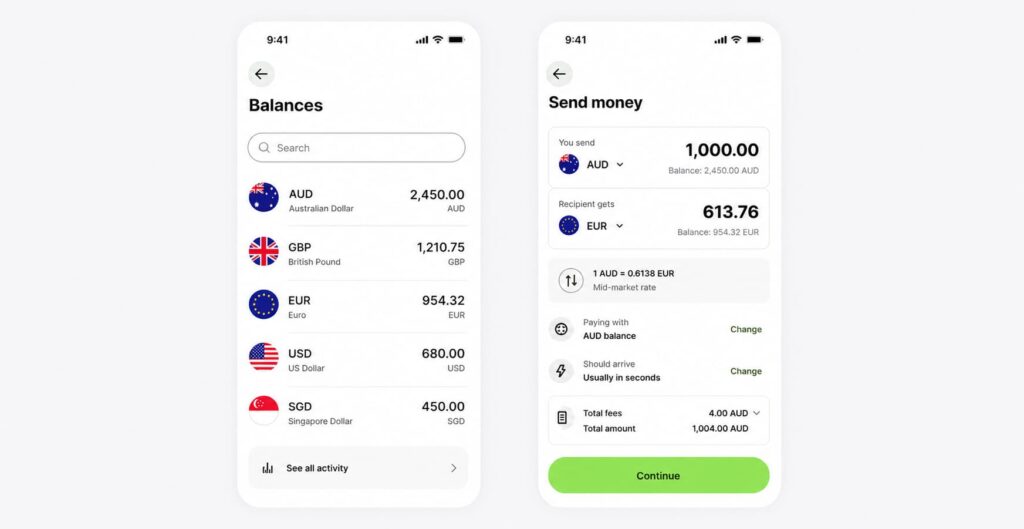
One practical use case is the gap between leaving your old bank setup and completing a Monaco one. If you need to send a euro deposit, pay first-month rent, or move living costs from a non-euro account, a Wise account can help you manage that transfer path. It is a money-management tool, not a tax, legal, or residency solution.
- Convert your home currency into euros before a deposit or rent payment.
- See the exchange rate and fee before you authorise the transfer.
- Send money between existing accounts while keeping a record of what you moved and when.
If that is your situation, check the current fee and exchange rate for your currency pair before sending a deposit.
Conclusion
Monaco can offer a very different personal tax environment from many other countries, but the move still involves residency rules, indirect taxes, transaction costs, and potential obligations elsewhere. Separate your Monaco residence paperwork from formal proof of tax residence, and review any continuing tax ties before changing your financial arrangements. Property, inheritance, business, and social contribution rules also deserve attention where relevant. For cross-border situations, professional advice can help you apply these general rules to your own circumstances.
FAQ
Frequently asked questions about taxes in Monaco
Do expats pay income tax in Monaco? 
Usually not. Most residents do not pay general personal income tax in Monaco, but the French-national exception, home-country filing rules, and other charges such as VAT, inheritance tax on Monaco-situs assets, and leasehold duty can still matter.
How do you become a tax resident in Monaco?
Monaco tax residency usually starts with lawful residence, but formal proof is separate. You generally need a valid residence permit first. For a tax residence certificate, Monaco applies criteria relating to your principal or habitual place of stay, your home where applicable, or the main centre of your activities. Principal or habitual stay generally means at least 183 days a year in Monaco, or fewer than 183 days if you spend more time there than in any other country.
Does Monaco have wealth tax or property tax?
Monaco does not generally levy wealth tax or an annual property or council tax equivalent for residents. Buying, holding, renting, or passing on property can still involve duties, VAT-linked issues, or inheritance planning.
What taxes apply when renting or buying a home in Monaco?
Tenants should factor in leasehold duty, currently 1% of rent and related costs when the tenancy is registered, usually within three months of signing. If you are buying property in Monaco, verify transfer, registration, notarial, and financing costs before you commit.
Do French nationals get the same Monaco tax treatment?
No. French nationals are treated differently under the France-Monaco convention, so they should not assume the same Monaco income-tax outcome as most other residents.
Can you still owe tax in your home country after moving to Monaco?
Yes, possibly. Ongoing home-country tax after moving to Monaco depends on your former country’s residence tests, citizenship-based rules in some systems, reporting duties, and whether you still receive income or hold taxable assets there.
Sources
Expatica’s experts are all about providing the most up to date and accurate information. All guides are fact checked, and whenever we use external sources (like government websites or research papers) we’ll make a note of them here so you can check them out too.
- Official overview of personal, business, and indirect taxation in Monaco, Mon Service Public — Tax in Monaco
- Official rules and rates for inheritance tax on Monaco-situs assets, Mon Service Public — Inheritance tax
- Official procedure for leasehold duty and tenancy registration, Mon Service Public — How to pay the leasehold duty
- Residence permit requirements, accommodation, financial resources, and supporting documents, Mon Service Public — How to apply for a residence permit
- Eligibility and criteria for Monaco residence certificates for tax purposes, Mon Service Public — Residence certificate for tax purposes
- Official information on the remit of Monaco's tax administration, Mon Service Public — Department of Tax Services
- Official overview of Monaco's general health insurance and social contribution system, Mon Service Public — Health insurance funds in Monaco
- UK guidance on foreign income and tax residence, HM Revenue & Customs — Tax on foreign income and residence
- US tax information for taxpayers with international circumstances, Internal Revenue Service — International taxpayers
- Canadian guidance for individuals leaving Canada and changing tax residence, Canada Revenue Agency — Individuals leaving Canada
- Secondary overview of taxes affecting expats and residents in Monaco, Taxes for Expats — Taxes in Monaco
- Secondary overview of Monaco's tax environment for international residents, Nomad Capitalist — Taxes in Monaco
- Overview of taxation considerations connected with Monaco property and residence, Magrey Monaco — Taxation Monaco
- Wealth-planning considerations for people considering a move to Monaco, J.P. Morgan Private Bank — Thinking of moving to Monaco