
'%20id='ico-down'%20stroke='%23000000'%20stroke-width='1.5'%3e%3cg%20transform='translate(1092.250000,%20254.750000)'%3e%3cpolyline%20id='Path-2-Copy-4'%20transform='translate(5.500000,%202.750000)%20scale(1,%20-1)%20rotate(-180.000000)%20translate(-5.500000,%20-2.750000)%20'%20points='0%200%205.5%205.5%2011%200'%3e%3c/polyline%3e%3c/g%3e%3c/g%3e%3c/g%3e%3c/svg%3e)


Finance
Banking
Offshore bank accounts: a guide for expats
What are the pros, cons and implications of offshore banking and what exactly is it? This guide looks at the key aspects for individuals and companies considering opening an offshore account.


Offshore accounts offer alternative ways of managing money but you’ll need to do your research ahead of opening an account to make sure that it’s the right thing for you and that you’re complying with the necessary legislation. This guide to offshore banking includes sections on:
Wise
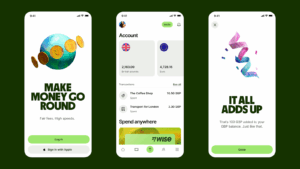
Do your finances go beyond borders? Then you need a fast and secure way to move money internationally. Wise is a global leader in online international money transfers, letting you move money at an exchange rate several times cheaper than your bank. Whatever your personal or business needs, Wise can make your money go further.

What is offshore banking?
Offshore banking gets a lot of negative press. For most people, it conjures up images of the super-rich funneling their wealth into secretive banks to avoid paying tax. Add to this the whiff of money laundering and general lack of transparency and you’ve nailed offshore banking’s reputation.
While it’s true that offshore banking has been widely (mis)used by the wealthiest in society (with the richest 0.01% of people channeling around 10% of global wealth offshore), the actual concept is much less controversial.
An offshore account is basically any account held outside the holder’s country of residence. They are offered by many mainstream banks, operate similarly to standard accounts and, contrary to popular opinion, you don’t have to be mega-wealthy (or have nefarious motives) to open an account.
This means that anyone that works abroad, spends a lot of time in more than one country, or frequently transfers money between countries can benefit from having an offshore account.

Many offshore accounts do come with distinct financial and legal advantages such as lower tax rates. However, this is often the case with inland savings accounts. Account types vary but they are more likely to be savings accounts and may require minimum initial deposits.
Most countries offer offshore banking of some description, with countries including banks in Switzerland, Belize, Singapore, and the Cayman Islands among those with the most favorable conditions.
Types of offshore accounts
The most common types of offshore accounts are savings accounts, which are normally available as fixed or variable rate accounts.
Variable rate accounts will typically offer easy access to funds while fixed-rate accounts generally stipulate that you must hold the money in the account for a minimum period (typically between 1-5 years) before touching it.
Many high street banks also offer offshore current accounts with debit cards, credit cards, and the ability to carry out day-to-day banking functions. However, the currency will usually be in that used by the country where the account is held unless you have a multi-currency account.
Other features of offshore current accounts can include mobile/internet banking, low-cost international transfers, and additional services such as loans and insurance.
You can also open an offshore business account with most banks. This can be particularly useful if you have set up an offshore company.
Reasons for opening an offshore account
People opt for offshore banking for various reasons. If you live in more than one country, or work/do business overseas, offshore accounts can make it easier to manage your finances. Reasons for offshore banking include:
- The ability to operate accounts in multiple currencies. Multi-currency accounts give users the freedom to make and receive payments in different currencies.
- Advantageous additional features such as foreign exchange features that allow you to fix currency prices in advance. This removes the uncertainty that can be a downside of dealing internationally.
- The convenience of concentrating financial transactions that involve multiple countries through one bank. This is ideal for businesses with operations in several countries as it avoids having to deal with separate institutions in a range of countries.
- The security of offshore banking, which can give peace of mind to individuals in countries that are politically/financially unstable. Money held in an offshore account won’t be affected by domestic problems.
- For those looking to relocate to another country at a later point, offshore banking offers an easy way of opening an account ahead of moving to the new country.
Advantages and disadvantages of offshore accounts
Advantages
- Flexibility – those who need access to their money or to international financing can do so more quickly and easily with offshore accounts than would be possible with domestic arrangements.
- Financial benefits – offshore accounts typically offer higher interest rates and lower taxes than domestic accounts.
- Diversification – if you’re investing money abroad, offshore banking gives you the potential to diversify your investments in various countries rather than sticking all your eggs in one basket.
- Privacy – offshore banks typically offer higher levels of privacy than domestic banks, with confidentiality agreements that personal information will not be passed onto any third parties. Some banks also offer anonymous accounts.
Disadvantages
- Larger deposits – some offshore bank accounts require high initial deposits. You may also need to agree to keep a minimum amount of money in the account to avoid charges.
- Expensive costs – transaction costs and administration fees are typically higher than with domestic and standard high street banks. You should ask for a full list of charges ahead of opening an offshore account.
- Less protection – although offshore banks can offer security for those living in financial or politically unstable countries, funds are less likely to be protected by guarantee schemes. For example, money in offshore bank accounts is not protected by EU member state deposit guarantee schemes. However, some countries offer separate offshore banking protection schemes.
These traditional offshore banking challenges have led many expats to explore modern alternatives. Digital platforms like Wise address several of these pain points by offering transparent, low-cost international banking services with real-time access through mobile apps, eliminating many of the accessibility and fee transparency issues associated with traditional offshore accounts.

How to open an offshore account
Opening an offshore bank account is largely similar to opening a regular bank account in terms of processes and requirements. You will need to provide the same personal information such as full name, date of birth, and address.
The same general documentation is also required. This usually includes:
- passport or valid photo ID
- proof of address
- proof of income
Offshore banks will often ask for additional documentation. This is a more recent measure that has been brought in to combat fraud. Additional information that you may be asked to provide can include:
- information from your existing bank, such as statements and references, to show that your finances are above board
- details on the nature of your day-to-day financial transactions
- information specific to the type of account you are opening, for example information on your investments if you’re opening a savings/investment account, or documentation relating to real estate transactions
- all the necessary company documentation if you are opening a business account. This includes a registration number to show where the business is registered.
If your offshore bank account has minimum requirements, you will also need to provide proof that these can be met.
Currency options with offshore accounts
Another aspect common with offshore banking is choosing which currency your funds will be held in. This will affect interest rates and the value of what you have in your account, so advanced planning is advisable. Most offshore accounts offer multi-currency options, meaning that you can perform transactions in currencies other than the one in which your money is held. However, check the fee structure to avoid being stung if you plan on making frequent payments in other currencies.
As with high street banks, offshore banks will usually offer the option of opening an account in person or online. If you open an account online, you will usually have to submit verified electronic copies of official documentation.
Using your offshore account
Using your offshore account will depend on what type of account you have and what it’s set up to do. Offshore current accounts will allow you to access money on a day-to-day basis (although there may be limits on withdrawal amounts) while certain types of savings account will have restrictions. For example, you may need to leave funds untouched for minimum periods or give a certain amount of notice if you want access to them.

Many people use offshore banking because it makes it easier for them to bank and manage money between different countries. Money transfers to and from offshore accounts are quite straightforward and can usually be carried out in a currency of your choosing, but fees vary so check these in advance.
Offshore current accounts normally allow easy access to funds on a daily basis. This means that you can usually withdraw money at ATMs or make payments (either in-store or online) using debit or credit cards. Again, check what fees are involved, especially if you are making transactions in a different currency from the one your money is held in.
General perceptions of offshore banking
Fraud and money laundering
Offshore banking has gained a somewhat unsavory reputation over the years. This is not unjustified as there have been plenty of high-profile scandals. Only a few years ago, the Panama Papers leak revealed how wealthy individuals and businesses across the globe had made use of offshore accounts to evade taxes, avoid scrutiny, and commit fraud.
The global cost of fraud currently stands at a staggering US$5.1 trillion each year, while the International Monetary Fund (IMF) estimates that tax avoidance across the globe costs between US$500 billion and US$600 billion a year.
However, new measures are coming into place – at both national and international level – to clamp down on offshore banking fraud and make it more difficult for people to use overseas accounts as tax havens.
For example, the EU brought in a new Anti-Tax Avoidance Directive last year which included more stringent reporting requirements and measures to prevent businesses from moving profits to low-tax regions. This is in addition to a number of anti-money laundering legislative measures.
Unfortunately, these well-known cases have impacted on the reputation of offshore banking as a general concept. However, opening up an offshore account is a perfectly acceptable practice and can be done by anyone who wants to benefit from moving your finances abroad more easily.
Is offshore banking legal?
Offshore banking is completely legal. Many well-known banks offer offshore banking options and it’s all above-board as long as you follow the rules.
What’s not legal is using an offshore account to do any of the following:
- evade taxation or avoid paying tax on your income
- hide away money that has not been declared to the necessary tax authorities
- hold money that has been acquired through illegal practices
Some of the tax laws can appear complicated in certain countries so make sure that you check the legislation in your home country to ensure that you comply with requirements. After all, the punishment if you are caught using an offshore account illegally can be a hefty fine or even a jail sentence.
It’s a good idea to seek out expert tax advice if you’re not completely sure of the rules and regulations surrounding offshore banking.
Is offshore banking safe?
Offshore banking provides a safe and secure way of managing your money if you open an account in a country with a stable economy, such a German bank or a Swiss one.
However, offshore accounts are rarely protected by the same guarantees as domestic banks. For example, in EU countries, funds up to a certain maximum amount are protected by a central government guarantee scheme in the event of an economic disaster or the collapse of the individual bank.
Offshore banks in many countries often have their own separate protection schemes. Again, this is something worth checking out and getting expert advice on ahead of opening an account.
Offshore banking tax implications
Similar to standard savings accounts, offshore accounts will often allow you to earn interest tax-free. However, this is usually capped (e.g., €1,000). Any interest earned above the capped amount will need to be declared to the relevant tax authorities otherwise you may be subjected to a hefty fine.

Another tax benefit with offshore banking is that there is normally a delay between you earning interest and having to pay tax on it. This is because you have to declare it on a tax return rather than paying it at the point of it being earned. Because of this, you can accrue extra funds through interest earned on your account.
One thing that’s important to check is that you won’t be double-taxed on your money. It’s likely that you’ll be protected by a double taxation agreement between your country of residence and the country where your offshore account is held. If not, you will probably need to claim tax relief when filing your annual tax return.
List of offshore banks
Here is a selection of banks that offer offshore accounts in different countries.
Belgium
- Bank Delen
- Bank de Groof Petercam
- KBC Bank
France
- BNP Paribas
- BPCE
- Crédit Agricole
- Crédit Mutuel
- Société Générale
Germany
- Commerzbank
- Deutsche Bank
Netherlands
- ABN AMRO
- ING
- MeersPierson
- Rabobank
- Van Lanschot
Qatar
- Qatar National Bank
Switzerland
- BCGE
- BCN
- Julius Baer
- Vontobel
United Arab Emirates
- Abu Dhabi Bank
- Commercial Bank of Dubai
- United Arab Bank
United Kingdom
- Barclays
- Coutts
- HSBC
- Lloyds
- Rothschilds
Other countries
- DBS Treasures (Singapore)
- TD Bank (Canada)
- Wells Fargo (USA)
Offshore banking apps
The world of finance is moving increasingly towards mobile and online banking and transactions. Offshore banking is no different, so it’s no surprise that a number of investment apps have appeared on the market in recent years.
Is Stash legit?
One such app is Stash Invest, which offers users the chance to open a mobile investment account for as little as US$1 a month. One of the big selling points of Stash is that it is very easy to use and offers guidance on investment selections, so is suitable for beginners to investing.
Stash allows users to invest in a range of options, including stocks and exchange-traded funds, in addition to operating a standard mobile bank account, complete with a debit card.
Because it encourages newcomers to get involved in the complex world of stocks and trading, many people have asked, is Stash legit? The good news is that everything is fully above board and no more risky than standard trading in stocks in shares.
In fact, apps such as this can be a great way of learning the ropes when it comes to financial planning. However, the main drawback with offshore banking through mobile apps is that, although basic account fees are usually cheap, more advanced account packages can be costly. Transaction expenses can also be high, so make sure you look at a full fees list before signing up.
Mobile offshore banking providers
Popular apps available on the market include:
- Acorns
- Betterment
- Sofi
- Stash
- Wealthfront
International money transfers
The traditional ways to send money internationally — via banks and wire transfers — are increasingly being challenged by specialized foreign exchange companies that offer online international money transfers. For many people, these could prove cheaper and more convenient than traditional banks. These services include:
- Wise is an international money transfer provider available in 59 countries that offers transfers between cross-border bank accounts up to eight times cheaper than traditional banks.
- CurrencyFair offers international money transfers to over 150 countries. They have exchange rates up to eight times cheaper than the banks, helping you avoid excessive bank fees.
- XE allows you to view live exchange rates online and transfer money quickly and safely. They support over 100 currencies and allow you to send to over 170 countries.
While offshore banks often charge high fees for international transfers, specialized services like Wise use the real exchange rate and charge transparent, low fees (typically 0.35-2% depending on the currency pair). This can result in significant savings compared to other offshore banking transfer fees, which often include hidden exchange rate markups of 3-4%.
Modern Digital Banking for Expats
Before committing to traditional offshore banking, expats should consider whether modern digital banking solutions meet their needs:
Wise Multi-Currency Account
- Hold and manage money in 40+ currencies in one account
- Get local bank details for major markets (receive payments like a local)
- Spend internationally with a debit card at real exchange rates
- Transfer money globally at transparent, low costs
- Fully regulated by the FCA with client money protection
When Wise works well:
- Regular international transfers and multi-currency needs
- Transparent fee structure is important
- You need easy digital access to funds
- You want to avoid minimum balance requirements

When traditional offshore banking might still be needed:
- Very large wealth management requirements
- Complex investment products
- Specific tax optimization strategies
- Private banking services
For many expats, the decision isn’t just between different offshore banks, but whether offshore banking is necessary at all. Modern digital solutions like Wise can provide the international banking flexibility most expats need, while traditional offshore banking remains valuable for those with complex wealth management requirements or specific tax situations.


Did you find this guide helpful?