'%20id='ico-down'%20stroke='%23000000'%20stroke-width='1.5'%3e%3cg%20transform='translate(1092.250000,%20254.750000)'%3e%3cpolyline%20id='Path-2-Copy-4'%20transform='translate(5.500000,%202.750000)%20scale(1,%20-1)%20rotate(-180.000000)%20translate(-5.500000,%20-2.750000)%20'%20points='0%200%205.5%205.5%2011%200'%3e%3c/polyline%3e%3c/g%3e%3c/g%3e%3c/g%3e%3c/svg%3e)




'%20fill='%23000000'%3e%3cg%20id='icons'%20transform='translate(56.000000,%20160.000000)'%3e%3cpath%20d='M144,7339%20L140,7339%20L140,7332.001%20C140,7330.081%20139.153,7329.01%20137.634,7329.01%20C135.981,7329.01%20135,7330.126%20135,7332.001%20L135,7339%20L131,7339%20L131,7326%20L135,7326%20L135,7327.462%20C135,7327.462%20136.255,7325.26%20139.083,7325.26%20C141.912,7325.26%20144,7326.986%20144,7330.558%20L144,7339%20L144,7339%20Z%20M126.442,7323.921%20C125.093,7323.921%20124,7322.819%20124,7321.46%20C124,7320.102%20125.093,7319%20126.442,7319%20C127.79,7319%20128.883,7320.102%20128.883,7321.46%20C128.884,7322.819%20127.79,7323.921%20126.442,7323.921%20L126.442,7323.921%20Z%20M124,7339%20L129,7339%20L129,7326%20L124,7326%20L124,7339%20Z'%20id='linkedin-[%23161]'%3e%3c/path%3e%3c/g%3e%3c/g%3e%3c/g%3e%3c/svg%3e)
'%20fill='%23000000'%3e%3cg%20id='icons'%20transform='translate(56.000000,%20160.000000)'%3e%3cpath%20d='M335.821282,7259%20L335.821282,7250%20L338.553693,7250%20L339,7246%20L335.821282,7246%20L335.821282,7244.052%20C335.821282,7243.022%20335.847593,7242%20337.286884,7242%20L338.744689,7242%20L338.744689,7239.14%20C338.744689,7239.097%20337.492497,7239%20336.225687,7239%20C333.580004,7239%20331.923407,7240.657%20331.923407,7243.7%20L331.923407,7246%20L329,7246%20L329,7250%20L331.923407,7250%20L331.923407,7259%20L335.821282,7259%20Z'%20id='facebook-[%23176]'%3e%3c/path%3e%3c/g%3e%3c/g%3e%3c/g%3e%3c/svg%3e)

Once your citizenship has been approved, you can apply for a French passport. This official document comes with a lot of additional benefits, such as visa-free traveling to 187 destinations worldwide.
This article outlines the following:
Sirelo
It's no secret that moving abroad can be stressful. Sirelo's team of removal advisers is here to help. They provide five free quotes from international shipping companies so you can find the best options at the best prices. Take the stress out of your relocation to France with Sirelo.

Passports in France
A French passport is one of two forms of ID you can get after becoming a French citizen. The other is the French national ID card (carte nationale d’identité).

With the ID card, you can travel freely around the European Union (EU) and European Free Trade Association (EFTA – Iceland, Liechtenstein, Norway, and Switzerland). If you want to travel outside that region, for example to Japan, you can only do so with a passport.
The Ministry for Europe and Foreign Affairs (Ministère de l’Europe et des Affaires étrangères) issues passports in France. You don’t automatically get a passport when you become a French citizen. Instead, you’ll have to apply for one and pay a fee.
Like all EU member states, the country issues biometric passports. The standard French passport is a small Bordeaux-red 32-paged booklet with a microchip containing your biometric information, such as fingerprints and facial features. It also includes key personal information, such as photo, height, eye color, place of birth, signature, and unique passport number.
Aside from the standard document, you can also apply for a temporary passport (i.e., short-term emergency permits if you lose yours abroad) or a diplomatic passport allowing visa-free travel for official visits.
The benefits of getting a passport in France
A French passport will give you several advantages in addition to those of your new citizenship, such as:
- Unlimited travel in and out of France while the passport is valid
- Freedom of movement across the EU/EFTA area
- Visa-free access to 187 countries around the world (although you might need to get a visa on arrival)
Freedom-wise, France ranks 6th best on the 2023 Henley Passport Index, a global ranking index that measures the travel freedom of passports.
Who can get a French passport?
You are only eligible to apply for a passport once you are a French citizen. In most cases, you must have lived in France for five consecutive years before applying for citizenship. You’ll also have to demonstrate that you have integrated into society with sufficient knowledge of the French language, culture, and values.

In some cases, you can apply for a passport before those five years have passed. For example, if you are married to a French citizen, you can apply after four years of marriage if you have lived in France for at least three years. If you have a French parent, serve in the French army, or have refugee status, you can apply for French citizenship immediately.
How to apply for a French passport
You can apply for a passport in France and abroad.
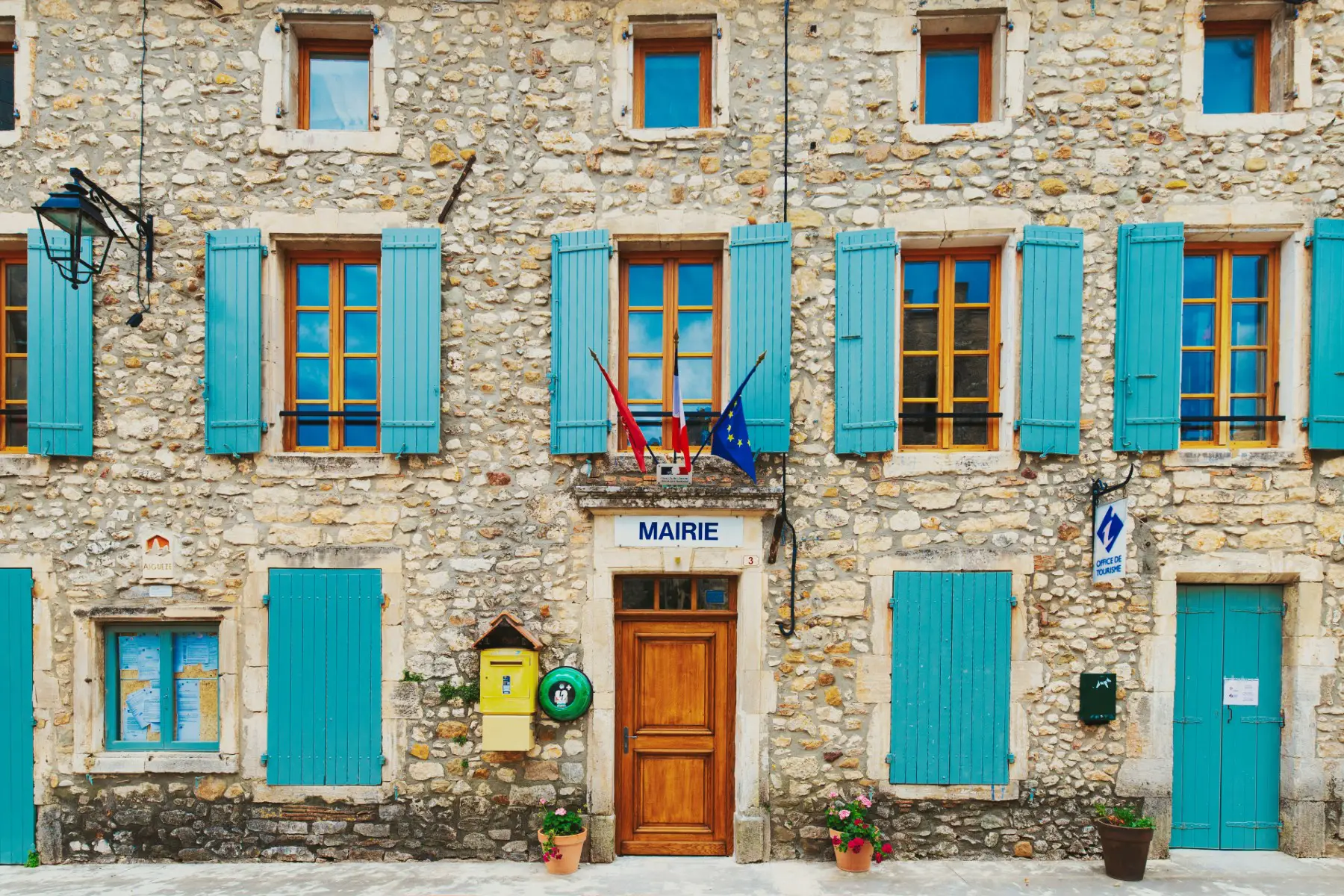
If you are in France, you can go to any town hall (mairie) with a check-in station. Many town halls require you to make an appointment first, so be sure to check the town hall website beforehand. If the applicant is a minor child under the age of 18, they must be accompanied by a parent or legal guardian.
Before or during the appointment, you must fill out a pre-application form. Then, in order to get your passport, you’ll need to provide:
- Your ID card (or, if you don’t have a French ID card, an extract of your birth certificate and proof of French nationality, no more than three months old)
- A recent photograph that conforms with the passport guidelines (not older than six months)
- Your biometric data, such as fingerprints
- Pre-application number if you filled in the online form
- Proof of residence (e.g., a utility bill)
- Passport fee or proof of payment
Note that all documents should be in French or English. Other languages need to be translated into French.
The passport will take a few days to process. The exact time depends on your location and the time of the application (e.g., it takes longer to issue a passport during the summer holidays). Fortunately, you can track your application online.
When the passport is ready, you’ll receive a text message with the details for collection. You need to pick up the passport in person as it requires your signature. It will be destroyed if you do not collect it within three months.
Applying for a French passport abroad
If you live overseas, you can apply for your passport at the French embassy or consulate. The process is similar to applying in France, except that it costs more, and you don’t have to fill in a pre-application form.
In many countries, you can receive your passport by post. If you go for this option, you will receive an e-mail with a secret code after it’s dispatched. Once you receive your passport, you’ll need to contact the National Agency for Secure Documents (agence nationale des titres sécurisés – ANTS) and give them that secret code.
If collection via post is not possible — or you’d prefer to collect it yourself — you can pick up your new passport from the embassy, consulate, or an authorized honorary consul in your country.
The cost of a French passport
Passport fees depend on the type of document and where you apply. For example, passports for children are cheaper than those for adults.
In 2022, the price of a passport is:
- Standard passport – €86
- Passport purchased abroad – €96 (€99 if it includes a photo taken onsite)
- Replacement or renewal – €86
- Replacement or renewal abroad – €96 (€99 if it includes a photo taken onsite)
- Emergency temporary passport – €30
- Emergency temporary passport abroad – €45
- Passport for a child (up to 14) – €17
- Passport for a child (up to 14 abroad) – €27 (€30 if it includes a photo taken onsite)
- Passport for a child aged between 15 and 17 – €42
- Passport for a child aged between 15 and 17 – €52 (€55 if it includes a photo taken onsite)
- Emergency temporary passport for a child – €30 (€45 if abroad from an embassy/consulate)
- Emergency temporary passport for a child abroad – €45
In France, passports will need to be paid with tax stamps. A tax stamp proves that you paid the tax (e.g., the ones you see on a bottle of wine).
If you apply for a French passport abroad, you’ll need to pay for it in cash. Some consulates also accept payment by credit card, check/cheque, or bank transfer, but you’ll have to check this on their website beforehand.
Dual nationality and second passports
One of the benefits of French citizenship is that it allows dual nationality. That means you can be a French national (with a passport) without renouncing your existing citizenship.
The exception to this rule is when your home country doesn’t allow dual nationality (e.g., the Netherlands). In that case, you will have to choose between keeping your nationality or giving it up to become French.
Renewing or replacing a French passport
The standard French passport for adults is valid for 10 years and five years for children under 18. You can renew your passport either before or after the expiration date. If your passport is damaged, you must also replace it.
The procedure for passport renewal is similar to applying for a first passport, except that you will need to bring your existing passport instead of another form of ID. If your French passport has expired for more than five years, you will need to bring either your French national ID or a birth certificate, together with proof of French citizenship.
You can also renew your passport at a town hall (if in France) or a French embassy or consulate (if abroad).
What to do when your passport is lost or stolen
If your passport is lost or stolen, you should report it to the municipal police, (gendarmerie brigade) or at the police station (commissariat de police). You need to report the theft to the local police if it occurred abroad.

After you have reported it, you can request a replacement passport at a town hall, a French embassy, or a consulate. The process is similar to applying for (or renewing) a standard passport.
In some cases, you can apply for an emergency temporary passport (e.g., if you are displaced for humanitarian, medical, or professional reasons). Emergency passports are usually issued on the same day and are valid for 12 months. You can apply for one at your local préfecture or French embassy or consulate.
Useful resources
- Service-Public – Government public services portal with information and useful links about applying for or renewing a French passport.
- MEAE – Government ministry responsible for issuing passports