
'%20id='ico-down'%20stroke='%23000000'%20stroke-width='1.5'%3e%3cg%20transform='translate(1092.250000,%20254.750000)'%3e%3cpolyline%20id='Path-2-Copy-4'%20transform='translate(5.500000,%202.750000)%20scale(1,%20-1)%20rotate(-180.000000)%20translate(-5.500000,%20-2.750000)%20'%20points='0%200%205.5%205.5%2011%200'%3e%3c/polyline%3e%3c/g%3e%3c/g%3e%3c/g%3e%3c/svg%3e)


Moving
Visas & Immigration
How to be an au pair in France
Being an au pair in France is a cultural exchange where you live with a host family, improve your French, and gain childcare experience. This guide covers eligibility and rules, the agreement, visa steps for non‑EU applicants, pocket money and hours, insurance, and tips for finding a safe host family.


Wise tip: manage your money safely as an au pair (before you even arrive)
Au pairs often need a simple way to budget in euros, avoid carrying lots of cash, and receive support from home if needed. With Wise, you can hold EUR, convert currencies with transparent fees, and use a debit card for everyday spending as you get settled.

What “au pair” means in France (and the different statuses)
An au pair in France is a cultural exchange. You live with a family, provide childcare and light housework, in exchange for room and board. This immersion in French family life should then give you the opportunity to learn about French culture and language.
Depending on where you’re applying from, there are a few different definitions for au pair. If you’re applying from outside the EU, the official pathway is the jeune au pair (young au pair). If you’re inside the EU, the category is called stagiaire aide familial étranger (trainee family caregiver). They’re very similar but there are some key differences.
You might also come across the term salarié au pair. This is a different category from what this guide focuses on and is a more formal work agreement, rather than a cultural exchange.
| Au pair type | Stagiaire aide familial étranger | Jeune au pair |
|---|---|---|
| Who it’s for | EU/European citizens (EEA countries and Switzerland) | Non-EU/international citizens (third-country nationals) |
| Typical age range | 17 to 30 years old | 18 to 30 years old |
| Visa required? | No. As an EU citizen, no visa or residence permit is needed. | Yes. Must apply for a VLS-TS (long-stay visa), jeune au pair. |
| Key document | Cerfa n°15973 (Placement agreement) | Cerfa n°15973(Used for the visa application) |
Quick facts: au pair rules in France (at a glance)
- Age: Must be aged 18–30 for jeune au pair (non‑EU). Can be 17 for EU citizens with the right paperwork and consent.
- Maximum working time: 25 hours per week.
- Pocket money: minimum €320 per month for jeune au pair.
- Time off: You’re entitled to at least 1 full day per week.
- The accommodation standard in official guidance says that au pairs need to have a private room, which is a minimum of 9m² and has a window.
Eligibility and requirements (before you start applying)
Basic eligibility checklist
- You need to be aged between 18 and 30 if you’re a non-EU citizen and between 17 and 30 if you’re in the EU.
- It would be useful if you have some childcare experience because you’re going to be looking after children. It’s not necessarily a legal requirement, but host families will want someone appropriate.
- You should have basic French or secondary education or professional qualifications.
- The host family must be of a different nationality and not related to you when you’re applying. That means you can’t apply for this visa program if you intend to stay with family in France.
- Your agreement should specify arrangements for French classes and you must have time to attend courses; for EU au pairs, enrollment in a French course is mandatory. Your host family will work with you to organise your schedule so you can attend classes.
Who can’t use the au pair route?
You can’t apply to be a jeune au pair if you’re over 30. It’s also not available for someone looking for full-time work, because the hours are capped and that wouldn’t be considered a cultural exchange.
How to find a host family in France (and choose safely)

Where to look
There are a number of specialist websites that can help you find host families. Some of the biggest ones include AuPairWorld, AuPair.com and GreatAuPair. You should read the reviews and see if you can speak to other people who have been au pairs to see how their experience was with the website they used.
It’s also possible to find au pair agencies. They can help you with the process and to find a host family, but they’ll charge a fee. If you do want to go down this route then make sure to read online reviews and fully understand exactly what support you’re paying for.
Interview questions to ask (to avoid mismatches)
The host family will interview you, but you also need to interview them. You should come up with a list of questions to ask them. This should include the following:
- Make sure both parties agree on the exact weekly schedule and get it in writing. This is likely to be a combination of mornings, afternoons and evenings.
- Find out the age of the children you’ll be looking after and what their school routine is.
- Ask if there’s an expectation for you to drive, for example to take the kids to school.
- You need to confirm your own living arrangements, especially in terms of privacy. Ask about your room, access to bathrooms and any house rules they have in place.
- Ask them if you’ll be speaking to them in English only or if you’ll be able to practise your French as well. They likely want you to help their kids improve their English skills, but it can be a relaxed environment to speak French once you’re comfortable with them. You could suggest having set times where everyone speaks one language together, such as meal times.
- Find out about any holidays they’re taking and whether they expect or want you to travel with them. There are no specific legal regulations in France on au pair holiday entitlement—agree the number of paid holidays in your contract. You are entitled to at least one full day off per week.
- Ask them how they plan to pay your pocket money and how often they will. It’s likely to be paid weekly or monthly and often as cash or via account transfer.
- Ask how often they’ll need evening childcare, what counts as “babysitting” vs normal hours, and how it will be tracked to stay within the weekly limit.
- Ask what happens if a child is ill (extra hours, school pickup), what support you’ll get if you’re sick, and who to contact/what the process is.
Red flags and common scams
Know your rights and don’t accept anything that might be in breach. Some of the things that might be cause for concern include:
- It’s important that you and the host family are clear of your working hours. They might expect you to be flexible with your hours or always on call, but it’s important to clearly define your responsibilities.
- Au pairs are only required to do light housework. For example, that would be tidying up after the kids eat, wiping down counters or helping the kids clean their rooms. If your host family expects you to do more than that then it’s likely a breach of the agreement.
- It’s a massive red flag if your host family refuses to sign the official agreement. In France it’s mandatory to do so and would make it difficult for you to get a visa without one.
- If your pocket money is below official minimums then that’s a serious offence. Make sure you get a receipt when it’s paid each month and keep track of it.
- Host families are required to provide a private room. There’s no grey area about their obligations.
- If a host family puts pressure on you to arrive on a tourist status for long stays (non‑EU) then you should not follow that advice. You’ll be in France on the wrong visa and it shows the host family might do other things they’re not supposed to as well.
The au pair agreement/contract in France (what must be included)

The placement agreement (convention) is mandatory. It must be signed before your leave for France to conform with the visa requirements.
Your agreement should include how much pocket money you’re going to get. For non-EU citizens working as a jeune au pair, that is €320 per month. You’re well within your rights to negotiate a higher amount because you sign the agreement.
It should also state the tasks you’ll be required to do, what time you’ll be doing them and the duration. You’re allowed to work for a maximum of 25 hours per week.
Lodging and food conditions need to be clear as well. This should confirm that the room meets the requirements of being private, 9m² and has a window.
You’ll agree on when you get rest time each week. Legally the minimum is one full day.
The document will also outline the arrangements for when you take your French classes. This is often when the children are at school themselves.
You’re well within your rights to ask for everything in writing. The host family should be happy to accommodate that, as it protects both parties. Make sure you keep signed copies of all relevant documents.
Visa and residence steps (non‑EU au pairs)
This is a brief outline of the visa process, but you should also refer to official documentation. You can find what you need on the France-Visas website and through your local French consulate.
Which visa applies?
The specific visa class you need to apply for is a long-stay visa (VLS-TS) as a young au pair. This is normally valid for a year, but it’s possible to extend it for up to two years.
What you typically need to apply
- Your passport, which needs to be valid for the entire length of your stay.
- A signed au pair agreement, known as a CERFA.
- You need to prove you have a basic knowledge of French, or show secondary education or professional qualifications.
- You’ll need to have your insurance arrangements referenced in the placement agreement.
- You’ll need to book an appointment at the consulate and pay the required fees. This varies by country, so look up your local consulate to confirm how much you’ll pay.
International health insurance for your au pair visa
Non‑EU au pairs are often asked to show comprehensive health insurance for the full stay when applying for a VLS‑TS (requirements vary by consulate). Cigna Global offers international health insurance designed for people living abroad, with configurable cover for outpatient care, hospital treatment, emergencies, and repatriation, so you can choose a plan that fits your visa needs.
After arriving in France
When you arrive in France there are arrival formalities for VLS-TS holders. Non-EU citizens need to validate their VLS-TS within three months of arrival. Your host family is required to register you with the URSSAF within eight days and also register you for social security.
For every process you go through, keep copies of the documents. This would include proof of address, your work contract and visa documents.
Wise tip: cover first‑week costs in France while your admin gets sorted
When you arrive, you may need to pay for transport, a local SIM/eSIM, French classes, and day‑to‑day expenses—sometimes before you’ve opened a French bank account. With Wise, you can keep an EUR balance, convert only what you need, and make payments with fees shown upfront.
Extending your stay (up to 2 years)
It’s possible to extend your stay for up to two years. You’ll need to make a new agreement with the host family, which you’ll be able to negotiate.
It’s important to start the renewal process early, because every prefecture has different timelines. It can take a while to get appointments and documents signed. You should be looking at this at least two months before your visa expiry date.

Working conditions in France (hours, duties, pocket money, time off)
Working hours and duties
You’re allowed to work up to 25 hours per week, according to the law. Your typical duties will include childcare and light housework, but you’re not going to France to be a housekeeper or cleaner.
It’s recommended to include a weekly schedule in your agreement before you sign. This means that both parties know what to expect.
Pocket money (how much you’ll get paid)
If you’re from a non‑EU country then the minimum amount of pocket money is €320 per month. This is the legal minimum and can’t be negotiated down.
It’s common for this to be paid weekly, but still based on the monthly minimum. Payment can be in cash or into your account. If you’re getting paid in cash then you should ask for receipts, so you have a record if a dispute arises in future.
Time off and holidays
You’re entitled to at least one full day off per week. It’s important to establish this in your agreement.
You should also confirm the amount of paid holidays in your agreement. It’s important that this is written down. At the same time, establish whether you’ll be required to go with the family when they go on holiday and whether this will count as working time or your own personal holiday time.

Accommodation and meals (what host families must provide)
Your host family is required to include room and board as part of the agreement. The room should be private, have a window and be at least 9m². The house rules should also be respectful to all parties and laid out in the agreement.
Learning French (courses and scheduling)

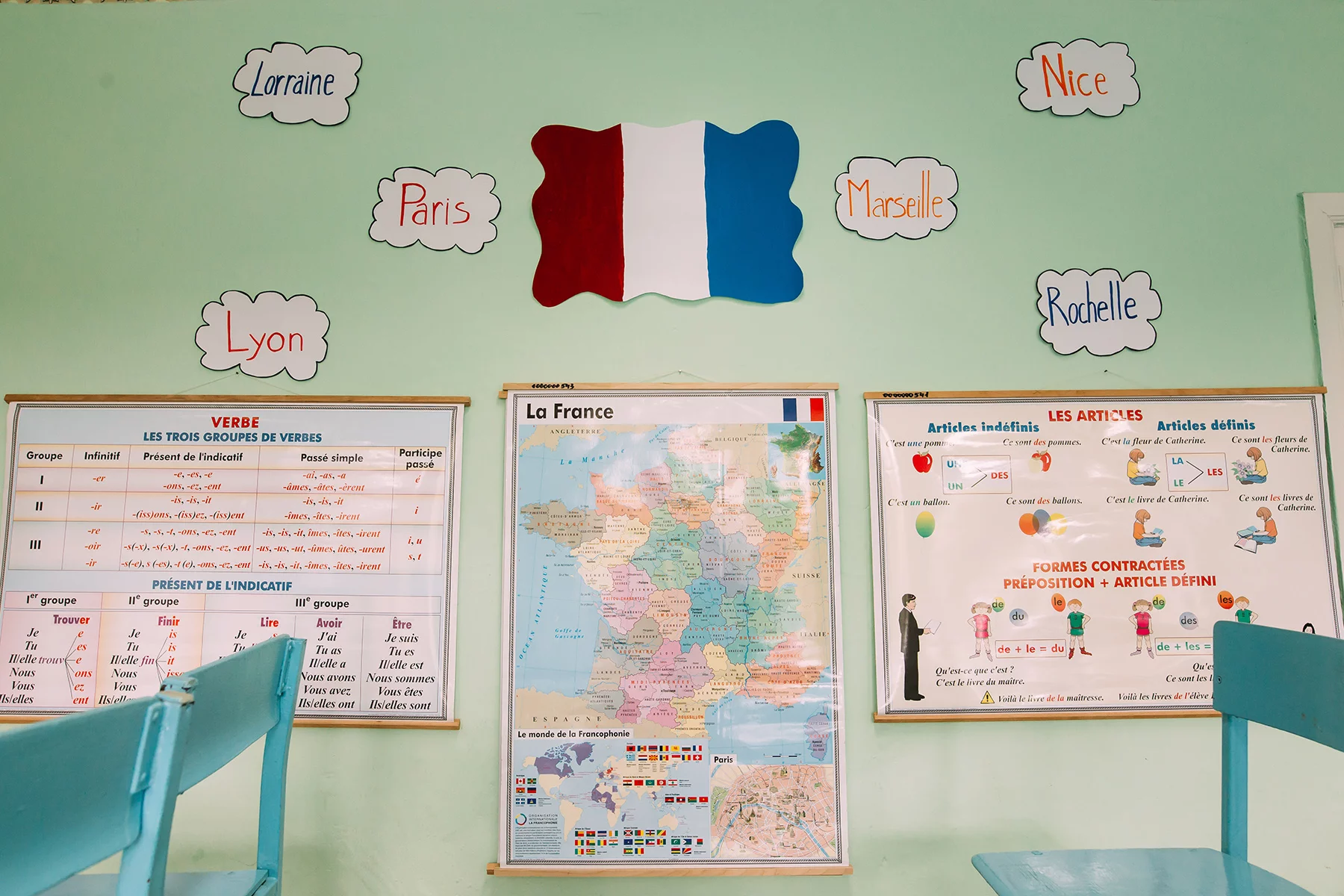
Working and living in France as an au pair is a cultural exchange. That means you should be there to learn the language and be immersed in French culture.
Being able to attend French classes is a key facet of this. So your schedule should be organised to make this possible.
There are a range of options when it comes to choosing where you do your French classes. What’s available will depend on where you live. Some of the main ones are Alliance Française, universities and local language schools. You might also be interested in community options, often provided by local town halls (mairies).
It’s important that you factor this cost in, because it is your responsibility. In some cases the host family will help you pay for it, but it’s not an obligation. You can ask them about it during your interview.
Healthcare and insurance for au pairs in France (don’t skip this)
Social security coverage (what the host family generally handles)
The host family is responsible for registering you with social security and making the payments.
Private health insurance (often required for the visa)
As a general rule, you’re going to need some form of comprehensive health insurance for the duration of your stay. The requirements vary by consulate, so check what your one needs before applying. You’re going to need to show proof.
You’ll need cover for outpatient care, hospitalisation, repatriation and any liability add-ons.There are many health insurers that will provide you what you need.
Health cover for au pairs in France (beyond the minimum)
Even if you’ll be registered for French social security by your host family, you may still want extra peace of mind—especially for emergencies, hospital stays, or repatriation. Cigna Global provides international health insurance for expats that can be tailored to the length of your stay and your budget, helping you stay covered while living in France.
Money, getting paid, and spending (pocket money tips)
Pocket money is typically paid as cash weekly or monthly, but in some cases you could have it paid into a bank account. It will depend on what you and your host family decide.
If you want it paid into an account, then you’ll likely look at opening a local account in France. This can also be handy when you want to pay for transport or subscription services. And in some cases it’s safer not to be carrying large amounts of cash with you everywhere you go.
Most of your expenses will be covered by your host family, at least in terms of housing and food. You could think of your pocket money as money to spend on things you want to do for fun. It’s a decent amount of spending money if you track your spending and budget as you go. If you haven’t lived out of home before then coming up with a budget before you go can be helpful, so you don’t run out of cash quickly.
Wise Account: useful if you’re paid in cash or need money from home
If your pocket money is paid in cash, you may still want an easy way to spend in EUR and receive occasional transfers from family or friends abroad. With Wise, you can hold and convert multiple currencies with transparent fees and use the Wise card for day‑to‑day spending in France.
Arriving and settling in (practical checklist for week 1)
- Many modern smartphones have dual-SIM capacity. So you could save yourself some money on roaming by getting a French SIM or eSIM to use for your local needs. You’d then still have your home number connected.
- You might need to get a transport card so you can get around. This will depend on where you live, but it’s worth getting organized so you can travel with ease.
- You should learn local school routines and make sure you know what you need to do each week. Some French schools are closed or have a half-day on Wednesdays, so talk to your host family to see how that impacts your schedule.
- The European emergency number is 112, but there are some other numbers in France that you might want to learn or keep somewhere accessible. Depending on their age, the children in your host family might know them and it could be a fun exercise to practise them together.
- Keep digital copies of your passport, visa, agreement, insurance and any other documents you might need. Using a cloud service to store them means you still have access even if your phone or laptop is broken or stolen.
Can you change host families or quit early?
In some cases, an au pair might need to find a new host family. It’s possible to do, but you need to make sure you’re compliant with your immigration status.
If you’re having issues with your host family, you should start by documenting them. You’ll also need to talk to them about the issues and see if it’s possible to resolve them. There might just be a misunderstanding that could be cleared up.
If you can’t resolve the issues then you’ll need to terminate your contract and give notice. A general rule is to give two weeks’ notice, but this is just common practice. In some cases it might not be feasible to do so.
If you’re hoping to stay in France, you’ll need to find a new host family. This might be a challenge at short notice, but it is still possible. You’ll also need to make sure you update the relevant authorities if you manage to find a new family, as they’ll have to sign a new agreement and register you the same way your first family did.
You can contact your country’s embassy in France if you need advice on your visa.
Common problems and complaints (what expats/au pairs report)
Some of the issues that come up the most include:
- Au pairs being asked to work more hours than was agreed in their contracts.
- Having unclear boundaries with your host family and them expecting you to always be on call, rather than sticking to the routine you agreed on.
- Not having privacy in the home you’re staying in, even though it’s required by law.
- Pocket money being paid late or not in full. Payment schedules should be agreed beforehand.
- Host families might not register you properly with the relevant French authorities or take longer than they should to do so.
- Feeling isolated and experiencing culture shock. This problem is especially difficult for young people living in a new country and don’t speak much of the language. That’s why it’s so key to find a good host family.
What you can do about it:
- If you’re having problems with your host family, you’ll need to talk to them. The earlier you do that, the better the outcome will be. They might not be aware of what you’re feeling and may want to help. If you agree on any changes, put them in writing.
- If you found your host family via a website, you could try contacting the support team. They have experience in dealing with these situations and can help you navigate it.
- The situation might not be safe or fixable, so you could consider switching families if that’s the case.
- If there’s an emergency then you should contact the emergency services, community support groups or your country’s embassy.
Safety and fraud prevention tips for au pairs
When you’re looking for a host family, you should do the following to protect yourself:
- Arrange a video call and ask for a virtual house tour before you leave. They’ll be able to show you exactly where your room will be.
- Don’t send sensitive documents without understanding why you’re sending them. If you get a strange request for a document that you weren’t expecting, then don’t send it.
- You shouldn’t pay placement fees to random individuals. Try to use reputable websites when you’re doing your research.
- Trust your gut. Settle on a backup plan before you leave and make sure you have access to emergency funds. You don’t want to get stuck in a situation you can’t get out of.
- If your host family has had au pairs previously, you could ask them for their contact details. Then you can talk to them about their experience living with that family.
Conclusion: Becoming an au pair in France
Becoming an au pair in France can be a rewarding way to improve your French, experience daily life with a host family, and gain childcare experience—but it only works well if you treat it as a structured cultural exchange with clear rules.
Before you commit, make sure you’re using the right pathway for your nationality (EU vs non‑EU), and insist on a signed placement agreement (Cerfa/convention) that clearly sets out your hours (max 25/week), pocket money (minimum levels), accommodation standards, time off, and French class arrangements. For non‑EU applicants, allow enough time for the VLS‑TS application and validation after arrival, and double‑check what your consulate requires.
Finally, don’t overlook the practical basics: arrange health insurance, keep copies of all documents, and agree upfront how you’ll be paid and how you’ll manage day‑to‑day spending. If anything feels unclear or unsafe during the matching stage, walk away and keep looking—choosing the right host family is the most important decision you’ll make.
FAQ
Au pair in France
How old do you have to be to be an au pair in France? 
Non-EU citizens need to be between 18 and 30, while EU citizens can work as an au pair in France from 17–30.
Do au pairs need a visa for France?
Yes, if you’re applying from outside the EU, you’ll need a visa to live in France as an au pair.
How much pocket money do au pairs get in France?
For non-EU citizens, the minimum monthly pocket money is €320. You could try to negotiate higher when you speak to host families.
How many hours can an au pair work in France?
Au pairs can work a maximum of 25 hours per week and are required to have at least one rest day each week.
Do au pairs in France get free accommodation and food?
Yes, au pairs in France get their accommodation and food paid for as part of their agreement.
Do I need to speak French to be an au pair in France?
You need to speak basic French or have secondary education or professional qualifications.
Can I study while being an au pair in France?
Your agreement should set out arrangements for your French classes and you must have time to attend courses. EU au pairs (stagiaire aide familial étranger) must be enrolled; non‑EU ‘jeune au pair’ must have time to attend courses, and the convention typically includes French classes.
Can I change host families in France?
Yes, you can change host families. You need to follow a certain process to make sure your visa stays valid.
What insurance do I need as an au pair in France?
You need to prove you have a good level of health insurance when you apply for your visa. This will vary depending on where you’re applying from.
How long can I stay as an au pair in France?
You can stay for up to a year initially and extend this for a further year, for a total of two years.
Useful resources:
- France-Visas – Young au pair: https://www.france-visas.gouv.fr/en/jeune-au-pair
- Service-Public – Jeune au pair residence permit rules: https://www.service-public.fr/particuliers/vosdroits/F15813
- Service-Public – Stagiaire aide familial / jeune au pair: https://www.service-public.fr/particuliers/vosdroits/F13348
- Service-Public – Agreement form (Cerfa): https://www.service-public.fr/particuliers/vosdroits/R18919
- AuPairWorld – Pocket money, working hours, contract for au pairs in France: https://www.aupairworld.com/en/au-pair-programs/france/general-conditions
- AuPair.com – How to become an Au Pair in France? https://www.aupair.com/en/p-france-requirements.php
- The American in Paris – How to Become an Au Pair in France https://theamericaninparis.com/2021/10/21/how-to-become-an-au-pair-in-france/
- Wise – How to get an au pair visa for France: UK guide https://wise.com/gb/blog/au-pair-visa-france
- France-Visas – Your arrival in France https://www.france-visas.gouv.fr/en/votre-arrivee-en-france
- Wise – Pricinghttps://wise.com/gb/pricing/
- Emergency numbers you need to know https://www.france.fr/en/article/emergency-numbers-to-know/



Did you find this guide helpful?