
'%20id='ico-down'%20stroke='%23000000'%20stroke-width='1.5'%3e%3cg%20transform='translate(1092.250000,%20254.750000)'%3e%3cpolyline%20id='Path-2-Copy-4'%20transform='translate(5.500000,%202.750000)%20scale(1,%20-1)%20rotate(-180.000000)%20translate(-5.500000,%20-2.750000)%20'%20points='0%200%205.5%205.5%2011%200'%3e%3c/polyline%3e%3c/g%3e%3c/g%3e%3c/g%3e%3c/svg%3e)


Working
Finding a Job
How to Become a Nurse in Germany
Learn how to navigate the process of becoming a nurse in Germany, from eligibility requirements and language skills to visa pathways and recognition.


Germany’s healthcare system is currently navigating a period of unprecedented demand. With an ageing population and a push for higher staffing standards, the country is facing a critical shortage of qualified professionals, with over 30,000 vacancies across hospitals and care facilities.
For international nurses, this translates into a unique opportunity to enter one of the most stable and well-funded healthcare sectors in the world, backed by clear migration pathways and government support.
While the journey to official recognition is rigorous, requiring dedicated language study and a meticulous paperwork trail, it’s a deeply rewarding career move. Beyond job security, you are entering a system that values professional development and offers a standard of living that few other countries can match. By following the right steps and preparing early, you can turn this high demand into a thriving long-term career in the heart of Europe.
Wise account
Moving countries is expensive. Before you even land, you’ll likely need to pay for exams, translations, and visa fees. Using a non-bank alternative like Wise can help you manage these international payments with the mid-market exchange rate, avoiding the high markups of traditional banks.

Why pursue a nursing career in Germany?
Germany is currently one of the top 10 highest-paying countries for nurses globally, driven by an ageing population and a healthcare demand that is expected to reach into the millions over the coming decade. Choosing a career here means entering a stable, dual health system where 90% of the population is covered by statutory insurance, ensuring that healthcare facilities are consistently well-funded and modern.
Beyond the financial incentives, Germany offers strong legal protections for healthcare workers, including the General Act on Equal Treatment, which safeguards employees from discrimination, and strict regulations on working hours to prevent burnout.
- Job security and placement: With over 30,000 vacant positions, qualified international nurses are in high demand across hospitals, elderly care facilities and specialised clinics, offering near-guaranteed work placements.
- Generous benefits and leave: Full-time nurses typically enjoy 24 to 30 days of paid vacation annually, plus up to six weeks of full-pay sick leave and comprehensive maternity protection (Mutterschutz).
- Extensive social safety net: Employment includes mandatory contributions to a reliable public pension, accident insurance covered by the employer and unemployment insurance to provide a financial cushion during unexpected transitions.
- Schengen area mobility: Working in Germany grants you a residence permit that allows for visa-free travel across the Schengen Area, enabling you to explore neighbouring European countries with ease.

Understanding the types of nursing roles
In 2020, Germany overhauled its medical education system by introducing Generalist Nursing (Generalistische Pflegeausbildung). The reform unified the previously separate paths of geriatric, paediatric and general nursing into a single qualification: the Pflegefachmann (male) or Pflegefachfrau (female).

By merging these disciplines, Germany has created a more versatile workforce capable of caring for patients of all ages across every medical sector. Because the qualification is recognised throughout the EU, nurses enjoy the professional flexibility to transition between hospital wards, elderly care homes and outpatient services without the need to re-qualify.
Nursing roles in Germany at a glance
| Role title | Duration of training | Primary responsibilities |
|---|---|---|
| Registered Nurse(Pflegefachkraft) | 3 years | Independent patient care, administering medicatio and assisting in medical procedures |
| Nursing Assistant(Pflegehelfer) | 1–2 years | Assisting with basic care, including hygiene, nutrition and mobility, while supporting registered nurses in daily ward tasks. |
| Specialised Nurse(Fachkrankenpfleger) | +2 years extra | High-level clinical responsibilities in specific fields such as ICU, Anesthesia, Oncology, or Psychiatric care. |
Eligibility requirements for foreign nurses
To practice nursing in Germany, you need to navigate a regulated process designed to ensure your skills align with strict national standards. While the German government has streamlined many of these pathways to meet the growing demand for healthcare staff, you will still need to meet professional, linguistic and personal criteria before you can legally use the title of Pflegefachkraft.
1. Professional qualification
The cornerstone of your application is the Equivalence Assessment. If you obtained your nursing degree within the EU, EEA or Switzerland, you will typically benefit from automatic recognition due to harmonised standards across these regions.
However, if your degree was earned in a non-EU country, your training will be reviewed against the German generalist nursing curriculum. If significant gaps are identified, the licensing authority will issue a deficit notice. To bridge these gaps, you can choose between a knowledge test or a supervised adaptation period, which usually lasts four to twelve months.
2. Language proficiency
Mastering the German language is non-negotiable for patient safety and effective team collaboration. For full professional recognition, you must provide a recognised language certificate demonstrating a minimum of B2 level proficiency. Some states or specific roles may initially accept a B1 certificate if you are enrolled in a bridge course, but the ultimate goal is almost always B2.
In many federal states, you must also pass a specialised medical language German exam (Fachsprachenprüfung), which tests your ability to handle medical documentation and professional handovers in a clinical environment.
- Standard language certificate: B2 General German (Goethe, telc, or ÖSD).
- Specialised exam: Fachsprachenprüfung for Nursing (testing clinical communication).
- Targeted training: Many employers now offer or subsidise German for Nursing courses to help international staff adapt quickly.
Paying for language tutors or exams abroad? Use Wise to send money at the mid-market rate, avoiding the hidden fees banks often charge on international payments.

3. Health & background checks
Beyond your clinical skills, you also need to prove your personal suitability for the profession. You’ll be required to submit a medical certificate, issued within the last three months, confirming that you are physically and mentally fit to perform nursing duties. A police clearance certificate from your home country (and Germany, if you have already resided there) are also required to demonstrate a clean criminal record. These checks ensure that all healthcare professionals in the German system meet the high standards of trust and reliability required for patient care.
Step-by-step guide to the recognition process (Anerkennung)
The recognition process, or Anerkennung, is the official path to having your international nursing degree validated against German standards. Since nursing is a regulated profession in Germany, you cannot legally work as a Registered Nurse (Pflegefachkraft) until this process is complete. While it may seem bureaucratic, following these steps in order will help you navigate the system efficiently.
1. Find your licensing authority
Germany’s healthcare system is decentralised, meaning recognition is handled at the state level. You must apply to the specific licensing authority in the federal state where you intend to live and work.

Editor
Tarah Ren
Insider Tip
If you haven’t decided on a specific city yet, don’t worry. Many international nurses simply choose the federal state based on where they first receive a job offer, which then dictates their licensing authority.
2. Submit documents
Once you’ve identified the correct office, submit a formal application along with certified translations of your essential documents. This typically includes:
- A valid ID or passport
- Your nursing degree or diploma
- A detailed transcript of records (showing total hours of theory and clinical practice)
- A CV in German
3. The Equivalence Assessment
The licensing authority will perform a comparison between your education and the German curriculum. If your training is deemed equivalent, you move straight to licensing. However, if significant gaps are found, you’ll receive a deficit notice, which outlines exactly what is missing and provides you with two options for a bridge course:
- Knowledge test (Kenntnisprüfung): An exam covering the contents of the German nursing curriculum.
- Adaptation period (Anpassungslehrgang): A supervised practical course and theoretical training that can last between six to 18 months.
4. Language certificate submission
While your professional credentials are being assessed, you’ll also need to provide proof of your language skills. Most states require a B2 General German certificate. You may also need to sit a specialised Fachsprachenprüfung (Medical Language Exam) to prove you can communicate safely in a clinical environment.

5. Receive your license
Once the authority confirms both your professional equivalence and your language proficiency, you will be issued your official license, known as the Approbation. You are now legally a registered nurse in Germany.
The recognition process involves several fees paid to German state authorities. If you’re paying from abroad, a Wise Business or Personal account allows you to hold EUR and pay local invoices like a local, helping you avoid international wire transfer fees.

Visa options for nurses
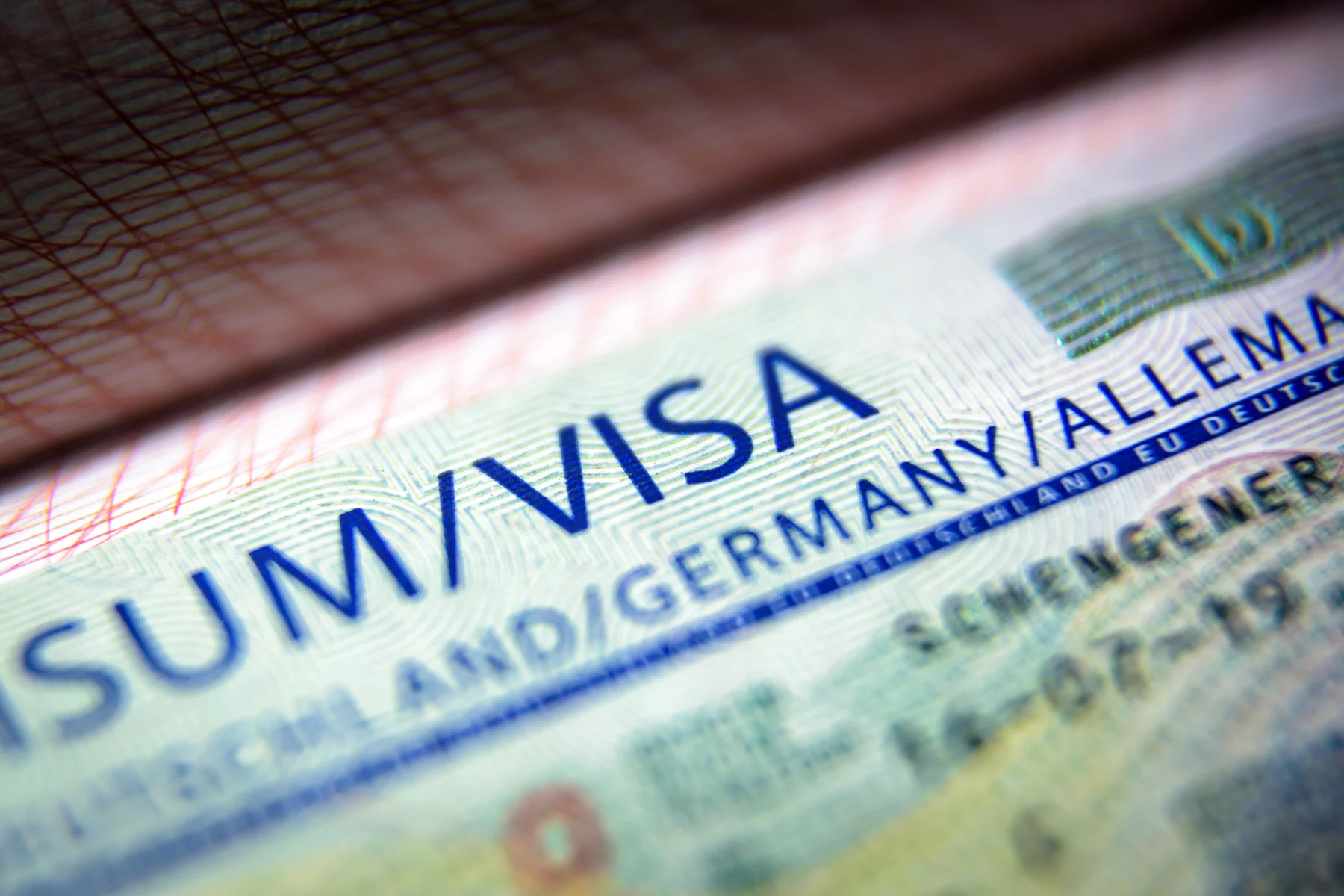
Once you have secured your recognition or are prepared to complete your training in Germany, it’s time to select the appropriate visa. The German government has significantly modernised its immigration laws as of 2026, offering several streamlined pathways for healthcare professionals.
- Section 18a/18b (Skilled Worker Visa): This is the main route for nurses who have already received full recognition and have a binding job offer from a German employer. Section 18a applies to those with vocational training, while 18b is for university graduates. The visa allows you to move to Germany and start working as a registered nurse immediately.
- Section 16d (Visa for Recognition of Foreign Professional Qualifications): If your equivalence assessment resulted in a deficit notice, a Section 16d visa allows you to enter Germany specifically to complete bridge courses or sit the knowledge test. A major advantage of the 16d visa is that it allows you to work part-time as a nursing assistant for up to 20 hours a week while you finish your recognition.
- Opportunity Card (Chancenkarte): Designed as a points-based system, this entry path is ideal for nurses who want to find an employer in person rather than applying from abroad. Applicants do not need a job offer to qualify, provided they score at least six points based on criteria such as age (with extra points for those under 35 or 40), professional experience and language skills. Valid for up to 12 months, the card also allows for part-time trial work while you secure a permanent contract.
Average nursing salary and benefits
Salaries for nurses in Germany are competitive and largely governed by the TVöD-P collective bargaining agreement, with a newly qualified nurse in 2026 expecting a starting gross monthly salary between 2,800 EUR and 3,000 EUR. This can reach up to 6,000 EUR for senior or management roles, often supplemented by shift differentials of 200 EUR to 300 EUR for nights, weekends and holidays.
| Experience Level | Monthly Gross Salary (Avg) | Monthly Net Salary (Approx) |
|---|---|---|
| Entry-Level Nurse (0–2 years) | €2,800 – €3,000 | €2,000 – €2,200 |
| Mid-Level Nurse (3–5 years) | €3,300 – €3,700 | €2,400 – €2,600 |
| Senior Nurse (8+ years) | €4,000 – €4,800 | €2,800 – €3,300 |
| Head Nurse/ Supervisor | €5,000 – €6,0000 | €3,400 – €4,000 |
Once you start earning in Euros, you’ll likely need a transparent and low-cost way to send money home. While banks often hide fees in exchange rate markups, Wise uses the mid-market rate to ensure your hard-earned money goes further.
Frequently Asked Questions (People also ask)
Can I work as a nurse in Germany without speaking German?
The short answer is no, you cannot work as a nurse in Germany without speaking German. Because nursing is a regulated profession involving patient safety and medical documentation, a minimum of B1 or B2 level German is legally required for professional recognition. Even if a hospital uses English internally, you will need to pass a specialised medical language exam (Fachsprachenprüfung) to prove you can navigate clinical environments safely.
How long does the recognition process take?
The nurse recognition process typically takes between 3 and 6 months, depending on the federal state and how quickly your home country provides the necessary transcripts. If the authorities find gaps in your training, completing a bridge course or adaptation period can extend this timeline to 12 months, though you are often permitted to work as an assistant during this time.
Editor
Tarah Ren
Insider Tip
If you anticipate a lengthy recognition process due to missing documents or required adaptation periods, strongly consider applying for the Section 16d Visa. It lets you enter Germany specifically to finish your recognition while legally working part-time.
Is nursing education free in Germany?
Yes, the German Ausbildung (apprenticeship) system is essentially free. In fact, rather than paying tuition, nursing students are paid a monthly stipend, usually between 850 EUR and 1,300 EUR, while they learn. For international nurses who already hold a degree, you don’t need to redo your education, though you will be responsible for administrative fees related to the recognition of your existing credentials.


Did you find this guide helpful?