
'%20id='ico-down'%20stroke='%23000000'%20stroke-width='1.5'%3e%3cg%20transform='translate(1092.250000,%20254.750000)'%3e%3cpolyline%20id='Path-2-Copy-4'%20transform='translate(5.500000,%202.750000)%20scale(1,%20-1)%20rotate(-180.000000)%20translate(-5.500000,%20-2.750000)%20'%20points='0%200%205.5%205.5%2011%200'%3e%3c/polyline%3e%3c/g%3e%3c/g%3e%3c/g%3e%3c/svg%3e)


Working
Finding a Job
Swiss resume and job interview tips
Find out how to write a Swiss resume and cover letter, and prepare for that all-important job interview in Switzerland with our helpful guide.

There are several things to take into account when looking for a job in Switzerland. Although it can seem like a daunting task, there are simple ways to approach it, such as familiarizing yourself with the local business culture and signing up with recruitment agencies in Europe.
To help you create a stand-out Swiss resume and cover letter, this helpful guide includes the following information, along with some tips on how to make a great impression at job interviews in the country:
Coursera
Boost your career with Coursera. This online learning platform lets individuals and organizations learn new job-relevant skills. They partner with over 275 leading universities and companies to offer flexible, affordable courses. From hands-on projects to certificates and degree programs, start your learning journey today with Coursera.

Applying for a job in Switzerland: what to expect
There are four national languages in Switzerland: German, Italian, French, and Romansh. However, you should always write your application in the same language as the listed job advert. There are several ways to find job vacancies in Switzerland. For instance, you can search for roles advertised in English on international job-search sites, directly on company websites, or on our own Expatica jobs board.
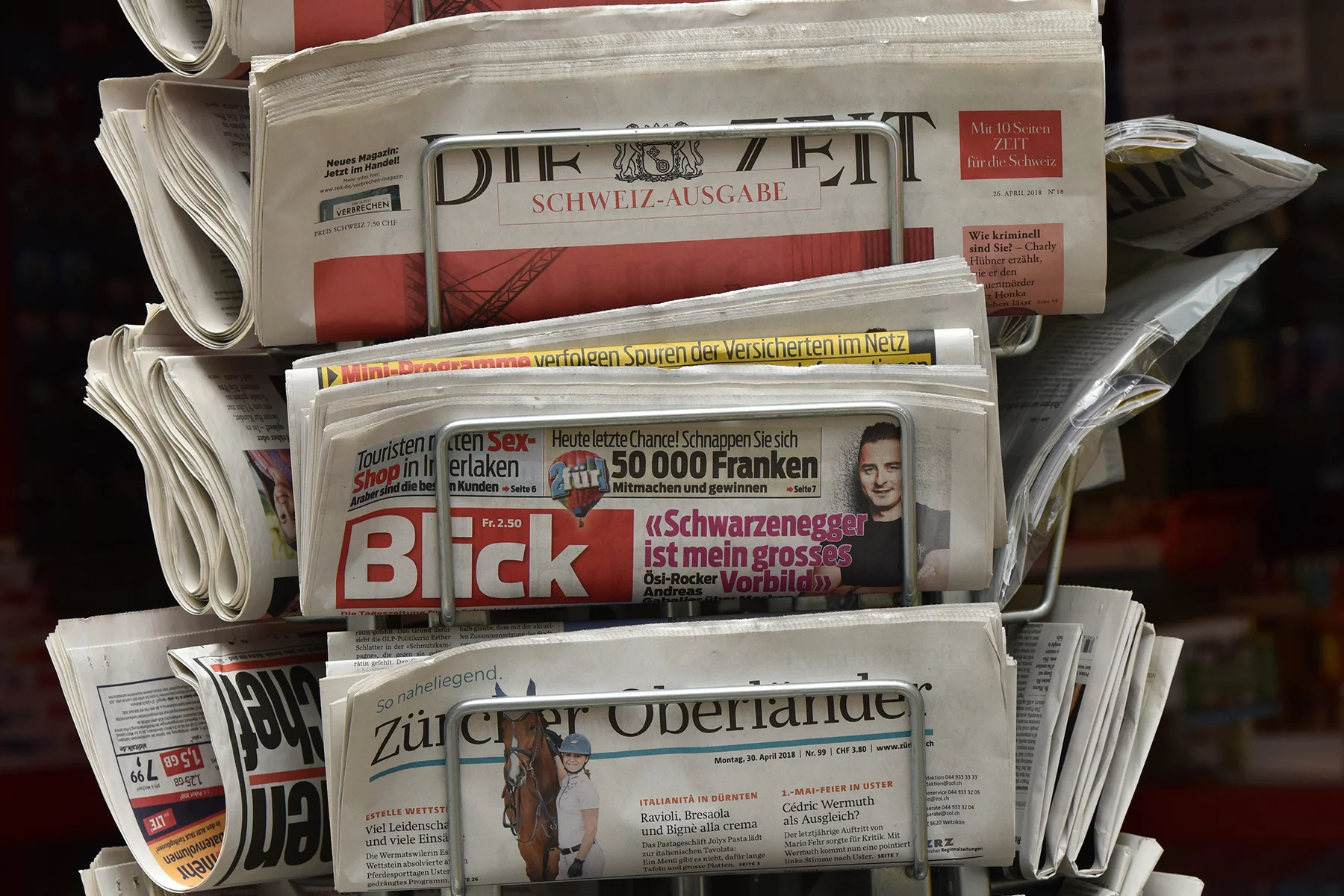
Similar to other countries, job postings in Switzerland outline the day-to-day tasks and duties of the role. The description will state the required qualifications and experience of the candidate. To apply for jobs, companies typically ask for a CV, a cover letter, and educational certificates, so be prepared with these three key components.

In Switzerland, successful applicants are typically invited to attend an interview which may include psychometric and psychological testing and assessments. Notably, it is quite common in Switzerland for employers to ask for personal details such as a photo, your age, or your marital status. However, responding to these questions is optional.
The whole process can take between two weeks and a month. Therefore, if there is no response after one month, you can assume that your application was unsuccessful. Interestingly, standard Swiss practice dictates that companies will usually call you to let you know whether or not your application was successful. They will also send back any posted documents.

Networking is highly recommended in Switzerland and many job vacancies are filled by simply meeting people. This can be achieved in advance by connecting through online platforms such as LinkedIn and Twitter and getting in touch directly with prospective employers.

Ideally, you should begin your job hunt by thoroughly researching the sector that you are applying within as well as the type of jobs you are interested in. You can also research salary expectations, and, if applicable, read our tips on finding work as a trailing spouse in Switzerland.
Writing a CV in Switzerland
Essentially, your job hunt in Switzerland should begin with preparing a top-notch Swiss resume that makes you stand out above other candidates and lands you that all-important job interview. Here are some helpful guidelines on how to write a Swiss resume that covers all the necessities.
Swiss CV structure
You should write your Swiss resume in the same language that the job posting is advertised in. Remember to keep it short and concise, listing out your key experiences and skills, and try to limit it to one A4 page. Note that bullet points are very efficient in resumes, so it’s a good idea to use them.

Of course, it is important to make sure that your spelling and grammar are perfect; after all, the Swiss are known to pay particularly close attention to detail. Popular fonts used in Swiss resumes include sans-serif fonts like Calibri and Arial as well as Helvetica which lends a more classic look.
Your CV should start with your personal information, including your name, address, phone number, and email. Swiss employers might also ask for your age, gender, marital status, along with a professional photo. It is not compulsory to provide this information, however, you may decide to add these details to your resume.

It is a good idea to insert an opener in your CV to outline your most relevant achievements and experiences which cater to the job that you are applying for. You will then want to add your education background in chronological order, along with dates and names of the institutions and certifications you have achieved. The sections that follow should include your professional skills, any languages you speak, and references from previous employers.
Tips on writing a Swiss resume
To summarize, here are some important guidelines to follow when writing your CV in Switzerland:
- Use precise, formal language
- Try to limit your CV to one page that summarizes your most significant and relevant experiences and achievements
- Use bullet points where appropriate
- Add certificates achieved while training
- Include any special skills or volunteer work at the bottom of your CV
- If the job advertisement asks for a photo, then attach a professional passport-sized photo of yourself in the personal section
- If you are submitting your application by post, then invest in good quality paper and a folder for organization
- If you need help putting your CV together, try out an online resume service such as Resume.io.
- And finally, don’t brag! Remember, Swiss culture tends to be more modest and people generally prefer humility in a person
Swiss CV templates
There are several accessible online templates to choose from when putting together your Swiss resume. Here are a few that you may find helpful:
- coolfreecv.com
- cursiveq.com
- hays.ch
- manpower.ch
- Microsoft Templates (for general CVs)
- TopCV (free CV review)
- visualcv.com
Cover letters in Switzerland
The cover letter is a key component of job applications in Switzerland, and when done right, can make a real impression on prospective employers. Before you begin writing your cover letter, read through the job posting carefully. Usually, cover letters are typed, unless the company requests that it is handwritten. You should put your name and address in the top left-hand corner, followed by your recipient’s name, company name, and address on the right-hand side. The subject line should indicate the title of the job that you are applying for, and where you saw the job listing.

The cover letter should not exceed one page and usually comprises four concise paragraphs. It should outline your education and experience, your strengths, why you are suitable for the job, and what made you apply for it. Remember to reference any relevant skills and experience wherever necessary. And finally, don’t forget to thoroughly proofread the letter for spelling and grammar before you send it.
Phrases and accented letters
There are certain phrases that are commonly used in cover letters in Switzerland. Below are some of them, listed in the country’s three national languages; German, French, and Italian.
German
- Sehr geehrte Damen/Herren: Dear Sir/Madam
- Danke für Ihre Zeit: Thank you for your time
- Ich freue mich darauf, bald von Ihnen zu hören: I look forward to hearing from you soon
French
- Cher Monsieur/Madame: Dear Sir/Madam
- Merci pour votre disponibilité: Thank you for your time
- Je vous prie de recevoir, Madame/Monsieur, l’expression de mes sentit distingués: I look forward to hearing from you soon
Italian
- Egregio Signore, Gentile Signora: Dear Sir/Madam
- Grazie per il suo/tuo tempo: Thank you for your time
- Resto in attesa di un suo gentile riscontro: I look forward to hearing from you soon
Job interviews in Switzerland
So you’ve submitted your Swiss resume and cover letter, and you’ve landed an interview for your dream job – now it’s time to shine. It goes without saying that preparation is key when it comes to making sure that you make the best possible impression at that all-important job interview.

With this in mind, here is an overview of what to expect when it comes to job interviews in Switzerland, along with some helpful tips to help you prepare for the big day.
What to expect in a Swiss job interview
Generally speaking, your prospective boss will usually be present in your job interview in Switzerland. That said, this depends on how the company wants to conduct interviews. If the company requires it, you might be asked to attend a second or even third interview, too, with each session usually lasting between 45 minutes and one hour.
Dress code and appearance for Swiss job interviews
The business attire in Switzerland is typically formal, conservative, and neat. Men usually wear a dark suit and tie while women wear a dark dress or suit. With this in mind, make sure you arrive at your interview looking smart, well-groomed, and polished – rocking up in jeans or trainers definitely won’t make a good first impression.

If you are on a tight budget, however, and can’t afford to buy professional attire, Caritas has several charity shops in Zurich which sell used clothes and shoes, to ensure that all workers are given a chance to present themselves formally at interviews.
Questions to expect in a Swiss job interview
Here are some of the most common questions that will likely pop up during a typical job interview in Switzerland:
- Why do you want to work for this company?
- Tell us about your greatest strength and why.
- What is your biggest weakness and how do you overcome it at work?
- What makes you a suitable candidate for this position?
- Tell us about a time where you showed leadership skills.
- Do you live in Switzerland? If not, when will you arrive?
- Do you need a work visa to work in Switzerland?
- Where do you want to be five years from now?
It is also important to prepare for more unexpected questions in advance. Remember, this is an opportunity to show your potential future boss who you are and what you are capable of. Therefore, try to stay positive and leave them with a good impression.
Questions to ask in a Swiss job interview
It is always advised to ask questions in a Swiss job interview to express your interest in the position. Therefore, try to think of some questions in advance, as well as more specific queries that relate to different aspects of the company and the role. However, just bear in mind that while asking questions is common and encouraged in Swiss interviews, it is best to avoid certain topics such as salary and holidays which are not relevant yet.

Here are some of the more general questions you can ask:
- What are some of the challenges that the predecessor faced in this role?
- What are the typical day-to-day duties of this role?
- Can you show me examples of projects that I would be working on?
- What are the most important skills for this job?
- What is the step-by-step application process from here, if you choose to proceed with my resume?
When are salary and benefits discussed during the hiring process?
As mentioned, it is better to avoid bringing up the subject of salary and benefits during the preliminary interview stages in Switzerland. That said, sometimes, the salary range is already listed on the original job listing to give an indication. An interviewer may bring up the topic, in which case it is acceptable to discuss it. Usually, however, these details are addressed at the later stages of interviews, so be prepared to negotiate if needed.

Tips for job interviews in Switzerland
- Dress well to impress
- Do as much research as you can about the company and interviewer before the interview
- Greet your interviewer with a firm handshake to show your confidence
- Try to use positive verbal language and non-verbal communication to exude a friendly, self-assured persona
- Maintain good manners with everyone in the workspace
- Always ask questions and prepare them in advance
- Don’t exaggerate and try to keep the conversation accurate and concise
Online and phone interviews in Switzerland
If you are applying for a job in Switzerland from overseas, it is common for employers to request a phone or video interview in the first stage. In some ways, this can actually be more challenging than in-person interviews. On the flip side, though, they are more convenient as they don’t require you to travel or dress up from head to toe.
Here are some top tips to help you ace your phone or video interview:
- Test your audio and video functions in advance and before the interview
- Tidy up your interview space to make sure that there are no distractions in the frame
- Wear professional attire and make yourself presentable for the interview
- Be punctual
- Stay positive and converse like it’s a standard face-to-face interview
- Keep a glass of water nearby
- Prepare some questions and answers in advance
Recruitment tests and tasks in Switzerland
Some application processes in Switzerland involve testing procedures as part of a screening process after submitting your resume. These are usually more popular among larger companies, which use psychometric testing and assessment centers to evaluate an individual’s personality, interests, and traits from a professional point of view. If you want to prepare for these tests in advance, you can explore the psychometric testing by Mettl or learn more about what to expect at assessment centers.
Qualifications in Switzerland
There are a few things to be aware of if you are applying for a regulated profession such as healthcare, teaching, technology, law, and social work in Switzerland. These professions must be recognized if they are foreign, even if you are from the EU or EEA. Other occupations can also opt for a level certificate that provides Swiss employers with information on how your foreign qualification relates to the higher education system in Switzerland.
You can explore ENIC-NARIC to find out more about qualification recognition in Switzerland. The Bologna Process, meanwhile, allows academic qualifications from some countries to be recognized and compared to their Swiss counterparts. SBFI also delves deeper into what to expect and what procedures to undertake for foreign qualifications.
Don’t forget, you can always learn new skills to boost your career and expand your job-hunting options. Nowadays, many platforms offer online learning where you can gain new qualifications and certificates. For example, Coursera partners with top universities and companies to provide educational courses and projects.
After the job interview in Switzerland
In Switzerland, it is good professional practice to write a thank you letter or email to your interviewer after an interview. If you don’t hear back after a few days, a courteous follow-up email or phone call is also encouraged to emphasize your interest in the role.

Depending on the company and its procedures, it could take days to weeks to receive a response. However, usually, employers in Switzerland will let you know the news via email or a phone call. If you still don’t hear back, then try to be patient and remember that it may take some time for them to make their decision. Again, it depends on the company whether or not they contact you to let you know if your application was unsuccessful.
However, when an application is successful, employees might be asked to start the job straight away, depending on their situation at the time. The first month of employment is deemed as a trial period, which can be written in the contract and extended up to three months. During this time, employers are given the benefit of a seven-day notice period. You may also need to bring several documents with you such as your Swiss identity document, Swiss bank account details, Swiss driving license (if applicable), employment contract, and any health insurance documents.
Useful resources
- swissinfo.ch – learn more about working as a foreigner in Switzerland
- The Local – tips on writing a Swiss CV
- Experis – tips on how to prepare for job interviews in Switzerland
- ch.ch – information on working in Switzerland as a foreign national


Did you find this guide helpful?