
'%20id='ico-down'%20stroke='%23000000'%20stroke-width='1.5'%3e%3cg%20transform='translate(1092.250000,%20254.750000)'%3e%3cpolyline%20id='Path-2-Copy-4'%20transform='translate(5.500000,%202.750000)%20scale(1,%20-1)%20rotate(-180.000000)%20translate(-5.500000,%20-2.750000)%20'%20points='0%200%205.5%205.5%2011%200'%3e%3c/polyline%3e%3c/g%3e%3c/g%3e%3c/g%3e%3c/svg%3e)



Securing a role with one of these corporate giants is a major goal for many professionals aiming to elevate their careers. This guide looks beyond the famous names to explain why Switzerland attracts global headquarters in the first place, which employers offer the best prospects, and how you can position yourself to land a job.
Key takeaways
- Switzerland hosts global headquarters across pharmaceuticals, finance, technology, and consumer goods.
- English is the primary working language at most large multinationals in Switzerland.
- Key business cities are Zurich, Geneva, Basel, and Zug, each with distinct industry strengths.
- Foreign nationals make up over a quarter of Switzerland’s resident workforce, making it one of Europe’s most internationally diverse labour markets.
- Swiss salaries are among the highest in the world, but the cost of living in cities like Zurich and Geneva is equally high.
- Many expats working in Switzerland earn in Swiss francs (CHF) while maintaining financial commitments in another currency abroad.
Why does Switzerland attract so many international companies?
Global headquarters thrive on predictability, a benefit Switzerland delivers through long-standing political neutrality and the exceptional stability of the Swiss franc. This secure environment pairs with a highly decentralized corporate tax system, where individual cantons set competitive local rates. Regions like Lucerne, Zug, and Nidwalden offer particularly favorable conditions that compare brilliantly with European neighbors, all while remaining fully aligned with global tax frameworks.
Beyond the financial perks, businesses gain immediate access to a highly educated, multilingual talent pool fluent in major European languages and English. Sitting right at the geographic crossroads of Europe, the country leverages strong bilateral trade agreements to grant companies direct access to continental markets without the complexities of full EU membership. Ultimately, it provides the ultimate stable home base for brands with global ambitions.

Editor
Tarah Ren
Insider Tip
If you are highly focused on maximizing your take-home pay, look closely at companies headquartered in cantons like Zug, Schwyz, or Nidwalden, which offer some of the lowest corporate and personal tax rates in the country.
Major international companies in Switzerland
Below is a practical overview of well-known international companies in Switzerland, organised by sector. This is not an exhaustive list, but it covers the most prominent employers across the key industries. Headquarters locations vary by canton.
Finance, banking and insurance
Zurich and Geneva are Switzerland’s main financial centres, and this sector is one of the most accessible for internationally mobile professionals. English is the standard language across senior and cross-border roles. Typical expat roles include wealth management, audit, advisory, risk, and compliance.
- UBS (Zurich) – Switzerland’s largest bank and one of the world’s leading wealth managers, with a substantial international workforce.
- Swiss Re (Zurich) – One of the world’s largest reinsurers, operating across more than 20 countries.
- Zurich Insurance Group (Zurich) – Provides general and life insurance products and operates in over 170 countries.
- Swiss Life (Zurich) – A major provider of life insurance and pension solutions across Europe.
- Julius Baer (Zurich) – One of Switzerland’s most prominent private banking groups.
- EY, KPMG, PwC (Zurich and Geneva) – All three firms have major Swiss operations, with roles across audit, tax, and advisory services.
Pharmaceuticals and healthcare
Basel is widely regarded as the global capital of Swiss pharmaceuticals, known informally as part of Europe’s “Bio-Valley.” These companies recruit internationally for research, clinical, regulatory, and commercial roles, and English is the standard working language for global functions. Basel’s concentration of life sciences employers makes it one of the most attractive cities in Europe for careers in this field.
- Roche (Basel) – One of the world’s largest biotechnology companies, with a highly international research and clinical team and products sold in over 180 countries.
- Novartis (Basel) – A global medicines company formed through the 1996 merger of Ciba-Geigy and Sandoz, with employees from over 80 countries at its Basel campus.
- Sandoz (Basel) – Spun off from Novartis in 2023 as an independent global generics and biosimilar company, headquartered in Basel.
- Lonza (Basel) – A global leader in pharmaceutical manufacturing and biotech services, working with companies across the drug development lifecycle.
Technology and engineering
Zurich has become one of Europe’s leading tech hubs, particularly for software engineering, artificial intelligence, and hardware development. Tech companies in Switzerland are generally open to international hires and often operate entirely in English, making them among the most accessible employers for expat professionals.
- Google Switzerland (Zurich) – Google’s Zurich engineering office is one of its largest outside the US, working across search, cloud, and artificial intelligence.
- ABB (Zurich) – A multinational leader in power and automation technology, employing more than 100,000 people in over 100 countries.
- IBM Switzerland (Zurich area) – A significant Swiss operation covering consulting, cloud, and technology services.
- Microsoft Switzerland (Zurich) – Microsoft’s Swiss hub, with roles across engineering, sales, and cloud services.
- Logitech (Lausanne area) – A global computer peripherals and accessories company, with its headquarters near Lausanne.
- STMicroelectronics (Geneva) – A major semiconductor manufacturer headquartered in Geneva, with global operations across electronics and industrial technology.
Consumer goods and food
Switzerland is home to some of the world’s most recognised consumer brands. These companies offer a wide range of entry points for internationally mobile professionals, from graduate programmes to senior leadership roles, across functions including supply chain, marketing, sustainability, and research and development.
- Nestlé (Vevey) – The world’s largest food and beverage company, headquartered in Vevey since 1867. Its campus workforce includes people from more than 85 countries.
- Lindt and Sprüngli (near Zurich) – One of the world’s best-known premium chocolate brands, based in Kilchberg.
- Tetra Pak (Lausanne) – The global food packaging company has its international headquarters in Lausanne.
- Ricola (Laufen) – The Swiss herbal confectionery brand, headquartered in the canton of Basel-Landschaft.
Commodities and trading
Zug is a major base for commodity and trading firms, largely due to its low cantonal tax rate. It is a smaller, specialist segment of the Swiss job market but significant in terms of global economic weight.
- Glencore (Baar, Zug) – The world’s largest commodities trader and Switzerland’s highest-ranked company on the Fortune Global 500, trading metals, minerals, oil, and agricultural products.
- Vitol (Geneva) – One of the world’s largest independent energy traders, with significant Geneva operations.
- Mercuria (Geneva) – A major global energy and commodities trading group headquartered in Geneva.
Luxury goods and watchmaking
Switzerland dominates the global luxury watch industry and is home to several of the world’s most prestigious luxury goods groups. This sector is smaller in total headcount than finance or pharmaceuticals, and many client-facing, design, and production roles require French, particularly in the Jura Arc and the Geneva region. It is a prestigious but competitive segment of the Swiss job market.
- Rolex (Geneva) – The world’s most recognised luxury watch brand, headquartered in Geneva.
- Patek Philippe (Geneva) – One of the oldest and most prestigious independent watchmakers, based in Geneva.
- Swatch Group (Biel/Bienne) – A holding company that owns Omega, Longines, Tissot, and several other watch brands.
- TAG Heuer (La Chaux-de-Fonds) – A luxury sports watch brand headquartered in the heart of the Swiss Jura watchmaking region.
- Richemont (near Geneva) – A luxury goods holding company that owns Cartier, IWC, Jaeger-LeCoultre, and other prestigious brands.
What do international companies in Switzerland look for?
International companies in Switzerland generally hire at a high standard. Most positions available to expats sit at the specialist or senior level, though graduate-entry roles exist at larger firms with structured programmes.
English fluency is essential at most major multinationals, but knowledge of at least one Swiss national language (German, French, or Italian) significantly widens your options. German is most useful in Zurich, Basel, and Bern. French is the working language in Geneva and Lausanne. Client-facing and locally integrated roles often require local language proficiency even at international firms.
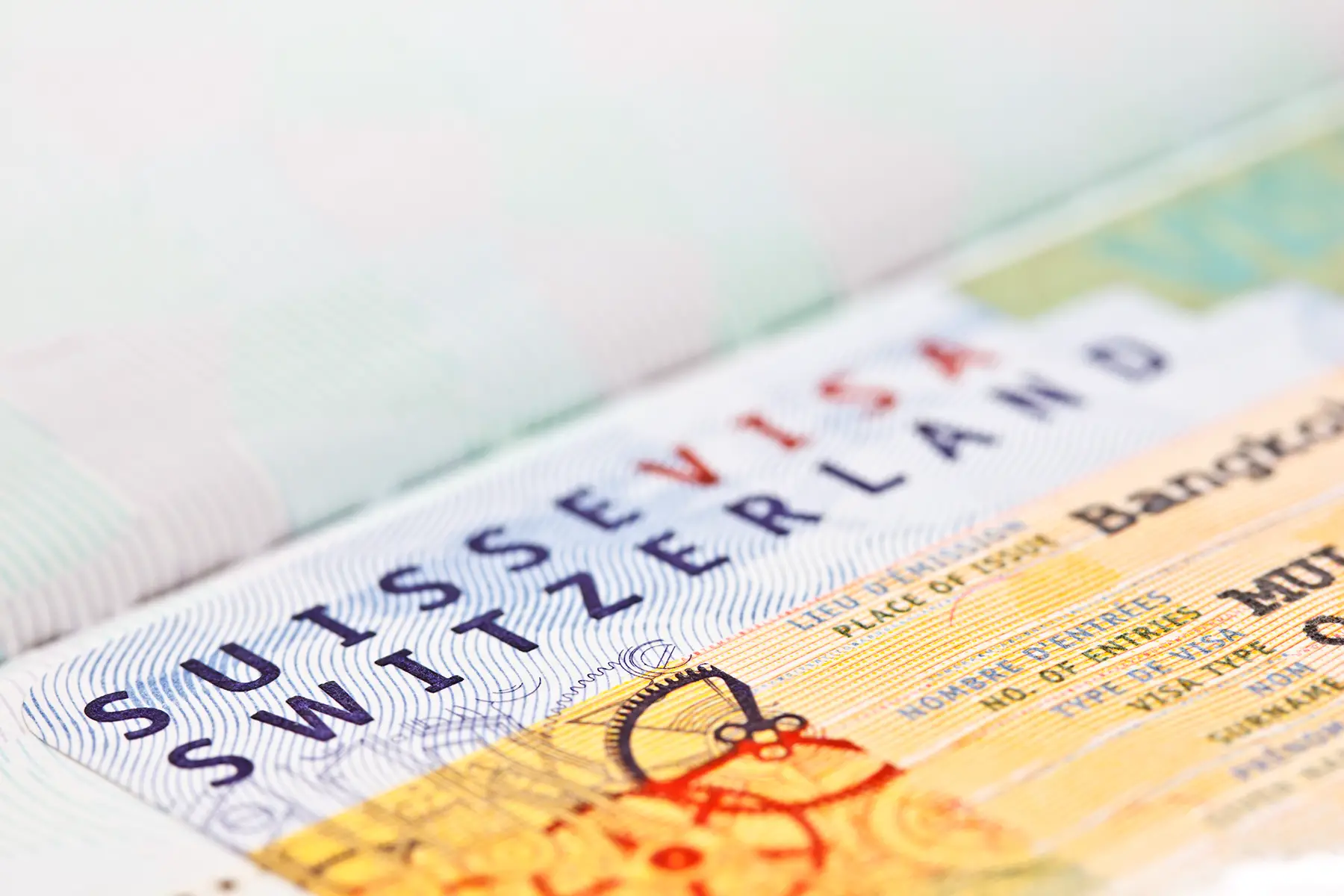
Switzerland is not an EU member, so work permit rules differ depending on your nationality. EU and EFTA (European Free Trade Association) nationals benefit from the Agreement on the Free Movement of Persons, making permits relatively straightforward. Non-EU and non-EFTA nationals, including UK, US, Australian, and Canadian citizens, require employer sponsorship under a quota-based permit system. Places are limited and reserved primarily for managers, specialists, and other qualified professionals. You can check current requirements on the Swiss State Secretariat for Migration (SEM) website, which is the official government source for work permit information.
For a deeper look at the permit process, read our full guide:
A practical checklist before you apply:
- Relevant degree or professional qualification in your field
- Several years of experience at the appropriate level
- Fluent English (essential for most multinational roles)
- At least one Swiss national language (an advantage for most; required for some)
- Valid right to work in Switzerland, or EU/EFTA nationality
Working at an international company in Switzerland: what to expect
Swiss salaries are consistently among the highest in the world. The national median gross salary is around CHF 6,700 per month, while roles in finance, technology, and pharmaceuticals regularly go well above that. You can use our average salary in Switzerland guide to benchmark pay in your sector. However, the cost of living in Switzerland is also very high, particularly in Zurich and Geneva, which rank among the most expensive cities globally, so it is important to look at purchasing power rather than advertised salary figures alone.
Editor
Tarah Ren
Insider Tip
Don’t just look at the headline salary figure. Keep in mind that compulsory health insurance and high rent prices, especially in major cities, will take a significant chunk out of your monthly budget.
Day-to-day corporate life generally follows a standard Monday-to-Friday structure, with working hours at most large employers typically averaging 40 to 42 hours per week. Navigating Swiss employment law is straightforward for newcomers, as standard contracts at international firms are professionally managed and guarantee a minimum of four weeks of paid annual leave.
Your monthly payslip will reflect compulsory Swiss social contributions, which fund the country’s multi-pillar retirement system. These include AHV deductions for old-age and survivors’ insurance alongside BVG occupational pension contributions. Unlike systems where healthcare is tied to employment, health insurance is not provider-sponsored and must be set up independently by the resident. To help balance these logistics, many large corporate employers offer comprehensive relocation packages to assist expats with housing searches and family relocation logistics.
Once settled into a routine, managing money across borders becomes a main focus for international professionals. Frequently maintaining a bank account back home means you will likely need to send a portion of your CHF earnings abroad regularly to cover foreign mortgages, support family, or build up savings. Taking the time to calculate the true cost of those international transfers is a smart financial move before committing to any specific provider.
Manage your international finances in Switzerland with Wise

Earning in CHF while maintaining financial ties in another currency is one of the most common financial challenges for expats working at international companies in Switzerland.
When you send money internationally through a bank, the exchange rate applied often includes a mark-up compared to the mid-market rate (the neutral rate you would see on a currency search), which means you receive less in your home currency than the headline figures suggest.
Wise is a money transfer service that converts and sends money using the real, mid-market exchange rate, with a small, transparent fee shown clearly before you confirm. It supports CHF alongside 40+ other currencies, which makes it a practical choice for expats moving earnings between Switzerland and the UK, Europe, the US, or other home countries.
You can open a free Wise account and check the exact fees for your specific currency route on the Wise website before you send.
Frequently asked questions about international companies in Switzerland
Which city in Switzerland has the most international companies?
Zurich has the highest concentration of international companies, particularly in finance, consulting, and technology. Geneva is the second major hub and home to many pharmaceutical firms, major trading companies, and international organisations. Basel is the centre of Switzerland’s pharmaceutical industry, while Zug, though a small canton, is a significant draw for companies headquartered in Switzerland because of its low cantonal tax rate, particularly in commodities and fintech.
Do international companies in Switzerland work in English?
Most large international companies in Switzerland use English as their primary language for internal communications, management, and cross-border collaboration. However, this varies by location and sector. Pharmaceutical companies in Basel may operate largely in German day-to-day, while firms in Geneva often default to French. If you are looking for English-speaking companies in Switzerland, the major multinationals in Zurich and Geneva are your strongest starting point. Proficiency in at least one national language significantly broadens your options.
What is the biggest company headquartered in Switzerland?
By revenue, Glencore, headquartered in Baar in the canton of Zug, consistently ranks as Switzerland’s highest-placed company on the Fortune Global 500 and is the world’s largest commodities trader. By global brand recognition and employee count, Nestlé, headquartered in Vevey, is arguably the most internationally recognisable Swiss company, with more than 270,000 employees worldwide. In financial services, UBS is Switzerland’s largest bank, formed through the 1997 merger of Union Bank of Switzerland and Swiss Bank Corporation.
Can expats work in Switzerland without an EU/EEA passport?
Yes, but the process is more involved. EU and EEA nationals benefit from bilateral agreements that make work permits relatively accessible. Non-EU and non-EEA nationals, including British, American, and Australian citizens, need employer sponsorship under a quota-based system, with placements reserved primarily for specialist and management-level roles. Large international companies with established HR teams are generally the best-placed employers to support non-EU nationals through this process. Always verify current requirements with the Swiss State Secretariat for Migration.
How do I find jobs at international companies in Switzerland?
Most major employers post roles directly on their corporate careers pages. Jobs.ch is Switzerland’s leading general job platform and is available in English, German, and French. LinkedIn is widely used by Swiss recruiters, particularly at major multinationals. The Expatica job board for Switzerland lists roles at international and English-friendly employers. Networking is also highly valued in Swiss hiring culture, particularly in Zurich and Geneva, where many positions are filled through professional contacts.

Useful resources
The links below can help you research employers, check work permit requirements, or find jobs:
- Expatica job board Switzerland – Job listings at international and English-friendly companies in Switzerland
- Jobs.ch – Switzerland’s leading job platform, with English-language search filters
- LinkedIn Switzerland – Widely used by recruiters at major Swiss multinationals
- Swiss State Secretariat for Migration (SEM) – Official source for work permit requirements, quotas, and residency rules
- SECO economic outlook – Official Swiss government economic forecasts and labour market data
- Glassdoor Switzerland – Employee reviews and ratings for top Swiss employers
- SIX Swiss Exchange – For researching publicly listed Swiss companies


