
'%20id='ico-down'%20stroke='%23000000'%20stroke-width='1.5'%3e%3cg%20transform='translate(1092.250000,%20254.750000)'%3e%3cpolyline%20id='Path-2-Copy-4'%20transform='translate(5.500000,%202.750000)%20scale(1,%20-1)%20rotate(-180.000000)%20translate(-5.500000,%20-2.750000)%20'%20points='0%200%205.5%205.5%2011%200'%3e%3c/polyline%3e%3c/g%3e%3c/g%3e%3c/g%3e%3c/svg%3e)


Education
Children's Education
Secondary schools in Belgium
The local system may seem confusing, but help your family get top marks with our guide to secondary schools in Belgium.
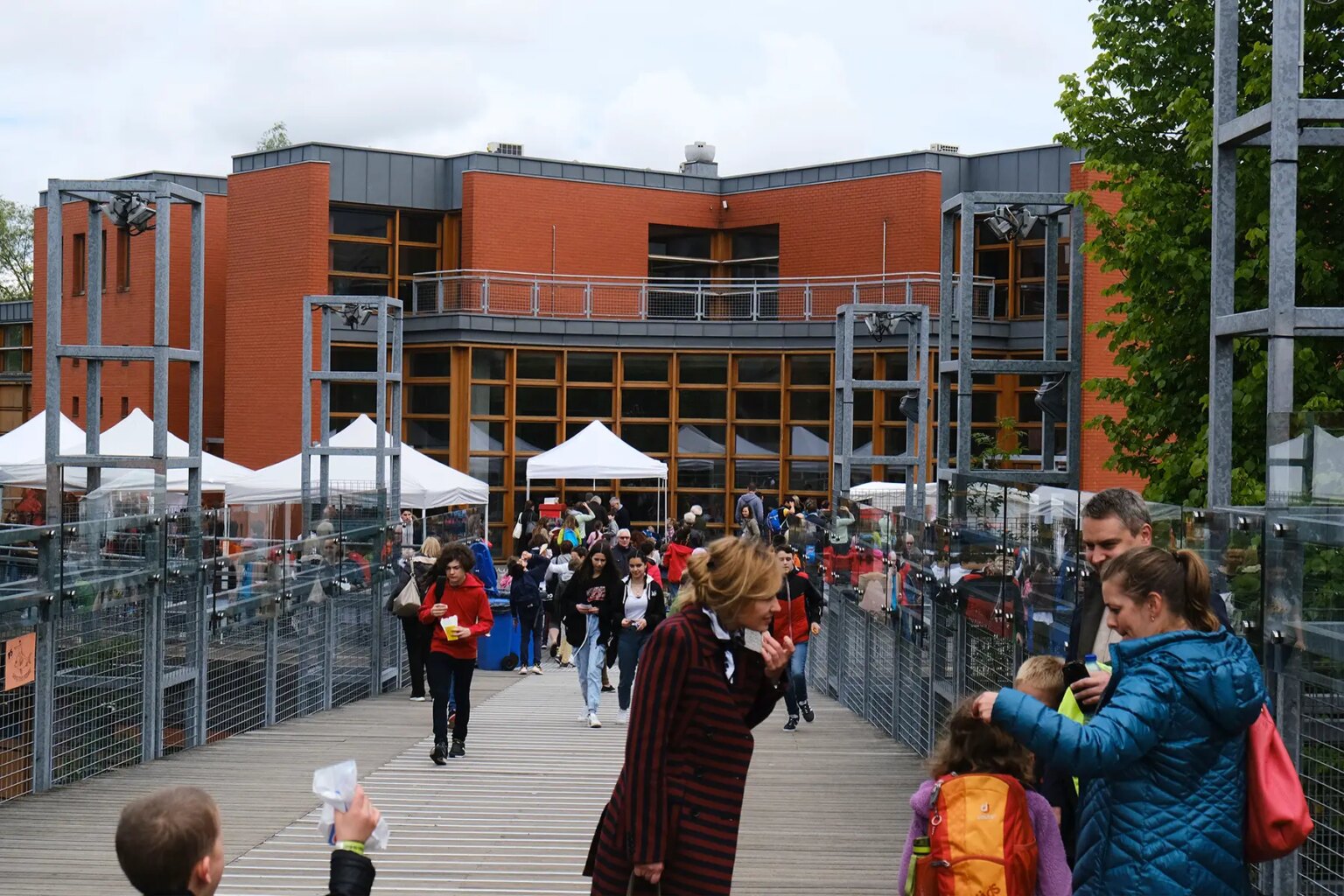
Secondary education in Belgium has four distinct streams: general, technical, vocational and artistic. As well as the different routes in state education, there are also many international schools, which offer globally recognized certificates of education.
This means, on the one hand, that there is something to suit every student’s interests and needs. On the other hand, so much choice makes it difficult to know where to start when picking a school. This guide will give you an overview of all the options available, as well as the necessary requirements.
Montgomery International School
Looking for high-quality English-language or bilingual education for your child in the heart of Brussels? Montgomery International School provides students aged five to 18 with a fully accredited program covering IB Diploma, Middle Years, and Primary Years. Give your child an international start in life with EIM.

The secondary education system in Belgium
Secondary education in Belgium – secundair onderwijs in Dutch; enseignement secondaire in French – is compulsory from ages 12 to 18. However, after age 16 students can opt to study part-time and undertake vocational or technical training.
Homeschooling is also legal in Belgium, although regulations can restrict your options.
State-funded secondary schools in Belgium
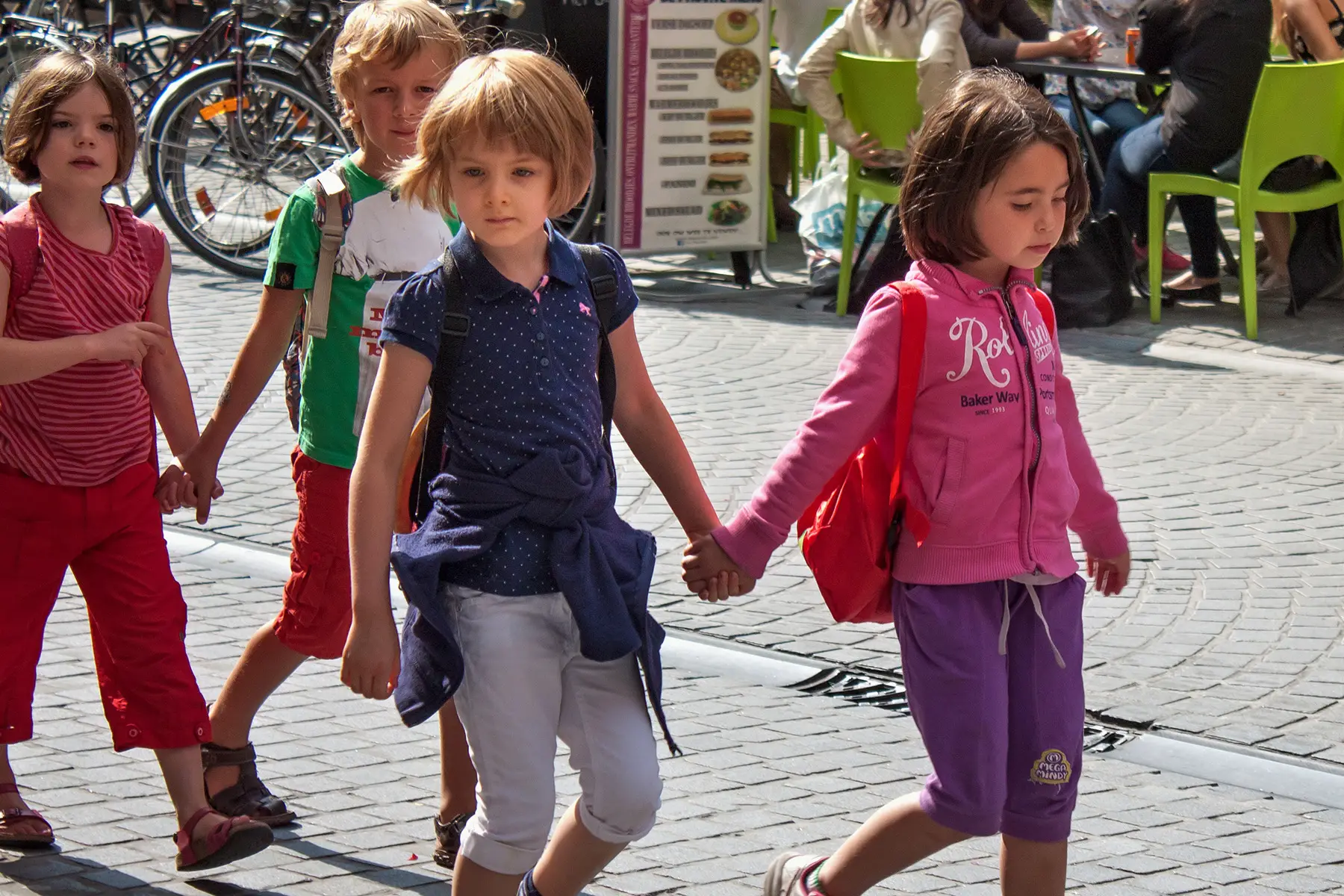
At first glance, what constitutes state education in Belgium is a bit confusing. Community education is the official equivalent of state education. However, subsidized public and private schools also come under municipal regulations – although these vary between communities. State funding, or funding by a religious organization in some cases, means that attending these schools is also free. Parents may also be expected to contribute to the price of textbooks and school trips.
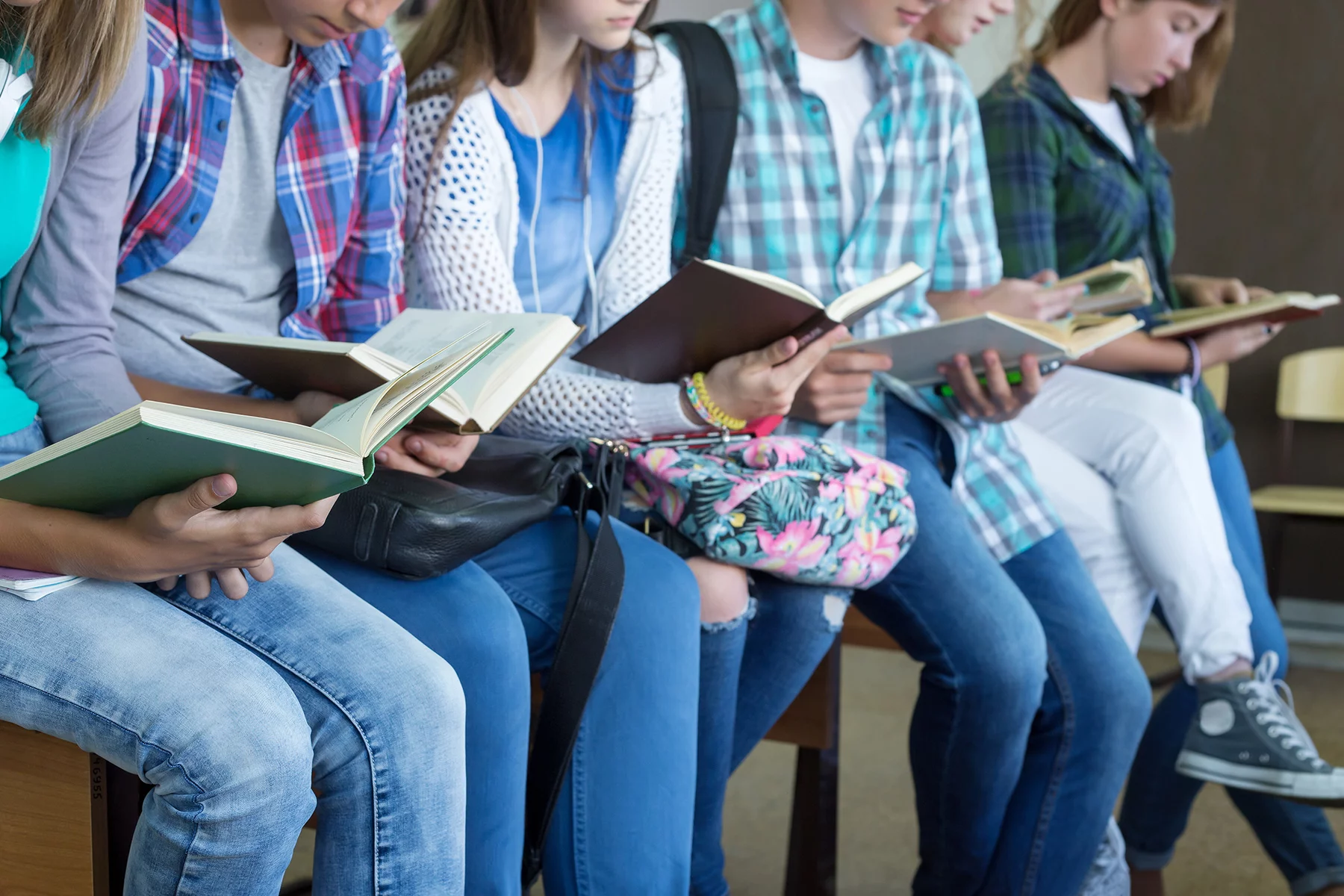
Education standards in Belgium are generally higher than the EU average. That said, the completion rate for the secondary education certificate is only 65%. Certain options are available for those who drop out of school, such as the Out of the Box school, a charity organization.
The school year begins in September and has five school holiday periods, with extra public holidays dotted throughout the year. The dates are the same across the three language communities. There are a number of lengthy holiday periods at Belgian schools, such as:
- Autumn holiday
- Christmas holiday
- Carnival/spring holiday
- Easter holiday
- Summer holiday (six weeks)

The curriculum in state secondary schools in Belgium
To begin, the secondary curriculum covers a broad range of subjects and includes compulsory ones like languages, mathematics, and science. Because of Belgium’s diverse population and multiple official languages, teaching is often bilingual.
As students progress, there are more options to choose subjects. All students follow one of four streams:
- General education: prepares students for the transition to higher education. It focuses on training theory and general knowledge.
- Technical education: similar to general education but focuses more on practice and technical teaching, preparing students for either a profession or further studies.
- Art education: organized in exactly the same way as technical education, but the elective options are within arts and non-technical subjects. Students can go on to higher education in either a specialized institution (e.g., art college) or to a university or college.
- Vocational education: provides direct access to a profession at the end of the course of study and focuses heavily on practice. Students also receive one or more additional years, called fourth degree.
For the vocational stream, an extra year is necessary to receive the certificate of secondary education. Some schools offer one particular stream, while others offer different sections for different streams.
In recent years, after an assessment of the level of physical activity in young people by the EU, action plans by each language community aim to offer more sports in schools.
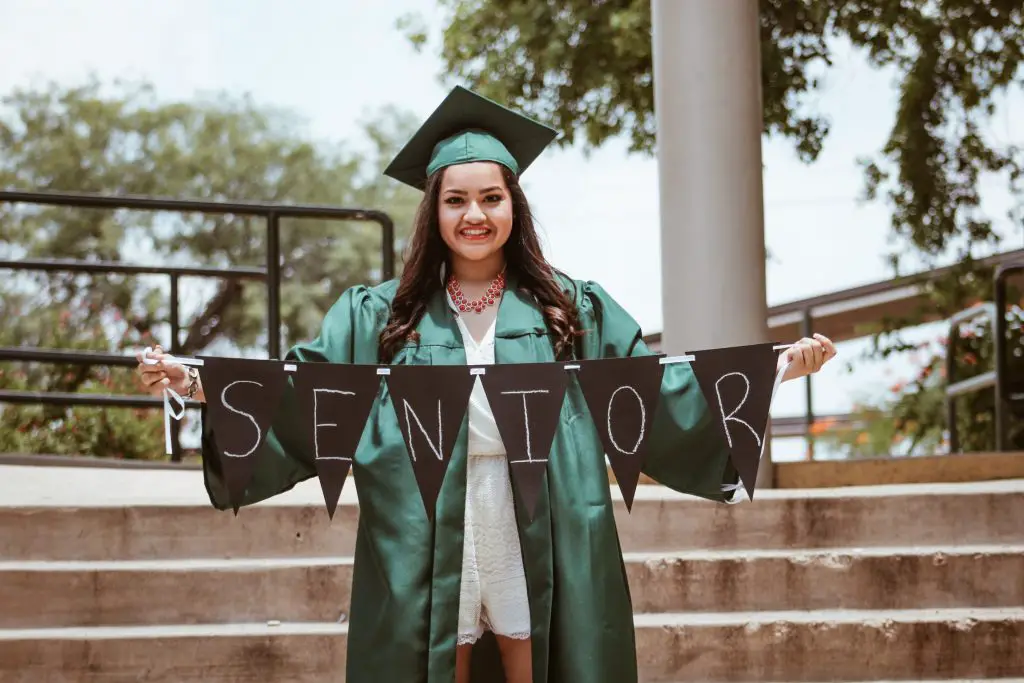
There is a strong focus on assessment in Belgian schools. Tests take place at the end of the year to check whether a student is ready to move up. At age 16, students can obtain a certificate of general lower education. Going forward, a certificate of secondary education – Diploma van Secundair Onderwijs (in Dutch) or Certificat d’Enseignement secondaire supérieur général, technique ou artistique (CESS) (in French) – is also awarded on completion of secondary education.
Applying to state schools in Belgium
Firstly, all children living in Belgium must be enrolled within the first 60 days of their registration in the municipality. The documents you will need to enroll include:
- proof of identity
- a residence permit for Belgium (if applicable)
- proof of vaccinations in Belgium
- proof of address
- any previous academic records
Because the registration system does not work on catchment areas, students are free to apply to register for any school. However, it can also mean that school places fill up quickly. Although it may seem extreme, registering interest in a school even a few years before is not uncommon.
Although acceptance to a state or subsidized school is non-selective, for students new to the country a language assessment may be required to ensure proficiency.
Students register through the education department of each community: Dutch, French, or German. Each has a different procedure, so check carefully what is necessary.
Pros and cons of state schools in Belgium
If you’re new to the Belgian education system, it can be tough to decide if state or subsidized secondary education is the right choice for your child. Here is a list of the main pros and cons of state-funded schools in Belgium:
Advantages
- Education is free and generally of a high standard
- The four different paths means students have a lot of choice in their education
- State education in Belgium has a strong focus on language-learning
- Children new to the country have more of an opportunity to integrate and make friends locally
Disadvantages
- Registration can be tricky and require years of planning for the most popular schools
- Belgian certificates of secondary education may not be recognized by universities worldwide
- Academic standards and facilities can also vary between schools
Private and international secondary schools in Belgium
In general, non-subsidized private schools in Belgium are not common. However, the exception to this is international schools, geared towards the large international population of Belgium. Certain international schools offer curriculums based on a specific national education system. Others offer globally recognized qualifications such as the European or International Baccalaureate.

Some of the most popular options include:
International Baccalaureate (IB) Schools
The IB is taught worldwide and higher education institutes worldwide recognize the diploma. IN secondary school students follow the Middle Years Program until age 16, and the Diploma or Careers Program until age 18. Schools offering the program in Belgium include BEPS International School.
For more information, visit our guide to the IB in Belgium.
British schools in Belgium
British schools follow a UK curriculum. Students study for GCSEs between 14 and 16 years, and AS and A-Levels between 16 and 18 years. Some British schools also offer the IB or the American High School Diploma.
American schools in Belgium
American schools follow a typical U.S curriculum. Studies lead to the American High School Diploma at age 18, with the chance for high-achieving students to obtain Advanced Placement certificates.
European schools in Belgium
European schools follow a curriculum overseen by the EU. Teaching has a strong focus on bilingualism and language immersion. Students also study for the European Baccalaureate between 16 and 18 years.
Method schools in Belgium
Most method schools only take children until age six or 12. However, there are a few that offer secondary education:
- Montessori: focuses on holistic development and independent learning. Most only offer education until primary school age, but the International Montessori School in Tervuren offers the IB for secondary school students. See all Montessori schools in our Directory.
- Decroly method: developed by a Belgian psychologist the principle of this method of teaching is formed around the idea that the interest of a child is essential in learning. École Decroly has over 1,000 students between 3 and 18 years old.
- Steiner method: puts the creativity and natural development at the center of learning. IATA in Namur offers secondary education.

Pros and cons of international schools in Belgium
Want to know if an international school would suit your child? Below is a list of some of the positive and negative factors that might be important when making a choice.
Advantages
- Students can obtain globally recognized qualifications
- Academic standards are usually high and class sizes are also small
- Schools often have better facilities and more opportunities for extracurricular activities and trips
- Students can follow a national curriculum that is familiar, and study in their own language
Disadvantages
- The costs can be very high, with schools charging up to €35,000 a year
- Location can be limiting, as most international schools are located in Brussels
- Students have less of a chance to integrate in Belgian culture and local languages
Vocational schools in Belgium
Because vocational education is one of the four main streams of Belgian education, there are lots of options for technical and vocational training. After age 16, students may combine a part-time study program that also has practical training or internships. In recent years, there are more options for work placements and apprenticeships contracts at secondary school. It is seen as a valid and popular alternative to preparing for higher education. In addition, a leaving certificate can be obtained in three years of study, paving the way for a degree in science or technology.
There are also training centers and technical institutes that function independently of a school. Here, students spent two days a week attending classes, and three days working at an enterprise. These centers are run by:
- Centre d’éducation et de formation en alternance (CEFA) in the French Community
- Centrum voor Deeltijds Onderwijs (CDO) in the Flemish Community
- Teilzeitunterichtszenter (TZUC) in the German-speaking Community
Vocational training in Belgium is state-funded and free for students. Options for enrolment change depending on age, however.
Useful resources
- Enseignement – French-language department for education
- Ostbelgien – German-language education portal
- Onderwijs – Flemish department for education

Did you find this guide helpful?