
'%20id='ico-down'%20stroke='%23000000'%20stroke-width='1.5'%3e%3cg%20transform='translate(1092.250000,%20254.750000)'%3e%3cpolyline%20id='Path-2-Copy-4'%20transform='translate(5.500000,%202.750000)%20scale(1,%20-1)%20rotate(-180.000000)%20translate(-5.500000,%20-2.750000)%20'%20points='0%200%205.5%205.5%2011%200'%3e%3c/polyline%3e%3c/g%3e%3c/g%3e%3c/g%3e%3c/svg%3e)


Living
House & Home
Supermarkets and grocery stores in the UK
Enjoying the taste of life in the UK? Find out how to bring those flavors home with our guide to supermarkets and grocery stores in the country.


Going to the grocery store will probably be one of the first things you do when you move to the UK. It’s one of the underrated pleasures of expat life. Faced with aisles and aisles of weird and wonderful foods, you soon remember that you’re not at home anymore.
When it comes to UK supermarkets, you will be pleasantly surprised. There is a good range of fresh produce and international foods to choose from wherever you are. To help you get more from your shopping basket, here’s our guide to everything you need to know about supermarkets and grocery stores in the UK. It includes the following information:
HelloFresh
Want to create some classic British dishes in your own kitchen? HelloFresh is a leading meal-kit provider that delivers innovative recipes from the UK and around the world straight to your doorstep. Choose from a range of recipes and let HelloFresh transform mealtime for you and your family.

Grocery shopping in the UK
Generally speaking, Brits buy their food at supermarkets. However, not all supermarkets offer the same range of products at the same price point, therefore, it’s important to do your research to find the right store for you in your local town or neighborhood.
If you don’t fancy browsing the aisles, there are alternatives. Food markets remain popular throughout the UK and there are plenty of online services that deliver groceries to your door. And if you don’t like cooking, you’ll find a selection of restaurants, take-outs, and pubs in towns and cities across the country.
Supermarkets in the UK
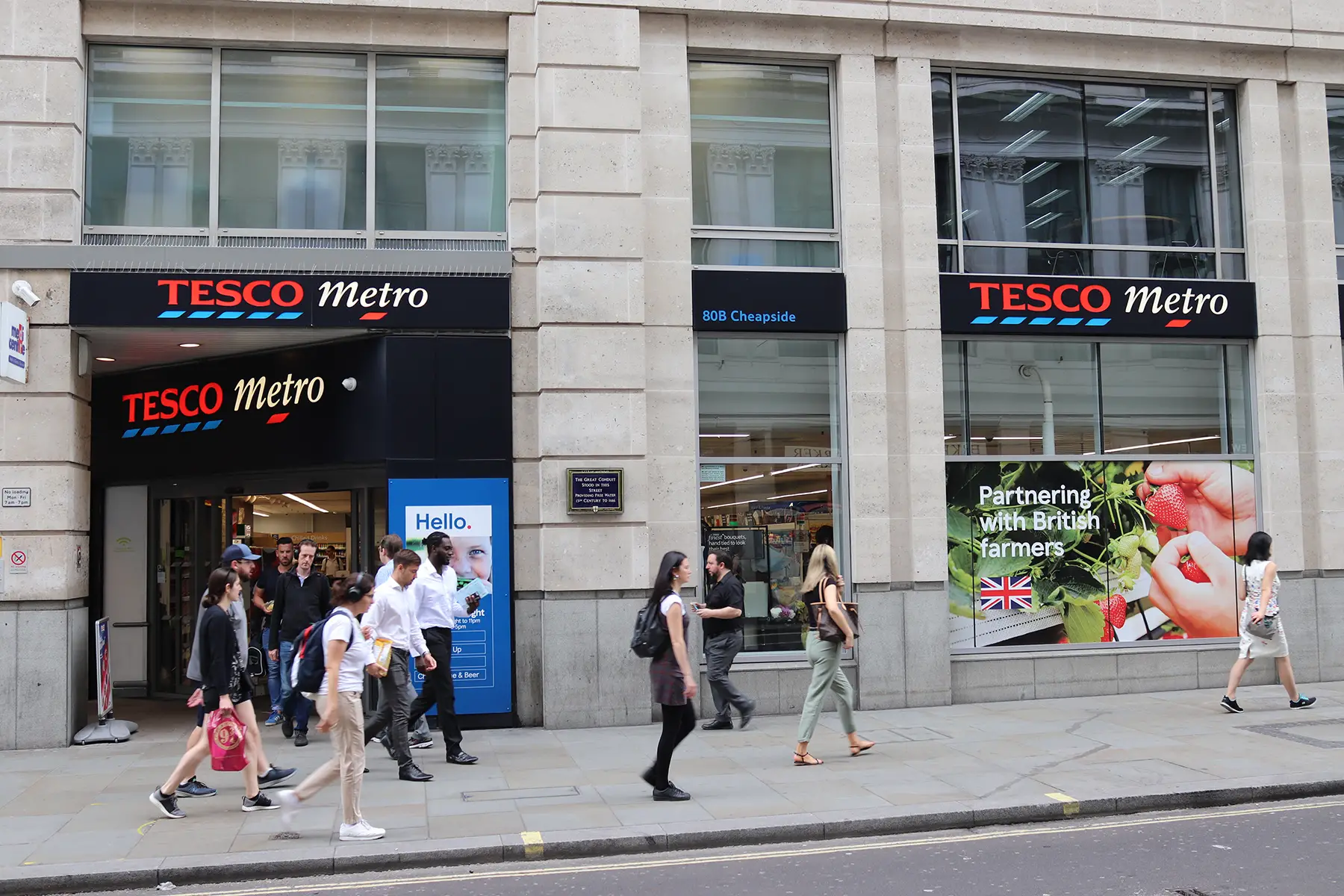
When it comes to UK supermarkets, location makes a difference. In large towns and cities such as London, Manchester, and Edinburgh, supermarkets are generally more centrally located and typically smaller. In less urban areas, however, they are often found on the edge of town and tend to be much bigger in size and product range.
If you live in a city, the limited size of the supermarkets can make it difficult to get hold of all the products you need. However, stores often vary their product line to some extent. This means that while you’ll be able to find most things you need in your neighborhood, you may need to shop around. What you pay at the checkout can also change significantly depending or where you live and where you shop. Some supermarket chains stock more premium product ranges than others, while city center stores are often slightly more expensive than their out-of-town cousins.
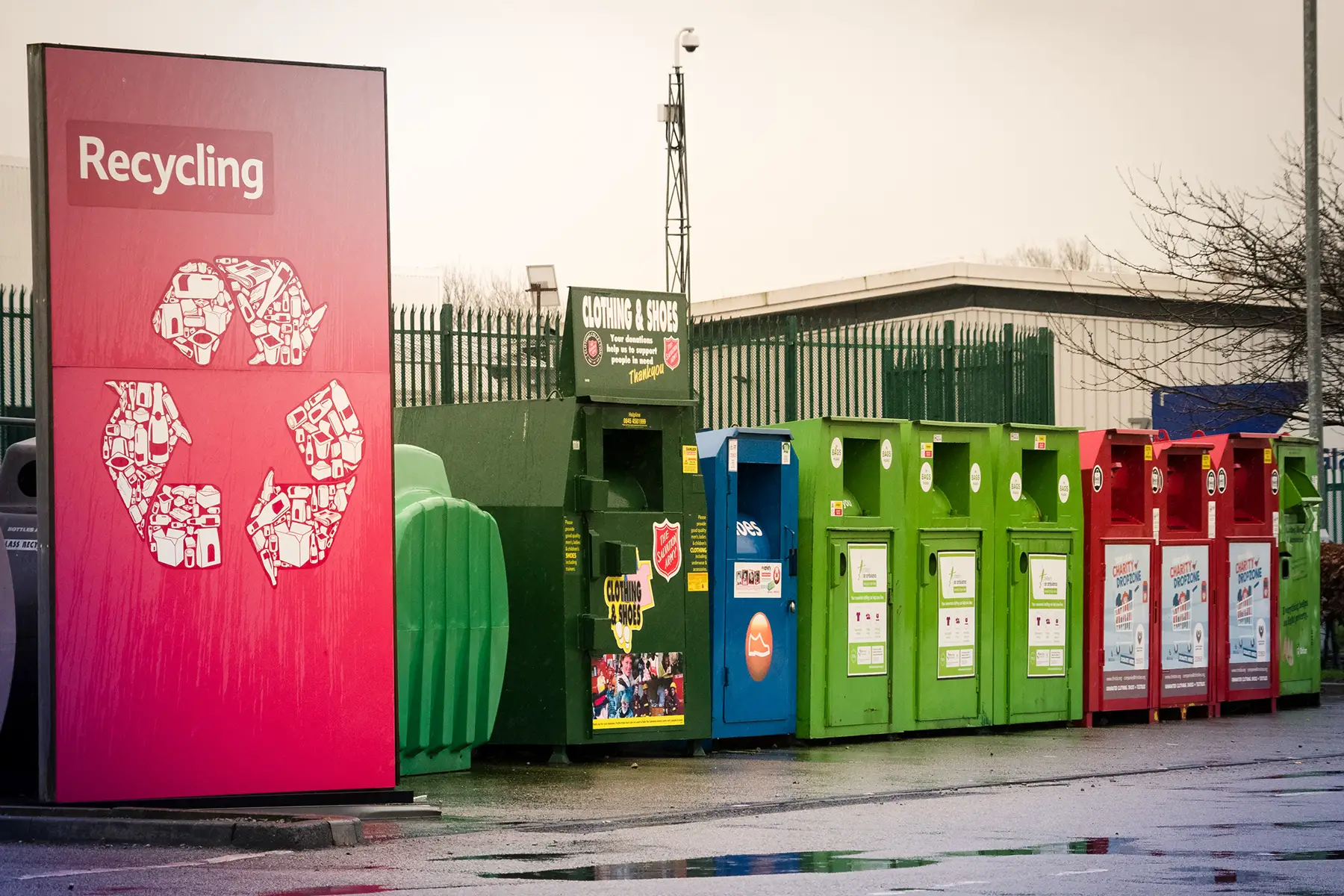
At larger, out-of-town supermarkets you’ll also find other local services and facilities. This can include opticians, pharmacies, and fuel stations, alongside other services like international money transfer and ATMs. Many larger supermarkets also have recycling centers in their car parks. Here, you’ll be able to recycle all manner of household items, including glass, clothing, and shoes. For more information, read our guide to recycling and garbage collection in the UK.
Supermarket chains in the UK
The UK has a number of supermarket chains. Most operate nationwide, however you’ll find some stores are more prominent in certain regions than others. However, stores are generally well-stocked with good quality fresh meat, dairy and produce, and dried groceries. Most also have in-store bakeries and in the larger out-of-town hypermarkets, you’ll also find clothing, homewares, and electronics. These chains include:
- Tesco: The UK’s largest supermarket chain has around 4,000 stores and a product range that focuses on price over quality. Their larger hypermarket format is called Tesco Extra, while city center stores are called Tesco Metro or Tesco Express.
- Sainsbury’s: Tesco’s biggest competitor has over 2,000 stores. You can expect to pay a little more but the products are of better quality. City center-based stores are called Sainsbury’s Local.
- Co-op Food: The country’s sixth-largest supermarket chain has more stores than any UK chain, with a big presence in rural areas. Their stores have premium product ranges, and customers can donate to local charitable causes with every shop if they become members of the ethical cooperative.
- Waitrose: The UK’s premium supermarket chain is historically found in city centers and affluent locations. It focuses heavily on the quality of products, although it’s often not as expensive as you might expect.
- Morrisons: The fourth-largest chain started life as a regional supermarket in Yorkshire. Stores focus on fresh produce and a market-style shopping experience at reasonable prices.
- ASDA: Another Yorkshire-based chain, ASDA is the UK’s third-largest supermarket. Focusing on low-price products and hypermarket-format stores, the retailer has a limited presence in London.
You’ll likely come across other supermarket chains in the UK, such as Budgens and Booths. These are often regional chains too.
Discount supermarket chains in the UK
Most UK grocery chains offer an own-brand no-frills product range in-store. However, if you’re looking for an even cheaper food shop, check out these discount retailers:
- Aldi: The German discounter is the UK’s fifth-largest chain, offering a no-frills shopping experience and cheaper products. Aldi stores are increasingly found in more central locations.
- Iceland: Historically focused on frozen goods, discounter Iceland offers an increasing range of dry and fresh products at cheap prices in stores across the country.
- Lidl: Another German retailer, Lidl has also taken the UK market by storm in recent years. A cheaper mix of fresh produce and non-food goods make these stores increasingly popular.
UK specialty supermarkets
If you’re looking for something a little more special from your grocery shopping, you can always try one of these specialty supermarkets:
- Marks & Spencer Foodhall: The internationally-renowned department store Marks & Spencer has always sold food alongside its fashion and homewares. In recent decades, the company has branched out into premium food-only stores, called M&S Foodhall.
- Whole Foods: US expats will be pleased to see Whole Foods on UK high streets. The organic retailer currently only has locations in London, although this may change in the coming years.
Supermarket opening times
UK opening times vary between supermarkets. Large, out-of-town hypermarkets are often open 24 hours while smaller city center locations are usually shut by 23:00. In smaller towns and villages, stores will generally close around 21:00.
Be aware that UK supermarkets over a certain size are only legally allowed to open for six hours on Sundays. This includes larger 24-hour hypermarkets, which close at midnight on Saturday and re-open at midnight on Sunday; to respect the law. Supermarkets can choose which six hours they want to open, although most will choose 10:00–16:00 or 11:00–17:00.
Things you need to know about grocery shopping in the UK
As an expat living in the UK, there are certain things you need to know before filling up your shopping cart. Here are some of them:
- Buy what you can carry: Many smaller supermarkets in cities like London and Manchester don’t have car parks and don’t provide shopping carts. Therefore, it pays to only buy what you can carry.
- There aren’t any shopping bags: Locals bring their own bags to the grocery store. However, you should be able to buy them at the register for less than 20 pence.

- Do it yourself: You won’t just have to pack your own food in the UK, you might have to scan it yourself, too. Self-checkouts are increasingly popular, particularly in smaller stores.
- Stock up for the holidays: Supermarkets are required by law to close on major public holidays, including Christmas Day, Boxing Day, and Easter Sunday. So check ahead to avoid disappointment.
- Loyalty pays: Most major supermarkets in the UK have a loyalty scheme. Some schemes are more complicated than others, but you can often get some great bargains both instore and elsewhere.
Grocery delivery services in the UK
If you are unable to get to the supermarket in person or prefer the convenience of home delivery, then you’re in luck. Most supermarkets offer home delivery services, including Tesco, Morrisons, and even Iceland. There are also online-only supermarkets, such as Ocado.
However, note that online delivery choices will be determined by your location. If delivery from one of the major stores or online-only supermarkets doesn’t work for you, due to order size or where you live, you still have options. For example, TaskRabbit has helpers you can book online to do your shopping and deliver your groceries.
Another popular choice for food delivery is meal-kit providers. These companies deliver pre-prepared meal kits to your front door, filled with seasonally fresh ingredients and recipes to create your own meals at home. Some UK meal-kit providers include:
Ethnic grocery stores in the UK
Another option for UK grocery shopping is ethnic supermarkets. There are plenty of these dotted across the country, particularly in larger towns and cities where there are more ethnically diverse populations. Many are Indian or Middle Eastern, but Chinese, Polish, and Japanese grocery stores can also be found in large cities and small market towns alike.
These shops are often popular with expats as they tend to stock a greater variety of international foods than the supermarket chains. The products are generally cheaper in these ethnic stores, although it’ll be more cost-effective to buy everyday items in chain supermarkets.
Food shopping at UK markets
If you prefer to get some fresh air with your groceries, there’s always the local market. Generally speaking, most towns will have a daily or weekly market where local producers sell fresh food and other goods. Some will be called farmer’s markets and will often draw sizeable crowds so arrive early.
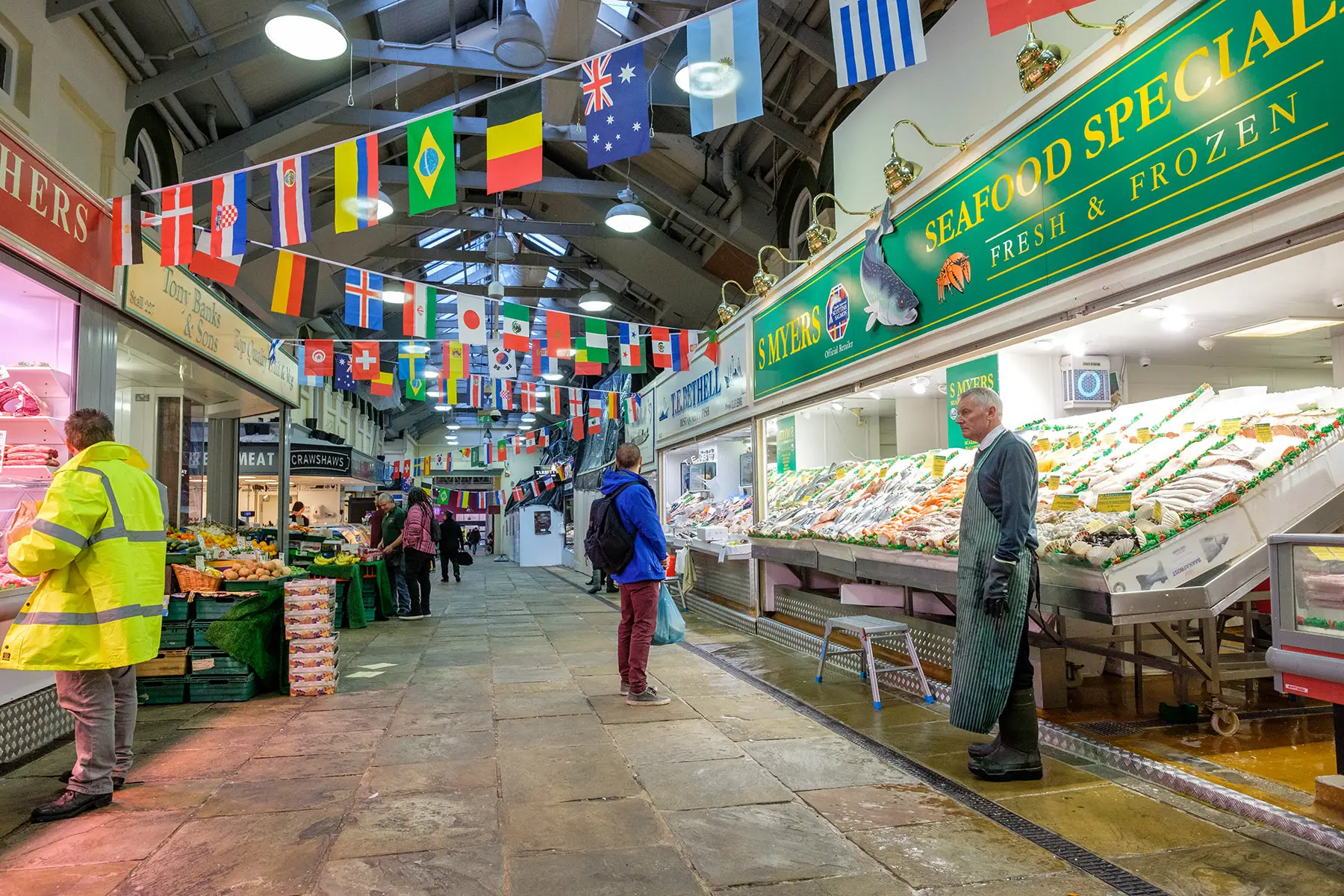
Bigger towns and cities will often have a large covered market. Here, market traders sell fresh meat, produce, and other foods every day. These are particularly popular in formerly industrial cities and are often significantly cheaper than the local supermarkets.
Specialty stores in the UK
Once upon a time, every market town in the UK would have a butcher, baker, and greengrocer on their main street. Following the explosion of out-of-town supermarkets across the country, however, these stores have been on the wane. Many smaller towns don’t have these shops at all anymore.
That said, in recent years there has been something of a renaissance in the UK’s specialty stores. In bigger towns and cities, you should be able to find local bakeries and butchers. Some will have their own stores on the high street while others can be found exclusively at weekly markets and online.
Convenience stores in the UK
Most neighborhoods and villages in the UK will have a convenience store, also known locally as a newsagent. These will sell newspapers, alcohol, cigarettes, and a limited range of essential everyday groceries. Most will have longer opening hours than the local supermarket although prices are usually higher.
Most of these convenience stores are independently run. However, some chains can be found across certain regions or nationwide. These include:
- Costcutter
- Londis
- One Stop
- Spar
- Tesco Express
Liquor stores in the UK
Unlike other countries, UK supermarkets are able to sell hard liquor alongside British beers, wine, and cider. This means that most people buy their alcohol with their weekly groceries, taking advantage of the special offers that are often available.
Because of this, liquor stores are not as common in the UK. However, you’ll still find plenty of wine merchants (selling only wine and some other drinks) in towns and cities. You’ll also find plenty of off-licenses, which are convenience stores that are licensed to sell alcohol. These stores will usually signpost the fact they sell alcohol outside the shop. In addition to this, there are an increasing number of online stores that sell alcohol, including:
Buying groceries from your home country
Missing food from home? Due to the UK’s multicultural nature, it’s fairly easy to get hold of food from around the world. This is particularly true in bigger cities like Liverpool, Glasgow, and London which have well-established ethnic communities.
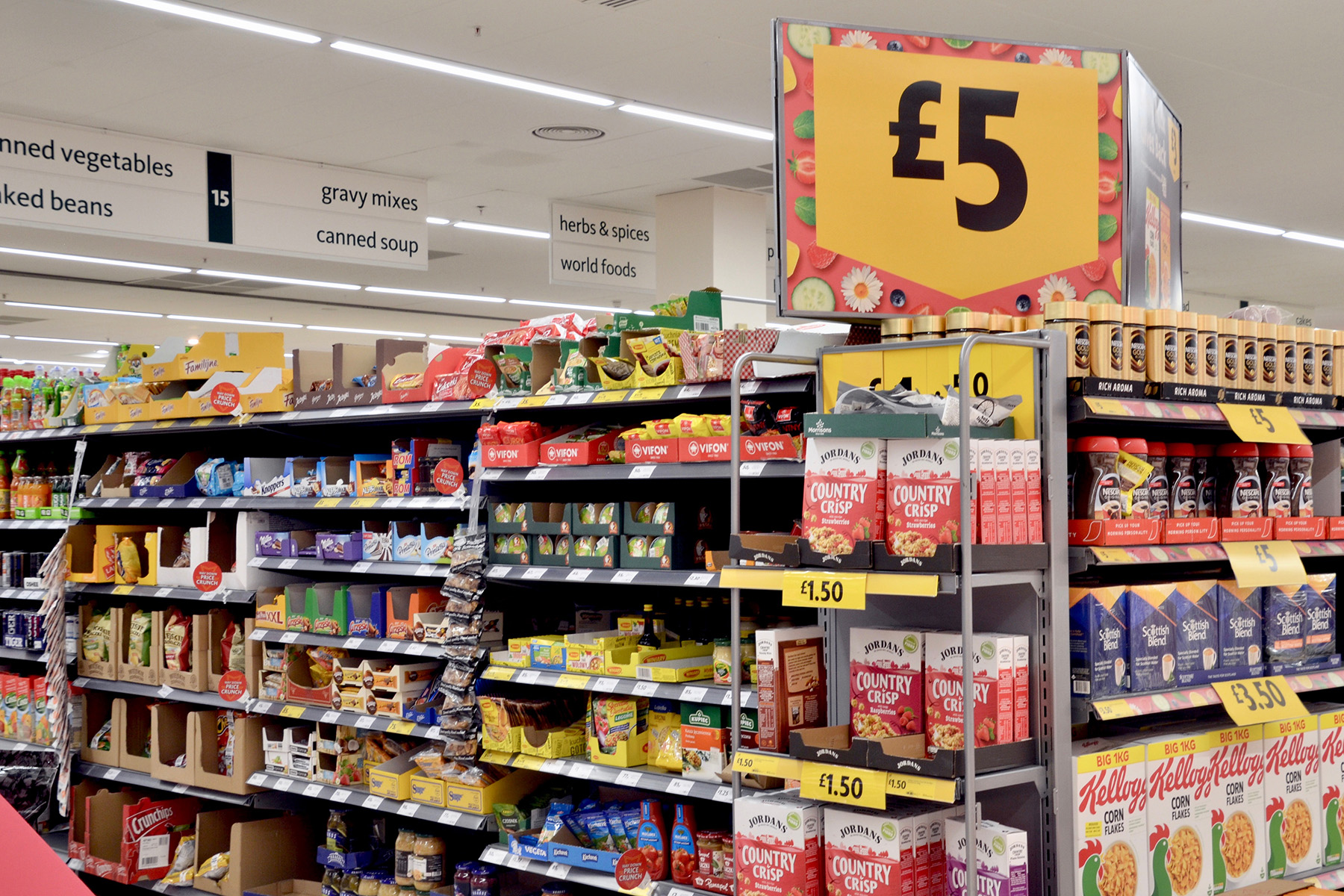
Most supermarkets in the UK will have a world foods section where you can pick up flavors from around the world. However, if that’s not enough there are also online grocery stores that can deliver your favorite foods internationally.


Did you find this guide helpful?