
'%20id='ico-down'%20stroke='%23000000'%20stroke-width='1.5'%3e%3cg%20transform='translate(1092.250000,%20254.750000)'%3e%3cpolyline%20id='Path-2-Copy-4'%20transform='translate(5.500000,%202.750000)%20scale(1,%20-1)%20rotate(-180.000000)%20translate(-5.500000,%20-2.750000)%20'%20points='0%200%205.5%205.5%2011%200'%3e%3c/polyline%3e%3c/g%3e%3c/g%3e%3c/g%3e%3c/svg%3e)



'%20fill='%23000000'%3e%3cg%20id='icons'%20transform='translate(56.000000,%20160.000000)'%3e%3cpath%20d='M144,7339%20L140,7339%20L140,7332.001%20C140,7330.081%20139.153,7329.01%20137.634,7329.01%20C135.981,7329.01%20135,7330.126%20135,7332.001%20L135,7339%20L131,7339%20L131,7326%20L135,7326%20L135,7327.462%20C135,7327.462%20136.255,7325.26%20139.083,7325.26%20C141.912,7325.26%20144,7326.986%20144,7330.558%20L144,7339%20L144,7339%20Z%20M126.442,7323.921%20C125.093,7323.921%20124,7322.819%20124,7321.46%20C124,7320.102%20125.093,7319%20126.442,7319%20C127.79,7319%20128.883,7320.102%20128.883,7321.46%20C128.884,7322.819%20127.79,7323.921%20126.442,7323.921%20L126.442,7323.921%20Z%20M124,7339%20L129,7339%20L129,7326%20L124,7326%20L124,7339%20Z'%20id='linkedin-[%23161]'%3e%3c/path%3e%3c/g%3e%3c/g%3e%3c/g%3e%3c/svg%3e)
'%20fill='%23000000'%3e%3cg%20id='icons'%20transform='translate(56.000000,%20160.000000)'%3e%3cpath%20d='M335.821282,7259%20L335.821282,7250%20L338.553693,7250%20L339,7246%20L335.821282,7246%20L335.821282,7244.052%20C335.821282,7243.022%20335.847593,7242%20337.286884,7242%20L338.744689,7242%20L338.744689,7239.14%20C338.744689,7239.097%20337.492497,7239%20336.225687,7239%20C333.580004,7239%20331.923407,7240.657%20331.923407,7243.7%20L331.923407,7246%20L329,7246%20L329,7250%20L331.923407,7250%20L331.923407,7259%20L335.821282,7259%20Z'%20id='facebook-[%23176]'%3e%3c/path%3e%3c/g%3e%3c/g%3e%3c/g%3e%3c/svg%3e)

Table of contents
- Key takeaways
- Before you invest in stocks
- Choose the right account in the UK
- Pick an FCA-authorised investment platform
- Decide what to buy
- How to buy your first stock in the UK
- Understand the main UK costs and taxes
- How to invest safely and avoid common mistakes
- Manage international investing and currency conversion costs
This article is for general information only and is not financial, tax, or legal advice. Your capital is at risk, and past performance is not a reliable indicator of future results.
Key takeaways
| Account or check | Main benefit | Main downside | Who it suits |
|---|---|---|---|
| Stocks and shares ISA | UK tax advantages on investments held inside the wrapper | You must be ISA-eligible and the annual limit applies | UK residents who are eligible for an ISA |
| General investment account | Flexible, with no ISA subscription limit | Gains and dividends may be taxable | People who have used their ISA allowance or are not ISA-eligible |
| FCA-authorised platform | Helps you verify regulatory status and permissions | It does not protect you from market losses | Everyone opening a UK investment account |
| Diversified funds or ETFs | Broad exposure in one purchase | You still face market risk | Beginners who do not want to pick individual shares |
| Overseas share investing | Access to US and EU markets | FX fees can raise your real cost | Expats and internationally focused investors |
This comparison is a general overview. Eligibility, tax treatment, platform features, fees, and protection depend on your circumstances and the provider’s current terms.
A cautious starting point is to invest only money you can leave untouched for years, use an FCA-authorised firm, and check total costs rather than headline dealing fees. A stocks and shares ISA may be preferable if you are eligible and want UK tax efficiency, while a general investment account can make sense if you are not ISA-eligible or need more flexibility. Tax treatment depends on your individual circumstances, including tax residency.
Before you invest in stocks
Not everyone searching this topic is ready to buy a stock today. Wanting to start and being financially ready to start are not the same thing.
Check your time horizon, emergency fund, and debts
Stock investing is usually better suited to money you can leave alone for at least five years. If you may need the money for rent, visa costs, school fees, or a house deposit soon, cash savings may be more appropriate.
Use this quick check before you begin:
- Do you have an emergency fund for unexpected costs?
- Are you carrying expensive debt, such as high-interest credit card debt?
- Could you need this money in the next few years?
- If most of your monthly costs are in the UK, do you have a GBP cash buffer first?
For expats, that last point matters. If your salary, rent, and bills are in pounds sterling, keeping a GBP safety buffer can help you avoid selling investments at the wrong time.
Decide whether individual shares or funds suit you better
A single share means you own part of one company. A fund, or an ETF, pools money into many investments, so one weak company has less impact on your whole portfolio.
This is different from trying to find the next winning stock. For many beginners, broader exposure is simpler because it spreads risk and reduces the pressure to monitor one company closely. If you want to learn how markets work without making stock picking your main project, funds can be easier to manage than a small basket of individual shares.
Choose the right account in the UK
Before you compare apps or platforms, decide which account type fits your situation. The account determines how your investments are held and how UK tax rules may apply.
| Feature | Stocks and shares ISA | General investment account |
|---|---|---|
| Tax treatment | No UK tax on ISA income or capital gains | Tax may apply on dividends and gains |
| Annual limit | ISA allowance applies | No ISA subscription limit |
| Eligibility | Usually UK residents aged 18 or over | Broader availability, depending on the provider |
| Flexibility | Tax-efficient wrapper within ISA rules | Flexible for investing beyond ISA limits |
| Common use | Tax-efficient long-term investing | Extra investing once ISA space is used |
ISA rules and tax treatment can change and depend on your residence status and circumstances. Check current GOV.UK guidance and the provider’s eligibility rules before opening or funding an account.
Stocks and shares ISA vs general investment account
A stocks and shares ISA is a tax wrapper. GOV.UK states that the annual ISA allowance is £20,000 for the 2026 to 2027 tax year and that adults aged 18 or over who are resident in the UK can generally open an ISA, subject to the rules and provider checks: Individual Savings Accounts (ISAs).
A stocks and shares ISA may be more tax-efficient, but only if you are eligible and the provider accepts you. A general investment account has no ISA subscription cap, so it can still be useful if you have already used your ISA limit or cannot open an ISA. ISA rules and limits were last checked on 15 July 2026.
What expats in the UK should check first
If you are an expat, check your UK tax residency, ISA eligibility, and the platform’s identity requirements before starting an application. Providers may ask for proof of UK address, photo ID, and tax details linked to your home country or another jurisdiction.
Also check whether the platform accepts your nationality, visa status, and overseas tax profile. This matters particularly for people with US tax obligations or recent international moves.
Pick an FCA-authorised investment platform
If you are unsure which platform to use, start with a shortlist based on practical needs rather than adverts. The key question is not which platform looks cheapest at first glance, but which one matches the way you plan to invest.
| What to compare | Why it matters | What to check |
|---|---|---|
| Markets and products | Not all platforms offer the same shares, ETFs, or funds | UK, US, or EU access and ISA support |
| Costs | Total cost can sit across several charges | Platform, dealing, FX, and other fees |
| Ease of use | Beginners often need a clear interface | App quality, education tools, and plain-language order screens |
| Minimums and features | Entry rules vary | Minimum deposit, regular investing, and fractional share availability |
Platform products, charges, minimums, and features may change. Confirm the details on each provider’s official website before opening an account or placing a trade.
Before funding any account, use the FCA Firm Checker to confirm that the firm is authorised and has permission for the service being offered.
How platform fees, FX fees, and share dealing fees work
UK share dealing fees are rarely just one number. Check these cost buckets:
- Platform fee: a regular charge for holding your account
- Dealing fee: what you pay when you buy or sell
- FX fee: what you pay when buying overseas shares in another currency
- Other charges: custody, inactivity, transfer, or withdrawal fees where relevant
Always compare the provider’s published charges page, not just the homepage. For example, a £1,000 purchase of existing UK shares may include a dealing fee plus 0.5% Stamp Duty Reserve Tax. Foreign shares bought outside the UK do not normally incur UK Stamp Duty or SDRT, although dealing fees, currency conversion charges, and other taxes may still apply.
Currency costs can sit outside the broker’s headline dealing fee. If you expect to move money across currencies, Expatica’s Wise review explains one option for managing exchange costs alongside broader cross-border finances.
Where Interactive Brokers may fit
Interactive Brokers is one factual example to compare if you want access to multiple markets, research tools, and international investing features. Its UK site offers stocks and shares ISA access and broad global market access, but you should verify current pricing, account terms, and permissions before opening an account.
Complete beginners may prefer a simpler interface, depending on how hands-on they want to be. If you compare Interactive Brokers with a more basic platform, focus on how much market access you need, whether you want advanced tools now, and whether the fee structure still makes sense for small first trades.
Decide what to buy
Many people say they want to invest in stocks when they really mean they want to start investing. Before you place an order, make sure you understand what sits behind the label on screen.

UK shares, US shares, ETFs, and index funds
Buying a UK share means buying part of one listed company, often in GBP. Buying a US share involves the same basic ownership idea, but it usually adds currency conversion and may involve different tax paperwork depending on the platform and your profile.
ETFs and index funds bundle many holdings together. That can make investing simpler for beginners because one purchase can spread money across a market or sector instead of relying on one company. Before you press buy, compare what you are buying, the market it trades on, the currency it uses, and whether your chosen platform supports fractional shares.
How diversification lowers risk
Diversification means not putting all your money into one company, one market, or one theme. If one part performs badly, the whole portfolio may be less affected because other holdings may behave differently.
A common beginner mistake is concentrating too much money in a few familiar names. The risk is not only market volatility, but being wrong in a very narrow way. That is one reason many new investors start with broader exposure rather than building a small stock list from scratch.
How to buy your first stock in the UK
Once you have chosen an account and a platform, the process is usually straightforward. Keep it simple, slow down before confirming anything, and make sure you understand the fees shown on screen.
- Open the account: complete the platform’s identity and tax checks.
- Add money: fund the account using a supported method.
- Find the investment: search for the share, ETF, or fund you want.
- Review the details: check the listing, price, currency, and fees.
- Enter the order: choose a cash amount or number of shares, where supported.
- Confirm and record it: place the order and keep the trade confirmation.

Open and verify your account
Most platforms ask for your legal name, date of birth, address, National Insurance number in some cases, and tax information. You will usually need photo ID and proof of address, and some firms may ask extra questions if you are new to the UK.
Before sending money, confirm the firm on the FCA Firm Checker. If you are funding from a UK current account with Barclays, Lloyds Bank, HSBC, or another local bank, check the receiving account name carefully so you do not send money to the wrong place.
Add money and place your first trade
Funding is often done by bank transfer or debit card, although costs and speed vary by platform. If you are setting up from scratch, the guide below explains the UK banking system and the usual options for expats.
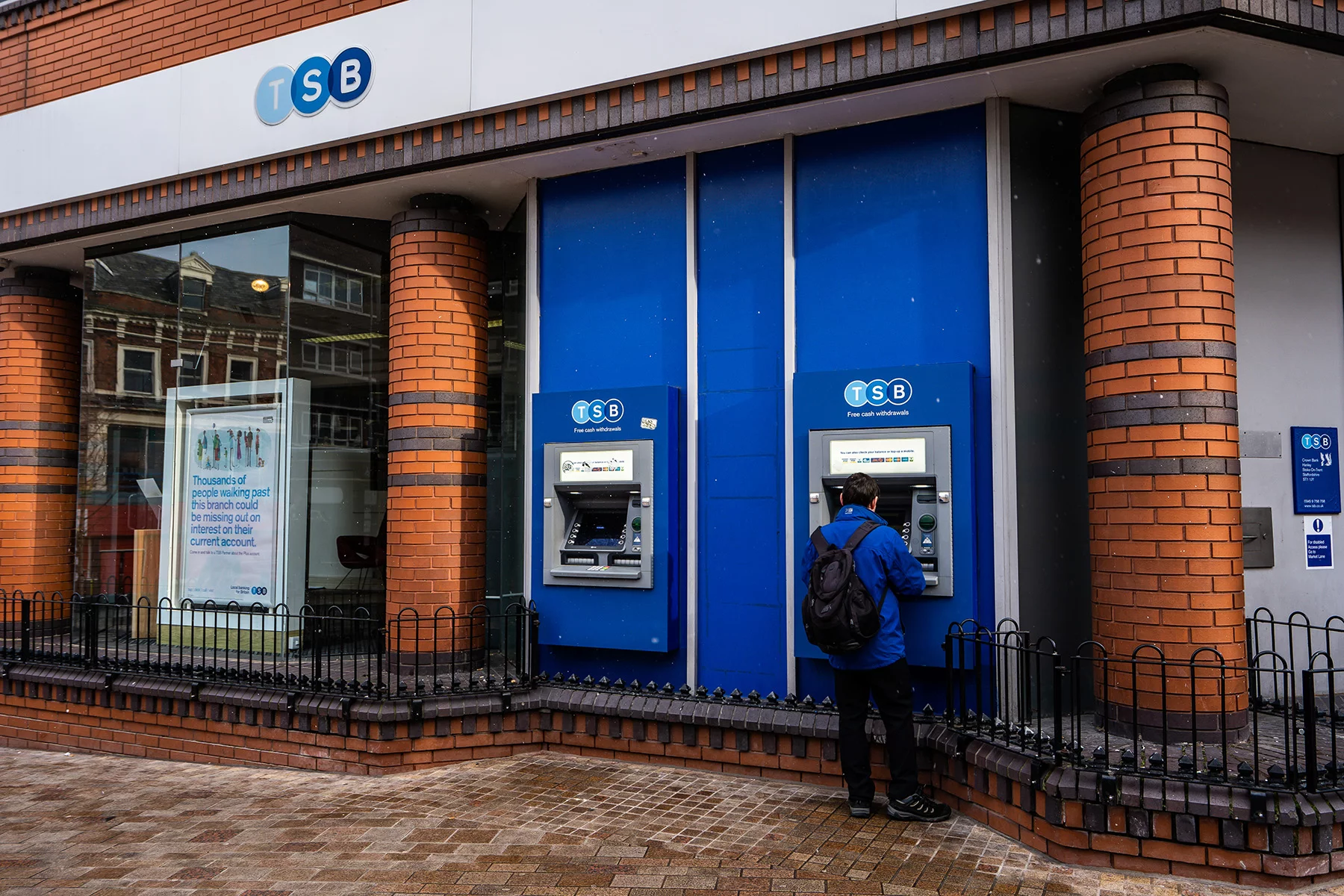
After funding, search for the investment you want and check the listing carefully. Some platforms let you buy a cash amount, while others ask for a number of shares. Buying by value can help if the share price is high and fractional investing is supported. Keep things simple and do not use advanced order types unless you understand the specific problem they are intended to solve.
Monitor your portfolio without overtrading
After your first trade, review the confirmation, note the fees paid, and keep a record for tax purposes. Checking too often can push beginners into unnecessary trading.
A simple review checklist is enough for many people:
- Review holdings on a set schedule, such as monthly or quarterly.
- Check whether fees match what you expected.
- Update records after buys and sells.
- Avoid reacting to every short-term price move.
Understand the main UK costs and taxes
Costs and taxes can shape your outcome as much as investment performance, especially when you start small. The tax figures and rules below were last checked on 15 July 2026, but you should verify them again before acting because rules can change and your tax residency matters.
For a broader overview, see Expatica’s guide to the UK tax system.
Share dealing charges, platform fees, and Stamp Duty Reserve Tax
When you buy shares in the UK, the main direct costs can include:
- Platform fees for holding your account.
- Dealing charges when you buy or sell.
- FX fees on overseas investments.
- Stamp Duty Reserve Tax on many UK share purchases.
HMRC says you usually pay tax or duty of 0.5% when buying shares, with SDRT applying to many electronic UK share purchases: Tax when you buy shares. New share issues and many foreign shares bought outside the UK can be treated differently, so check the instrument you are actually buying.
Dividend tax and Capital Gains Tax
Dividend tax can apply to shares held outside an ISA once your dividend income rises above the allowance. GOV.UK states that the dividend allowance is £500 for the 2026 to 2027 tax year and that rates above the allowance depend on your tax band: Tax on dividends.
Capital Gains Tax may also apply when you sell shares outside an ISA and make gains above the relevant allowance. Gains on investments held inside an ISA are generally outside Capital Gains Tax. Your total income, gains, tax residency, and individual circumstances affect what you may owe.

How to invest safely and avoid common mistakes
Safety starts with process, not with trying to predict which share will rise next. If something feels rushed, overly certain, or hard to verify, stop and check it.
How to check the FCA Firm Checker and what FSCS protection means
Use this checklist before opening or funding an account:
- Search the firm name on the FCA Firm Checker.
- Confirm that it has permission for the service you want.
- Match the contact details against the FCA record.
- Avoid replying to unexpected messages without checking them independently.
- Read what protection does and does not cover.
FCA authorisation helps you confirm a firm’s regulatory status and permissions, but it does not protect you from losses if an investment falls in value. FSCS protection may apply in some firm-failure scenarios depending on the provider, product, and circumstances, but it is not protection against market losses.
Common beginner mistakes and how to avoid them
Common mistakes include:
- Investing money you may need soon.
- Chasing fashionable shares after big price moves.
- Ignoring UK share dealing fees.
- Skipping diversification.
- Buying overseas shares without checking FX costs.
- Assuming ISA eligibility or tax treatment after moving to the UK.
For scam awareness, read the FCA’s warning signs on online trading scams. Pressure, unrealistic promises, and unsolicited contact are all reasons to slow down.
Manage international investing and currency conversion costs
This is where many expats underestimate cost. If you buy overseas shares, the investment itself may perform well while currency conversion quietly reduces your return.
When FX fees matter for expats buying overseas shares
If you buy a US- or EU-listed share from the UK, you may pay a separate FX fee on top of the broker’s dealing fee. Your real entry cost can therefore be higher than the trade ticket first suggests.
A provider may charge a dealing fee plus a currency conversion fee for a US-listed share. If the investment value stays flat, those trading and FX costs still reduce your overall result. Expats comparing overseas markets should separate investment performance from money movement costs.

How a Wise account can fit into cross-border money management
If you earn, save, or spend in more than one currency, a Wise account can help with the cash-management side of cross-border finances. It may be useful for holding and converting money when moving funds between currencies for broader international money management.
The Wise account mentioned here is for holding and converting money across currencies rather than buying the investments discussed in this guide. Wise does not provide investment advice, and using the account does not remove market or currency risk.
Wise for managing money across currencies
A Wise account can help you hold and convert money when managing cash across currencies alongside overseas investing.

Conclusion
Starting to invest in UK stocks is mainly a question of preparation rather than finding a perfect first share. Check that you can leave the money invested, choose an account that fits your eligibility and tax position, and use an FCA-authorised platform whose total fees you understand. Diversification can reduce concentration risk, while overseas investing requires extra attention to FX costs. Recheck current tax rules, platform terms, and protection details before opening an account or placing a trade.
FAQ
Investing in stocks in the UK
Can non-UK citizens invest in stocks in the UK? 
Whether you can open an investment account depends on the provider’s eligibility rules, your residence and tax status, the account type, and the identity information you can provide. Check the platform’s requirements before applying.
Is a stocks and shares ISA better than a general investment account?
It depends on your eligibility, tax position, and need for flexibility. An ISA can provide UK tax advantages within its rules, while a general investment account may be useful if you cannot open an ISA or have used your allowance.
How much money do I need to start investing in UK shares?
The minimum depends on the platform, the investment, and whether fractional shares are available. More importantly, use money you do not expect to need soon and keep an emergency cash buffer.
Do I pay tax when I buy or sell shares in the UK?
You may pay SDRT on many UK share purchases, dividend tax on income outside an ISA, and Capital Gains Tax on taxable gains outside an ISA. The result depends on the investment, allowances, income, gains, and tax residency.
What is the safest way to start investing in stocks in the UK?
Use an FCA-authorised platform, understand the total fees, diversify rather than relying on one share, avoid pressure or unrealistic promises, and invest only money you can leave untouched for several years.
Sources
- Financial Conduct Authority: FCA Firm Checker and firm permissions, checked on 15 July 2026.
- Financial Conduct Authority: online trading scam warning signs, checked on 15 July 2026.
- GOV.UK: Individual Savings Accounts, allowance, eligibility, and tax treatment, checked on 15 July 2026.
- GOV.UK: tax and duty when buying shares, checked on 15 July 2026.
- GOV.UK: dividend allowance and tax guidance, checked on 15 July 2026.
- GOV.UK: Capital Gains Tax treatment and ISA exclusions, checked on 15 July 2026.
- Financial Services Compensation Scheme: scope of protection when authorised financial firms fail, checked on 15 July 2026.
- Interactive Brokers U.K. Limited: stocks and shares ISA information, checked on 15 July 2026.
- Financial Services Compensation Scheme: investment protection, eligibility, compensation limits, and exclusions, checked on 15 July 2026.


