
'%20id='ico-down'%20stroke='%23000000'%20stroke-width='1.5'%3e%3cg%20transform='translate(1092.250000,%20254.750000)'%3e%3cpolyline%20id='Path-2-Copy-4'%20transform='translate(5.500000,%202.750000)%20scale(1,%20-1)%20rotate(-180.000000)%20translate(-5.500000,%20-2.750000)%20'%20points='0%200%205.5%205.5%2011%200'%3e%3c/polyline%3e%3c/g%3e%3c/g%3e%3c/g%3e%3c/svg%3e)



'%20fill='%23000000'%3e%3cg%20id='icons'%20transform='translate(56.000000,%20160.000000)'%3e%3cpath%20d='M144,7339%20L140,7339%20L140,7332.001%20C140,7330.081%20139.153,7329.01%20137.634,7329.01%20C135.981,7329.01%20135,7330.126%20135,7332.001%20L135,7339%20L131,7339%20L131,7326%20L135,7326%20L135,7327.462%20C135,7327.462%20136.255,7325.26%20139.083,7325.26%20C141.912,7325.26%20144,7326.986%20144,7330.558%20L144,7339%20L144,7339%20Z%20M126.442,7323.921%20C125.093,7323.921%20124,7322.819%20124,7321.46%20C124,7320.102%20125.093,7319%20126.442,7319%20C127.79,7319%20128.883,7320.102%20128.883,7321.46%20C128.884,7322.819%20127.79,7323.921%20126.442,7323.921%20L126.442,7323.921%20Z%20M124,7339%20L129,7339%20L129,7326%20L124,7326%20L124,7339%20Z'%20id='linkedin-[%23161]'%3e%3c/path%3e%3c/g%3e%3c/g%3e%3c/g%3e%3c/svg%3e)
'%20fill='%23000000'%3e%3cg%20id='icons'%20transform='translate(56.000000,%20160.000000)'%3e%3cpath%20d='M335.821282,7259%20L335.821282,7250%20L338.553693,7250%20L339,7246%20L335.821282,7246%20L335.821282,7244.052%20C335.821282,7243.022%20335.847593,7242%20337.286884,7242%20L338.744689,7242%20L338.744689,7239.14%20C338.744689,7239.097%20337.492497,7239%20336.225687,7239%20C333.580004,7239%20331.923407,7240.657%20331.923407,7243.7%20L331.923407,7246%20L329,7246%20L329,7250%20L331.923407,7250%20L331.923407,7259%20L335.821282,7259%20Z'%20id='facebook-[%23176]'%3e%3c/path%3e%3c/g%3e%3c/g%3e%3c/g%3e%3c/svg%3e)

When moving to the UK, make sure your money is in the right hands by opening the right bank account for you. Whether you’re working, studying, or retiring to the UK, there is a range of options on the market.
To help you out, this guide to opening a bank account in the UK covers the following topics:
- Banking in the UK
- Do you need a bank account in the UK?
- Before you open a bank account in the UK
- Types of bank account in the UK
- What the different banks offer in the UK
- Choosing a bank account in the UK
- How to open a bank account in the UK as an expat
- Banking services in the UK
- Managing your bank account in the UK
- Changing banks or closing a bank account in the UK
- Useful resources
Wise
Do your finances go beyond borders? Then you need a fast and secure way to move money internationally. Wise is a global leader in online international money transfers, letting you move money at an exchange rate several times cheaper than your bank. Whatever your personal or business needs, Wise can make your money go further.

Banking in the UK
The UK’s financial services sector includes UK and international banks, building societies, and credit unions. Building societies and credit unions are member-owned institutions rather than publicly owned lenders. The Bank of England is the UK’s central bank. Banking regulation is split between the Prudential Regulation Authority (PRA), which is part of the Bank of England, and the Financial Conduct Authority (FCA). The PRA publishes a monthly list of the banks it regulates. Eligible deposits with UK-authorized banks, building societies, and credit unions are protected by the Financial Services Compensation Scheme (FSCS) up to £120,000 per eligible person, per authorized firm for failures after 30 November 2025. See our guide to banking in the UK for more information.
Do you need a bank account in the UK?
It is not a legal requirement to have a bank account in the UK. Alternatives for some day-to-day payment needs include current accounts from building societies or credit unions. National Savings and Investments (NS&I) also offers government-backed savings products, although these are not a replacement for an everyday current account.
However, opening a bank account in the UK will make your move a lot easier. You’ll likely need one when it comes to things such as paying UK utility bills and it may be a requirement with some lenders if you want to get a mortgage in the UK. Fee-free basic bank accounts are available for some people who do not have a bank account or are not eligible for a standard current account, so they are worth considering if a regular account is unavailable.
Before you open a bank account in the UK
Before you open a UK account, you can manage your finances from an overseas account if you have debit or credit cards that can be used abroad. However, be aware that you may incur costs such as transaction fees and currency exchange fees.
There are a couple of options to set things up before you move to the UK. Your home bank may be able to help open a bank account in the UK for you if it has a correspondent banking relationship with a UK bank (you’ll need to ask if this is the case).
Alternatively, some providers let eligible customers apply for a UK account from abroad, while others offer separate international or offshore accounts. Eligibility, country-of-residence rules, fees, and balance requirements vary widely, so check the specific account before you move.
Types of bank account in the UK
If you want to open a bank account in the UK, there are different types to choose from so you can select what is most suited to your needs. The main types of bank account in the UK are:
Current account
This is the standard and most common form of bank account which you can use for everyday needs such as paying bills, shopping and receiving wage payments. Current accounts are available for free or low cost (premium accounts will be more), they come with a debit card and usually have options such as credit cards and overdraft facilities. Most banks offer special versions of these accounts for groups such as students and young people.
Basic account
Several major UK providers offer fee-free basic bank accounts for people who do not have a bank account or are not eligible for a standard current account. These accounts provide core services such as a debit card, cash withdrawals, Direct Debits, standing orders, and receiving wages or benefits, but they do not include an overdraft facility. Eligibility and upgrade options vary by provider.
Savings account
Most banks have a range of savings and investment options that start with basic savings accounts. These accounts offer a higher interest rate but may require minimum deposits and stipulate that money needs to remain in the account for a minimum period, depending on the account type. You’ll also find savings and investment products available at building societies and friendly societies, such as Shepherds Friendly.
International or non-resident account
Some UK banking groups offer international or non-resident accounts, often through separate international or offshore entities. Country eligibility, available currencies, fees, and minimum-balance requirements vary by provider and account.
Digital or mobile account
All of the main UK banks now offer their services online and via mobile banking apps, so you can choose to run your bank account remotely. There are also online-only and mobile-only banks in the UK. See our guide to mobile banking in the UK for more information.
Joint accounts
You can also open a bank account in the UK jointly with other people. This is commonly done between married couples and people living together in a long-term relationship.
Offshore accounts
Expats may consider an international offshore bank account if they need to hold multiple currencies or manage finances across countries. These accounts can have higher eligibility thresholds or fees than standard UK accounts. Tax treatment does not depend simply on an account being offshore: UK tax residents are generally subject to UK tax rules on foreign income unless a specific relief applies. Since 6 April 2025, the four-year foreign income and gains (FIG) regime can provide relief on eligible foreign income and gains for qualifying new UK residents who meet the residence conditions. Check the current HMRC guidance before relying on any tax advantage.
What the different banks offer in the UK
If you are an expat looking to open a bank account in the UK, you can shop around the many different UK banks to find the best deal for you. Here is what some of the major UK banks have to offer.
Barclays
Barclays offers a range of UK current accounts, including the Barclays Bank Account, Premier Current Account, Basic Current Account, and accounts for students and younger customers. As of August 2026, Premier Banking requires either a gross annual income of at least £75,000 paid into the account or at least £100,000 in eligible savings and investments with Barclays. For international clients and expats, Barclays International Banking is a separate offshore service generally aimed at clients with £100,000 (or currency equivalent), with requirements varying by region, product, and service. Check the current Barclays account range and International Banking criteria before applying.
HSBC
HSBC offers UK current accounts including its standard Bank Account, Premier Account, and accounts for students and children, alongside international services. HSBC says customers can set up a UK bank account from many locations abroad, subject to eligibility and identity and address checks. As of August 2026, HSBC Premier requires either an individual annual income of at least £100,000 paid into the account, at least £100,000 in savings or investments with HSBC in the UK, or qualifying Premier status in another country or region. HSBC Expat is a separate offshore banking service with its own eligibility requirements. See HSBC’s UK account options for people moving to the UK for current requirements.
Lloyds
Lloyds’ current-account range includes the no-monthly-fee Classic Account, Club Lloyds, and Lloyds Premier, plus accounts for children, teenagers, and students. Lloyds International separately offers an International Classic account to customers living in eligible countries. It is available in pounds sterling, euros, and US dollars; its £5, €5, or US$5 monthly fee is waived when you maintain a balance of at least 5,000 in the corresponding currency. See the Lloyds current-account range and International Classic account for current eligibility.
Metro Bank
Metro Bank opened in 2010 and had 78 locations in March 2026. Its standard Current Account has no monthly account fee and is available to eligible UK residents, but foreign-currency card purchases and cash withdrawals are subject to fees. Its Cash Account also has no monthly fee, and UK cash-machine withdrawals are generally limited to £300 a day. Metro Bank’s locations are generally open Monday to Friday, with Saturday opening at some stores, rather than seven days a week. Check the store locator for local hours.
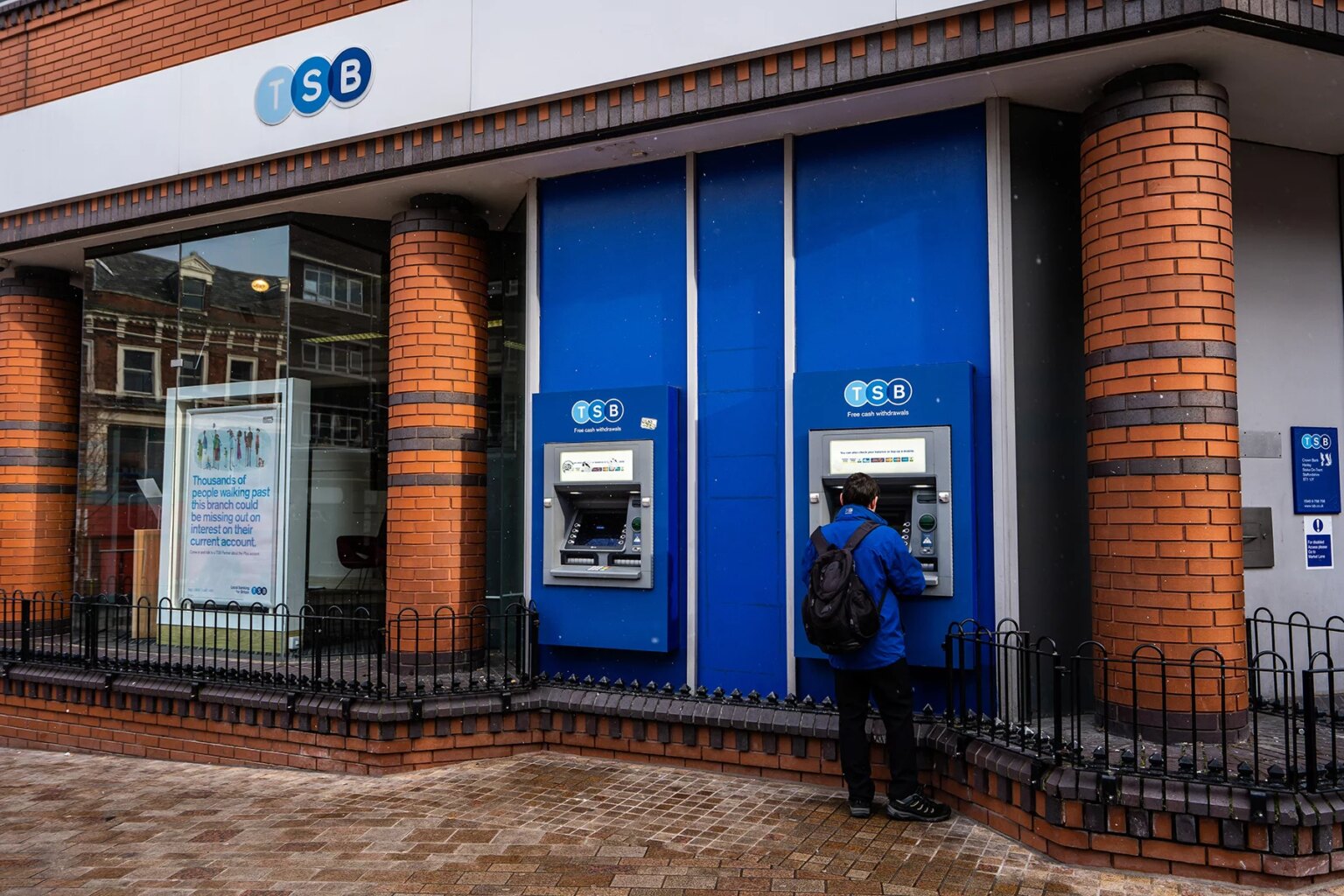
You can see more UK banks detailed in our guide to banking in the UK.
International banks
Many international banking groups operate in the UK, but their UK activities do not necessarily include standard personal current accounts. If you want a bank with an international network, check whether it offers UK retail banking to individuals, whether it can onboard you from your country of residence, and whether eligible deposits are protected by the FSCS. Providers such as HSBC and Santander offer UK personal current accounts alongside international services.
Online and mobile banks
Several online-only and mobile-only bank accounts are also now available to UK customers. These banks tend to have a more limited range of accounts, products and services than bigger high street banks, but they are more flexible and often cheaper options. Online and mobile banks available in the UK include:
- Revolut
- Monzo
- Suits Me – although not a bank, this service offers e-money accounts with many features of traditional banking.
See our guide to digital banking in the UK and read our article on mobile banking safety.
Building societies
Building societies are member-owned financial institutions and can offer many of the same retail products as banks, including savings accounts, mortgages, and, in some cases, current accounts. Nationwide offers several current accounts, including FlexAccount, FlexDirect, and FlexBasic, alongside other age- or feature-specific products. Its mainstream current accounts currently require UK residency; for example, both FlexAccount and FlexBasic require applicants to be UK residents. See Nationwide’s current-account range for current eligibility.
Choosing a bank account in the UK
If you are looking to open a bank account in the UK, which account you opt for will depend on your own personal circumstances and what you are looking for. There are various factors you might want to take into consideration, such as:
- Costs – many of the UK accounts are free of monthly fees but there may be additional charges for certain services or add-ons, as well as a trade-off in terms of range of services available
- International scope – if you want an account that will be well-linked to accounts and services overseas, you’ll need to check international and multi-currency account options as well as services such as international money transfers
- Range of products and services – this can range from account-related services such as credit and borrowing options to other financial services including UK mortgages, insurance in the UK, and investments
- Flexibility – if you’re looking for ease of access and 24/7 banking, digital and mobile accounts are well worth considering
- Incentives – many banks will try to attract customers by offering incentives such as cash deposits or interest-free periods, so shop around to see what’s available
You can compare account fees and charges through the MoneyHelper website, and there are many comparison tools such as MoneySuperMarket and Compare the Market which enable you to compare various different current account features.
How to open a bank account in the UK as an expat
Requirements vary by bank and account. Most standard current accounts are aimed at UK residents, although some providers offer applications from abroad. Banks must verify your identity and will usually need to verify your address; depending on the account, they may also use credit-reference and fraud-prevention checks. Some basic accounts accept alternative forms of identification or applicants without a fixed address, so check the bank’s accepted-document list before applying.
You may be asked for:
- A passport, driving licence, national identity card, or another accepted form of identification
- Proof of address or an accepted alternative, and sometimes your recent address history
- Employment, income, and tax-residency details, depending on the account
- Immigration or right-to-reside evidence where relevant
- Proof of studying in the UK if you are applying for a student account
Application times vary. Digital applications can be quick, but identity checks, non-standard documents, or applications from abroad can take longer.
How to open a bank account in the UK from abroad
Options for opening an account before you move vary by provider. HSBC says applicants can set up a UK bank account from many locations abroad, subject to eligibility and identity and address checks. By contrast, Barclays’ standard UK current accounts are generally for UK residents, while Barclays International Banking is a separate offshore service aimed at eligible international clients with higher balance requirements. Other providers have their own country-of-residence and eligibility rules, so check the exact account before applying. Processing times vary and can be longer where extra verification is needed.
How to open a digital or mobile bank account in the UK
Many UK banks let you apply online or in an app, but digital onboarding still includes identity and eligibility checks. You will normally need valid identification and may need a selfie or video check, proof of address, address history, or evidence of your right to reside in the UK. For example, Monzo requires personal-account applicants to live in the UK full time with the right to reside, while Starling can request proof of address in addition to identification. See our guide to mobile banking in the UK for more information.
How to open a business bank account in the UK
If you are starting a business in the UK, the banking requirements depend on your legal structure. Sole traders and ordinary business partnerships are not legally required to have a business bank account, although their bank’s terms may restrict business use of a personal account. A limited company is a separate legal entity, so its banking must be kept separate from the owners’ and directors’ personal banking.
When you apply for business banking, the provider may ask for identification and address details for owners, partners, or directors, information about the business and its activities, Companies House details for a limited company, and expected turnover or source of funds. Credit and fraud checks depend on the provider and product. Many banks now support online onboarding, so an in-person meeting or a business plan is not a universal requirement, although lenders may ask for forecasts or a business plan when considering finance.
How to open a bank account in the UK for your children
There is no single minimum age that applies to every children’s bank account. Some youth accounts and debit cards are available from age 11, while other current accounts start at 16 or 18. A bank may require a parent or guardian’s consent or involvement, depending on the child’s age and the product.
Applications may be available online or in a branch. The bank may ask for identity and address evidence for the child and, where a parent or guardian is involved, for the adult as well. Check the provider’s age limits and document requirements before applying.
What to do if your application to open a bank account in the UK is refused
Banks can refuse an application for several reasons, including identity or anti-money-laundering checks or because the applicant does not meet the account’s eligibility criteria. For fee-free basic bank accounts at the designated providers, if an application is refused the bank must normally explain the reason in writing and free of charge, unless it would be unlawful to do so, and tell the customer how to complain.

If you think a bank has treated you unfairly or discriminated against you, complain to the bank first. For most complaints, the business has up to eight weeks to send a final response; complaints about fraud and scams, payment services, or electronic money have a 15-day response period. If you remain unhappy, or the bank misses the applicable deadline, you can complain free of charge to the Financial Ombudsman Service. You normally have six months from the date of the bank’s final response to refer the complaint.
Banking services in the UK
As with banks in many other countries, UK banks provide a range of services beyond accounts, credit cards, lending options and money transfers. These include:
- Insurance plans in the UK, including areas such as home insurance and car insurance
- Investment options such as funds, bonds, and shares
- Mortgages in the UK
- Pension plans in the UK
International money transfers in the UK
For international money transfers, there are alternative solutions to banks which could prove cheaper and more convenient, such as:
Managing your bank account in the UK
When you open a bank account in the UK, you have the option of choosing how you manage your account. UK banks offer their services in the following ways:
- Face-to-face banking – the UK branch network has shrunk sharply. Parliamentary research recorded 6,870 bank and building society branches in 2024, with further closures announced since then. You can still access in-person services at many branches, but availability varies by provider and location, so check your bank’s branch locator before travelling.
- Online banking – more and more people are choosing to do their banking remotely today. All the major banks have sophisticated websites where you can access your account, manage your money, find out information, and apply for products at any time of day. See our guide to digital banking in the UK for more information;
- Mobile banking – Most traditional banks have a banking app. There is also a growing number of online and mobile-only banks. Read more in our guide to mobile banking in the UK.
Changing banks or closing a bank account in the UK
You can switch current accounts between participating providers using the Current Account Switch Service. The service moves incoming and outgoing payments, such as Direct Debits, standing orders, and salary payments, and closes the old account as part of a full switch. A switch takes seven working days once the new account is open and the switch date is agreed. You can switch while overdrawn if you agree the required overdraft or repayment facilities with your new provider; otherwise, you need to make separate arrangements to repay the old overdraft before switching.
You can also close most UK bank accounts at any time without being penalized, as long as you didn’t open an account that stipulated a minimum usage period as part of an offer. If you close an account when you have an outstanding overdraft, you will have to pay this off first. Loans will normally continue to be paid off at the agreed rate. To close a UK bank account, just get in touch with the bank and let them know. You may have to fill out and sign a short closing order form.
Make sure that you:
- Get confirmation in writing from the bank that the account is closed. This way, you can’t be charged any subsequent fees
- Cancel all future payments coming out of the account, such as direct debits and standing orders
- Inform your employer and anyone else likely to make payments into the account that it is no longer active
Useful resources
- Bank of England – the central bank of the UK
- Prudential Regulation Authority – the Bank of England body responsible for prudential regulation of banks, building societies, and credit unions
- Financial Conduct Authority – the conduct regulator responsible for consumer protection, market integrity, and competition
- Financial Services Compensation Scheme – information on deposit protection for eligible customers
- Financial Ombudsman Service – handles eligible complaints about banks and other financial businesses
- Direct Debit – information on Direct Debits and the Direct Debit Guarantee
- Current Account Switch Service – the service for switching between participating current-account providers

