
'%20id='ico-down'%20stroke='%23000000'%20stroke-width='1.5'%3e%3cg%20transform='translate(1092.250000,%20254.750000)'%3e%3cpolyline%20id='Path-2-Copy-4'%20transform='translate(5.500000,%202.750000)%20scale(1,%20-1)%20rotate(-180.000000)%20translate(-5.500000,%20-2.750000)%20'%20points='0%200%205.5%205.5%2011%200'%3e%3c/polyline%3e%3c/g%3e%3c/g%3e%3c/g%3e%3c/svg%3e)


Moving
Visas & Immigration
Dutch citizenship by descent: who qualifies?
If you were born in the Netherlands or have one or more Dutch parents, how and if you qualify for Dutch citizenship can depend on the year you were born and your exact circumstances. While some people qualify for citizenship automatically, others may be able to acquire nationality later through the option procedure or another route.



This guide walks through how your birth date, parentage, and acknowledgment of parentage (erkenning), impact citizenship decisions. We also cover how it works in the case of adoption, and the documents that you’ll be asked for to establish Dutch citizenship by different routes.
Key takeaways
- The rules around Dutch citizenship can be found in plain English on the website of the Immigratie- en Naturalisatiedienst (IND) – the immigration and naturalisation department
- The exact citizenship rules varied depending on whether you were born before or after 1 January 1985.
- A Dutch parent is usually the key to establishing citizenship by descent – a Dutch grandparent alone does not usually give you Dutch citizenship.
- Recognition after birth can help, but the child’s age and the date of recognition are critical.
- If you were already Dutch by law, your next step is usually establishing proof, not a citizenship application.
Check whether you may already be Dutch at birth
The first question is whether you became Dutch automatically at birth, by operation of law. Official Dutch sources usually use the word nationality, even when English speakers search for citizenship.
If you were born on or after 1 January 1985
For people born on or after 1 January 1985, Dutch nationality usually depends on which legal parent was Dutch when you were born. You were generally Dutch from birth if your mother was Dutch, or if your father was Dutch and he was married to or in a registered partnership with your non-Dutch mother at that time.
You may also have been Dutch from birth if your Dutch father acknowledged parentage before you were born. Being born abroad does not block this route. That is why Dutch citizenship by birth abroad can still apply.
There is also a narrow residence-based rule tied to principal residence in the Kingdom of the Netherlands at the relevant births. It is not an ancestry route, and it mainly matters when a parent and grandparent were already based in the Kingdom.
If you were born before 1 January 1985
Before 1 January 1985, the rules were different. If your father was Dutch when you were born, you were usually Dutch at birth, whether you were born in the Netherlands or abroad.
If your mother was Dutch and your father was not, the answer can turn on your parents’ marital status. NetherlandsWorldwide says an unmarried Dutch mother could pass Dutch nationality automatically, while a Dutch mother married to a non-Dutch father often could not and may need the option procedure instead.

When recognition, legitimation, or adoption can change the answer
Birth is not the only moment that matters under the Netherlands Nationality Act. Later legal parentage events can also make a difference, but only within strict timing and age rules.
Recognition of parentage after birth
Acknowledgment of parentage, called erkenning in Dutch, can matter if it happened after you were born. The exact date matters because Dutch law treats recognition before age 7, recognition between ages 7 and 18, and older gap-period cases differently.
From 1 March 2009, a Dutch parent who acknowledged a child after birth but before age 7 could usually pass Dutch nationality on the date of acknowledgment. If the child was at least 7 but still under 18, accredited DNA evidence is normally needed within 1 year to prove the biological link.
The awkward gap is 1 April 2003 to 1 March 2009. During that period, post-birth acknowledgment did not automatically make a child Dutch, and some people may need the option procedure instead.
Recognition after age 18 works differently. If the family-law act happened outside the Netherlands, Dutch authorities may first need to decide whether that foreign acknowledgment is legally valid in the Netherlands.
Adoption and court-based parentage routes
Adoption by a Dutch parent can also lead to Dutch nationality, but it depends on more than family intention. The child generally must have been under 18, at least one adoptive parent must have been Dutch, and the adoption must fit the Hague Adoption Convention or the Dutch Civil Code rules recognized in the Netherlands.
Court-based parentage orders can matter too if they established legal parentage while the child was still a minor. Because foreign adoption orders, parentage judgments, and the effect on earlier family ties can be technical, these cases should be checked directly with IND or a Dutch mission abroad.
Can you claim Dutch citizenship through grandparents?
Usually, no. A Dutch grandparent alone does not usually create Dutch citizenship.
This is different from countries that offer ancestry-based citizenship routes. In the Netherlands, a grandparent record usually matters only because it helps prove something about your parent, such as your parent’s Dutch nationality, identity, civil status, or principal residence at the relevant time.
There is one narrow statutory situation where a grandparent can still matter directly, but not on a stand-alone basis. That is the residence-based rule tied to where your parent and grandparent had their principal residence at the relevant births.
If you are researching Dutch citizenship through grandparents, ask whether the grandparent’s records help prove a parent-based route. If they do not, ancestry alone usually will not be enough.
Are you already Dutch, or do you need to acquire citizenship later?
Here’s a quick check guide to identify the likely next steps based on your specific reason for looking at Dutch citizenship by descent.
| Outcome | What it usually means | Next step |
|---|---|---|
| Already Dutch by law | You met the birth, recognition, legitimation, adoption, or court-based rules automatically. | Prove your status with documents and ask the right authority for a passport or nationality confirmation. |
| Not Dutch yet, but possibly eligible through option | You do not appear to have been Dutch automatically, but a special legal route may still apply, often in older family-history cases. | Check the option rules and ask IND, your municipality, or a Dutch mission which category fits. |
| No descent-based claim | Your family history does not match the statutory routes. | Look at residence-based routes, such as naturalization, instead. |
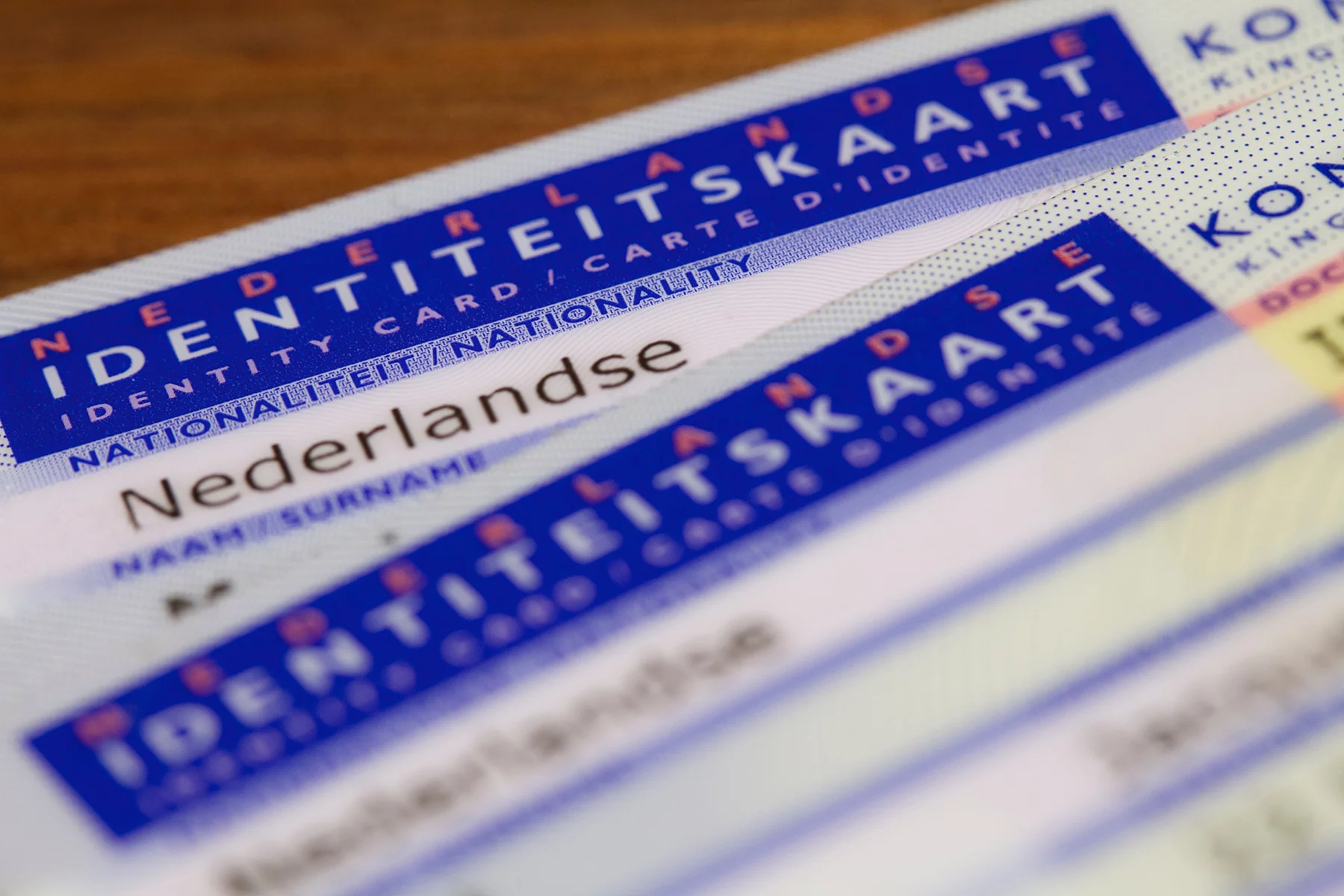
Evidence and documents to collect
The exact evidence and documents needed will depend on your citizenship route, but in all cases you need a suite of supporting documents to back up your claim.
| Scenario | Records that usually matter most |
|---|---|
| Birth claim | Full birth certificate, proof of the Dutch parent’s nationality at the date of birth, and any marriage or registered partnership record. |
| Recognition claim | Acknowledgment deed, proof of the Dutch parent’s nationality at the date of recognition, and accredited DNA evidence where the age rules require it. |
| Adoption or court order | Adoption order or parentage judgment, proof a parent was Dutch at the relevant time, and records showing whether prior family ties were broken where required. |
| Option procedure | Birth certificate, current passport, residence evidence where needed, and parent records linking you to the relevant option category. |
Pay international document fees seamlessly with Wise
Gathering official birth certificates, translations, and apostilles from abroad often means paying foreign fees. With Wise, you can send payments overseas at the mid-market exchange rate with transparent, low fees, helping you manage international application and legalisation expenses without hidden currency markup costs.

No commitment required
You may also need divorce certificates, death certificates, or older passports if they help prove nationality status on the critical date. If your documents were issued outside the Netherlands, check whether they need legalization or an apostille and a certified translation before Dutch authorities will accept them.
How to start with IND, your municipality, or a Dutch mission abroad
Start by identifying the correct application route before choosing an application form. Your date of birth, which parent was Dutch, whether your parents were married or in a registered partnership, and when acknowledgment of parentage happened usually tell you which rule to check first.
Then gather the documents that support your claim. If you live in the Netherlands, you may deal with your gemeente, meaning municipality, and sometimes IND. If you live abroad, NetherlandsWorldwide and the nearest Dutch embassy or consulate are often the practical starting points.
If your parents married, acknowledged parentage, or completed an adoption outside the Netherlands, ask if the foreign document or family-law act be recognized under Dutch law. That often decides whether your Dutch nationality argument can move forward.
If you learn that you are not automatically Dutch, your next step to pursue citizenship may be a residence-based route instead. In that case, Expatica’s guides to Dutch visas and residence permits and family and partner visas in the Netherlands can help you map the alternatives.
FAQ
Frequently asked questions about Dutch citizenship by descent
Can I get Dutch citizenship through my grandparents? 
A Dutch grandparent alone does not usually create Dutch citizenship. Grandparent records can still help if they prove a parent-based claim or fit the narrow residence rule tied to your parent’s and grandparent’s residence.
Am I automatically Dutch if my mother was Dutch when I was born?
Often, yes, but the date matters. If you were born on or after 1 January 1985, a Dutch mother usually passed Dutch nationality automatically. Before that date, your parents’ marital status can change the answer.
What if my Dutch parent recognized me after birth?
The date of recognition decides which rule applies. Recognition after birth can help, but Dutch law treats children under 7, children aged 7 to 17, and people recognized during the 1 April 2003 to 1 March 2009 gap period differently. Recognition after age 18 does not work the same way.
Do I need to apply for citizenship if I was already Dutch at birth?
Not in the same way as someone using option or naturalization. If you were already Dutch by operation of law, the practical task is usually proving that status and then applying for the right document through the proper authority.
What documents prove Dutch nationality by descent?
The core records are usually a full birth certificate, proof of the Dutch parent’s nationality on the relevant date, and any family-law records tied to marriage, recognition, adoption, or a court order. Depending on where the documents come from, you may also need legalization, an apostille, and certified translations.
Sources
- Dutch citizen by birth, acknowledgment or adoption – Immigratie- en Naturalisatiedienst (IND)
- Becoming a Dutch national by birth, acknowledgement or adoption – NetherlandsWorldwide
- Becoming a Dutch national through option – Immigratie- en Naturalisatiedienst (IND)
- Becoming a Dutch citizen abroad through the option procedure – NetherlandsWorldwide
- Becoming a Dutch citizen – Government.nl
- Legalisation of foreign documents for use in the Netherlands – NetherlandsWorldwide
- Rijkswet op het Nederlanderschap – wetten.nl
Related Articles


Editor's picks
 Primary schools in the NetherlandsConfused by the primary school system in the Netherlands? We explain how it works, from educational approaches to international options.
 Child benefits in the NetherlandsYou can claim different types of child benefits in the Netherlands, to help with the costs of child-rearing, schooling, and childcare.
 Higher education in the Netherlands: a guide to Dutch universitiesThe Netherlands is home to some of the world's top universities. Learn all about the different subjects available at Dutch institutions.
Did you find this guide helpful?