
'%20id='ico-down'%20stroke='%23000000'%20stroke-width='1.5'%3e%3cg%20transform='translate(1092.250000,%20254.750000)'%3e%3cpolyline%20id='Path-2-Copy-4'%20transform='translate(5.500000,%202.750000)%20scale(1,%20-1)%20rotate(-180.000000)%20translate(-5.500000,%20-2.750000)%20'%20points='0%200%205.5%205.5%2011%200'%3e%3c/polyline%3e%3c/g%3e%3c/g%3e%3c/g%3e%3c/svg%3e)


Finance
Retirement
Japan pension and Nenkin refund guide for expats (2026)
Japan’s pension rules can affect you long after you leave the country. This guide explains pensions in Japan for expats, nenkin refunds, and the key choice between claiming a lump-sum withdrawal or keeping your pension rights for later.


This decision can be especially important if you are approaching the 10-year qualifying period, have paid into Employees’ Pension Insurance through work, or may benefit from a social security agreement with Japan. This guide is for general information only and is not legal, tax, pension, or financial advice.
Wise
Do your finances go beyond borders? Then you need a fast and secure way to move money internationally. Wise is a global leader in online international money transfers, letting you move money at an exchange rate several times cheaper than your bank. Whatever your personal or business needs, Wise can make your money go further.

Key takeaways
- You generally need at least six months of eligible Japanese pension coverage to claim a lump-sum withdrawal payment.
- In most cases, you must claim within two years after you cease to have an address in Japan, so avoid leaving the paperwork until the last minute.
- Reaching Japan’s minimum period for an old-age pension, or combining coverage periods under an applicable social security agreement, could make preserving your pension rights more valuable.
- A 20.42% tax is generally withheld from an Employees’ Pension Insurance lump-sum withdrawal payment, although you may be able to claim a refund through a separate Japanese tax procedure.
- Look beyond the advertised transfer fee and consider exchange-rate margins, intermediary or bank charges, and receiving fees when calculating how much will actually reach you.
How Japan’s pension system works for expats
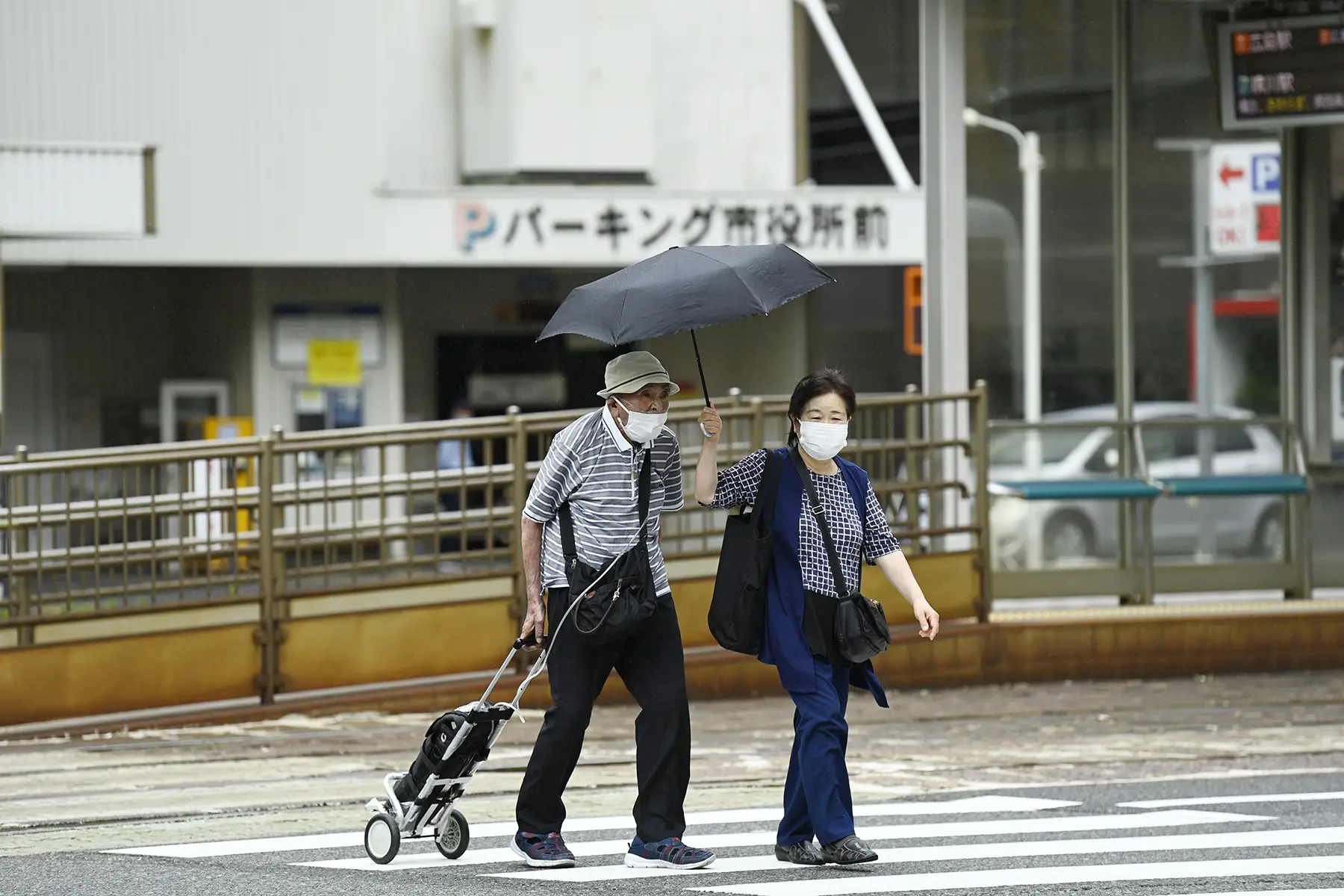
Japan has a two-tier public pension system. National Pension provides the basic first tier, while eligible company and public-sector employees are also covered by Employees’ Pension Insurance (EPI). Many people simply remember paying nenkin without knowing how they were covered, which can cause confusion when they leave Japan.
- If you are self-employed, a student, unemployed, or otherwise not covered through EPI or as a dependent spouse, you will generally be a Category I National Pension member and pay contributions yourself.
- If you work for an employer and meet the coverage requirements, you will generally be enrolled in Employees’ Pension Insurance, with contributions deducted through payroll.
- The distinction matters when claiming a lump-sum withdrawal because National Pension and Employees’ Pension Insurance use different calculation methods and are treated differently for withholding tax.
National Pension and Employees’ Pension Insurance
National Pension (国民年金, kokumin nenkin) forms the basic tier of Japan’s public pension system. Category I members typically include self-employed people, students, and unemployed people aged 20-59 who meet the residence requirements and are not covered under another National Pension category.
Employees’ Pension Insurance (厚生年金保険, kosei nenkin hoken) provides an additional tier for eligible company and public-sector employees. Contributions are generally deducted through payroll and shared between the employee and employer.
If you were covered by Employees’ Pension Insurance, you were also part of the National Pension system as a Category II insured person. For lump-sum withdrawal purposes, the amount and tax treatment therefore depend on your recorded pension coverage and the applicable scheme.
Who can claim a lump-sum withdrawal payment?
Many expats assume that leaving Japan automatically means a refund. In reality, a Japanese nenkin refund claim depends on your pension record, residence status, and timing.
The official name is the Lump-sum Withdrawal Payment (脱退一時金, dattai ichiji-kin), although it’s often called a nenkin refund or pension refund.
You will usually need to meet all of the following:
- You’re not a Japanese national.
- You have at least six months of qualifying National Pension contribution periods or Employees’ Pension Insurance coverage.
- You no longer have an address in Japan and have left Japan.
- You’re no longer covered by Japan’s public pension system.
- You have never been eligible to receive a Japanese pension.
- You apply within two years from the date you no longer had an address in Japan.
Use the current Japan Pension Service claim form and instructions rather than an old copy saved from a blog or forum.
If you’re approaching the 10-year qualifying period, or you have pension coverage in a country with a social security agreement with Japan, check your future pension position carefully before claiming a lump-sum withdrawal. Taking the payment can affect the Japanese coverage periods available for a future pension.
Should you claim a refund or keep your pension record?
This is one of the most important decisions in the process. A lump-sum withdrawal can provide money sooner if you do not expect your Japanese pension record to contribute to future pension rights.
However, once you receive the Lump-sum Withdrawal Payment, the Japanese pension coverage periods before the payment are no longer counted as pension coverage periods for future Japanese pension benefits.
The refund decision isn’t just about cash today. It’s also about what you may be giving up, especially if you might return to Japan, are close to 10 qualifying years, or have coverage in a country whose social security agreement with Japan allows periods to be totalised.
| Situation | Claim now may fit | Check first | Why |
| Short stay, no plan to return | Possibly | Eligibility and future pension options | A lump sum may be more useful, but check what rights you would give up |
| Close to 10 qualifying years | Often worth waiting | Pension entitlement | Keeping your coverage periods may help you qualify for a future pension |
| Home country has an agreement with Japan | Maybe | Totalisation rules | Combining eligible coverage periods may help you meet pension qualifying requirements |
| Unsure about future plans | Not always | Long-term options | Receiving the lump sum means the earlier Japanese coverage periods will no longer count |
Example: If you have eight years of qualifying Japanese coverage and four years of qualifying coverage in a country whose agreement with Japan permits totalisation, those periods may help you meet the relevant pension eligibility requirement. If you claim a lump sum first, however, the Japanese periods before that payment will no longer count toward future Japanese pension benefits.
How social security agreements and totalisation change the decision
Japan has social security agreements with a number of countries, but they do not all work in the same way. Agreements can help prevent dual social security coverage, while some also allow eligible coverage periods in the two countries to be totalised when determining entitlement to benefits.
Check your country on the current Japan Pension Service agreement guidance and confirm whether totalisation applies to the pension benefit you may eventually claim. If it does, claiming a lump-sum withdrawal without checking the consequences first could reduce your future pension options.
What to do before leaving Japan
Many avoidable delays can be prevented before departure. If you’re still in Japan, treat your final admin week as part of the pension process.
- Complete your move-out procedures. Submit the necessary moving-out notification to your local municipal office so that you no longer have a registered address in Japan from your departure date.
- Keep a record of your Basic Pension Number (基礎年金番号). Store your Basic Pension Number Notice or Pension Handbook safely and make a separate note of the number, as you may need it for your claim and later enquiries.
- Check your bank details and supporting evidence. Make sure the bank account is in your name and that you have the information required for an international transfer, including the correct account details and SWIFT/BIC code where applicable.
- Consider appointing a tax agent in Japan. This is particularly important if you expect to reclaim tax withheld from an Employees’ Pension Insurance lump-sum withdrawal after leaving Japan.
- Save copies of your important paperwork. Keep copies of your pension, departure, banking, and other relevant administrative records linked to your Individual Number somewhere you can access from abroad.
What could go wrong? Problems with your move-out procedures, losing track of your Basic Pension Number, or providing incomplete bank details can delay a claim or lead to requests for additional information.
Documents to gather before you move out
Keep a file containing your passport details, Basic Pension Number, and a bank document showing information such as the bank name, branch, account number or IBAN, and account-holder name. Depending on your circumstances, additional evidence may be required.
For the exact current requirements, use the Japan Pension Service lump-sum withdrawal page and latest claim form rather than relying on an older checklist.
How to apply after you leave Japan
Once you’ve completed your move-out procedures and left Japan, the application itself is usually simpler than the decision that came before it. The important part is using the latest official instructions and making sure every name, number, and account detail is accurate.
Download the current form. Open the Japan Pension Service Lump-sum Withdrawal Payment page and download the latest claim form and instructions.
Check your eligibility again. Make sure you no longer have an address in Japan, are no longer covered by the relevant Japanese pension scheme, and meet the other requirements for a lump-sum withdrawal.
Complete the form and gather the evidence. Enter your Basic Pension Number and provide the passport and bank-account evidence specified in the current instructions, plus any other documents required for your circumstances.
Submit your claim. Follow the current JPS instructions for submitting the application rather than relying on an old form, screenshot, or forum post.
Keep copies and wait for the decision. Save a copy of your application and supporting documents. If your claim is approved, keep the Notice of Lump-sum Withdrawal Payment that JPS sends you, particularly if tax has been withheld and you intend to seek a refund.
Use the live JPS page each time to make sure you’re using the current form and instructions, even if you downloaded a copy previously.
Where to send the form and what happens next
For postal applications, send the claim to the Japan Pension Service at the address shown in the current official form pack. Eligible applicants may also be able to apply electronically through Mynaportal, so check the current JPS guidance for the submission methods available to you.
After JPS reviews and approves the claim, it sends a Notice of Lump-sum Withdrawal Payment and transfers the payment to the nominated account. Incomplete or inconsistent information can delay the process, so check your personal and bank details carefully before submitting the claim.
How the 20.42% tax refund works
This is one of the most misunderstood parts of the process. When you receive an Employees’ Pension Insurance lump-sum withdrawal payment, 20.42% income tax, including the Special Income Tax for Reconstruction, is withheld at source. National Pension lump-sum withdrawal payments are treated differently and are not subject to this withholding.
The pension payment and tax refund are separate processes:
- Japan Pension Service processes the lump-sum withdrawal. If you receive an Employees’ Pension Insurance payment, the applicable tax is withheld and you receive a Notice of the Lump-sum Withdrawal Payment.
- You can then pursue the tax refund separately. The National Tax Agency allows you to claim a refund of the tax withheld by filing the relevant Japanese tax return through a tax agent in Japan and submitting the required payment notice.
The refund is not automatic, so don’t assume that receiving your pension payment completes the process.
When you may need a tax agent
A tax agent (納税管理人, nozei kanrinin) is a person in Japan who can handle the relevant tax filing on your behalf after you’ve left. This is particularly relevant if you want to reclaim tax withheld from an Employees’ Pension Insurance lump-sum payment.
If you expect to pursue a refund, it makes sense to plan ahead and understand who will handle the filing after you leave. Check the latest National Tax Agency guidance for the current procedure and requirements.
How to move your payout abroad after it arrives
Japan Pension Service can pay an eligible lump-sum withdrawal into a qualifying Japanese or overseas bank account, so you may not need to transfer the money abroad yourself. If the payout reaches an account in one currency and you later need it in another, however, compare the total cost of converting and moving the money rather than focusing only on the first visible fee.
Check the exchange rate, transfer fee, intermediary or correspondent bank charges, receiving fees, and the final amount expected to reach your destination account. If you’re comparing a bank transfer with a money transfer provider, use the same amount, currency pair, and roughly the same time so that exchange-rate movements do not distort the comparison.
| Provider | Fee visibility | Rate transparency | Tracking | Typical friction |
| Wise | Route-based quote before you send | Separate fee and mid-market rate shown on supported routes | In-app status updates | Verification and route support vary |
| MUFG | Check route and bank fee pages carefully | Compare the offered rate on the day | Depends on payment route | Bank paperwork can be heavier |
| SMBC | Fees can depend on route and method | Compare quoted rate and extra charges | Varies by transfer type | First-time setup may take longer |
| Japan Post Bank | Check transfer and receiving charges in full | Compare the applied rate with alternatives | Tracking may be less detailed | Processes can feel more manual |
Comparing Wise with major local banks
Wise can be a practical option if you need to send your payout overseas or manage supported currencies after receipt through the Wise account. When comparing providers, be sure to check the final amount received after fees and conversion on your route.
You can compare the live Wise pricing page with major Japanese banks using the same transfer amount and destination. Product availability, supported routes, verification steps, and Japan-specific limits can change, and Wise isn’t the mechanism for the pension claim itself.
Common mistakes to avoid
- Missing the two-year deadline for claiming the lump-sum withdrawal payment.
- Claiming too quickly without checking the 10-year threshold or totalisation first.
- Confusing National Pension with Employees’ Pension Insurance.
- Sending bank documents that don’t clearly show the account-holder name and transfer details.
- Assuming tax withheld from an Employees’ Pension Insurance payment will be refunded automatically.
- Comparing transfer providers on upfront fees alone instead of the final amount received
Before you submit anything, check the latest requirements on the live Japan Pension Service page and, where relevant, the National Tax Agency guidance, and your chosen transfer provider’s current pricing and terms.
FAQ
Frequently asked questions about Japan pension refunds and nenkin in Japan
Can I claim a Japanese pension refund if I have lived in Japan for more than 10 years? 
Possibly, because the key issue isn’t simply how long you lived in Japan. It’s your qualifying pension period. If you already have 120 months (10 years) or more of the qualifying period for a Japanese old-age pension, you cannot claim the Lump-sum Withdrawal Payment because you may instead qualify for a future Japanese pension.
Do I need a tax representative for a nenkin refund?
Not always for the lump-sum withdrawal claim itself. But if you later want to reclaim tax withheld from an Employees’ Pension Insurance payout, a tax representative in Japan is commonly relevant because the tax reclaim is a separate process.
How long does a lump-sum withdrawal payment take?
There’s no fixed safe promise here, and many readers should plan for months rather than weeks. Delays are more likely when names don’t match, bank proof is incomplete, or the claim pack is missing documents.
Can I send my Japanese pension refund abroad with Wise?
You may be able to use Wise after the payout has reached an eligible account and if the route, verification steps, and product availability support the transfer at that time. Wise isn’t part of the Japan Pension Service claim process and doesn’t replace any pension or tax filing step.

Did you find this guide helpful?