
'%20id='ico-down'%20stroke='%23000000'%20stroke-width='1.5'%3e%3cg%20transform='translate(1092.250000,%20254.750000)'%3e%3cpolyline%20id='Path-2-Copy-4'%20transform='translate(5.500000,%202.750000)%20scale(1,%20-1)%20rotate(-180.000000)%20translate(-5.500000,%20-2.750000)%20'%20points='0%200%205.5%205.5%2011%200'%3e%3c/polyline%3e%3c/g%3e%3c/g%3e%3c/g%3e%3c/svg%3e)


Finance
Retirement
Claiming a nenkin refund in Japan 2026: steps, tax refund, and moving money abroad
Understand how to claim a nenkin refund in Japan, from eligibility and tax to moving your payout abroad.

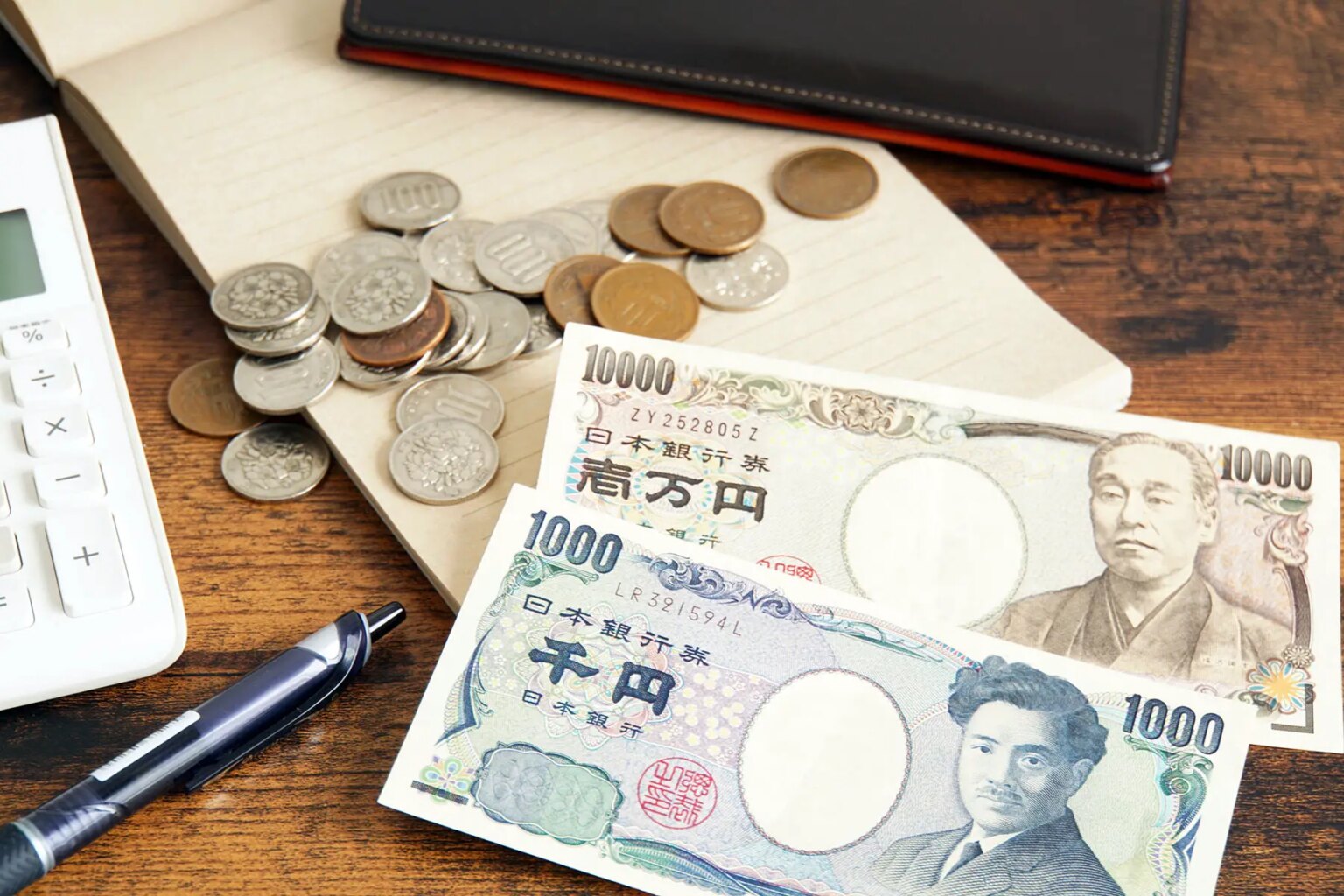
If you have worked in Japan and are leaving the country, you may be able to claim a nenkin (lump-sum pension withdrawal) refund on some of the pension contributions you made. Understanding the rules, deadlines, and tax implications can help you avoid missing out on money you are entitled to.
This guide explains how Japan’s nenkin system works, who can claim a refund, how to file correctly, and your options for moving the money abroad through options such as Wise or major local banks.
This guide is for general information only and does not constitute legal, tax, pension, or financial advice.
Key takeaways
Process details, the 20.42% withholding rule, and agreement status were checked on 22 July 2026.
| Point | What to know | Why it matters |
| Minimum contribution period | At least 6 months of qualifying pension contributions | Without this you cannot claim |
| Application deadline | File within 2 years of leaving Japan | The Japan Pension Service usually rejects late claims |
| 20.42% tax on the refund | Employees’ Pension Insurance lump-sum payments usually have tax withheld at source (no withholding on National Pension lump-sum payments) | You may be able to reclaim tax by filing a separate tax return |
| Check totalisation first | Social security agreements can allow people to combine Japanese coverage with coverage in other participating countries | Claiming a lump-sum payment invalidates Japanese pension coverage periods built up before the claim |
| Moving the payout abroad | Compare the final amount received after bank fees, intermediary charges, and currency conversion | Poor exchange rates and additional fees can reduce the amount that you receive |
Wise
Wise can be useful if you need to move inherited money across borders or manage JPY alongside other currencies for planned exchange transactions (subject to transaction limits) without relying fully on a local bank account. It does not replace Japanese filing or tax payment steps, and you should check current product availability, supported currencies, and document requirements for your region before you act.

What is the Nenkin System?
Japan’s nenkin system is the country’s public pension system. In general, people living in Japan who are aged between 20–59 are legally required to enrol in one of its pension systems. For most expatriates, this means joining one of two categories:
- National Pension (Kokumin Nenkin): Mainly for students, freelancers, the self-employed, and others not covered by Employees’ Pension Insurance.
- Employees’ Pension (Kosei Nenkin): For employees whose employer enrols them in the scheme, with contributions automatically deducted from their monthly salary.
Who can claim a lump-sum withdrawal payment?
For a Japanese pension refund for foreigners, eligibility mainly depends on your nationality, pension coverage, and when you apply. You may be eligible if you:
- Are not a Japanese national
- Have at least six months of qualifying pensions contributions to either Kokumin Nenkin or Kosei Nenkin schemes
- No longer have an address in Japan after completing your departure procedures
- Have not become entitled to a Japanese old-age or disability pension
- Apply within two years of losing your Japanese address and pension coverage
One thing worth knowing is that Kokumin Nenkin and Kosei Nenkin use the same lump-sum withdrawal process. However, the tax rules differ because Employees’ Pension Insurance lump-sum payments are generally subject to 20.42% withholding tax, while National Insurance lump-sum payments are not.
Should you claim your nenkin refund or keep your pension record?
The key question is whether a Japanese pension refund is worth more to you now than keeping your pension record for the future.
A common question is what you lose if you claim now. In general, you give up all Japanese pension coverage periods built up before your claim — not just the period used to calculate the payment amount (which is capped at 60 months). For example, someone with 90 months of coverage would still lose all 90 months, even though the payment itself is calculated using only 60 months.
If you are close to the 10-year qualifying period, or your home country has a social security agreement with Japan, pause before claiming. Check the Japan Pension Service’s guidance on social security agreements and totalization to see whether your Japanese contribution years could help you qualify for future pension benefits instead.
| Situation | Better fit | Why |
| You paid in for a short period and need cash soon | Claim now | You receive a lump-sum refund instead of waiting until pension age |
| You are near 10 years of coverage | Keep your pension record | The contribution period used for the refund will no longer count towards future pension benefits |
| Your country has a totalization agreement with Japan | Check before claiming | You may be able to combine periods instead of cashing out |
| You are unsure about future plans | Wait and get advice | Once paid out, the refunded period is generally not restored |
What to do before leaving Japan
The most costly mistakes happen before you mail the claim form. File your move-out notice (tenshutsu todoke) with your municipality, keep your Basic Pension Number notice safe, and decide early whether someone in Japan should act as your tax representative if you expect to reclaim withholding tax.
Bank evidence is another common failure point. Your bank account document should clearly show the account-holder name, bank name, branch details, account number, and SWIFT/BIC code (where required).
Here is a summary of steps to take:
Download the current form pack before you leave, so you know exactly what the Japan Pension Service expects.
Keep copies of your passport, pension number document, and final Japanese address records in one place.
Check whether your bank at home can receive an international transfer and confirm what fees or currency conversion may apply.
If you have a My Number or tax document you may need later, store it safely
What could go wrong? Forgetting about municipal de-registration, losing your original pension paperwork, or using unclear bank evidence can add months to the process or force you to submit again.
Appointing a tax representative
A tax representative (nozei kanrinin) is the person in Japan who handles tax paperwork after the lump-sum withdrawal payment is made. This matters most if you later reclaim tax withheld from an Employees’ Pension Insurance payout.
- Choose someone reliable and comfortable with Japanese paperwork
- Make sure they can receive official letters and act promptly
- Agree in advance how any refunded tax will be transferred to you
How to apply after leaving Japan
Once you have left Japan and are no longer registered as a resident, the application process is fairly straightforward.
Use the current English/Japanese application form and the official example of entry, because old copies and guesswork are a frequent cause of delays.
Here are the steps to follow:
Fill in the latest lump-sum withdrawal payment form.
Attach your passport copy, pension number document, and bank evidence.
Mail the full packet to the Japan Pension Service after you have left Japan and deregistered your address.
Wait for the payment notice and for the payout to reach your bank.
What documents you need
Document checks are where many readers get stuck, so match everything carefully before you post the claim.
- Passport copies showing your identity details and final departure from Japan, where recorded
- Your Basic Pension Number notice or other pension number document
- Bank evidence with the account-holder name, branch, account number, and clear SWIFT/BIC code or other international transfer details, where required
- Documents verifying that you no longer have an address in Japan (e.g., tenshutsu todoke)
- Any extra pages the current form pack requests for your case
Bank documents are a common reason for delays if the account holder’s name, branch information, or transfer details are incomplete or hard to read.
How the 20.42% tax refund works
This is the part many people find confusing. When you receive a lump-sum withdrawal payment from Employees’ Pension Insurance (Kosei Nenkin), Japan generally withholds 20.42% income tax at source. This tax refund step is separate from the original pension claim.
In practice, your tax representative usually files an income tax return with the relevant Japanese tax office after the lump-sum payment has been made, using the official payment notice and any other required documents.
Do not assume every case is the same or that all of the withheld tax will automatically be refunded, as the amount depends on your circumstances and the information provided.
The two main steps are:
The Japan Pension Service pays the lump sum and sends a Notice of Payment of Lump-sum Withdrawal Payment.
You send the notice to your tax representative, who files the tax return in Japan.
The Japan’s National Tax Agency explains this route on No.12005 For those who can receive lump-sum withdrawal payments
How to move your refund abroad after it arrives
Once the money reaches your bank account, your next decision is practical, not bureaucratic. Depending on your account, you may be able to hold the funds in JPY, convert them straight away, or transfer them later.
For example, if your refund arrives in JPY and you need GBP for rent next month, compare converting now with waiting, then compare the final GBP amount each provider delivers.
A common mistake is focusing only on the upfront transfer fee. The real comparison is the final amount received after bank charges, exchange-rate markups, and any other costs that reduce the final amount received.
Wise is one option for international transfers after the payout arrives. Fees, exchange rates, supported routes, verification steps, and product availability can change, so check the live Wise Fees & Pricing page before you send.
Note that in Japan, balance transfers are subject to a 1 million JPY limit per transaction, and you should only hold funds you plan to use for exchange transactions.
Wise Payments Japan is licensed as a Type 1 & 2 Fund Transfer Service Provider and registered with the Kanto Local Finance Bureau.

Wise vs major local banks for overseas transfers
If you are not sure whether to use a bank wire or a money transfer provider, compare the full journey, not just the headline fee.
| Provider | Fee visibility | Exchange-rate transparency | Tracking and status | Paperwork friction |
| Wise | Upfront pricing page and route-based quote | Mid-market exchange rate with a separate fee | App updates and transfer status | Can be simpler. Checks and route support vary |
| MUFG | Often split between visible fees and charges such as exchange-rate margins and intermediary bank charges | Compare the rate offered on the day | Tracking depends on the payment route | Branch or form requirements may be higher |
| SMBC | Similar to other banks, with route-specific fees | Compare the quoted rate and any correspondent costs | Tracking may be less transparent for some wires | Documentation requirements may be greater, particularly for larger or first-time transfers |
| Japan Post Bank (ゆうちょ銀行) | Check transfer fees, receiving fees, and any intermediary costs | Compare the applied rate with your alternatives | Status updates may be limited | Overseas transfer setup can feel slower |
Practical note: compare the final amount received, not just the first fee quoted.
Note: Japan Post Bank (ゆうちょ銀行) cannot be designated as the receiving account for the Lump-sum Withdrawal Payment itself, per Japan Pension Service rules. It can still be used for subsequent transfers once funds have been received in an eligible account.
Common mistakes to avoid
Most problems with nenkin refund claims come from rushing the paperwork. Missing one required document can cause more delays than completing the rest of the application perfectly.
It’s also useful to know that using your bank is not automatically the cheapest or best way to move money abroad after leaving Japan. An option with the lowest upfront fee can still leave you with less after exchange-rate margins, intermediary charges, and receiving bank fees.
Common mistakes include:
- Missing the two-year application deadline
- Confusing social security totalization with a lump-sum withdrawal payment
- Sending incomplete or unclear bank documents
- Losing the original payment notice needed for the tax refund process
- Assuming your bank offers the best value for international transfers
If you are unsure about any requirement, check the latest guidance from the Japan Pension Service and the National Tax Agency, and compare live transfer fees and exchange rates before moving your money.
FAQ
Frequently asked questions
Can I claim a nenkin refund after more than five years in Japan? 
Yes, possibly. The key requirement is your period of pension coverage, not simply how many years you have lived in Japan. If you are close to the 10-year qualifying period, or your home country has a social security agreement with Japan, check whether keeping your pension record may be more valuable than taking a lump-sum withdrawal payment.
Do I need a tax representative for a pension refund in Japan?
You may not need one for the first lump-sum withdrawal payment itself, but you usually need a tax representative in Japan if you want to reclaim income tax withheld from an Employees’ Pension Insurance lump-sum withdrawal payment. The pension claim and the tax refund are separate steps.
How long does a lump-sum withdrawal payment take?
There is no fixed official processing time, so plan for several months rather than several weeks. Delays are more likely if names do not match, bank evidence is unclear, or the packet is incomplete.
What documents do I need to claim a nenkin refund?
Usually you need a passport copy, your Basic Pension Number document, bank documents showing your account details, and proof that you no longer have a registered Japanese address. You should also include any additional documents requested in the latest Japan Pension Service application instructions.
Can I get the 20.42% tax back on my Japan pension refund?
Some people can reclaim tax withheld from an Employees’ Pension Insurance payout through the Japanese tax process, usually with a tax representative in Japan. Do not assume you will recover the full amount without checking the exact forms, timing, and tax office rules that apply to you.
Can I use Wise to send my Japan pension refund abroad?
You may be able to use Wise to transfer money internationally after the payout reaches an eligible bank account. Check supported routes, live fees, exchange rates, verification requirements, and availability at the time of transfer, because those can change.
Useful resources
(checked 22nd July 2026)
- Japan Pension Service form pack, the current English and Japanese application
- Japan Pension Service example form, a sample to check common entry errors
- Japan Pension Service totalisation guidance, for checking whether an agreement could preserve pension rights
- National Tax Agency guidance, for the 20.42% withholding and tax refund process
- Wise Fees & Pricing, to compare live costs before you transfer money from Japan after leaving

Did you find this guide helpful?