
'%20id='ico-down'%20stroke='%23000000'%20stroke-width='1.5'%3e%3cg%20transform='translate(1092.250000,%20254.750000)'%3e%3cpolyline%20id='Path-2-Copy-4'%20transform='translate(5.500000,%202.750000)%20scale(1,%20-1)%20rotate(-180.000000)%20translate(-5.500000,%20-2.750000)%20'%20points='0%200%205.5%205.5%2011%200'%3e%3c/polyline%3e%3c/g%3e%3c/g%3e%3c/g%3e%3c/svg%3e)


About Japan
Transportation
Driving in Japan
Discover everything you need to know about driving in Japan, including how to get a license, register a car, and understand road signs.


People tend to think of Japan’s hyper-connected railways as the best way to get around. And while this may be true in some cases, having a car allows more freedom and flexibility and better access to some of the country’s more remote locations. Not only that, but having a driver’s license (運転免許証) is necessary if you happen to live in the countryside.
So to help you get on the road, this article outlines everything you need to know about driving (運転) in Japan.
Let’s dive in:
Driving in Japan
With well-maintained road networks and varied landscapes, Japan is a great place for driving (ドライブ) and taking road trips. People drive on the left, and vehicles are right-hand drive.
It’s believed that this originates from the Tokugawa period (1603 to 1868) when samurai walked on the left side of the road to avoid clashing their swords which they also wore on the left. Over the years, this tradition stuck.

Road networks are well maintained and adequately sign-posted (often in English), and drivers tend to obey the rules and drive sensibly.
Car ownership across Japan
Around 61% of people in Japan own a car (車). However, this figure varies significantly depending on where you live. For instance, in major cities such as Tokyo (東京), only 28% of residents have one.
Interestingly, the nation’s capital is one of the least car-dependent cities in the world, largely because it has one of the best public transport systems on the planet, making owning a vehicle seem redundant.
However, in more rural prefectures such as Yamanashi (山梨), Fukushima (福島), and Kagawa (香川), this figure is much higher, at 89%, 85%, and 79%, respectively.
The rise of electric vehicles (EVs)
Interestingly, Japan has seen a sharp increase in the demand for electric vehicles (EVs) (電気自動車) in recent years. In fact, it made the list of top 10 countries for EV sales in January 2022, with plug-in hybrid electric vehicles (PHEVs) dominating the market and accounting for 70.5% of sales.
However, compared with the other countries on the list, Japan still had the lowest EV and battery electric vehicle (BEV) penetration rates in the passenger car market, at 2.7% and 1.2%, respectively.
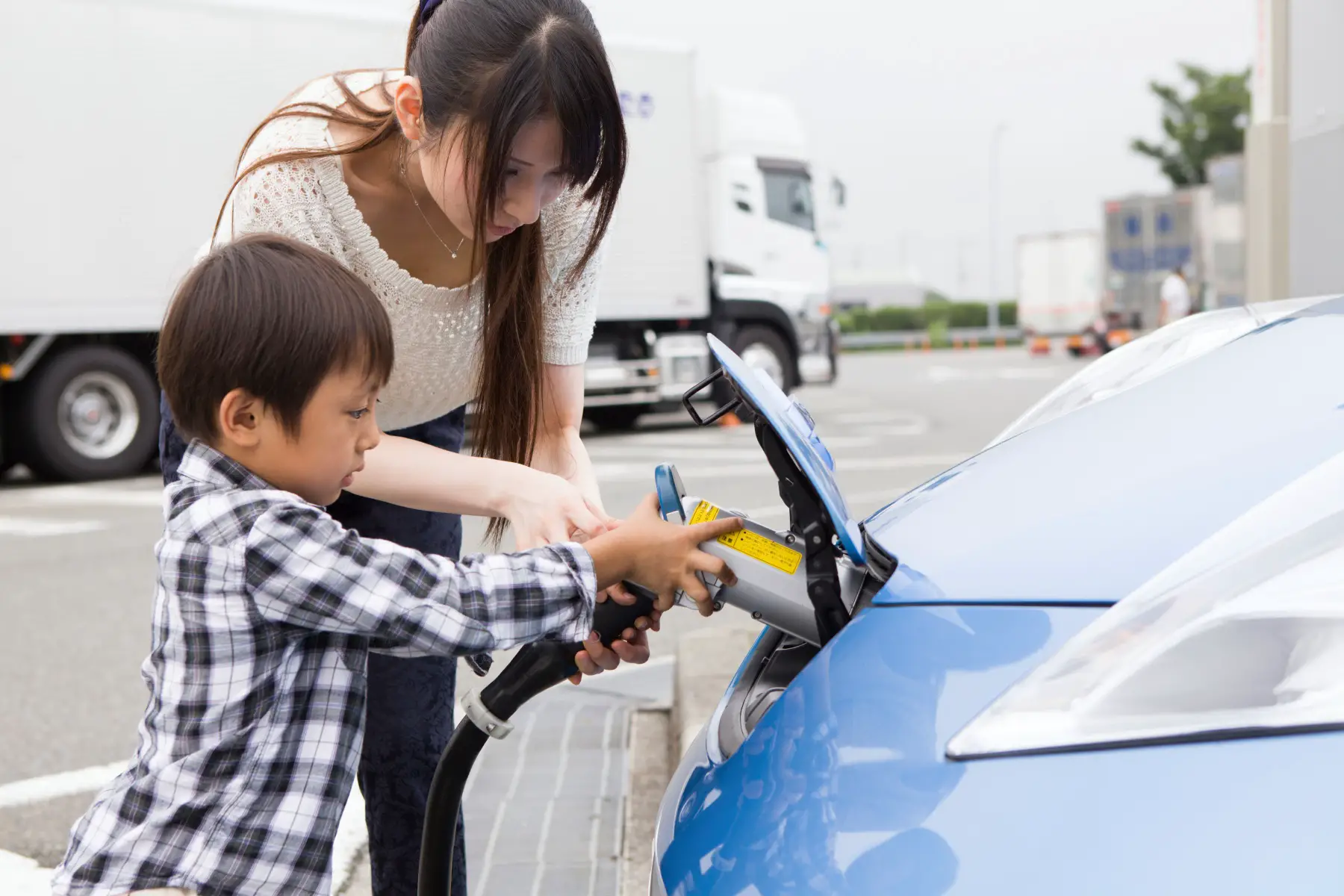
The major players in the Japanese EV market include Daihatsu (ダイハツ), Honda (ホンダ), Mitsubishi (三菱), Nissan (日産), and Toyota (トヨタ). However, numerous companies are developing and releasing new models in order to meet the demand for more electric vehicles in Japan.
The Japanese government has also introduced subsidies to encourage more people to purchase new electric vehicles and curb emissions. These are currently ¥650,000 for BEVs, ¥450,000 for plug-in PHEVs, and ¥2,300,000 for fuel cell electric vehicles (FCEVs).
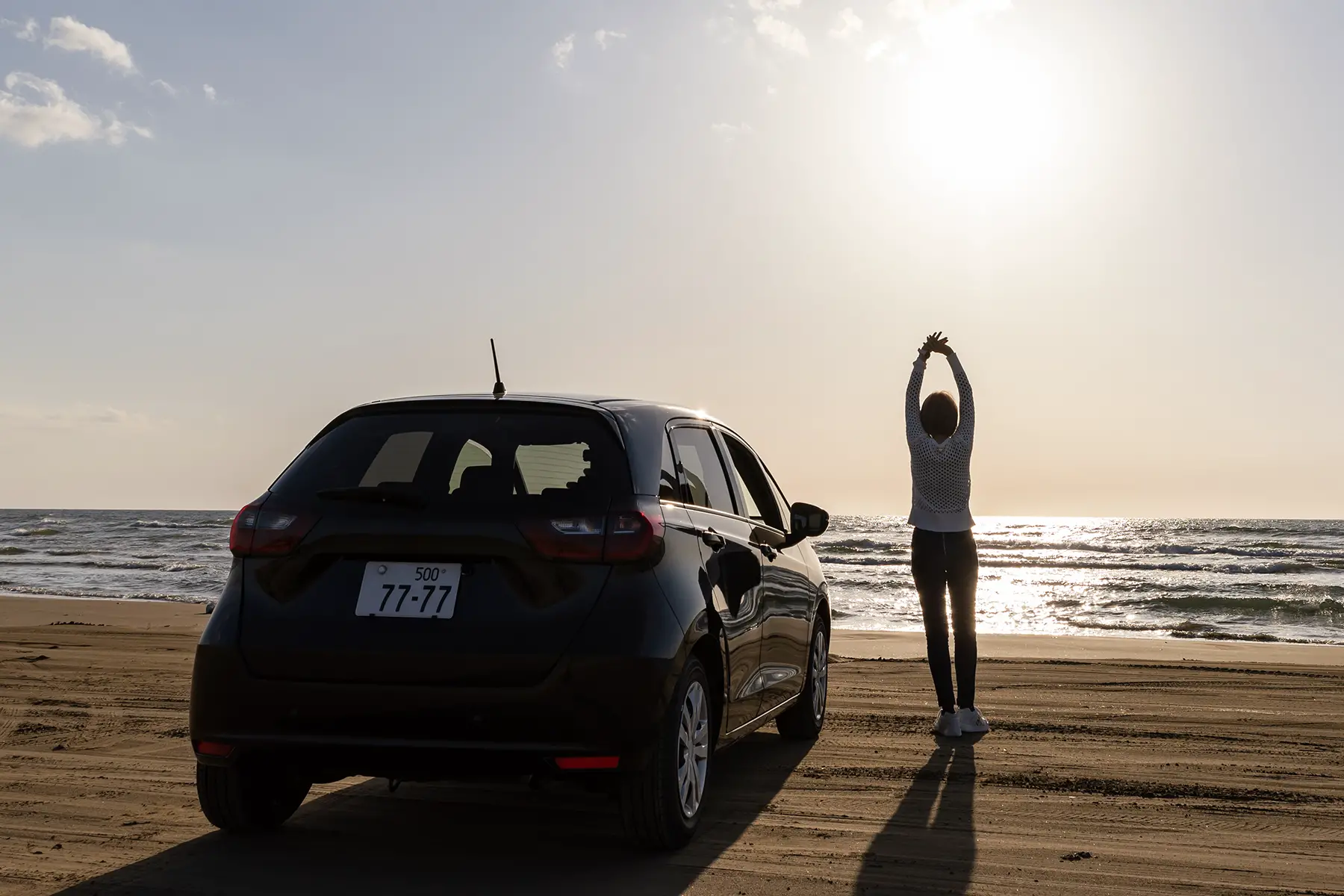
The Ministry of Land, Infrastructure, Transport and Tourism (MLIT) (国土交通省) oversees all aspects of transportation in Japan. This includes road (道路) and highway (高速道路) construction and maintenance, vehicle safety and emissions standards, driver licensing, and traffic enforcement.
Meanwhile, the non-profit Japan Automobile Federation (JAF) (日本自動車連盟/JAF) works closely with the government and deals with roadside assistance, insurance, driver training, and license translations.
Who can drive in Japan?
The legal minimum driving age in Japan is 18 years old. Once you reach this age, you can begin taking driving lessons and applying for a driver’s license.
Notably, expats living in Japan can either have their foreign driver’s license translated or take driving tests in Japan to obtain one. If they choose the latter, they will have to take a written and practical exam, which is only available in English and other languages at select test centers.
The requirements for getting a driver’s license in Japan also depend on where your original license was issued. For instance, if you got it in one of the countries listed below and lived there for three months after passing the test, you are exempt from taking the written and practical driving tests in Japan:
- Australia
- Canada
- EU Countries
- New Zealand
- South Korea
- Switzerland
- Taiwan
- The UK
- The USA (Hawaii, Maryland, Ohio, Virginia, and Washington only)
If you come from one of these countries, you will need to obtain an official translation from your local JAF branch, which costs ¥4,000. You will then need to bring the translation and other documentation to an official Driver’s Licensing Center (運転免許試験場).
Types of licenses
Once you have done that, you will receive one of three types of license:
- Green (グリーン免許): For beginner drivers or those on their first Japanese license; lasts for three years
- Blue (ブルー免許): For your first renewal or a further renewal if you have received three penalty points due to traffic violations, it lasts for three years
- Gold (ゴールド免許): This rewards drivers with perfect track records; if you have driven for five years without receiving any penalties for road infringements, you will receive this for five years
Tourists and visitors on short-term stay visas – such as working holiday visas – can also drive in Japan using an International Driving Permit (IDP) (国際運転免許証).
Driving licenses in Japan
Most of the information on a Japanese driving license will appear in Kanji which is one of the three writing systems (or alphabets) in the Japanese language.
The license will contain the following information:
- A photograph of the driver
- Driver’s name
- Driver’s address
- Driver’s date of birth
- Driver’s gender
- Driver’s nationality
- Driver’s license number
- Date of issue and expiration date of the license; this will appear in the colored strip to indicate the category of your license: blue, green, or gold
- Categories of vehicles that the driver is licensed to operate
- Any restrictions on the driver’s license, such as corrective lenses or automatic transmission only
- Date of the driver’s last renewal examination
Getting a driving license in Japan
The process can be quite intensive if you are required to take the Japanese driving tests. Moreover, most driving schools in Japan offer little-to-no support or information in English. Paying for a translator every step of the way is expensive, and in many cases, not allowed.
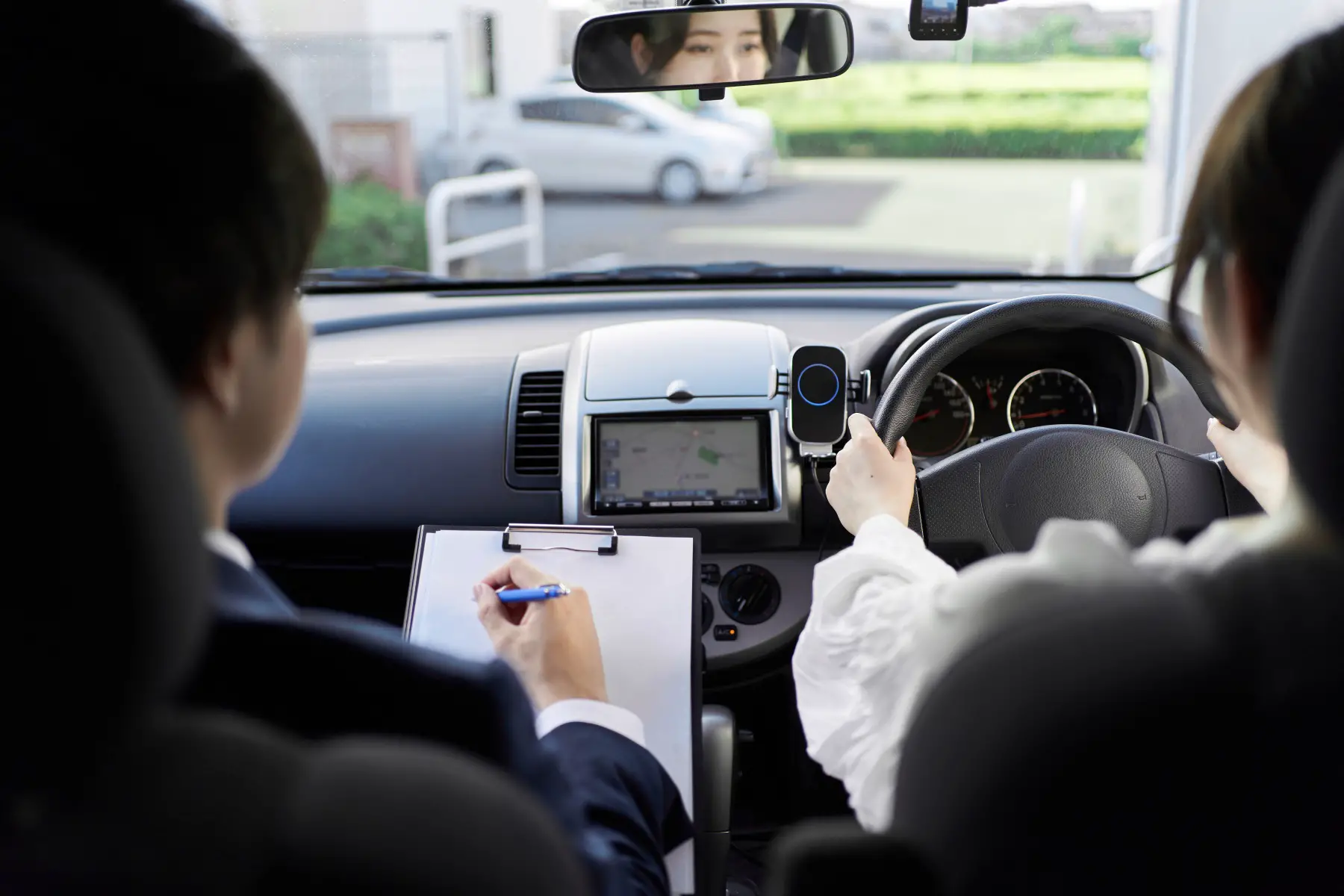
The process for getting a Japanese driver’s license is as follows:
- Get a learner’s permit: To get this, you will first need to pass a multiple-choice test on driving and road safety, scoring at least 45 out of 50
- Upskilling: Within the next six months, you will need to take written and practical lessons in preparation for your final tests
- The written test: This includes 100 questions, and you need to score a minimum of 95 to pass
- The practical test: This takes place at the test center
The JAF publishes and sells an English-language edition of Japan’s Rules of the Road, which explains the country’s traffic rules.
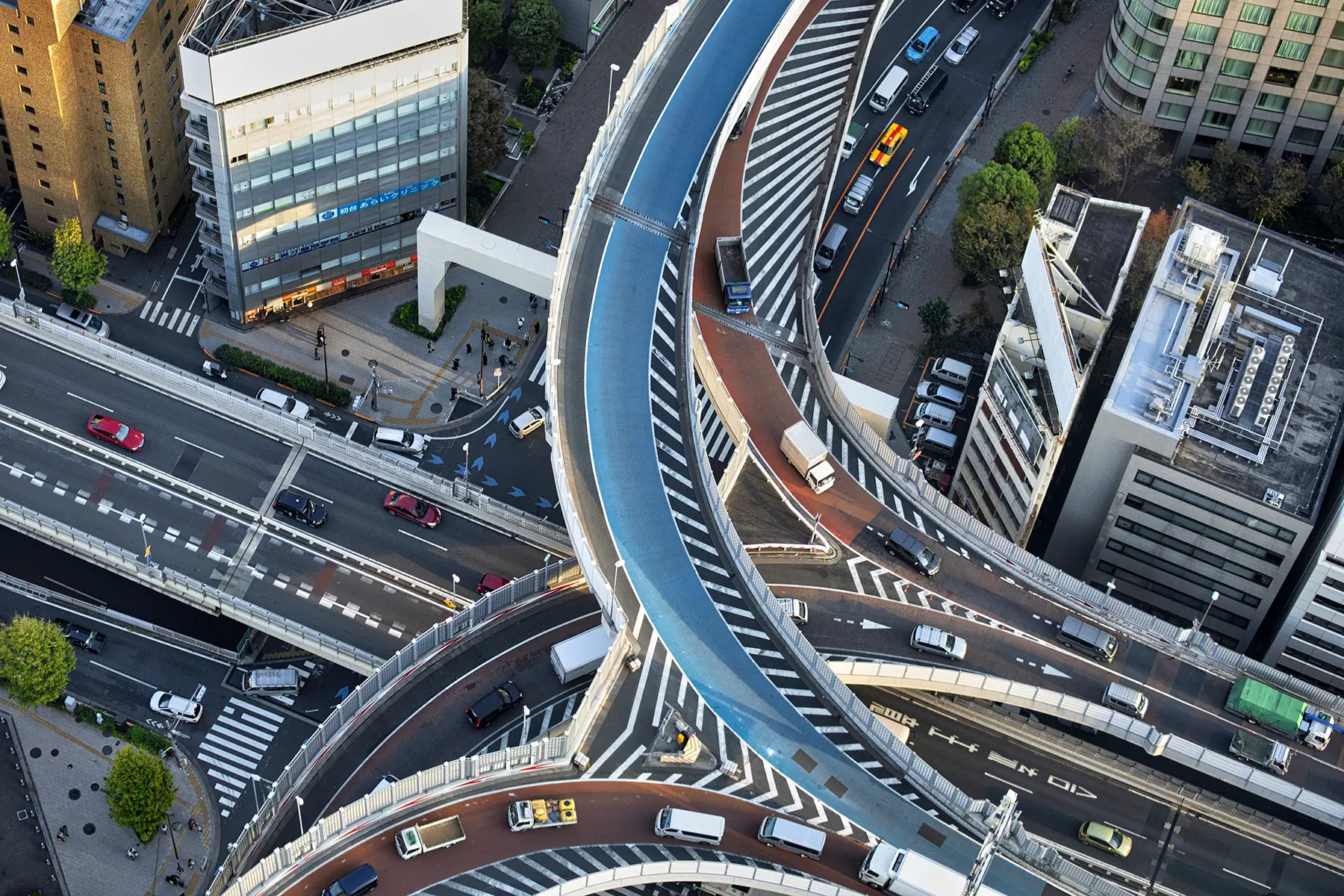
Notably, Koyama Driving School is the first authorized driving school for foreigners in Japan and offers driving lessons in English. It has branches in Tokyo and Yokohama (横浜). EDS International Driving School also provides these in Tokyo and Saitama (埼玉).
Exchanging a foreign driving license in Japan
If you obtained your original driver’s license in a country that is not mentioned in the list above, the process for obtaining a Japanese license is as follows:
- Go to your local JAF branch with a copy of your driving license, any other official licensing documentation, and your Japan residence card
- The official translation will be posted to your address in one to three weeks
- Go to a Driver’s Licensing Center; some may require you to book an appointment and a few will provide English-language support
- You will need to submit: the official translation; your residence card and passport (for copies); a residence certificate, obtained from your ward office; a 3cm x 2.4cm photo; and any previous Japanese licenses
It is important to note that you may need to spend several hours at the Driver’s Licensing Center, which requires many steps. Therefore, it is advisable to take a day off work to complete it and bring a translator if you can’t speak Japanese.
Drivers with disabilities in Japan
Some drivers with disabilities are forbidden from obtaining a license and driving a car in Japan. These include:
- People who cannot sit upright due to trunk impairment, referring to muscles that may be damaged following a stroke
- People who have lost all limbs or the ability to control them
- Those who do not satisfy cognitive or operational requirements for safe driving
There is a national driving disability scheme for drivers with disabilities. People with the following conditions can apply for a reserved parking card (which includes free street parking):
- People with walking difficulties
- People with vision impairment
- People with mental health issues and learning disabilities
The National Police Agency (警察庁) provides more information on parking concessions for drivers with disabilities. Notably, many Japanese manufacturers produce handicap-accessible cars, and websites such as Car Junction and Handicapped Car have directories of available models.
Car registration and maintenance
Japan has a long history in the car manufacturing business. It produces more cars than any other country, except for China and the US, and is responsible for some of the most popular global brands. These include Honda, Toyota, Subaru (スバル), Mitsubishi, Nissan, Suzuki (スズキ), Daihatsu, and Mazda (マツダ). For this reason, buying a car in Japan is much more economical than importing one from abroad.
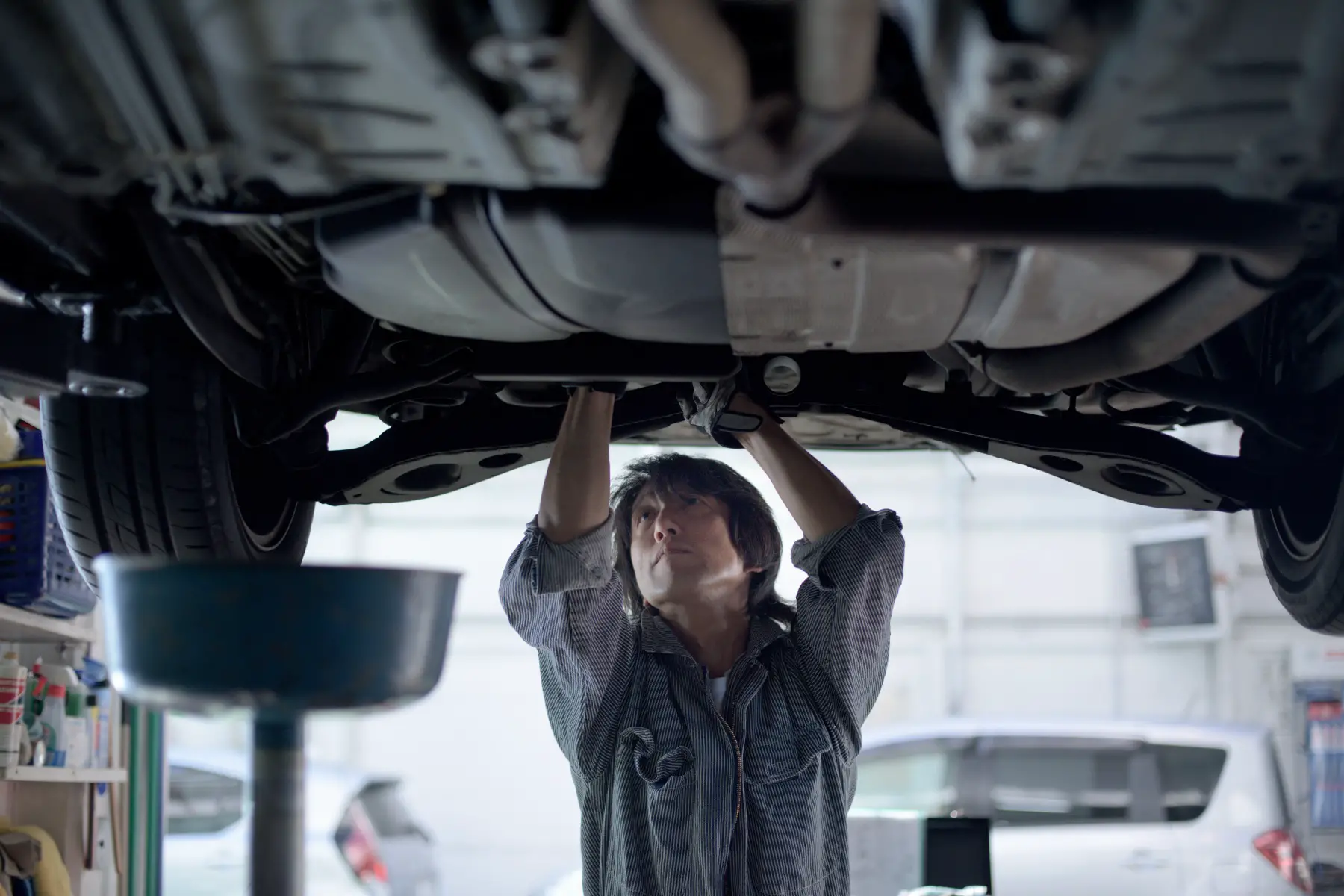
Once you have purchased a car, you will need to register it immediately. To register or transfer ownership, you will need to present the following documents:
- Bill of sale with the seller’s name stamp
- Car parking certificate (車庫証明) and a map of the parking space
- Proof of vehicle tax payment
- Valid driving license
- Vehicle Inspection Certificate (車検)
- Your registered hanko (ハンコ – name stamp) and the Seal Registration Certificate
Notably, obtaining some of these documents involves its own separate process, such as the car parking certificate, which you can apply for at the police station.
You can register your car at your local Land Transport Bureau branch (運輸支局). When you do this, you will need to pay a registration fee, and if your car was previously registered in another prefecture, you will need to purchase new license plates (ナンバープレート).
You are also required to get your car inspected for roadworthiness every two years. This can be done at an authorized service station or official inspection center. The advantage of choosing a service station (ガソリンスタンド) is that they might be able to carry out any repairs if your car fails the test. That said, it is important to know that English-language support will likely be limited.
Driving costs in Japan
Japanese cars tend to be durable, so vehicle owners get a lot of mileage out of their purchases. There are, however, some costs that will mount up over time.
Vehicle maintenance costs
- The biannual vehicle inspection typically costs around ¥40,000: this includes ¥20,000 for inspection and ¥10,000 apiece for safety standards and agent fees
- The cost can increase greatly for larger or imported vehicles, and repair costs will be based on the car’s condition
Road and vehicle taxes
- Automobile tax (自動車税): This varies depending on the prefecture where the vehicle is registered and the size of the engine. A car with a two-liter engine registered in Tokyo costs approximately ¥35,000 annually.
- Weight tax (重量税): This varies depending on the weight of the vehicle and the prefecture where it is registered. A car weighing 1,000kg (1.1T) registered in Tokyo costs approximately ¥8,000 annually.
- Road maintenance tax (道路整備費): This is based on the size and weight of the vehicle. A car with a two-liter engine that weighs 1,000 kg (1.1T) registered in Tokyo requires a one-time payment of around ¥10,000.
- Automobile acquisition tax (自動車取得税): This is based on the purchase price of the vehicle. For a car with a purchase price of ¥3 million, the tax is a one-time payment of around ¥150,000.
Auto insurance
All vehicle owners are required by law to have automobile liability insurance, or jidosha-songai-baisho-sekinin-hoken (自動車損害賠償責任保険). This covers the costs of damages or injuries to third parties caused by the vehicle in the event of an accident. The minimum mandated coverage is:
- Death: ¥30 million
- Injury: ¥1.2 million
- Residual disability: ¥750,000 to ¥40 million
Other driving-related costs
- Road tolls: These can be expensive when traveling between prefectures. For example, driving from Tokyo to Osaka costs ¥13,500 in highway tolls, similar to using the bullet train.
- Fuel costs: The price of fuel per liter in Japan was ¥168 as of May 2023, which is much lower than the global average of ¥246
Driving laws and penalties in Japan
Japan is renowned for its strict adherence to and enforcement of rules, and driving is no exception. Based on Japan’s Road Traffic Act (道路交通法), all pedestrians, cyclists, and drivers have codes of conduct to follow.
Below are the main laws and penalties to be aware of.
General road rules
- Pedestrians, then cyclists, get right of way
- Overtaking is generally permitted, except for in tunnels
- Obey all road signs (道路標識), signals (信号), and indicators, and ensure that all passengers are wearing a seatbelt (シートベルト)
- Children aged six and under must sit in an infant car seat (チャイルドシート)
- Stop signs painted on the road at junctions (止まれ) mean ‘stop completely’, even if no oncoming traffic is present
- Be mindful of pedestrian crossings (横断歩道) when turning
- Snow tires are advisable when driving in the winter, especially in Japan’s mountainous regions
- Zero-tolerance towards driving under the influence
- The vehicle registration, insurance, inspection certificate, and owner manual should be kept in the car at all times
- Drivers should have a valid license on their person when driving
- Traffic violations such as speeding, running a red light, or not wearing a seatbelt can lead to fines starting from ¥9,000 and increasing based on the severity
Speed limits
- Expressways: 100km/h (62mph)
- National highways: Between 60km/h (37mph) and 80km/h (50mph), depending on the location and road conditions
- Urban roads: Between 30 km/h (19mph) and 50 km/h (31mph), depending on the location and road conditions
- Residential areas and school zones: 30 km/h (19 mph)
- Speeding penalties start from ¥9,000 and can increase up to ¥300,000 based on severity and repeat offenses
Driving under the influence
- The blood alcohol concentration (BAC) limit for drivers in Japan is 0.03%, which is in the lowest detectable range
- If you are caught driving while under the influence, you could face a maximum of three years imprisonment and a ¥500,000 fine
- If you are caught driving intoxicated, with a substantially higher BAC, this could rise to five years imprisonment and a ¥1 million fine
Distracted driving laws
- Using a mobile phone while driving is illegal in Japan
- Punishments start with a ¥9,000 fine but can rise to ¥50,000 fine, while repeat offenders may have their licenses revoked
Driving without a license
- If you are caught driving without a valid license, you could face a maximum of three years imprisonment and a ¥500,000 fine
Road signs in Japan
You can find a visual representation of all the road signs used in Japan on the JAF website.
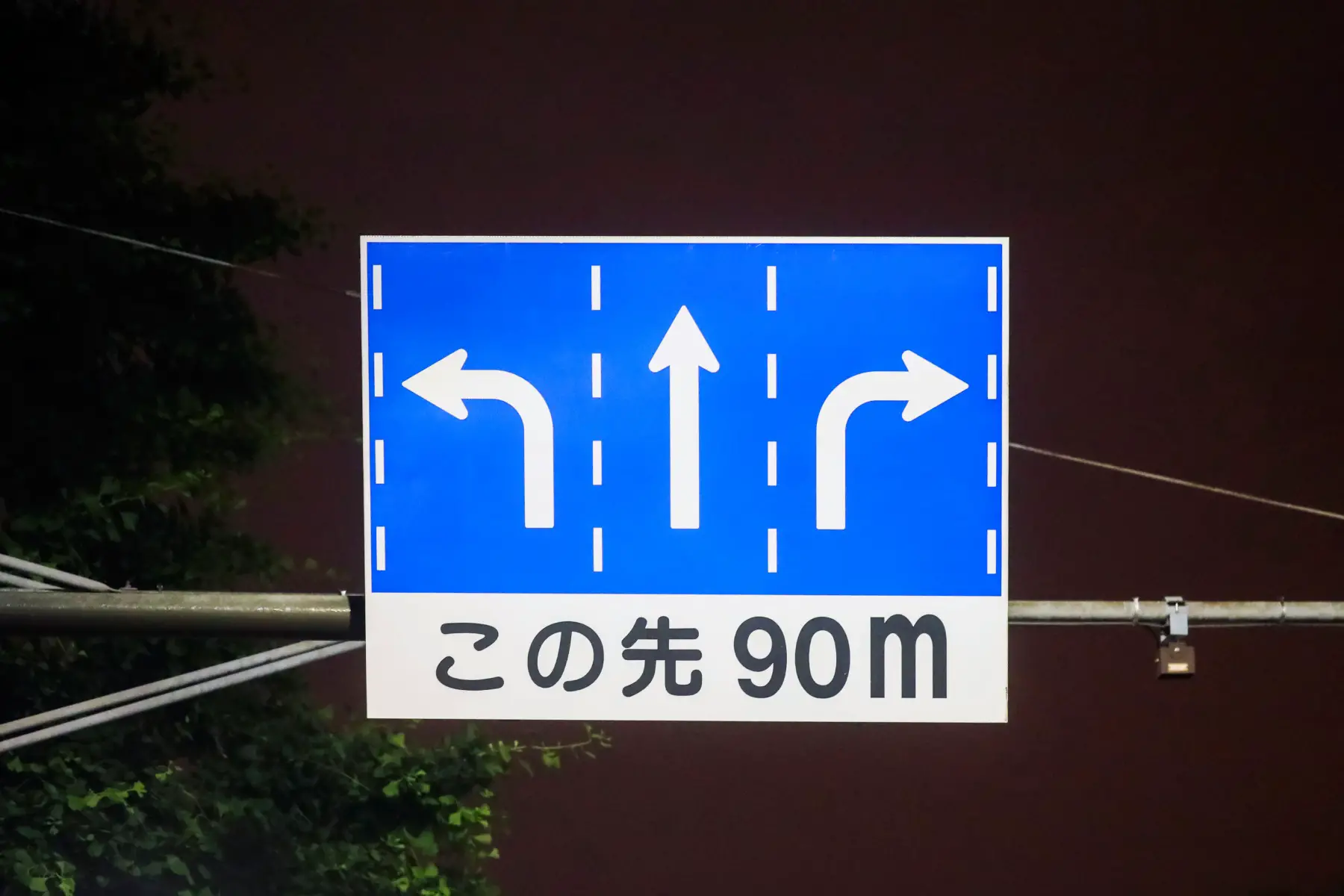
Here is a quick overview of some of the main things to be aware of:
- All speed signs will be in km/h
- Japan uses a green, amber, and red traffic signal system, although they call it 青, ao (blue), 黄色, kiiro (yellow), and 赤, aka (red)
- Japanese road signs, in general, follow the international standards established by the Vienna Convention on Road Signs and Signals, meaning they will be familiar to most drivers
- Some kanji to look out for: 止まれ means stop, 通行止 means road closed to all vehicles and pedestrians, and 優先車線 refers to a priority lane for buses or similar
Traffic information in Japan
Although Japan’s major cities are densely populated, this doesn’t always translate to traffic congestion. As mentioned, Tokyo is one of the least car-dependent cities in the world, meaning that the streets are surprisingly quiet with little noise and congestion.
As you might expect, urban areas will have more traffic during weekday rush hours. However, most of the congestion is on trains and subways, and this will change during public holidays, such as Golden Week in spring. Notably, driving out of Tokyo at the beginning of this holiday can add several hours to your journey.

To make your journey run smoother, Google Maps provides reliable updates on traffic congestion on road networks and offers alternative routes where available. Local app Navitime also offers live updates, route suggestions, and information on weather conditions and road closures.
Parking in Japan
The ease of parking (駐車) in Japan will depend on your location. For instance, there are more parking areas (駐車場) and parking-friendly streets in the countryside where there is more space. However, you will usually have to seek out paid parking lots in the cities.
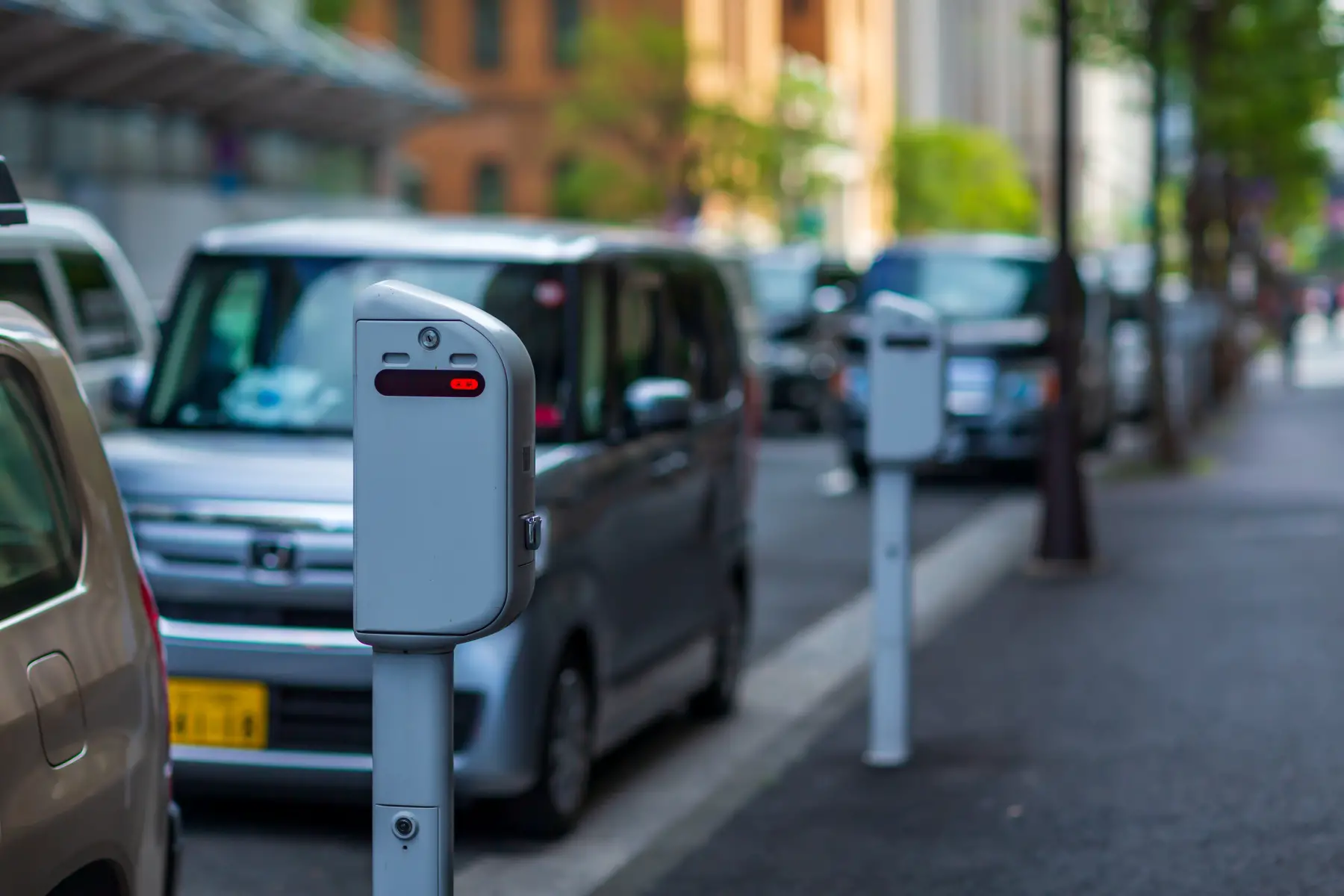
Urban parking areas include:
- Street parking with parking meters
- Coin parking lots, for example, Times Parking
- Automated parking garages, which are often attached to malls and shopping complexes
- Paid parking starts at around ¥100 for 10, 15, or 30 minutes, depending on how busy the area is
- Many convenience stores will also have free parking for customers
If you make a mistake or park illegally, you will likely receive a fine and a penalty sticker. The fine ranges from ¥10,000 to ¥18,000. If you get a penalty sticker, you should do the following:
- Report it to the police station indicated on the violation notice
- Fill out the necessary paperwork at said station, then receive a payment notice
- Pay the fine at a bank and keep a receipt as proof of payment
- If you rented the car, show any documentary evidence to the car rental company or you may face further fines
Road accidents and breakdowns
Road accidents (交通事故) are an unfortunate by-product of getting behind the wheel, and reports suggest that they are as frequent as one per minute throughout Japan.
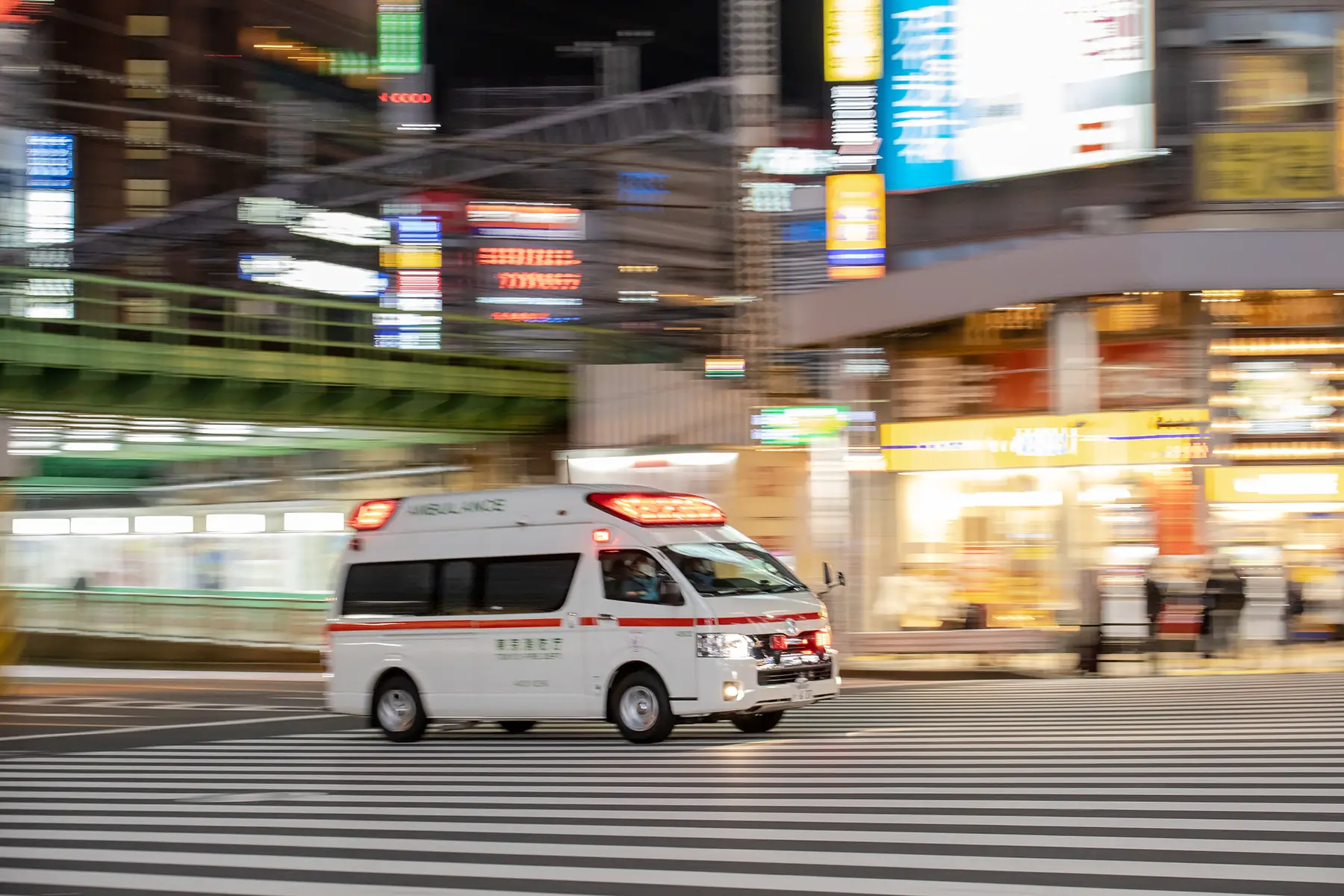
Here are some tips on what to do if one occurs:
Road accidents
- If you are in an accident, call the police on 110 (a Japanese speaker is helpful in this case)
- Drivers should stop immediately, aiding injured persons and preventing road hazards, if possible
- Depending on the nature of the accident, the person who caused it could be liable for reparations
- There are two kinds of accident: damage-only accidents (物損事故), where vehicle or property damage occurs, and personal injury accidents (人身事故), where the accident has caused either injuries or death
- Accommodate the police investigation into the incident as best you can
- You should keep all certificates from the investigation or resulting medical procedures, and contact an English-speaking lawyer if you are unsure of your rights
Vehicle breakdowns
- The JAF offers 24/7 support and roadside assistance (ロードサービス)
- They will ask questions, including location, model of car, and the nature of the issue
- If the car cannot be serviced or repaired on-site, it might be towed to a nearby garage
- You must ensure hazard lights are on if the car cannot be moved from the road
Cars in Japan
You can find more detailed information about owning a car in our article on buying, importing, and selling a car in Japan.
However, here are some of the main things to be aware of:
Buying a car
- If you buy a new car, you can find good financing and leasing deals, as well as 24/7 support if there are any issues
- Second-hand cars (中古車) tend to be in great condition in Japan and have good longevity even after clocking thousands of miles on the road
- There are car dealerships all over the country, from local manufacturers like Honda and Toyota to foreign imports such as Mercedes and Ferrari
- For English-speaking car brokers, check out Asahi Motors, MickLay, and Euro Japan
- For second-hand sellers online, visit Nextage and Car Sensor
Importing a car
- If you are importing a car, you can keep it in Japan for a year tax-free
- You will need to obtain a Carnet de Passages en Douane (CPD) (カルネ) in the country of origin, and the car must undergo an inspection and registration at a branch of the Ministry of Land, Infrastructure, Transport and Tourism (MLIT – 国土交通省)
Renting a car
- Renting a car (レンタカー) is a great and efficient way of driving to regions of Japan that are harder to access via public transport
- You can expect to pay between ¥5,000 and ¥15,000 per day for a standard compact or mid-size car
- Popular dealerships include Nippon Rent-a-car, Times Car Rental, and Toyota Rent-a-car
- Be sure you get insurance and thoroughly understand what to do in case of an accident; Nippon Rent-a-car typically provides this information in English
Selling a car
You have three main options:
- Sell your car privately
- Sell it to a dealership
- Scrap it
You can use the Carnext calculator to assess its market value, and English-speaking companies in Tokyo, such as Asahi Motors, MickLay, and Euro Japan, may help streamline the process.
Required documents include:
- The vehicle inspection certificate
- Tax certificate
- Registered name stamp
- A deed of transfer (譲渡証明書)
Carpooling
Carpooling (相乗り) is not popular in Japan, although there are some local services that connect drivers and passengers traveling in the same direction.
The Noritomo app services users in major cities, including Tokyo, Osaka (大阪), and Fukuoka (福岡). Some companies also offer employee carpooling programs to reduce traffic congestion and carbon emissions.
Car repair in Japan
You will find plenty of car garages (自動車修理工場) and repair shops in Japan’s smaller towns and suburbs. Here are some facilities that offer English-language support:
- Auto Direct (Tokyo)
- Euro Japan (Toyko)
- VANKS (Tokyo)
- Car Factory (Kansai)
- A directory of garages in Okinawa (沖縄)
- JAF offers 24/7 roadside assistance and support
Tips on driving in Japan
Driving in Japan is usually stress-free and can be a lot of fun. Here are some tips to make it more enjoyable:
- Consider taking road trips in the countryside, where you can enjoy fantastic views from mountain passes and coastal carriageways
- If you are driving to another city, make sure to check the parking facilities before you go
- If you are used to driving on the right side of the road, practice in a quiet area before jumping straight onto highways or busy urban roads
- Japanese drivers are typically respectful, so reciprocate this and avoid any road rage
Useful resources
- Japan Automobile Federation (JAP) – the official website of JAP which provides information about driving in Japan, including road safety and support services
- Ministry of Land, Infrastructure, Transport, and Tourism – provides information about the Road Bureau and Road Transport Bureau
- Careco app – a popular car-sharing app that also provides car rentals in Japan



Did you find this guide helpful?