Non-residents can often get a mortgage in Italy, but the process is stricter than many buyers might expect. Approval depends on your nationality, residence status, income, deposit, property type, age at the end of the loan, and each lender’s own rules.
The costliest mistake is usually signing the wrong document too early, especially the compromesso, before your finance timing is clear. In this guide, we’ll explain the steps, documents, costs, and timing points that matter most.
This guide is for general information only, and should not be used as a substitute for professional legal, tax, or mortgage advice.
Key takeaways
- Non-residents can apply for an Italian mortgage, but the bank will usually review the case more cautiously than an application from a resident.
- Many non-resident buyers plan for a larger deposit because some lenders stay below the loan-to-value limits they may offer residents.
- Common requirements include proof of identity, proof of address, income records, tax returns, bank statements, property papers, and an Italian tax ID.
- The mortgage clock usually starts properly only when both your file and the property file are complete.
- Mortgage costs and wider purchase costs need to be budgeted separately.
- The biggest practical risk is signing the compromesso before finance timing, conditions, and fallback plans are clear.
Wise for managing Italian mortgage payments in euros
- Wise for managing Italian mortgage payments in euros
- Hold while you wait: Keep funds in supported currencies until payments are due
- Pay in EUR: Convert and send euros for Italian payments, fees shown upfront

No commitment required
Should you use a bank, broker, or another financing route?
The best route depends on how simple or complex your case is.
| Route | Best when | Main trade-off |
| Direct to a major local bank | Your income is straightforward and you can manage the process yourself | Fewer options if the first bank says no |
| Specialist broker | Your income is foreign, self-employed, complex, or time-sensitive | Added fee and quality varies by broker |
| Home-country finance or remortgage elsewhere | You want to compare a non-Italian route against Italian lending | Different tax, legal, and currency risks may move elsewhere |
If your case is simple, it can be worth approaching major local banks such as UniCredit, Intesa Sanpaolo, Banco BPM, Monte dei Paschi di Siena, and BNL BNP Paribas directly. If your case is more complex, a broker may help you avoid wasting time with lenders that do not like your profile.
Financing from home, or remortgaging another property, is worth comparing too. It may reduce some Italian lender friction, but can also create a different currency or security risk. If you want broader background on rate types, repayment structures, and market context, Expatica’s guide to mortgages in Italy fills in the wider picture. If you later refinance an Italian loan, you may hear the term surroga, which means moving the mortgage to another lender.
How the mortgage process works in Italy step by step
Check legal and lender fit early. Confirm whether you can buy, whether reciprocity matters in your case, and whether the lender will consider your residence country, income type, and property plan.
Get your codice fiscale and cash plan ready. You usually need the tax ID before the process gets far, and you should budget for deposit, taxes, fees, translations, and a currency buffer.
Test lender appetite before you commit. Ask banks or a broker what deposit, documents, and income profile they are comfortable with before you sign anything binding.
Prepare your file in full. Incomplete income records, unclear source-of-funds evidence, or missing translations can slow the case down later.
Plan your payment route. If your income is outside Italy, you may need euros for a reservation deposit, valuation, or notaio bill at different points. Some buyers use a free-to-open Wise account to hold pounds or dollars, convert into euros in stages, and pay Italian recipients as each cost is due.
Apply, then wait for valuation and underwriting. The lender checks your file and the property at the same time, which is why legal or technical property issues can delay a finance decision.
Review the ESIS or PIES carefully. Compare the total cost, rate type, fees, early repayment terms, and conditions before you accept.
Complete at the rogito. The rogito is the final deed of sale, signed with the notaio, the notary who handles the legal completion and mortgage formalities.

Expatica Content Editor
Connor Glaze
Insider Tip
If the seller wants a fast closing, build finance timing into the compromesso so you are not forced to complete before the bank is ready.
Can non-residents get a mortgage in Italy?
Yes, but only on the lender’s terms. Banks usually review non-resident cases more carefully because they may be dealing with foreign income, foreign documents, a borrower they cannot easily assess through local records, and a property that may be used as a second home rather than a main residence.
A non-resident borrower is usually someone who lives and pays tax outside Italy, even if they are Italian by nationality or registered abroad through AIRE, the register of Italians living abroad. In Italy, this is not a separate legal mortgage product. It is a normal mortgage with a stricter risk review for cross-border buyers.
- Nationality and whether reciprocity rules matter
- Country of residence and tax status
- Income type, currency, and stability
- Deposit size, debts, and source of funds
- Property type, location, and condition
- Age at the end of the mortgage term
Who is eligible to buy and borrow?
Purchase rights and lending rights don’t always align perfectly. If you need the wider property sequence first, Expatica’s guide to buying a house in Italy covers the non-finance side of the process.
For EU and EEA citizens, reciprocity is usually not the issue. For some non-EU buyers, legal purchase rights can depend on reciprocity or on residence status, while the lending decision still depends on the bank.
Expatica Content Editor
Connor Glaze
Insider Tip
Test lender appetite before signing a preliminary contract, because a bank may still reject foreign-currency income, short work history, or a property it sees as hard to value.
How much can you borrow, and what deposit is typical?
While there’s no single foreign-buyer cap, but many non-resident applicants plan around a 30% to 50% deposit because some lenders keep loan-to-value limits below what they may offer residents. Looking to buy a holiday home or having non-euro income can push the cash requirement higher.
Treat online percentages as indicative only. The most reliable way to compare offers is through each lender’s ESIS or Italian PIES quote, not through an old headline rate on a generic guide.
What Italian banks check before approving you
Italian banks usually test two things at once: whether you can repay the loan, and whether the property is suitable security. That means a strong salary alone may not be enough if your income is hard to verify, your debts are already high, or the property is difficult to value or resell.
Salaried applicants are often judged on contract type, payslips, and continuity of earnings. Self-employed applicants may need fuller accounts and tax returns. Retired applicants may need to show pension income and a term that still fits the lender’s age-at-maturity rules.
| Factor | What banks look at | Why it matters | How to prepare |
| Affordability | Income, debts, monthly commitments | The bank wants repayments to stay manageable | List loans, cards, maintenance, and other fixed outgoings clearly |
| Income quality | Employment type, tax returns, business accounts, pension proof | Foreign or variable income can be harder to assess | Prepare recent payslips, tax returns, accounts, and supporting letters |
| Deposit and source of funds | Where your cash comes from and how it moved | Anti-money-laundering checks can delay approval | Keep savings records, sale statements, and gift evidence ready |
| Property risk | Valuation, legal status, location, condition | The mortgage is secured on the property | Confirm title, cadastral records, and building compliance early |
Documents you usually need
Most lenders ask for both applicant documents and property documents. Many also want to know early whether you can open an account locally, so it helps to understand opening an Italian bank account before you reach closing.
The codice fiscale, Italy’s tax identification number, is usually needed somewhere in the buying and mortgage process. Some lenders accept foreign documents in the original language, while others ask for sworn or certified translations, so confirm this before you pay for them.
| Applicant documents | Property documents |
| Passport or national ID, proof of address | Draft offer or compromesso, title and cadastral papers |
| Payslips, employment contract, pension proof, or company accounts | Floor plan, energy certificate, and any lender valuation paperwork |
| Tax returns and recent bank statements | Building or planning compliance records if requested |
| Source-of-funds evidence and codice fiscale | Seller and notary paperwork needed for completion |

Income, age, and foreign-currency issues
Non-euro income often receives extra scrutiny because the bank is judging both repayment strength and currency risk. If your income is paid in pounds, dollars, or another currency, the lender may use a tougher affordability assumption than it would for euro income.
Age can matter just as much as income. For example, a 62-year-old salaried applicant paid in pounds may look strong on paper, but if the lender wants the loan cleared by age 75, the shorter term can raise the monthly payment and reduce the amount approved.
What to do before making an offer
Before making an offer, answer three questions: can you legally buy, will a bank consider you, and do you have enough cash for more than just the deposit? The risk here is signing a compromesso, the preliminary purchase contract, on a timeline that only works if every mortgage step goes perfectly.
A finance clause, realistic dates, and a full cash budget matter. If the contract is too aggressive and the lender is slow, you could lose money even if your long-term finances are sound.
What happens after the compromesso?
Once the compromesso is signed, the mortgage usually moves through a short chain of events.
The lender orders or reviews the valuation and checks the property papers.
Underwriters review your income, debts, source of funds, and any translations.
If the case works, you receive an ESIS or PIES quote showing the key terms and total cost.
EU rules give you at least seven days to assess the offer or withdraw, depending on how the rule is applied locally.
After acceptance, the bank, seller, and notaio coordinate the rogito and release of funds.
The most common delays are incomplete cadastral records, missing building compliance papers, late translations, and slow source-of-funds checks.
Costs, taxes, and fees to budget for
Some charges sit inside the mortgage process, while others belong to the wider purchase whether you borrow or not. If you mix them together, your cash plan can go wrong very quickly.
| Cost type | What it relates to | Who charges it | When paid | What to verify |
| Valuation fee | Property appraisal for the lender | Bank or appointed valuer | Early in the application | Whether it is refundable if the loan fails |
| Arrangement or admin fee | Setting up the mortgage file | Bank | Before offer or at completion | How it affects total borrowing cost |
| Broker fee | Advice or lender sourcing | Broker | Varies by contract | Whether the fee is due on application, offer, or completion |
| Notaio fee | Mortgage and purchase deeds | Notaio | Near completion | What legal work is included |
| Translation and legalization | Foreign documents made acceptable in Italy | Translator or certification authority | As documents are prepared | Which documents really need certified translation |
| Imposta sostitutiva | Mortgage tax withheld by the bank | Bank | At or around completion | Whether prima casa, first-home status, changes the rate |
| Purchase taxes and agent fees | Wider buying costs, not mortgage-only costs | Tax authority and agent | Usually near completion | Whether the figure belongs in your mortgage budget or your purchase budget |
If you are comparing offers, focus on the total borrowing cost, not just the headline rate. And if a guide quotes exact fees or mortgage rates for foreigners in Italy, check when those figures were last verified.
Ongoing costs and insurance
Owning the property brings ongoing costs beyond the mortgage payment. These can include buildings cover, possible life cover, local property taxes, condominium charges, maintenance, and utility standing costs.
Lender-required cover and optional cover are not always the same. Many lenders want buildings insurance in place, while life cover may be recommended or sold alongside the loan without being legally identical to a mortgage condition. Before choosing cover, compare home insurance in Italy and the wider insurance in Italy market so you know what is compulsory, what is optional, and what level of cover the bank will accept.

Managing your Italy property payments with a Wise account
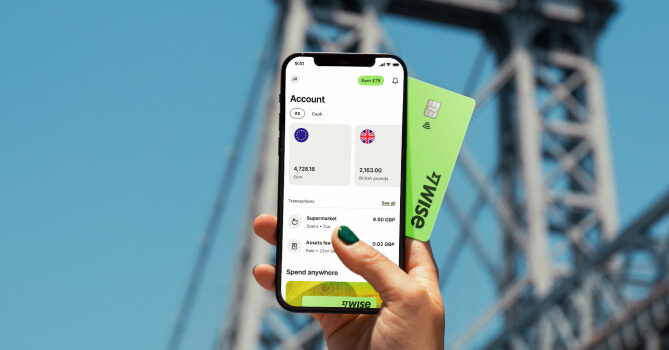
The mortgage is only one part of the cash flow. You may also need to pay a reservation deposit, valuation fee, notaio invoice, utilities, renovation costs, or regular property bills from abroad.
A free-to-open Wise account can be useful if you want to hold money in GBP, USD, and EUR, and convert only what you need as each euro cost falls due. That can make budgeting easier when your income stays outside Italy but many of your purchase and setup costs are in euros. It will not improve your mortgage approval chances, and you should still ask the lender whether repayments must come from an Italian account before you finalise your payment route.
Final thoughts
Non-residents can often get a mortgage in Italy, but only on the lender’s terms and after a stricter review than a resident would face. Banks look at your income, currency, deposit, age at the end of the loan and the property itself. Many non-resident buyers plan for a larger deposit, commonly 30% to 50%, though this varies by lender and shouldn’t be treated as a fixed rule.
The most important lesson is timing. Test lender appetite before you sign anything binding, and don’t sign the compromesso until your finance timeline, conditions and fallback plan are clear. If the seller wants a fast closing, build finance timing into the contract, so you aren’t forced to complete before the bank is ready. Prepare your documents early, including your codice fiscale, income records, source-of-funds evidence and any translations, because incomplete files are a common cause of delay.
Finally, budget for the full picture. Mortgage costs (valuation, arrangement, notaio and imposta sostitutiva) are separate from wider purchase costs and ongoing costs like insurance and local taxes. Compare lenders by the total borrowing cost in the ESIS or PIES, not just the headline rate. If your income is outside the eurozone, plan how and when you’ll convert euros for each payment. With a realistic cash plan and a clear contract timeline, you can avoid the costliest mistakes.
FAQ
Mortgages in Italy for non-residents
Can foreigners get a mortgage in Italy? 
Foreigners can often apply if they can legally buy in Italy and if a lender likes their file. The bank will still judge the deposit, income profile, documents, and property before it agrees to lend.
Do you need an Italian bank account for a mortgage in Italy?
Often, yes, or at least it helps. Many lenders prefer repayments from an Italian account, and having one can also simplify the purchase process, but you should confirm the exact setup with the bank handling your case.
How long does it take to get mortgage approval in Italy?
There is no fixed timetable. For non-residents, the process often takes several weeks once the file is complete, but translations, property paperwork, valuation issues, and source-of-funds checks can all lengthen the process.
Can UK citizens still get a mortgage in Italy?
Yes. UK citizens can still be considered for an Italian mortgage, but banks usually assess them as non-EU non-resident applicants unless they hold relevant residence status, so deposit size, documentation, and income structure all matter.
What happens if your mortgage application is rejected?
Ask whether the problem was the deposit, your documents, or the property itself. One rejection does not always close every route, but compare alternatives before you sign, or re-sign, any binding purchase document.
Sources
Expatica’s experts are all about providing the most up to date and accurate information. All guides are fact checked, and whenever we use external sources (like government websites or research papers) we’ll make a note of them here so you can check them out too.
- Official guidance on codice fiscale, Agenzia delle Entrate
- Official explanation of reciprocity rules, Ministero degli Affari Esteri e della Cooperazione Internazionale
- EU consumer rights page, Your Europe
- Consumer guide used for mortgage terminology, Bank of Italy
- Expatica Italy, Mortgages in Italy: home loans and interest rates in 2026