
'%20id='ico-down'%20stroke='%23000000'%20stroke-width='1.5'%3e%3cg%20transform='translate(1092.250000,%20254.750000)'%3e%3cpolyline%20id='Path-2-Copy-4'%20transform='translate(5.500000,%202.750000)%20scale(1,%20-1)%20rotate(-180.000000)%20translate(-5.500000,%20-2.750000)%20'%20points='0%200%205.5%205.5%2011%200'%3e%3c/polyline%3e%3c/g%3e%3c/g%3e%3c/g%3e%3c/svg%3e)


Housing
Buying & Selling
Buy to let in Italy: costs, taxes, and yields
Buying to let in Italy can mean renting a property to long-term tenants or short-stay guests, but the purchase price is only part of the calculation. Taxes, local rules, condo charges, vacancies, financing, and ongoing euro costs can all affect your eventual return.


This guide explains the main costs, taxes, rental models, and mortgage considerations for expats and non-residents. Rules vary by comune and individual circumstances, so always check the local legal and tax position before committing to a purchase.
Key takeaways
- Upfront taxes can significantly increase the cash you need at closing, and costs differ depending on whether you buy from a private seller or a developer.
- Long-term and short-term lets can have different income potential, management demands, and local rules, so check what applies in your comune.
- Factor in IMU where applicable, TARI, condo fees, maintenance, vacancies, and other recurring expenses rather than relying on gross rental yield.
- A low purchase price does not automatically make a property a good investment. Compare local property values, achievable rents, demand, and resale prospects using OMI data and local market research.
- Exchange rates and transfer fees can affect your deposit and ongoing euro expenses, so compare your bank with alternatives such as Wise before transferring large amounts.
Should you buy to let in Italy or rent first?
Buying a property in Italy can make sense if you expect to keep the property for several years, know the area well, and have a clear rental plan. It can also suit people who want an Italian base and are comfortable managing repairs, paperwork, taxes, and tenants from abroad.
Renting a property first is often lower risk if you have not chosen a city yet, are unsure how you will use the home, or are still learning how local rules work. Liking an area as a visitor is not the same as knowing its rental demand, tenant market, building costs, and local restrictions as a landlord.
Use this checklist before you buy:
- Can you hold the property for several years?
- Do you know whether you are targeting students, professionals, families, or short-stay guests?
- Can you handle repairs and emergencies from abroad, or pay someone local to do it?
- If your rental plan changes, would you still be happy owning the property?

What makes a strong buy-to-let property in Italy?
A strong buy-to-let property in Italy usually starts with practical details, not postcard views. Local rental demand, property condition, condominium costs and rules, and rental regulations can matter more to your returns than a charming façade or a low asking price.
Long-term vs short-term rentals
| Rental model | Income pattern | Management load | Regulatory requirements |
| Long-term rental | Steadier monthly rent | Lower turnover | Lease, registration, tax, and tenancy rules apply |
| Short-term rental | Higher gross potential in strong seasons | High turnover and guest support | CIN, guest reporting, safety requirements, plus applicable regional and local rules |
Long-term letting may suit owners who want steadier occupancy and less day-to-day admin. Short-term letting can generate stronger gross revenue in the right market, but it also brings more administration and regulatory requirements. Properties used for tourist and short-term rentals are covered by Italy’s national Codice Identificativo Nazionale (CIN) system, alongside applicable regional and municipal requirements.
Best locations and property types for different goals
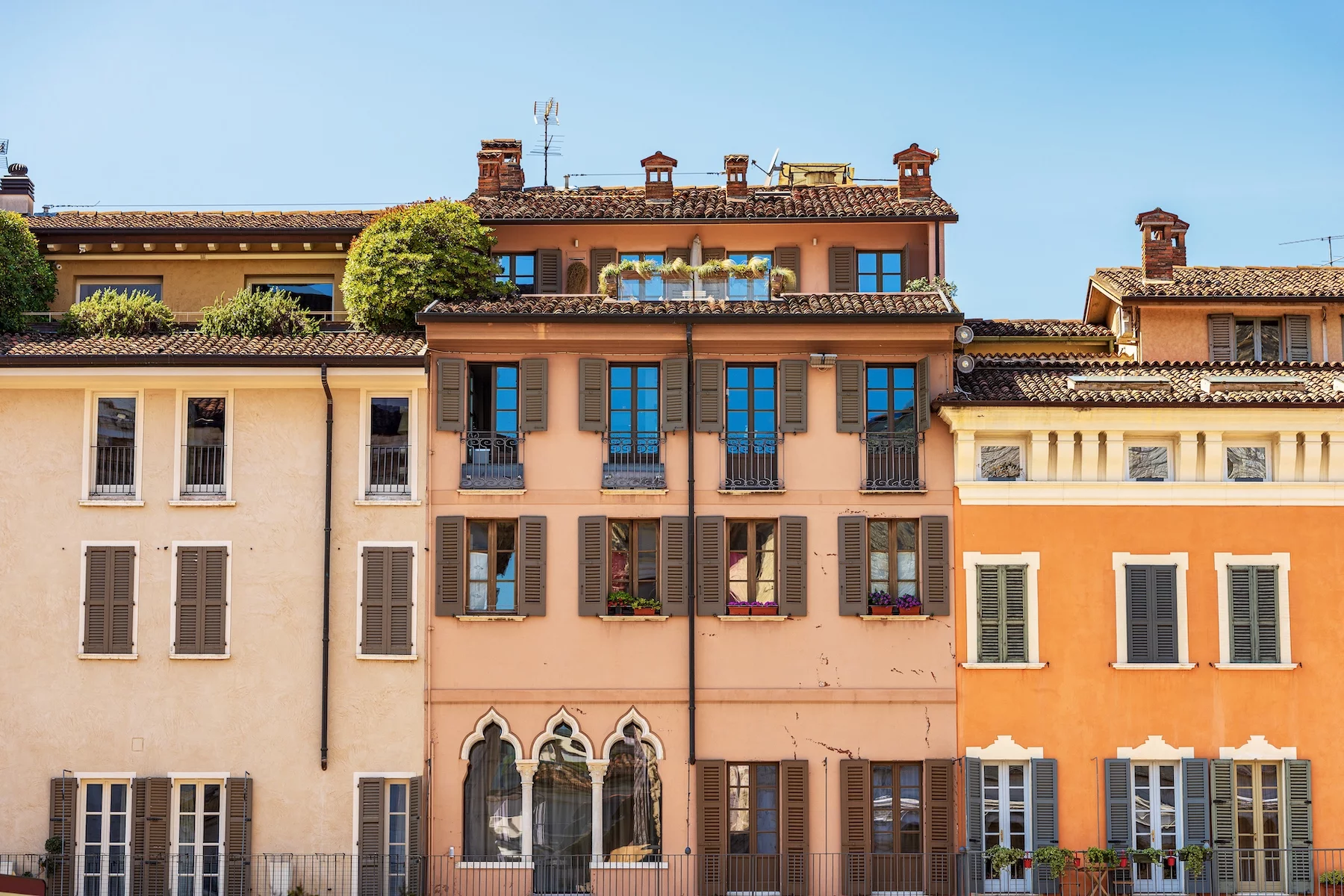
Tourist cities are not automatically the best places for a buy-to-let property in Italy. Large cities and university centres may offer broader professional, student, and long-term rental demand, while tourism-heavy markets can be more exposed to seasonal demand and short-term rental rules.
Smaller towns can have lower purchase prices, but investigate year-round tenant demand and the depth of the resale market before assuming a cheap property will produce a good return.
If you live abroad, a straightforward apartment in a well-run condominium may also be easier to manage than a detached house with a garden, pool, or extensive maintenance needs.
- Major cities and university centers may offer broader professional, student, and long-term rental demand.
- Tourist centers can work for short stays, but check national, regional, municipal, and condominium requirements before buying.
- Smaller towns can offer lower entry prices, but tenant demand may be thinner and resale can be less liquid.
- Newer, renovated, or well-documented apartments may be easier to assess and maintain, but check the actual condition, paperwork, and ongoing costs rather than relying on age alone.
What costs, taxes, and returns should you model?
The key number in a buy-to-let investment in Italy is the total cost, not just the asking price. In addition to the costs of buying the property, you will need to consider:
- Add-on costs of buying, such as taxes and professional fees
- Ongoing property maintenance costs
- Property taxes and insurance
- Cost of any vacant periods
- Money transfer and conversion costs, if you earn outside the eurozone
It also helps to distinguish gross from net rental yield. Gross yield compares annual rent with the property price before expenses, while net yield accounts for relevant ongoing costs such as maintenance, condominium charges, insurance and vacancy.
When comparing properties, use the same method each time and be clear about whether your calculation includes financing, income tax and purchase costs.
Upfront buying costs
| Cost type | When it applies | Typical basis | How to verify |
| Registration tax or VAT | At purchase | Depends on seller, VAT treatment, and any available tax relief | Agenzia delle Entrate |
| Notary fee | Before completion | Depends on transaction and complexity | Quote from the notaio |
| Agent commission | If an agent is involved | Often a percentage of purchase price | Agency mandate or fee agreement |
| Geometra, lawyer, translation | During due diligence and closing | Flat fee, percentage, or hourly (depending on service) | Engagement letter or quote |
| Mortgage setup costs | If you borrow | Valuation, lender fees, mortgage tax, insurance | Lender fee sheet and mortgage offer |
Your route for funding the purchase can also affect the true cost. If you earn outside the eurozone, compare the exchange rate and transfer fees offered by your bank with alternatives such as Wise before converting a large deposit or purchase balance into EUR. Even a small difference in the effective exchange rate can materially affect the cost of a large property transfer.
Ongoing taxes and rental income
Imposta Municipale Unica (IMU) is a municipal property tax, although qualifying main homes are generally exempt, apart from certain higher-value cadastral categories. A buy-to-let property will therefore normally fall within the IMU system, with the applicable rate depending on the property and comune.
Tassa sui Refuti (TARI) covers municipal waste services, while condominium charges, maintenance, insurance and periods without a tenant also need room in your budget.
IMU rates and TARI charges are determined locally, so do not assume that costs for a similar property in another comune will apply to yours.
Rental income from Italian property is generally taxable in Italy. Eligible individual landlords may be able to choose cedolare secca, a substitute flat-tax regime, instead of ordinary taxation for qualifying rental income. However, there is no universally best option: the appropriate treatment depends on the rental arrangement, the property and your personal tax circumstances.
Before assuming the property will produce the return you want, verify:
- The local IMU rate using the municipal rate search tool.
- The applicable TARI rules and whether your comune offers any relevant reduction for seasonal or part-year use.
- Recent condo meeting minutes, outstanding arrears and planned extraordinary works.
- Likely maintenance, insurance, and vacancy costs.
- The tax treatment of your rental income with Agenzia delle Entrate, your comune, and a commercialista.
What checks matter before you buy?
Expat landlords need to look at a property through a rental lens. A home that appears rentable can still run into ownership, planning, condominium, or regulatory problems that only become obvious when you try to let or resell it.
Due diligence documents and professionals
Notary insight: Italy’s National Council of Notaries recommends involving a trusted notaio early, before signing a purchase proposal or preliminary contract. These documents can create binding commitments, so carrying out legal and property checks early can help prevent expensive surprises.
- Get your tax code (codice fiscale): You need it for the purchase, tax filings, and many banking and administrative steps. Foreign buyers can request it through Agenzia delle Entrate or an Italian consulate.
- Check your right to buy: If you are a non-EU national, ask the notaio whether reciprocity rules, your residence status, or an international agreement affects your ability to purchase property in Italy.
- Check ownership and liens: Confirm who owns the property and whether mortgages or other claims exist.
- Match the cadastral record: Compare the cadastral plan with the real layout and use of the home.
- Review planning and renovation compliance: Old works, extensions, or conversions can create trouble if they were never regularized.
- Confirm the energy performance certificate: Check that the property has the required Attestato di Prestazione Energetica (APE), which documents its energy performance and is relevant when selling or renting it.
- Use the right professionals: The notaio has an independent and impartial role rather than acting as your personal lawyer. Depending on the property and your circumstances, you may also want your own avvocato for legal advice and a geometra, architect, or engineer for technical and planning checks.
Local rental rules, permits, and compliance
Short stays involve several layers of rules: national requirements apply alongside regional and municipal rules, and the exact obligations depend on the location and rental setup. These can include:
- the national CIN identification system
- guest-reporting and safety requirements
- regional or local registration procedures
- tourist-tax obligations
- other municipal rules
Condominium regulations also deserve attention. If short-term letting is part of your investment plan, have the relevant rules and documents checked rather than assuming that owning the apartment automatically means you can operate it exactly as you intend.
Long-term letting is not friction-free either: the type of tenancy agreement, registration and tax requirements, local tenant demand, condominium costs, and the condition of the building can all affect how practical and profitable the property is to run.
How to verify before you buy:
- Ask the comune and relevant regional authority which registrations or procedures apply to your planned rental model, and check the national requirements for short-term rentals where relevant.
- Ask your notaio or adviser to confirm any purchase restrictions that could apply to you as a foreign buyer.
- Review the condominium regulations, recent meeting minutes, outstanding arrears, and any planned extraordinary works.
- Check recent utility, condo, insurance, and maintenance records to understand the property’s likely running costs.
- Confirm the property’s cadastral, planning, and building documentation with an appropriate professional rather than relying only on the seller or agent.
- Benchmark local sale and rental ranges in the OMI quotations database, remembering that OMI gives broad ranges, not a property-specific valuation.
How do financing and cross-border money flows work?
Non-resident buyers can sometimes borrow from major Italian banks, although eligibility and lending criteria vary. Non-residents can face stricter affordability checks, more documentation, and lower loan-to-value limits than resident buyers.
If you earn outside the eurozone, you also need to factor in the currency gap between your income and your Italian mortgage and property costs.
Mortgages, deposits, and euro cash flow
A non-resident mortgage in Italy can be an option, but lenders may ask for detailed proof of income and assets and require a larger deposit than you expect. Requirements can also depend on where you live, the currency and source of your income, and the property you are buying.
Before making an offer, check whether:
- Your deposit still works if the exchange rate moves against you.
- Monthly EUR costs remain affordable during periods without rental income.
- Financing gives you useful flexibility or simply adds another layer of cost and risk
Managing transfers and local spending with Wise
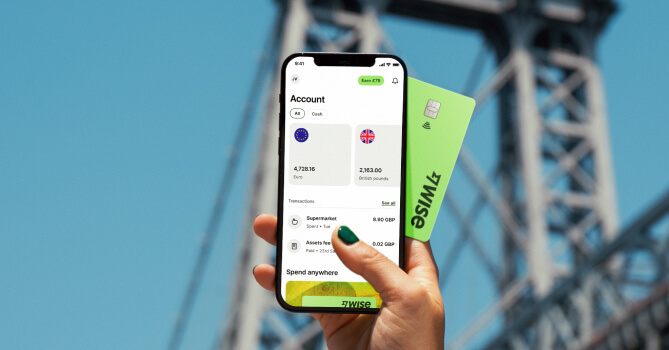
If you are funding a purchase from abroad, or paying for furnishing and renovation work later, Wise can help with the cross-border payments. A Wise account lets you hold 40+ currencies, convert between currencies, and send money internationally. Eligible customers can also get EUR account details and use a Wise card for spending abroad.
FAQ
Frequently asked questions about buy to let in Italy
Can foreigners buy rental property in Italy? 
Yes, in general foreigners can buy rental property in Italy. EU and EEA citizens can generally buy without a reciprocity check, while some non-EU buyers may need to meet Italy’s reciprocity rules depending on their nationality and residence status. Buying property does not automatically give you Italian residency or visa rights.
Is rental income taxed in Italy for non-residents?
Yes. Rental income from Italian property is generally taxable in Italy, including for non-residents. The exact treatment depends on the property, rental arrangement, your circumstances, and whether you qualify for a regime such as cedolare secca, so compare the available tax options with a qualified adviser rather than assuming the flat-tax regime is automatically best or available to you.
Do I need a codice fiscale to buy a buy-to-let property in Italy?
Yes. The codice fiscale is the Italian tax code used in property, tax, and many banking or utility processes, so you usually need one early in the purchase process. Check the latest application procedure with the Agenzia delle Entrate guidance before you start.
Can I get a mortgage in Italy as a non-resident?
Sometimes, yes. Some lenders do offer non-resident mortgages, but loan-to-value limits, affordability requirements, and document checks may be stricter than for resident borrowers. Compare lenders or speak to a broker familiar with non-resident buyers before relying on finance to make an offer.
Is short-term letting allowed everywhere in Italy?
Not necessarily. Short-term and tourist lets are subject to national rules, including the CIN identification system, as well as regional and municipal requirements that can vary by location. Before buying for this model, check the property’s registration and safety requirements, local restrictions, tourist-tax rules, and guest-reporting obligations, as these can materially affect whether the property works as a short-term rental.



Did you find this guide helpful?