
'%20id='ico-down'%20stroke='%23000000'%20stroke-width='1.5'%3e%3cg%20transform='translate(1092.250000,%20254.750000)'%3e%3cpolyline%20id='Path-2-Copy-4'%20transform='translate(5.500000,%202.750000)%20scale(1,%20-1)%20rotate(-180.000000)%20translate(-5.500000,%20-2.750000)%20'%20points='0%200%205.5%205.5%2011%200'%3e%3c/polyline%3e%3c/g%3e%3c/g%3e%3c/g%3e%3c/svg%3e)


Healthcare
Women's Healthcare
Views on breastfeeding around the world
When deciding whether to breastfeed, each new mother is influenced by her physical ability, personal beliefs, and cultural customs. But how much do attitudes differ when it comes to breastfeeding around the world?
Cigna Global
Enjoy peace of mind while living abroad with Cigna Global’s long-term international health insurance plans (12+ months). Get tailored coverage, direct billing with many providers, complex case management, and global care on demand, with access to a network of 1.5+ million doctors, specialists, and therapists.

Breastfeeding is important, wherever you are
First, health professionals almost universally recognize breastfeeding as the best way to nourish a baby. A recent worldwide survey of pregnant women and new mums found that a majority felt breastfeeding is better than using infant formula; correspondingly, pregnant women feel guilty if they did not breastfeed their babies.
When it comes to the ideal length of time to breastfeed a baby, however, there was more variation. Most mothers in Brazil, China, Germany, Hungary, Mexico, the United Kingdom, and the United States feel six to 12 months is ideal. On the other hand, French mothers favored a shorter period of three to six months, while Turkish mothers felt it better to carry on for 12 to 24 months.

In every country surveyed, a sizable percentage (between 26–58%) of respondents felt that a two-year-old is too old to be breastfed. However, the WHO’s views on breastfeeding recommend that mothers should continue throughout the first two years of a baby’s life.
Attitudes to public breastfeeding around the world
The survey also revealed varying attitudes on public breastfeeding around the world, with 41% of mothers in France and 47% in China the most likely to find it an awkward experience. On the opposite end of the spectrum, only 7% of Hungarian mothers and 13% of Mexican mothers are uncomfortable breastfeeding in public. A large number of respondents in all of the countries (between 19–63%) believed it was natural to breastfeed in public.
Approaches to breastfeeding around the world
Many cultures have their own individual beliefs and customs when it comes to breastfeeding. Some of these are helpful to mothers and babies; others are fairly harmless; while others could potentially have a negative impact on a baby’s health.
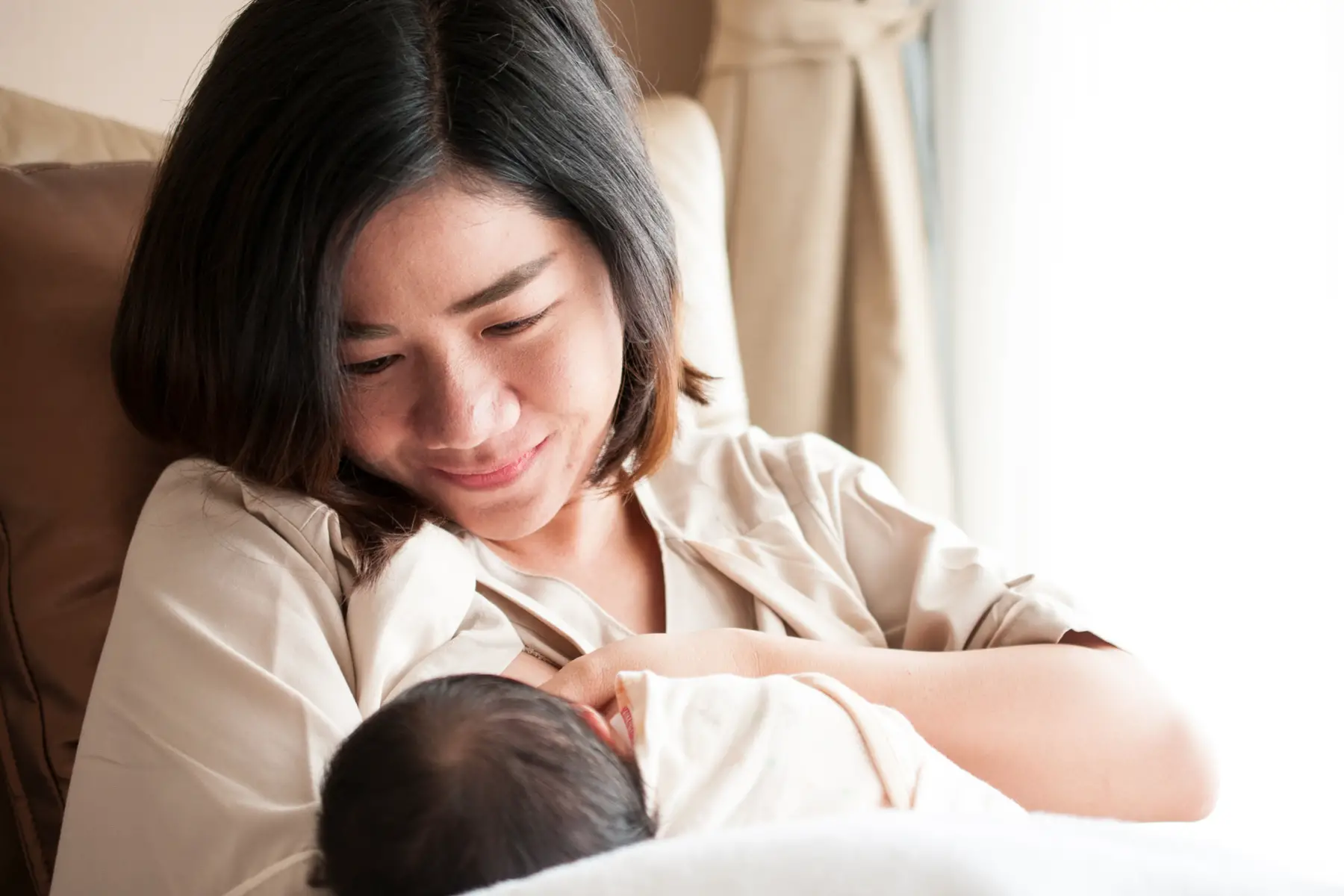
Here are a few examples of cultural practices for breastfeeding around the world:
- In many countries, including India, there is a widespread belief that colostrum (the nutritionally-dense liquid produced by a mother immediately after her baby’s birth) is impure and dirty. As a result, parents prefer to dispose of the colostrum. The baby is then fed formula for the first few days of its life.
- Lebanese families often believe that a mother can pass a stomach ache onto her baby through her breastmilk. Similarly, many believe that eating foods such as cauliflower and cabbage can cause the nursing baby to develop gas and bloating.
- In predominantly Muslim countries, women often see breastfeeding as a religious duty; the Qu’ran specifies that babies should be breastfed by their mothers or a wet nurse for approximately two years. In the past, women often shared breastfeeding duties; relatives or neighbors with babies of a similar age shared nursing amongst themselves.
- Women in some areas of Kenya are advised not to breastfeed after a quarrel until they have undergone a ritual cleansing. In other regions of the country, mothers believe that breastfeeding in public makes the mother and child vulnerable to the evil eye.
- In Mongolia, breastmilk is considered so healthy and appetizing that even adults will occasionally indulge. It is not uncommon for a nursing mother to offer excess milk to her husband or another family member. In addition, elderly folks often drink it for medicinal purposes.
The mother’s opinion is more important
A woman’s approach to breastfeeding could depend on what country or culture she’s born into. Mothers in different countries encounter different messages and customs when it comes to breastfeeding. Ultimately, a mother’s personal preference, physical ability to breastfeed, increasing scientific awareness, global education, and access to either public or private health insurance also play a role.



Did you find this guide helpful?