'%20id='ico-down'%20stroke='%23000000'%20stroke-width='1.5'%3e%3cg%20transform='translate(1092.250000,%20254.750000)'%3e%3cpolyline%20id='Path-2-Copy-4'%20transform='translate(5.500000,%202.750000)%20scale(1,%20-1)%20rotate(-180.000000)%20translate(-5.500000,%20-2.750000)%20'%20points='0%200%205.5%205.5%2011%200'%3e%3c/polyline%3e%3c/g%3e%3c/g%3e%3c/g%3e%3c/svg%3e)




'%20fill='%23000000'%3e%3cg%20id='icons'%20transform='translate(56.000000,%20160.000000)'%3e%3cpath%20d='M144,7339%20L140,7339%20L140,7332.001%20C140,7330.081%20139.153,7329.01%20137.634,7329.01%20C135.981,7329.01%20135,7330.126%20135,7332.001%20L135,7339%20L131,7339%20L131,7326%20L135,7326%20L135,7327.462%20C135,7327.462%20136.255,7325.26%20139.083,7325.26%20C141.912,7325.26%20144,7326.986%20144,7330.558%20L144,7339%20L144,7339%20Z%20M126.442,7323.921%20C125.093,7323.921%20124,7322.819%20124,7321.46%20C124,7320.102%20125.093,7319%20126.442,7319%20C127.79,7319%20128.883,7320.102%20128.883,7321.46%20C128.884,7322.819%20127.79,7323.921%20126.442,7323.921%20L126.442,7323.921%20Z%20M124,7339%20L129,7339%20L129,7326%20L124,7326%20L124,7339%20Z'%20id='linkedin-[%23161]'%3e%3c/path%3e%3c/g%3e%3c/g%3e%3c/g%3e%3c/svg%3e)
'%20fill='%23000000'%3e%3cg%20id='icons'%20transform='translate(56.000000,%20160.000000)'%3e%3cpath%20d='M335.821282,7259%20L335.821282,7250%20L338.553693,7250%20L339,7246%20L335.821282,7246%20L335.821282,7244.052%20C335.821282,7243.022%20335.847593,7242%20337.286884,7242%20L338.744689,7242%20L338.744689,7239.14%20C338.744689,7239.097%20337.492497,7239%20336.225687,7239%20C333.580004,7239%20331.923407,7240.657%20331.923407,7243.7%20L331.923407,7246%20L329,7246%20L329,7250%20L331.923407,7250%20L331.923407,7259%20L335.821282,7259%20Z'%20id='facebook-[%23176]'%3e%3c/path%3e%3c/g%3e%3c/g%3e%3c/g%3e%3c/svg%3e)

If you’ve left Belgium but still have income, assets, or other financial ties there, filing your Belgian taxes from abroad may feel confusing. Many expats assume they no longer need to file once they move away, only to find out later that Belgium still requires a return for certain types of income or residency situations. Knowing your obligations upfront can save you from surprise tax bills or penalties.
Managing payments or refunds from outside the country also adds another layer of complexity, from converting currencies to meeting deadlines. Wise can make that process easier by helping you send, receive and convert money between euros and other currencies at transparent rates.
This guide breaks down everything you need to know about filing your 2025 Belgian taxes from abroad, including your rights, filing requirements, possible exemptions, deductions and practical tips to help you stay compliant:
Do I have to file/pay Belgian taxes as a Belgian living abroad?
Yes – if you’re a Belgian national or resident for tax purposes and you live abroad, you may still have a filing obligation or tax liability in Belgium depending on your situation.
If you’re still considered a tax resident, you’ll have to report your worldwide income to the Belgian tax authorities. But if you’re a non-resident, you’ll only need to declare income that comes from Belgium, like local employment, rental property, pensions, or investments.
A common misconception is that living abroad automatically relieves you of Belgian filing, but many expats fail to file because they’re unsure whether they remain residents or believe that non-resident status means zero obligations.

Who is considered a Belgian resident for tax purposes?
Belgium uses factual circumstances to determine tax residency rather than a strict days-spent rule. Key criteria include:
- Having your domicile (i.e., a place where you live permanently) or your “seat of wealth” in Belgium.
- Being registered in the Belgian National Register
- If you’re married or a legal cohabitant, the location of the household is decisive, and if your family lives in Belgium then you are considered a resident.
Categories of residents for tax purposes typically include:
- Resident taxpayers: Individuals whose domicile or centre of economic interests is in Belgium and are taxed on worldwide income.
- Non-resident taxpayers: Those who come to Belgium without establishing tax residency and are only taxed on Belgian-source income.
To clarify, just because you need to file a tax return, it doesn’t mean you’ll necessarily owe tax. If Belgium doesn’t tax your income (for example due to a treaty) or your taxable income falls below the allowance, your liability may be zero.
For help determining your status and how it applies, see official advice from FPS Finance.
Who is exempt from filing their Belgian taxes?
Non-residents who receive no income from Belgian sources may have no Belgian filing obligation. For example:
- You live abroad and do not receive any employment income, pensions, rental income or other taxable income from Belgium.
- The relevant double tax treaty and Belgian law confirm zero Belgian tax on your income.
Even then, you may still need to file a “non-resident income tax return” purely to declare that you had Belgian-source income but it is treaty-exempt.
What taxes do I have to pay if I’m a Belgian citizen/resident living abroad?
If you are a Belgian tax resident, you’re taxed on all your worldwide income, like employment, pensions, business income and rental/investment income, unless you’re exempt under treaty or domestic rules.
Belgium uses a progressive income tax system, meaning the rate increases as your income goes up. For the 2025 income year (assessment year 2026), the rates are:
- 0 – 16,320 EUR: taxed at 25%
- 16,320 EUR – 28,800 EUR: taxed at 40%
- 28,800 EUR – 49,840 EUR: taxed at 45%
- Over 49,840 EUR: taxed at 50%
These brackets apply to your net taxable income, after social security contributions and professional expenses are deducted.
You’ll also get a basic personal allowance that reduces the amount of income you pay tax on 10,910 EUR for the 2025 income year.
If you are a Belgian non-resident taxpayer, you’re only taxed on Belgian-source income (employment in Belgium, Belgian rental property, Belgian investments) and not worldwide income.
You pay the same progressive tax rates as residents, but there are limitations. You can only access full personal allowances if your Belgian taxable professional income is at least 75% of your worldwide professional income.
Additionally, communal tax (which applies to residents) isn’t levied for non-residents, and a federal surcharge of 7% on income tax is typically imposed instead.

Will I be double-taxed on my income? (Double taxation and exemptions for Belgian expats)

Belgium has an extensive network of double taxation treaties that ensure you won’t pay tax twice on the same income. If you live abroad but still earn money from Belgian sources, your income will usually be taxed either in Belgium or in your country of residence, depending on the treaty. Belgium’s treaties generally follow the OECD model, which allocates taxing rights between countries and allows a tax credit or exemption to avoid double taxation.
If you remain a Belgian tax resident but work or invest abroad, your foreign income may be exempt in Belgium under the “exemption with progression” method. While the income is excluded from Belgian taxation, it’s still taken into account when calculating your Belgian tax rate on other income. Non-residents who pay tax abroad on Belgian-source income may receive a foreign tax credit if the treaty allows it.
In practice, this means most expats will not be double-taxed, but they need to report income correctly and apply treaty provisions when filing their return. Belgium currently has treaties in force with more than 100 countries, including the UK, the US, Canada, France, Germany and the Netherlands.
Belgian tax exemptions, deductions, and credits for expats
When you file your Belgian taxes from abroad, you may be able to lower what you owe through various exemptions, deductions, and tax credits. Availability depends on whether you’re taxed as a resident or a non-resident.
Main exemptions and deductions:
- Foreign income exemptions – If the relevant double tax treaty states that a certain type of income is taxable abroad, it’s exempt from Belgian tax under the ‘progression rule’. However, it will still be included to determine your overall tax rate, and the more exempt foreign income you report in Belgium, the higher the rate applied to your other taxable income may be.
- Basic personal allowance – All resident taxpayers are entitled to a basic exemption of 10,570 EUR for income year 2024 (assessment year 2025), rising to 10,910 EUR for income year 2025.
- Pension savings deduction – Contributions to approved Belgian pension savings schemes are eligible for a tax reduction of 30% or 25% depending on the savings amount, and capped at around 1,050 EUR or 1,350 EUR.
- Charitable donations – Donations above 40 EUR to approved organisations qualify for a 45% tax reduction.
- Alimony and maintenance payments – Generally, 80% of the amount paid is deductible for residents if certain conditions are met.
- Special expatriate regime for foreign executives and specialists – Qualifying employees with a minimum gross annual remuneration of around 75,000 EUR can benefit from tax-exempt allowances.
Claiming all eligible deductions and credits is essential, as Belgium’s self-assessment system requires taxpayers to report and justify them directly on the return.
Reducing your tax liabilities when filing Belgian taxes abroad
These practical steps can help you manage or reduce your tax exposure:
- Decide whether you are better off being taxed as a resident or non-resident, based on your ties and where your income arises.
- Check which deductions, credits and expenses you qualify for, including those for pension savings or dependants.
- Verify what tax has already been withheld abroad so you can apply the correct foreign tax credit or exemption.
- Review how your Belgian or foreign pension is taxed under the relevant treaty.
- Consider how and when to transfer your savings. Using a Wise multi-currency account can help you convert and send euros to pay Belgian tax bills at mid-market exchange rates.
- Confirm whether you can claim a personal or family tax credit, such as for dependent children or single-parent status.
- Keep all supporting documentation, such as payslips, pension certificates, or donation receipts, in case the Belgian tax authorities request verification.
Staying organised and understanding how Belgium applies treaty relief and deductions helps you meet your obligations without overpaying.
How and when to file your Belgian taxes from abroad

Belgian taxes are managed by the Federal Public Service Finance (FPS Finance), which oversees both resident and non-resident income tax returns. Belgium uses a self-assessment system, so each taxpayer is responsible for declaring income, deductions and any tax credits accurately. After submission, the tax office issues an assessment notic econfirming the final amount due or refundable.
The tax year runs from 1 January to 31 December, and the return you file covers that same calendar year’s income. For the 2025 filing season (assessment year 2025):
- Residents must submit paper tax returns by 30 June 2025 or file online via MyMinfin (Tax-on-Web) by 15 July 2025.
- Taxpayers with more complex income (such as self-employment or foreign income) have an extended electronic deadline until 7 November 2025.
- Non-residents, including Belgians living abroad who still earn Belgian-source income, must usually file between September and late November 2025. The exact date is confirmed annually by FPS Finance.
Filing methods and required forms
The form you need depends on your residency status:
- Resident return: The standard individual income tax return (déclaration à l’impôt des personnes physiques / aangifte in de personenbelasting).
- Non-resident return: The Impôt des non-résidents – personnes physiquesform, which covers income earned in Belgium by people living abroad. You can download or complete it through MyMinfin or via your local Belgian tax office.
Ways to file your return:
- Online via MyMinfin / Tax-on-Web – recommended for speed and security.
- Paper form by post – use the return sent by FPS Finance and mail it to the address printed on the envelope.
- Assistance by phone or in person – FPS Finance offices and Belgian embassies/consulates may offer support.
If you file by post, address your return to the office listed on your form and allow extra time for international delivery.
Documents and information you will need:
- Belgian national or fiscal identification number
- Personal and family details (name, address abroad, marital or cohabitation status)
- Details of income from Belgium and abroad
- Proof of deductible expenses, donations, pension contributions and tax credits
- Evidence of any foreign tax paid
- Details of foreign bank accounts, assets, or investments if applicable

What foreign income should I declare on my Belgian tax return?
The income you must declare depends on whether you are a resident or non-resident for tax purposes:
- Residents declare worldwide income, including Belgian and foreign earnings.
- Non-residents declare only Belgian-source income.
Declarable categories may include:
- Employment income and professional income
- Business or self-employment income
- Rental income from Belgian property
- Pensions from Belgium and abroad (depending on treaty rules)
- Investment income, dividends and interest
- Foreign financial assets
- Capital gains from foreign investments if taxable under Belgian law
When converting foreign income into euros, you can use the official exchange rate published by the National Bank of Belgium. Tools like Wise can help by offering transparent exchange rates and low-cost transfers, making it easier to manage and pay your tax return.
How to pay your Belgian taxes from abroad
Once FPS Finance issues your assessment notice, you’ll have a deadline to settle your balance.
Payment methods for expats:
- Bank transfer to the account listed on your assessment.
- SEPA transfer in euros if your foreign bank supports it (for those in the EU/EEA).
- International bank transfer for those outside SEPA, although bank charges and currency conversion fees may apply.
- Wise multi-currency account, which lets you hold euros and send payments to Belgium at the mid-market rate with low, transparent conversion fees.
If payment is made after the deadline, interest charges apply at 4% per annum (rate confirmed by FPS Finance for 2025). Persistent or repeated late payments may also trigger administrative penalties.

If you need to convert from another currency to make your tax payment, services like Wise can be a good low-cost option. Wise is an iDEAL partner in the EU, making transfers quick and convenient. Fees are typically lower than international bank transfers, as Wise uses the mid-market exchange rate with no hidden conversion fees, so you always know what you are paying for up front.
Late tax returns and penalties in Belgium
Submitting your return late or failing to file can result in significant penalties:
- Administrative fines from 50 EUR to 1,250 EUR depending on the seriousness of the delay.
- Tax increases between 10% and 200% of the amount due for repeated non-compliance.
- Ex officio (automatic) assessment, where FPS Finance estimates your taxable income based on available data. You then bear the burden of proof if you dispute the amount.
Providing false information or concealing income can lead to further penalties or, in severe cases, criminal prosecution. To avoid these outcomes, file promptly, declare all income accurately and contact FPS Finance early if you need more time or assistance.
Managing currency exchange
Exchange rate movements can have a noticeable impact on your income, savings and tax obligations when you live abroad but still earn or pay taxes in Belgium. If your income is in a different currency than the euro, even small shifts in rates can change how much you owe or receive once converted. This is particularly relevant when declaring foreign income in euros or paying Belgian tax bills from an overseas account.
Managing multiple currencies can also affect your cross-border financial planning. Converting money through banks often involves hidden markups and transfer fees that eat into your earnings. Keeping part of your income in euros and part in your local currency can help balance your finances against exchange rate swings. For instance, if you receive a foreign pension or rental income abroad, using transparent exchange tools and tracking currency trends can make it easier to plan for tax payments.
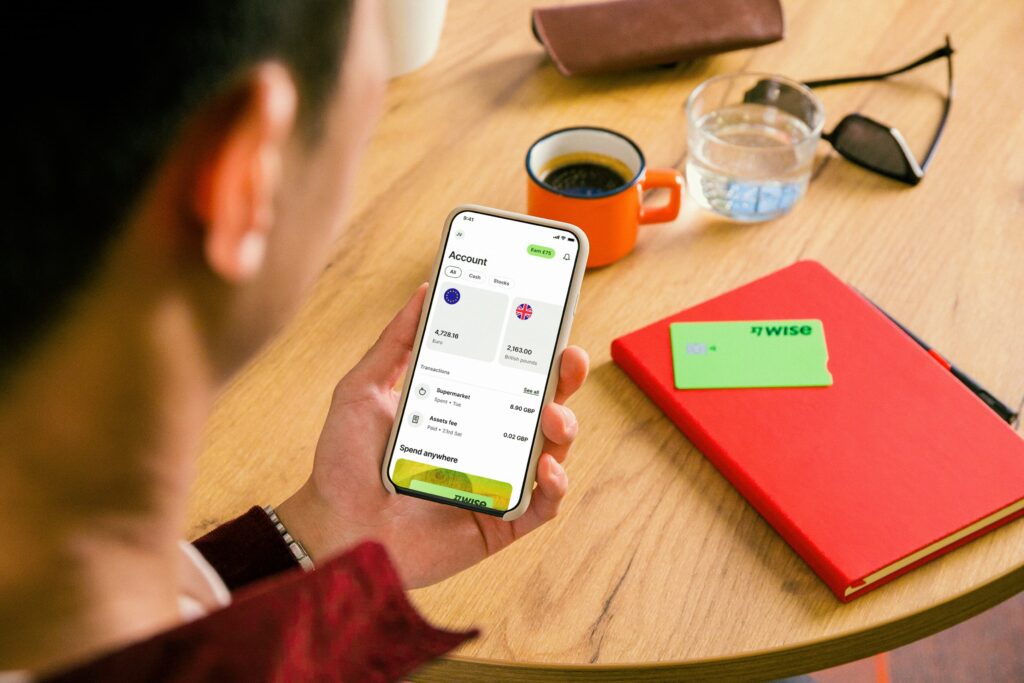
A Wise multi-currency account can simplify this process by letting you hold, convert, receive and send money in over 40 currencies at the mid-market rate. You can receive payments in euros or another currency, convert only when the rate suits you, and pay your Belgian tax bill directly from your euro balance, giving you more control over exchange costs and keeping your international finances organised in one place.
What to do when leaving Belgium
If you’re moving abroad temporarily or permanently, you’ll need to inform your local authority before leaving. Make an appointment for deregistration, either in person or online and provide your identity documents, national register number, your address abroad, and your expected departure and return dates. Deregistration is free of charge, and you’ll receive a Model 8 certificate immediately or within about three days, which formally ends your Belgian residence.
Before you go, it’s also important to file your final resident tax return, review any outstanding tax payments or refunds, update your correspondence address abroad, and keep digital copies of your MyMinfin login details to access your tax file after leaving.
If you expect to continue receiving Belgian income after moving abroad, your taxation will switch to the non-resident regime. In this case, you may need to appoint a Belgian tax representative or ensure that tax is correctly withheld at source. It’s also advisable to check whether your new country of residence has a double taxation treaty with Belgium to prevent paying tax twice on the same income.
Finally, setting up a Wise multi-currency account before leaving can make managing your money across borders much simpler. You can hold both euros and your new local currency in one account, transfer money internationally at the mid-market rate, and pay any remaining Belgian taxes directly from your euro balance, so you can avoid unnecessary bank fees once you’ve moved abroad.

Returning to Belgium
If you decide to move back to Belgium, you’ll need to re-register at your local commune within eight days of your return. This reinstates your entry in the National Register of Persons and re-establishes your Belgian tax residency. Once registered, your tax obligations shift back from the non-resident to the resident system, meaning you’ll again be taxed on your worldwide income rather than just Belgian-source income.
You should also inform FPS Finance of your new address and update your MyMinfin account to ensure all correspondence and tax assessments reach you. If you earned income abroad before returning, you may still need to declare it for the relevant tax year under Belgium’s double taxation treaties.
Setting up your finances before moving, including reopening or maintaining a euro account such as Wise, can make the transition smoother and help manage payments or refunds in both currencies during your first year back.
Useful resources
- FPS Finance (Service Public Fédéral Finances) – Official Belgian tax authority. Includes tax return forms, filing deadlines, and online access via MyMinfin.
- MyMinfin (Tax-on-Web) – Secure online portal for filing, viewing, and paying your Belgian taxes.
- Belgium’s double taxation treaties – Bilateral tax treaties and country-specific details.
- National Bank of Belgium – Exchange rates – Official euro conversion rates for reporting foreign income.
- Wise – Multi-currency account to send, receive, and convert money at the mid-market rate when paying or receiving Belgian tax payments abroad.