
'%20id='ico-down'%20stroke='%23000000'%20stroke-width='1.5'%3e%3cg%20transform='translate(1092.250000,%20254.750000)'%3e%3cpolyline%20id='Path-2-Copy-4'%20transform='translate(5.500000,%202.750000)%20scale(1,%20-1)%20rotate(-180.000000)%20translate(-5.500000,%20-2.750000)%20'%20points='0%200%205.5%205.5%2011%200'%3e%3c/polyline%3e%3c/g%3e%3c/g%3e%3c/g%3e%3c/svg%3e)


Healthcare
Healthcare Basics
Using an EHIC card in Germany: guide for expats
Check how your EHIC card works in Germany before you need treatment.


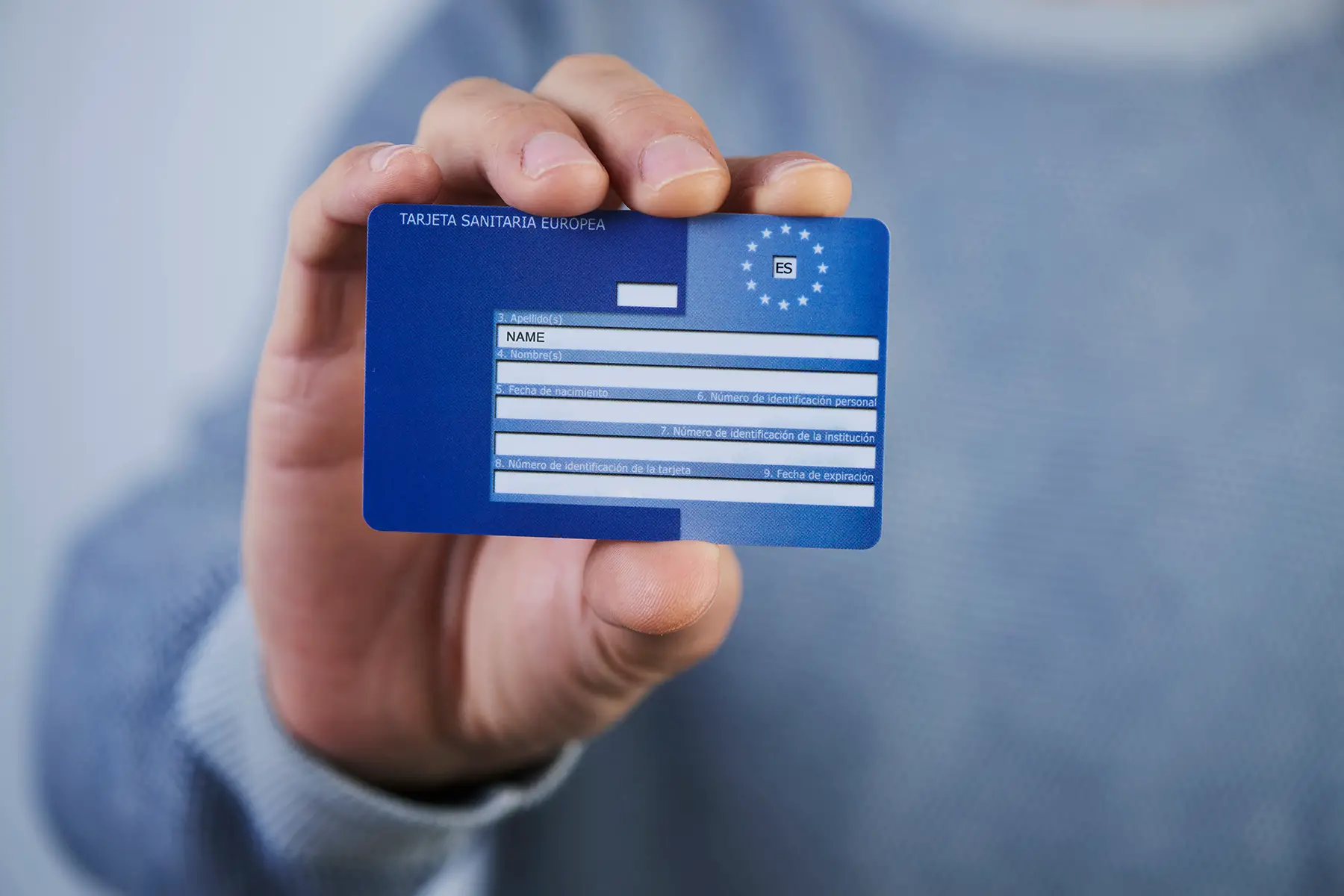
If you are spending temporary time in Germany, carrying an EHIC can save you from unexpected medical bills if you fall ill or get injured. But it is not a replacement for German health or travel insurance, and navigating how, and where, the card actually works can be confusing.
Below, you can see who can use the card, where it works, what you may still pay, and when you need another form of cover.
Key takeaways
| Your situation | Can you rely on EHIC/GHIC? | What to do next |
|---|---|---|
| Short stay or holiday in Germany | Usually yes, for medically necessary treatment in the state system | Use a Kassenarzt, bring your card and ID, and expect normal German co-payments |
| New employee in Germany | Not usually as your main cover | Check when your German insurance starts and whether you need temporary cover before that date |
| Long-term resident or person who has moved to Germany | Usually no | Arrange German health insurance and do not rely on the EHIC alone |
| Pensioner or dependant with possible S1 rights | Sometimes, but S1 may be the better route | Ask your home insurer whether you should register an S1 in Germany |
| UK visitor with a GHIC | Usually yes, if the stay is temporary and the card is valid | Use the GHIC in the same way and check current UK rules before travel |
What the EHIC covers in Germany
In Germany, the EHIC gives you access to medically necessary, state-provided healthcare during a temporary stay. This means receiving treatment within the public statutory side of the German healthcare system rather than private-only care.
Your card entitles you to care on the exact same terms as someone insured in Germany, which also means following the same financial rules. As a result, coverage only applies at practices contracted with the state system (often marked Kassenarzt or Alle Kassen).
Having an EHIC does not guarantee 100% free care. If a German resident pays a standard co-payment for a prescription or hospital visit, you will pay that same out-of-pocket amount.
For more information, Expatica’s EHIC explainer covers the general rules:
What “medically necessary” means in practice
Medically necessary means care that cannot reasonably wait until you go home, such as an asthma flare-up, an infection, acute dental pain, or pre-arranged dialysis. It can also include ongoing care for chronic conditions and routine pregnancy care while you are visiting. However, you cannot use an EHIC if you are traveling to Germany specifically to seek medical treatment.
Who can use an EHIC in Germany
Whether you can rely on a European Health Insurance Card (EHIC) comes down to your official residency status rather than your citizenship. If you are wondering if your card applies, the first step is determining whether your stay is purely temporary or if you are establishing long-term residence in Germany.
- Temporary visitor or tourist: Yes, you can use a valid EHIC for medically necessary state healthcare during a short trip.
- Student on a short exchange or temporary course: Generally yes for short-term courses or university semesters abroad. However, students completing full degree programs or permanently relocating usually need to enroll in a German health insurance scheme.
- Posted worker: You may remain covered by your home country’s social security system, but you should verify your documentation and coverage arrangements before traveling.
- Pensioner or dependant: An EHIC covers temporary visits to Germany. If you are moving to Germany permanently, an S1 form is usually required instead.
- Jobseeker, new employee, or long-term mover: An EHIC can sometimes act as a brief safety net during your initial days. Once you begin employment or register as a permanent resident, you will need to switch to official German health insurance.
It is also worth noting that UK Global Health Insurance Card (UK GHIC) rules function identically in Germany for eligible UK travelers. As long as your card is valid and your stay remains temporary, you enjoy the exact same access to public healthcare as EU EHIC holders.
When you need S1 or German health insurance instead
The moment you establish primary residence or sign an employment contract, relying on an EHIC is no longer an option. At this point, you will need to set up full local coverage. Our Guide to getting health insurance in Germany in 2026 breaks down exactly how to navigate the system.
However, if you are a pensioner, a dependant, or a cross-border worker, you may be able to register your healthcare rights using an S1 form issued by your home country instead of buying a local policy.
If you are coming from the UK, you likely hold a UK GHIC rather than an EHIC. The fundamental principle remains the same – a card designed for temporary visits cannot replace proper, long-term health coverage once Germany becomes your permanent home.
How to use your EHIC at a doctor or hospital
If you need treatment, the safest route is to use the state system and follow the local steps.
- Choose a doctor, dentist, or hospital that works with the statutory system.
- Bring your EHIC, GHIC, or provisional replacement certificate, plus your passport or ID card.
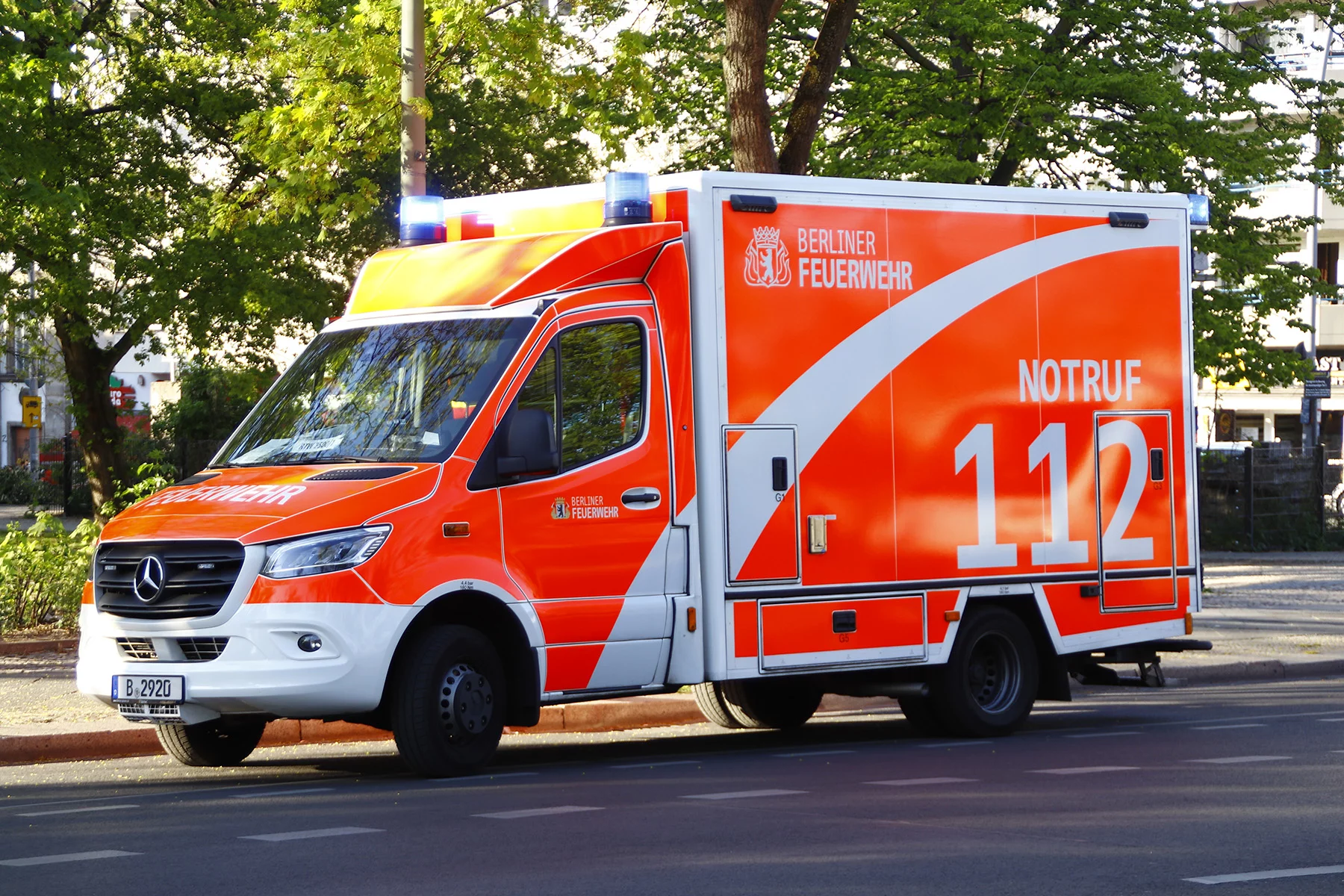
- If it is urgent but not life-threatening, use the 116117 service for out-of-hours help. For a life-threatening emergency, call 112 or go to a Notaufnahme, Germany’s accident and emergency department.
- At the practice or hospital, complete the patient declaration form and choose a German sickness fund, called a Krankenkasse, for billing.
- Keep receipts and paperwork if you are charged, especially if you need to ask your home insurer for reimbursement later.
Using an EHIC is different from using private care. If the provider says they are private-only, check the cost before treatment unless it is an emergency.
Which providers accept it and what paperwork to expect
Look for signs such as `Kassenarzt` or `Alle Kassen` on the practice sign or website. Those labels usually mean the provider works with the statutory system, while private-only practices normally do not accept the EHIC route.
German providers may ask you to complete the Patient Declaration of European Health Insurance form, and hospitals can ask for similar details if you are admitted. Check the practice sign or website before you book. If the doctor is private-only, the EHIC usually will not be accepted and you may have to pay the full bill yourself.
What you may still pay in Germany
Cost anxiety is understandable, because EHIC cover does not mean everything is free. Germany applies the same patient contributions to visitors as to locally insured patients, so it is worth checking the latest official amounts before treatment.
| Service | Usual patient share | What to know |
|---|---|---|
| Hospital stay | €10 a day if you are 18 or over | Usually capped at 28 days in a calendar year |
| Prescription medicines and bandages | 10% of the cost, usually €5 to €10 | You do not get more cover than a locally insured patient |
| Treatment or therapies on prescription | 10% of the cost plus €10 per prescription | This can apply to services such as physiotherapy |
| Ambulance | 10% of the cost, usually €5 to €10 | Emergency rules can differ, so check the bill details |
| Optional extras | Full cost | Private rooms or treatment by the head physician are not standard cover |
If you need to pay medical co-payments or other non-covered prescription fees during your stay, holding euros in a Wise multi-currency account is a convenient backup. Using a Wise card lets you pay directly in local currency at mid-market rates, helping you avoid foreign card fees on unexpected clinic bills. Just keep in mind that Wise is a financial tool for managing spending, not health insurance.
What the EHIC does not cover
The EHIC is not travel insurance. It usually does not cover private care, planned treatment abroad, medical repatriation, lost luggage, or trip cancellation.
Separate travel cover still makes sense if you want protection for winter sports, private clinics, or the cost of getting home after a serious medical problem. For that side of the picture, see Travel insurance in Germany below:

Common EHIC mistakes expats make in Germany
The risk here is usually not the card itself, but using it in the wrong setting. These are the mistakes that often cause the most confusion:
- Assuming the EHIC still works as your main cover after you have moved to Germany
- Booking a private-only doctor and expecting the card to work there
- Forgetting to bring ID as well as the card
- Not arranging recurring treatment, such as dialysis, in advance
- Assuming the card replaces German health insurance or travel insurance

Editor
Tarah Ren
Insider tip
Don’t panic if your card vanishes mid-trip or you leave it at home in the pre-flight rush. You can ask your home country’s healthcare authority to issue a Provisional Replacement Certificate (PRC) via email or phone. German clinics and hospitals accept this document just like the physical card. And if you run into an unexpected out-of-pocket medical bill that isn’t covered, using a Wise account is a quick, low-cost way to transfer funds from family back home without getting hit by bank transfer fees.
Frequently asked questions about EHIC cards in Germany
Can I use my EHIC after moving to Germany?
Usually not as your long-term solution. The EHIC is mainly for temporary stays, so once you become habitually resident in Germany or start work there, you often need German health insurance instead, though some people may use an S1 in specific cases.
Can I use an EHIC while waiting for German health insurance?
Sometimes, in a short transition period, the card may help with medically necessary treatment while formal cover is being arranged. The exact answer depends on your status, your employment start date, and the country that issued the card, so do not assume it replaces proper registration.
Does the EHIC cover private doctors in Germany?
Usually no. The EHIC route generally works through Germany’s statutory system, so look for `Kassenarzt` or `Alle Kassen` and check before you book, because private treatment may mean paying the full bill yourself.
What is the difference between an EHIC and an S1 form?
The EHIC is for medically necessary treatment during a temporary stay. An S1 is for certain longer-term cross-border situations, such as some pensioners or dependants, and is used to register healthcare rights in the country where you live.
Do UK residents need a GHIC or EHIC in Germany?
Many UK residents now use a GHIC, while some people may still hold a valid EHIC depending on their status. What matters most is whether the card is valid and what entitlement it gives, so check the current NHS GHIC and EHIC guidance.
Useful resources
Checked 29th July 2026
- Your Europe, standard forms for social security rights: Explains social security forms like the S1 for cross-border healthcare.
- NHS healthcare cover abroad with a UK GHIC: Essential guidance for UK residents on using cards abroad.
- 116117 for Medical Help: Contact information for German non-emergency, out-of-hours medical care.



Did you find this guide helpful?