'%20id='ico-down'%20stroke='%23000000'%20stroke-width='1.5'%3e%3cg%20transform='translate(1092.250000,%20254.750000)'%3e%3cpolyline%20id='Path-2-Copy-4'%20transform='translate(5.500000,%202.750000)%20scale(1,%20-1)%20rotate(-180.000000)%20translate(-5.500000,%20-2.750000)%20'%20points='0%200%205.5%205.5%2011%200'%3e%3c/polyline%3e%3c/g%3e%3c/g%3e%3c/g%3e%3c/svg%3e)



If you live in Germany and still receive a UK salary, pension, rent, or investment income, it’s important to understand which country may tax each income stream. You also need to know whether Germany gives exemption or credit relief, and what still has to be reported to HMRC or your local Finanzamt (local tax office in Germany).
Read on to learn more about UK and German tax residence rules, the 183-day test, common UK income types, relief claims, and the money steps around cross-border tax admin.
This is a general guide based on official treaty and tax authority sources checked on 12 August 2026. It is not personalised tax, legal, or investment advice.
Key takeaways
- Tax Residence: Domestic and treaty residency can differ; confirm your status using criteria like permanent home and ties (verify with GOV.UK and BMF)
- UK Salary: Generally taxed where the work is physically performed; verify specific treaty conditions, such as the 183-day rule (check Treaty Article 14)
- UK Pensions: Tax treatment varies by pension type (state, government, private); consult HMRC guidance and the treaty text for specifics
- Relief Claims: Treaty relief is not automatic; ensure you follow the correct form process (e.g., HMRC forms or ELSTER) and keep proof of tax paid
- Cross-Border Payments: While transfers don’t determine tax liability, they impact costs and records; monitor FX spreads, fees, and bank statements
*Details checked 12th August 2026
What the UK-Germany double tax treaty is and who it covers
The UK-Germany double tax treaty is an agreement on taxes on income and capital. The current framework is the 2010 Convention as amended by the 2021 Protocol in force from 2022 for the latest changes.
It matters if you live in Germany and still have UK salary, pensions, property income, dividends, interest, capital gains, or other UK-linked income. You may also see it called the UK Germany DTA or double taxation agreement Germany UK.
Bear in mind that while the treaty is important it does not automatically settle every tax issue, and it does not replace domestic law in either country.
People who may be covered by the UK Germany double tax treaty include:
- UK employees working partly across borders
- Retirees with UK pensions
- Landlords with UK property
- Investors with UK shares or savings
- People who may be dual tax resident
How tax residence is decided between the UK and Germany
Living in Germany or being registered there does not settle tax residence by itself. Germany, the UK, and the treaty have separate tests, so you can be resident in both countries before the treaty tie-breaker is used.

If both countries treat you as resident, the treaty normally looks at these tie-breakers in order:
Permanent home: where you have a home available to you.
Centre of vital interests: where your personal and economic ties are closer.
Habitual abode: where you live more regularly in practice.
Nationality: if the first three tests do not settle it, nationality is next, and the competent authorities may still need to agree.

How the 183-day rule fits in
The Germany tax residency 183 day rule is often misunderstood. In the treaty, it mainly concerns employment income, and is less about residence, pensions, or investment income.
Salary for work done in the other country may stay taxable only in your residence state if you meet all three conditions: no more than 183 days there in the relevant twelve month period, employer not resident there, and pay not borne by a permanent establishment there.
Why residence is not the same as filing obligations
Even if the treaty gives primary taxing rights to one country, you may still need to file, disclose, or claim relief in the other.
For example, a German resident with UK rental income may still need UK reporting and German disclosure, even where Germany later applies exemption with progression.
How the treaty can affect common types of UK income
| Income type | Often taxed first | Common relief route | Common risk | What to verify |
|---|---|---|---|---|
| Employment income | Usually taxed where work is done | Exemption or credit | Assuming payroll settles everything | Days, employer, Permanent Establishment |
| UK State Pension | Often UK | Germany-side relief or reporting depends on treatment | Treating all pensions alike | Pension type |
| Government service pension | Often paying state | May switch in narrow cases | Ignoring nationality rule | Service history |
| UK property income | Often UK | Commonly exemption with progression in Germany | Forgetting German reporting | UK tax paid |
| Dividends, interest, gains | Mixed by asset type | Often credit for dividends, residence taxation for interest | Missing withholding evidence | Vouchers and statements |
Employment income and self-employment
Employment income is usually taxed where the work is physically performed, so cross-border commuters and short UK assignments should start there. Remote work from Germany for a UK employer is not the same as working in the UK.
Self-employment needs more care. If you carry on activity through a fixed place of business or other permanent establishment in the other country, the treaty analysis can change quickly, so freelancers and company owners should verify that point before filing.
UK pensions and retirement income
Pensions are easy to oversimplify. Private and workplace pensions are often taxed in the country of residence, but state or social insurance pensions, government service pensions, and pensions linked to long periods of source-state tax relief can follow different rules.
Separate UK State Pension, government service pension, and private or workplace pension before you do anything else. If HMRC or a payer applies treaty relief, keep the gross payment statement and any withholding evidence.

UK rental income, dividends, interest, and capital gains
UK rental income is normally covered by the rule for immovable property. To understand tax treatment you’ll need to check the UK position first and then the Germany relief method, which can depend on the circumstances.
For German residents, one common outcome is exemption with progression, which means the UK-taxed income can still affect the rate applied to your other German-taxable income.
Dividends, interest, and gains do not all follow one rule. UK dividends may still involve source taxation within treaty limits, with Germany commonly giving credit. Interest is often taxable only in the residence state, while gains depend heavily on the asset sold. Use dividend vouchers, broker statements, HMRC records, and proof of UK tax paid to verify the route.
How double tax relief is usually claimed in practice
To make sure you submit everything correctly for your tax across both the UK and Germany you may benefit from professional support.
In practice, what you and your advisors are likely to need to do include:
- List each income stream separately.
- Confirm domestic and treaty residence.
- Check the treaty article and the relief method.
- Use the right route, such as HMRC’s DT-Individual form or Germany’s ELSTER.
- Keep proof of tax paid, withholding, residence, and filing.
If both countries tax the same income contrary to the treaty, the mutual agreement procedure may help. Germany-based expats can identify the German route through the BZSt, but this is usually a specialist step requiring advice.
What records and documents to keep
Keep residence evidence, payslips, pension statements, dividend vouchers, broker reports, proof of UK tax paid, exchange-rate records, and filing confirmations from HMRC and the Finanzamt.
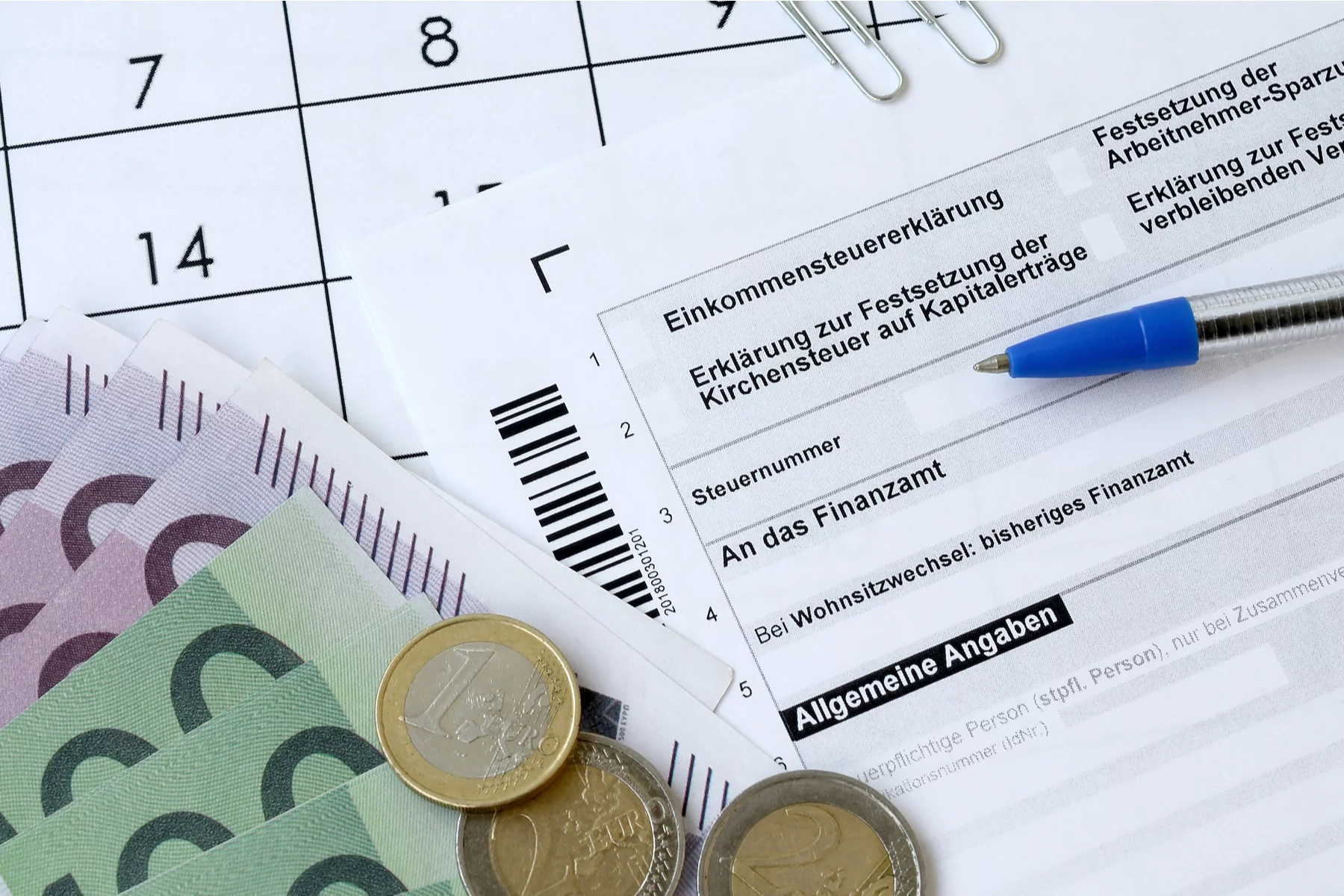
Transfer statements can help with timing and admin, but they do not replace official tax documents. ELSTER activation can arrive by post, so register early if you expect to declare UK income.
What the treaty does not do
The treaty is useful, but it has clear limits. Common assumptions to avoid include:
- It does not guarantee that you only file in one country.
- It does not replace UK or German domestic tax law.
- It does not decide every social security question.
- It does not settle VAT, immigration status, or every inheritance issue. See Expatica’s inheritance tax in Germany if that is relevant.
- It does not turn bank receipts into tax evidence.
Managing UK-Germany transfers, tax payments, and multi-currency income
Tax questions often sit next to money-movement problems. You may receive UK income in GBP, need to pay German tax in EUR, or move a UK refund back to Germany while keeping records clear.
Major local banks such as Deutsche Bank, Commerzbank, and Sparkasse can handle international payments, but fees, speed, and FX spreads differ by route and product.

A multi-currency account from a digital provider like Wise can help when you want to hold GBP and EUR separately, choose when to convert, and keep a clearer transfer trail. That can make budgeting easier, and may also help you cut costs by avoiding unnecessary currency conversions.

Use Wise for UK-Germany tax payments and multi-currency money management
Wise can help you send UK-Germany transfers, hold GBP and EUR in one account, receive UK-linked money, and convert at the mid-market exchange rate with transparent fees.
This can be practical if you need to pay HMRC or German tax bills across currencies, receive UK rent or pension money, or keep multi-currency statements for admin.
Your Wise account comes with local and SWIFT account information to receive EUR, GBP and other currencies without forced conversion, allowing you to hold the balances you need without the extra costs of switching back and forth. Convert only when you need to, with the mid-market rates and low, transparent fees you can see before you confirm.
When to speak to a specialist tax adviser
A general guide stops being enough if you are dual resident, self-employed, involved with a company or trust, realising large gains, receiving several pension types, or dealing with conflicting UK and German treatment. These cases can turn on detailed facts, not headline rules.
If you are in one of those groups, use the official treaty text and speak to a qualified UK-German tax adviser before you file or claim relief.

FAQ
Frequently asked questions about the UK-Germany double tax treaty
What is the UK-Germany double tax treaty? 
The UK-Germany double tax treaty is a double taxation agreement UK nationals who are German residents use to work out which country may tax certain income and how double taxation is relieved. It allocates taxing rights and relief methods, but not every filing duty.
Do I need to file tax returns in both Germany and the UK?
Possibly. The answer depends on your residence status, the income source, and whether you need to claim or evidence relief with HMRC or the German Finanzamt.
How are UK pensions taxed if I live in Germany?
It depends on the pension type. UK State Pension, government service pensions, and private or workplace pensions can follow different treaty rules, so check the exact pension against current HMRC guidance and the treaty before you start receiving payments.
How does the 183-day rule work between the UK and Germany?
The Germany tax residency 183 day rule is mainly an employment rule in the treaty. It can help decide whether short-term work in the other country stays taxable only in the residence state, but it does not settle treaty residence by itself.
How do I claim treaty relief on UK income from Germany?
Start by confirming your residence status and income type, then check the relevant HMRC form or route and keep proof of UK tax paid or withheld. You may also need to report the same income in Germany through ELSTER and keep evidence for the Finanzamt.
Useful resources
Checked 12th August 2026
- German tax treaties – Official UK hub for treaty documents and updates
- How Double Taxation Treaties affect non-UK residents – HMRC guidance for residents with UK income
- Form DT-Individual – HMRC form to claim treaty tax relief
- ELSTER – German portal for electronic tax filings