
'%20id='ico-down'%20stroke='%23000000'%20stroke-width='1.5'%3e%3cg%20transform='translate(1092.250000,%20254.750000)'%3e%3cpolyline%20id='Path-2-Copy-4'%20transform='translate(5.500000,%202.750000)%20scale(1,%20-1)%20rotate(-180.000000)%20translate(-5.500000,%20-2.750000)%20'%20points='0%200%205.5%205.5%2011%200'%3e%3c/polyline%3e%3c/g%3e%3c/g%3e%3c/g%3e%3c/svg%3e)


Finance
Taxes
Corporate tax in Germany
Thinking about starting your own business? Find out everything you need to know about corporate tax in Germany, including rates, rebates, and exemptions.


Everyone has to pay taxes, whether you live in Germany or anywhere else. While salaried employees are liable for income tax, German business owners and self-employed freelancers must pay local and federal corporate tax.
Learn how business tax affects you in Germany by reading the following:
Wundertax
Rethink the way you do your tax returns with Wundertax. Their easy-to-use website guides expats through every step of the German tax return process, giving you more time to explore your new home. For simple and intuitive help in English, use Wundertax for your tax returns.

The corporate tax system in Germany
In Germany, companies pay corporate tax (Körperschaftsteuer) based on their net income for one business year.
For individuals running their own business activities, the same general principles for determining industrial, commercial, agricultural, and professional profits apply in the same way as for corporate entities.

Companies pay tax on total income, which includes the distributed profit shares of general and limited partnerships, as well as profits earned by sole proprietors.
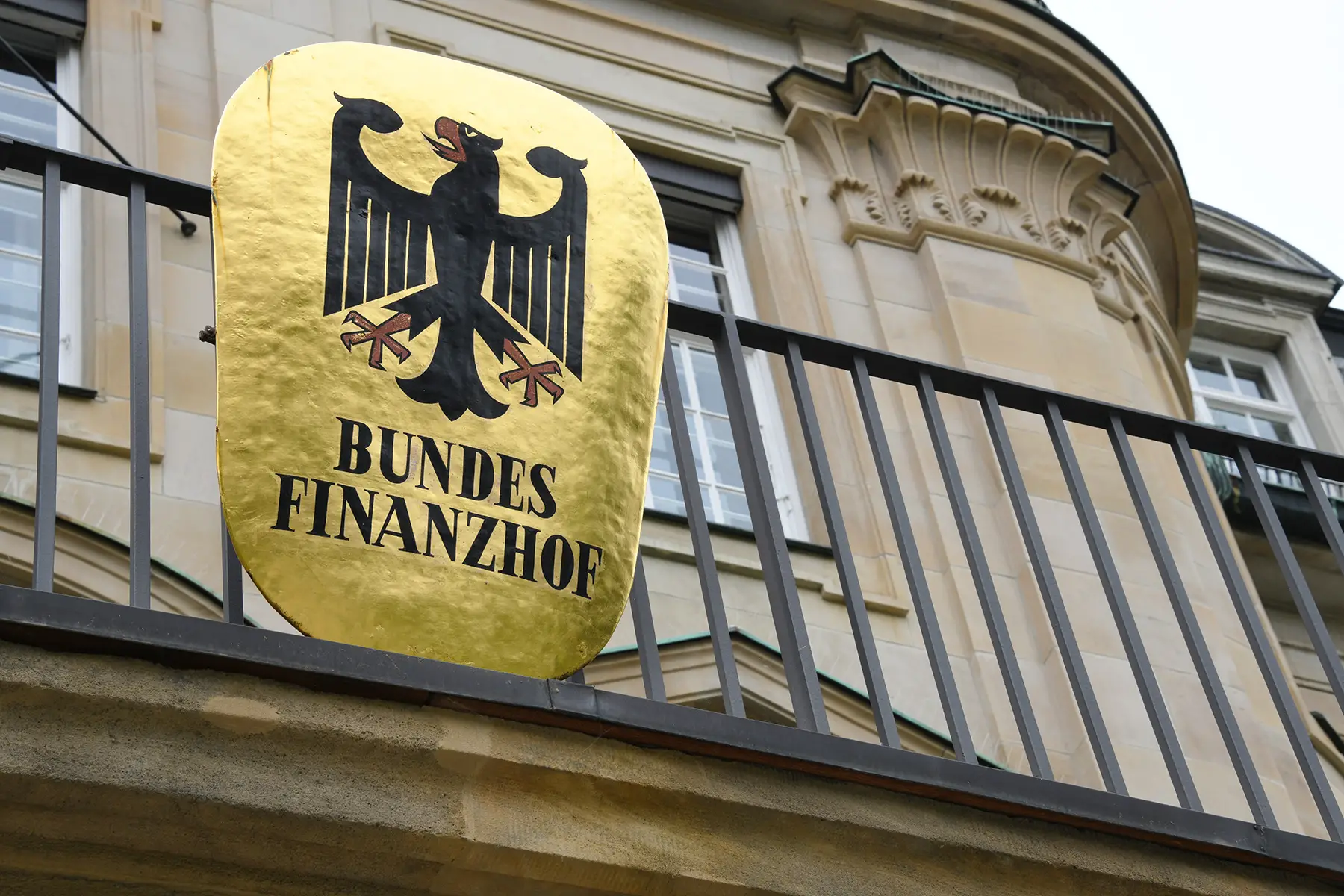
Who pays corporate tax in Germany?
If the management office or registered office is located in Germany, the following types of businesses are liable to pay corporate tax:
- Corporations
- Cooperatives
- Mutual insurance companies
- Legal entities such as societies and trusts
- Commercial enterprises run by public legal entities
Companies that generate income in Germany but don’t have management or registered offices in the country are only liable to pay corporate tax on their German income.
Sole traders and limited companies
Business owners and self-employed workers in Germany must register with their local tax office and get an official tax number.
Tradespeople register with the trade office. The trade office passes on your details to the tax office, which will then issue your tax number.
Once you register, you’ll have to complete annual tax returns and pay income tax in installments in advance. Profits are taxed at the personal tax rate rather than the corporate tax rate.
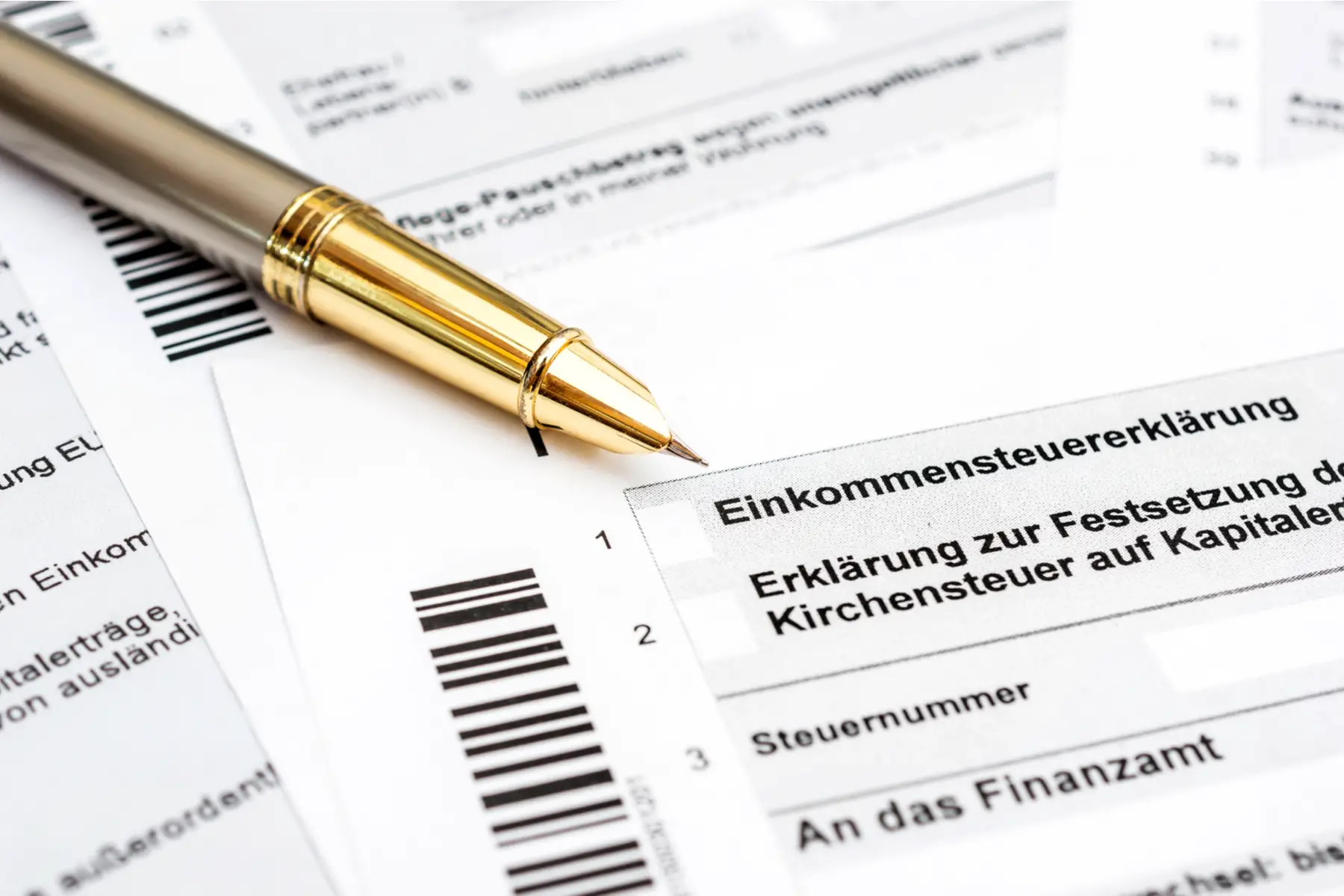
Many self-employed workers in Germany are exempt from making state social security contributions. However, as it’s the law to have health insurance, you must make alternative arrangements.
Some self-employed people also need to pay contributions to the German pension fund. Self-employed workers can claim some services and items necessary for their work as tax-deductible expenses. This includes things such as stationery, office space, office equipment, work-related travel, childcare costs, healthcare, pension, and other insurance contributions.
You’ll need to save your receipts and other relevant documentation to prove the expenses.
Corporate tax for freelancers
Things work a little differently for freelancers. They do not have to register with the Commercial Register (Handelsregister) or become members of or contribute to the Chamber of Commerce (commonly referred to as an IHK in German, which is short for Industrie – und Handelskammertag).
In addition to this, freelancers don’t need to prepare annual financial statements for taxation purposes or pay a trade tax. Instead, a simple profit-and-loss assessment is sufficient.

Freelancers in Germany must register with the local tax authorities, their professional association, and an accident insurance company (if they employ other people).
The tax authorities assess your income tax in quarterly payments, which are based on your income after deducting expenses.
While freelancers are generally not liable to the German social security system, they should consider making their own arrangements for things such as:
- Private health insurance
- Health insurance that also covers the risk of illness and the loss of income should you become sick
- Disability insurance to cover the risk of monetary loss if illness means you can’t continue working
- Life insurance to supplement retirement income
Artists and journalists
Artists and journalists in Germany must make contributions to the government-backed social security system. This covers pensions, a contribution to health insurance, and care insurance for old-age nursing care.
If you don’t make these arrangements, a law called the Social Law for Artists (Künstlersozialversicherungsgesetz) means freelance artists or journalists who are not contributing to their social insurance, such as a pension scheme, need to join the government’s Künstlersozialkasse.
The contributions depend on your income. There is also a ceiling on the total annual income that contributors can make, which changes each year.
Corporate tax rates in Germany
In Germany, the federal corporate tax rate is 15%. A solidarity surcharge of 5.5% is then added, bringing the effective rate to around 15.8%.
In addition, all municipalities levy a local trade tax (Gewerbesteuer). This tax is calculated by applying the federal assessment rate (Steuermesszahl) of 3.5% to taxable business income, resulting in a basic tax amount. Each municipality then applies its own multiplier (Hebesatz) to determine the final trade tax payable.
As a result, effective trade tax rates typically range from about 7% to over 20%, depending on location. The combined corporate tax burden therefore varies significantly, but generally falls between approximately 22% and 33%.
In 2026, the average corporate tax rate is 30.1%, much higher than the European average of 21.6%.
Are there any exemptions and credits in Germany?
Corporate tax exemptions
Several types of income are exempt from corporate tax in Germany. The most important ones include:
- Company-level capital contributions upon the company’s formation or capital increase. This is regardless of whether the contribution was in return for shares, other membership rights, or just in connection with an increase in the capital reserves.
- Shareholder-level capital repayments from the company if they do not contain dividend distributions. If they exceed the book value of the shareholder’s investment, the amount that exceeds it is taxable.
- 95% of domestic and foreign dividends, proving minimum shareholder requirements are met
- 95% of capital gains from the sale of shares in a company
- Investment grants for investments in the new federal states
Corporate tax credits
Tax incentives are rarely offered to businesses in Germany. This is partly to reduce the state budget and partly to ensure that all taxpayers are treated equally across the country.
The German government introduced a new research and development tax credit in 2020. This allows businesses to claim a tax credit worth 25% of the wages and salaries paid to research staff. The maximum credit increased from €500,000 to €1 million until June 2026, and broader expansions in 2024 raised the eligible base significantly, meaning larger credits (e.g. up to €2.5 million at 25% or higher for SMEs) are now possible under current law.
Manage your international business finances with Wise
Wise Business allows you to hold and manage money in 40+ currencies, send international payments at the mid-market exchange rate with low fees, and receive payments with account details. You can pay international suppliers, easily receive payments from clients abroad or manage expenses across different currencies.

VAT in Germany
VAT in Germany is called Umsatzsteuer (USt), though many people still use its old name, Mehrwertsteuer (MwSt).
The standard VAT rate in Germany is 19%, though a reduced rate of 7% is available for certain everyday goods (Waren des täglichen Bedarfs). These include art, books, cultural services, (some) foods, hotel stays, magazines, and newspapers.

Certain goods and services are VAT-exempt and pay a 0% tax rate. These include financial services, deliveries within the EU, and insurance premiums.
Corporate tax years in Germany
The German tax year is the same as the calendar year. Certain businesses, particularly corporations, may apply to the tax authorities to use a financial year that differs from the calendar year.
Companies must pay tax on the profit in the calendar year when its financial year ends. For example, if a company’s financial year runs from 1 February 2025 to 31 January 2026, the profit from that period is taxable in the 2026 tax year.
As a result, tax filing and assessment typically occur several months after the end of the relevant financial year.
How to file your corporate tax return?
Individuals, employers, entrepreneurs, and associations can use ELSTER (in German) to register, make tax declarations, and pay taxes online.
There are several steps in the registration process. After sending the registration data, you must send a confirmation mail via the ELSTER portal and an activation code by letter.
Therefore, it’s best to register well before the return is due on 31 July.
The ELSTER certificate authenticates the information you provide and serves as an electronic signature for security.

The next step is for the tax office to decide how much tax you need to pay. You’ll receive an assessment including a demand for payment or information on getting a refund for any tax you overpaid.
An overpayment can occur because you have to pay the tax a year in advance, in four installments. These are due in March, June, September, and December.
Other types of business tax in Germany
Dividend tax
Corporations receiving dividends in Germany may benefit from the participation exemption. Under this regime, 95% of qualifying domestic and foreign dividends received by a corporation are exempt from corporate income tax, while the remaining 5% is treated as non-deductible business expenses at the recipient level. The exemption generally applies only if the corporation holds at least 10% of the shares at the beginning of the calendar year.
Capital gains tax
In general, capital gains received by companies from selling business assets are treated as ordinary income. The gains can be offset against the cost of a replacement property.
Capital gains from the sale of investments are exempt from corporation and trade taxes, and therefore any associated losses are not deductible.
Solidarity surcharge
The solidarity surcharge (Solidaritätszuschlag) is an additional fee on top of corporate tax.
This surcharge applies at a flat rate of 5.5%. Payment is at the same time as the tax is charged; there’s no tax return necessary for reporting or paying the Solidaritätszuschlag.
Local trade tax
All commercial businesses in industry, trade, crafts, and services must pay a trade tax (Gewerbesteuer).
Germany has a base rate of 3.5%. Each municipality then adds a multiplier (Hebesatz), which can vary between 8.75% and 20.3%.
Partnerships have an annual tax-free trade tax allowance of €24,500. Some trade tax exceeding that can often be offset against personal income tax.
You can use an online tax calculator (e.g., from GmbH Tax Services) to determine your trade tax burden.
Corporate tax fines in Germany
If a corporate tax return is filed late in Germany, a late-filing penalty (Verspätungszuschlag) of €25 per full month of delay may be imposed, capped at €25,000, rather than a percentage of tax due.
If tax is paid late, a late-payment surcharge (Säumniszuschlag) of 1% per commenced month applies.
Where a tax audit identifies underpaid tax, no additional fine is usually imposed unless negligence or tax evasion is established. However, interest accrues at 0.15% per month, starting 15 months after the end of the relevant tax year.
Where can I get corporate tax advice in Germany?
Corporate tax in Germany can be tricky, particularly if you have complex circumstances. Using the services of a professional accountant can help.
To find an appropriate professional near you, you can contact the German Federal Chamber of Tax Consultants (Bundessteuerberaterkammer or BStBK; German only) and the German Association of Tax Advisors (Deutscher Steuerberaterverband or DStV).
You can also try using the following tax and administrative software to simplify your accounting:
Alternatively, check our Business Directory to find tax advisors in Germany to address any financial concerns you have.
Useful resources
- Deutscher Steuerberaterverband – help with finding an accountant or tax professional near you
- ELSTER – register, make tax declarations, and pay online (in German)
- Bundeszentralamt für Steuern (BZSt) – Federal Central Tax Office in Germany
- Find your local tax office (in German)


Did you find this guide helpful?