
'%20id='ico-down'%20stroke='%23000000'%20stroke-width='1.5'%3e%3cg%20transform='translate(1092.250000,%20254.750000)'%3e%3cpolyline%20id='Path-2-Copy-4'%20transform='translate(5.500000,%202.750000)%20scale(1,%20-1)%20rotate(-180.000000)%20translate(-5.500000,%20-2.750000)%20'%20points='0%200%205.5%205.5%2011%200'%3e%3c/polyline%3e%3c/g%3e%3c/g%3e%3c/g%3e%3c/svg%3e)


Moving
About South Africa
Where to get the news in South Africa
Here’s how to get your news fix as an expat in South Africa, from national newspapers and magazines to alternative media and podcasts.


With the state of the world as it is, you sometimes just want to make a cup of Ricoffy, pull your hoodie tight, and act like you’re not home. But, unfortunately, no one can hide forever.
In South Africa, keeping on top of the local and global news (Zulu: izindaba, Xhosa: iindaba, Afrikaans: nuus) requires little effort. South Africans face exceptional challenges, and staying up-to-date with current events will help you understand the issues of crime, government, and finance. Plus, you’ll gain insight into the country’s diverse cultures and complex perspectives.
Learn more about the news in South Africa, including which media outlets to trust and which channels to steer clear of, by reading the following sections:
Ground News
Get every side of the story with Ground News, the biggest source for breaking news in South Africa and around the world. This news aggregator lets you compare reporting on the same stories. Use data-driven media bias ratings to uncover political leanings and get the full picture. Stay informed on stories that matter with Ground News.

The media landscape in South Africa
With its many public and private news outlets, South Africa’s media landscape reflects the country’s exceptional cultural and political diversity.
The national public broadcaster is the South African Broadcasting Corporation (SABC), which operates six major TV stations and several radio channels that broadcast in eleven of the twelve official languages. There are also numerous commercial TV stations, some of which are free-to-watch, while others require a satellite subscription. The SABC is funded through advertising, government spending, and a mandatory license fee.
Like elsewhere in the world, the print industry has taken a nosedive over the last decade. Between 2014 and 2024, some of South Africa’s most prominent daily titles lost as much as 80% of their readers. During that same time frame, another 15 publications shut down entirely or transitioned to an online-only format. Notable losses in the sector include the 125-year-old Pretoria News and the 77-year-old Weekend Post, which ceased publishing in May 2023 and February 2024, respectively.

It’s perhaps understandable, then, that most people in South Africa consume their news online. According to the Reuters Institute (2025):
- 88% of South Africans source their news online (including podcasts and AI chatbots)
- 71% use social media platforms to access current events
- 55% of people stay up to date by watching TV
- 19% rely on print media to stay informed
Political bias of the South African media
South African news is generally factual and reliable, with many journalists adhering to ethical standards set by the Press Council of South Africa. This body promotes journalistic integrity, accountability, and self-regulation through a Press Code and public complaints system.
That said, the media landscape is not completely free from political and ideological bias. For example, the SABC has frequently been accused of political interference, particularly during election cycles or under controversial administrations. Historically, editorial decisions and leadership appointments have been shaped by whichever party holds power, which has led to allegations of propaganda.
Similarly, most private news outlets in South Africa have an identifiable political or ideological lens. For instance, Daily Maverick is known for its progressive tone, while Independent Media (publisher of titles like The Star and IOL) is considered more pro-government and populist.
So, while you can usually trust news stories from public broadcasters and major outlets in South Africa, it’s still recommended to consult a range of sources. This is especially true when you’re reading about politically sensitive topics. Tools like Media Monitoring Africa and Ground News can help you assess multiple sources and steer clear of potential bias.

Freedom of the press in South Africa
South Africa fares pretty well in terms of press freedom. The country ranks 27th out of 180 nations worldwide on the 2025 World Press Freedom Ranking, scoring 75.7/100.

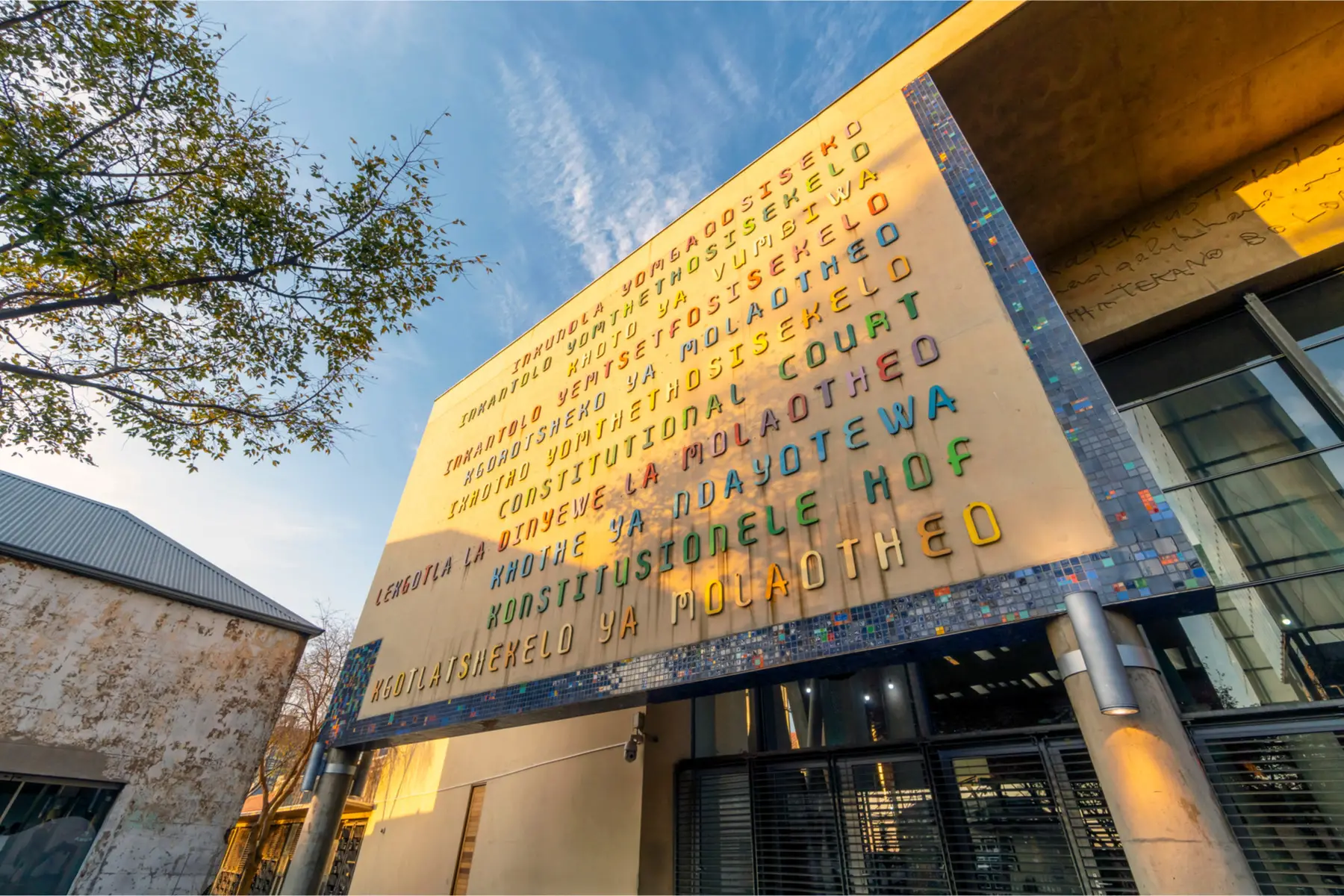
Freedom of the press is protected by Section 16 of the South African Constitution, which guarantees the freedom of speech, the press, and other media. Journalistic integrity and confidentiality are safeguarded under the Declaration of Principles on Freedom of Expression and Access to Information in Africa (2019).
Despite this, there have been instances of repressive measures against reporters. For example, in 2021, investigative journalists were targets of surveillance and illegal wiretapping by the South African police. Similarly, reporters are frequently at risk of harassment and intimidation by politicians and their supporters. Indeed, it is not uncommon for journalists, especially women journalists, to be mocked, insulted, and even threatened on social media.
Do the South Africans have trust in the press?
Overall trust in the media is relatively stable. Around 55% of South Africans consider the news to be reliable (Reuters Institute, 2025), a percentage significantly higher than the world average (40%). Elsewhere in the world, Finland has the highest levels of overall trust (67%), while Greece (22%) and Hungary (22%) record the lowest levels.
In South Africa, the most reliable news sources are the 24-hour news station eNCA and the online platform News24, with 80–1% of respondents saying they trust these outlets. BBC News and SABC News follow closely behind, with a trust score of 75%. The Daily Sun is seen as the least trustworthy news source, with 24% of South Africans expressing mistrust in it.
Where to get the news in English in South Africa?
English-language newspapers and magazines
South Africa’s printed news industry has shrunk significantly over the last decade, with all publications losing over half of their readers. Before it shut down its print edition in December 2024, the Daily Sun saw a massive 96.0% decline in its circulation between 2014 and 2024.

Still, there are a few good English-language newspapers (Zulu: iphephandaba, Xhosa: iphephandaba, Afrikaans: koerant) left. Some of the biggest national titles include (in alphabetical order):
- Business Day – a daily newspaper covering finance, politics, and business. Although not overtly partisan, it’s clearly aligned with rational, economically liberal views.
- The Citizen – a populist tabloid that reports on mainstream issues with a center-right bias
- Mail & Guardian – a progressive, left-leaning weekly paper that is known for its investigative journalism and political coverage. It’s very critical of ANC misgovernance.
- Sowetan – a populist, left-leaning daily newspaper that often reflects the perspectives of the working-class and Black South Africans
- The Star – a slightly controversial tabloid; its editorial stance was once centrist, but is now considered more populist and aligned with ANC-adjacent rhetoric. The paper has faced criticism for publishing unverified or biased stories.
- Sunday Independent – often seen as partisan by critics, this national weekly broadsheet covers national politics and is considered pro-ANC.
- Sunday Times – South Africa’s largest weekend title, known for impactful investigative reporting. While critical of corruption across the political spectrum, it has a centrist to center-left bias.
- DM168 (Daily Maverick) – a national weekly newspaper that is progressive, anti-corruption, and pro-democracy. Its editorial tone is sometimes ironic or provocative.
You can also find reputable international newspapers at newsagents and kiosks in major cities in South Africa, including The Guardian and The New York Times. Some may be a day out of date.
Regional or local English-language newspapers
While just 15% of South Africans read a local or regional weekly newspaper, many consider it one of the more respectable news sources, with 67% of respondents deeming it trustworthy (Reuters Institute, 2025).
Here are some of the more popular local newspapers in English:
- Cape Argus (Cape Town)
- Cape Times (Western Cape)
- Daily Dispatch (East London)
- Daily News (Durban)
- The Herald (Nelson Mandela Bay region)
- The Mercury (KwaZulu-Natal)
- Pretoria News (Pretoria)
- Saturday Star (Gauteng)
- Sunday Tribune (Durban)
- Weekend Post (Eastern Cape)
- The Witness (KwaZulu-Natal)
- Ziwaphi (Mbombela)
English-language periodicals and magazines
Of course, South Africa also has a wide range of weekly and monthly publications that can help keep you up to date with the latest news. Seemingly, if you have an interest, you’ll be able to find a magazine dedicated to it.

Some of the larger titles in the country include:
- Business and finance: e.g., African Business, BusinessLIVE, DealMakers, FA News, Financial Mail, Finweek, and SA Business Integrator
- Lifestyle and entertainment: e.g., GQ South Africa, Nomad Africa, Sandton Lifestyle Magazine, and YOU
- News and politics: e.g., Chimurenga
- Sports: e.g., SA Cricketmag, SA Rugby Magazine, and Zigzag
English-language news websites and social media
If you prefer to access your news online, you’re spoilt for choice. There are numerous platforms that cover the news in English; many are free to access, though some have hidden their content behind a paywall for subscribers only.
Aside from the digital editions of the newspapers we already mentioned above, other major outlets include (in alphabetical order):
- African Insider – a pan-African platform with a centrist or neoliberal tone
- The Africa Report – an award-winning news magazine that focuses on the African continent
- The Bulrushes – a news website founded in 2021 as “real news you can trust”
- BusinessTech – a financial news site covering banking, business, and more
- Daily Maverick – a popular website known for its strong investigative work and anti-corruption reporting
- EWN (Eyewitness News) – a radio and digital-first news brand that has built a strong reputation through live coverage of major events (e.g., Oscar Pistorius murder trial pop-up radio)
- GroundUp – a nonprofit newsroom reporting on social justice, housing, health, and inequality. The website has been praised for its factual, no-frills journalism.
- News24 – South Africa’s leading news source, with an 81% trust rating
- Scrolla.Africa – a bilingual (English/Zulu) news site that covers crime, local politics, and human-interest stories
- The South African – a news website that presents itself as agenda-free, but fact-checkers note a slight progressive tilt

English-language news TV, radio, and podcasts
South Africa has plenty of TV and radio stations where you can get your fill. For example, you can tune into English news on popular stations and programs like:
- eNCA – South Africa’s most watched and trusted TV news station, focusing on African stories and events
- e.tv News – an evening news program on the free-to-air channel e.tv
- Carte Blanche – a reputable investigative journalism program on the pay-to-watch channel M-Net
- Newzroom Africa – a 24-hour digital satellite channel that broadcasts all over Africa
- SABC News – South Africa’s public 24-hour news station
The SABC also operates the three national news stations: Lotus FM, Radio 2000, and SAfm. Private radio stations are abundant and include CapeTalk, Power 98.7, Radio Islam International, Tru FM, 702, just to name a few. Of course, you can also catch hourly news bulletins across music-led radio stations like Jacaranda FM, Kaya 959, and Metro FM.

If you want to catch up on the news on the go, many news outlets offer downloadable podcasts. For example:
- Afternoons with Relebogile Mabotja – a South African podcast covering current affairs and social issues
- The Daily – an American podcast from the New York Times
- The Daily Friend Show – a daily podcast from the SA Institute of Race Relations
- Global News Podcast – a BBC News podcast focusing on global news
- In The News – a podcast from TimesLIVE
- Politically Aweh – a comedy podcast disseminating local and global news
- SowetanLIVE Podcast – a podcast from the Sowetan newspaper
- Talking Africa – an African Report podcast covering current affairs across the continent
- The Midday Report with Mandy Wiener – a 60-minute catch-up from 702/CapeTalk radio
- Today Explained – an American podcast from Vox Media
Where to get news in other languages in South Africa?
National and local newspapers in South Africa
Despite the fact that around 40.7% of South Africans have Zulu or Xhosa as their language, indigenous-language news outlets are kept to a minimum. In fact, legacy media houses overwhelmingly prioritize English and Afrikaans because that’s where the advertising money and internet access are concentrated.
Still, depending on your area, you may find the following print newspapers:
- Die Burger (Afrikaans)
- Ilanga (Zulu)
- Isolezwe (Zulu)
- I’solezwe lesiXhosa (Xhosa)
- Die Son (Afrikaans)
- Vukani (English and Xhosa)
South African news websites and social media
A massive 88% of South Africans source their news online, including through news websites/apps, social/video networks, podcasts, and AI chatbots. Many of these digital sources are free to access, though some have hidden their content behind a paywall for subscribers only. Around 30% of people pay for online news.
Besides the websites of the newspapers we already listed, other popular news outlets include:
- Beeld (Afrikaans)
- Eyethu News (Zulu)
- Rapport (Afrikaans)
- Volksblad (Afrikaans)

In January 2025, South Africa had 26.7 million social media users, which is roughly 41.5% of the population. Around 71% of these also use it to stay up-to-date with current events. According to the Reuters Institute, the most-visited social media platforms are:
- YouTube
- TikTok
Although social media can be great for quickly disseminating news stories and getting unfiltered information, it does come with its own risks. Because posts are not editorially filtered for factual accuracy, fake news and disinformation can spread quickly.
The South African government has introduced several initiatives to combat fake news and disinformation, including a Digital Complaints Platform (Real411), together with Media Monitoring Africa. Private news outlet News24 has also launched a WhatsApp Channel to help readers distinguish fact from fiction.

South African TV, radio, and podcasts
The public broadcaster SABC hosts four TV stations and several radio channels, with news programs in 11 of the country’s languages. It also has plans to introduce a dedicated 24-hour news station that will broadcast in all indigenous languages, including isiNdebele and siSwati. As of July 2025, this channel has yet to be launched.
Despite the rise of other media, radio remains popular in South Africa. In 2023, 74.7% of people aged 15+ listened to the radio every week, with most tuning in during their morning commute to work. The most-listened-to radio station is Ukhozi FM, which provides programming in Zulu. Other popular radio channels include Lesedi FM, Motsweding FM, Thobela FM, Ugu Youth Radio, and Umhlobo Wenene FM.

According to the Broadcasting Research Council of South Africa (BRC), roughly 21.1% of South Africans listen to podcasts (2023). However, like with the country’s printed media, there’s a gap in the market for non-English podcasts. The few examples we could find are:
- Nuuspod (Afrikaans)
- Ubusuku Obuhle (Zulu)
Alternative news and citizen journalism in South Africa
South Africa has quite a vibrant culture of independent media and grassroots journalism. These provide counter-narratives to what’s often seen as elite-centric, English-language, urban-focused mainstream media (e.g.,eNCA and News24).
Notable examples include:
News sources to avoid in South Africa
Like we said earlier, the media in South Africa is generally trustworthy, and outlets that publish outright fake news are rare. However, you do want to be cautious when it comes to IOL (Independent Online). This news platform has had credibility issues around fake content, and its chairperson, Iqbal Survé, has been repeatedly accused of using the platform for his own personal and political agenda. In October 2024, IOL was expelled from the Press Council, a move that should not be taken lightly.
Other news sources you’ll want to avoid are social media platforms and WhatsApp. For example, 2025 has seen a wave of fake SASSA grants and job postings each month, spreading fear among the most vulnerable population groups. When you come across a news story that’s too good to be true, always put on your critical thinking hat and double and triple-check it before forwarding it to a loved one.
Tips on getting reliable news in South Africa
There are some resources out there specifically designed to help you assess news articles and sources for accuracy, bias, and reliability. Some of the services operating in South Africa include:

The key to stopping the spread of misinformation is learning how to spot it. Here are some top tips from the experts:
- Develop a critical mindset when following news coverage. Instead of relying on just one source, cross-check different news platforms across the political divide.
- Consider what might be missing from the news report; fake news often leaves out information
- Check several sources before sharing news stories with friends and family members. Don’t trust expert quotes that only appear on one news source; they may be false or taken out of context.
- Research the accuracy of images by reverse-searching for them on your search engine. for fake images. Doing this allows you to see where the picture originated. For example, a photo going viral on social media today might actually be several years old.
- Always check the website’s URL. Scammers often create copycat websites to misinform, promote dodgy products, or phish for your information.
Useful resources
- South African National Editors’ Forum (SANEF) – a non-profit organization that protects journalists and media freedom in South Africa
- Press Council of South Africa – the self-regulatory body of the South African Press, where you can complain about news coverage
- Media Monitoring Africa – the journalism watchdog in South Africa, explaining disinformation, with links to more resources
- Real411 – the government’s Digital Complaints Platform, where you can report disinformation


Did you find this guide helpful?