
'%20id='ico-down'%20stroke='%23000000'%20stroke-width='1.5'%3e%3cg%20transform='translate(1092.250000,%20254.750000)'%3e%3cpolyline%20id='Path-2-Copy-4'%20transform='translate(5.500000,%202.750000)%20scale(1,%20-1)%20rotate(-180.000000)%20translate(-5.500000,%20-2.750000)%20'%20points='0%200%205.5%205.5%2011%200'%3e%3c/polyline%3e%3c/g%3e%3c/g%3e%3c/g%3e%3c/svg%3e)


Healthcare
Healthcare Basics
Vaccinations in the UK
Find out more about the vaccination schedule in the UK including the general process and what illnesses they can prevent in this guide.


Vaccinations are available for the general public in the UK from birth through to old age. They are routinely offered free of charge through the National Health Service (NHS) at your local doctor’s office. These range from the earliest vaccine; which is generally referred to as the 6-in-1 vaccine and is available to babies from the age of eight weeks old, to the shingles vaccine, which is given at 70 years.
However, it can be difficult to understand the vaccination schedule in the UK. So, to help you navigate it, this guide explains what vaccinations are available to UK residents and how to go about getting them. It includes the following information:
Allianz Care
Allianz Care is a world leader in providing international health insurance. Their various premiums provide professionally designed solutions for a variety of expat lifestyles. So, wherever your life takes you, make sure you have the right health protection for you and your family with Allianz Care.

The UK vaccination system
The first vaccination was introduced in the UK back in 1796 by Edward Jenner in order to prevent the smallpox illness. He became the first to publish the evidence that a vaccine containing a microorganism in a weakened state would stimulate the body’s adaptive immunity, subsequently transforming the practice of medicine worldwide.
Since then, vaccinations have become widely used all over the world and are subject to extensive testing and safety reviews. The official UK expert body responsible for the checking and review of all vaccination data is the Medicines and Healthcare Products Regulatory Agency. They undertake rigorous laboratory development and testing, clinical trials, and post-market evaluation in order to monitor the efficacy of a vaccine and ensure it meets the necessary safety thresholds for vaccinations in the UK.
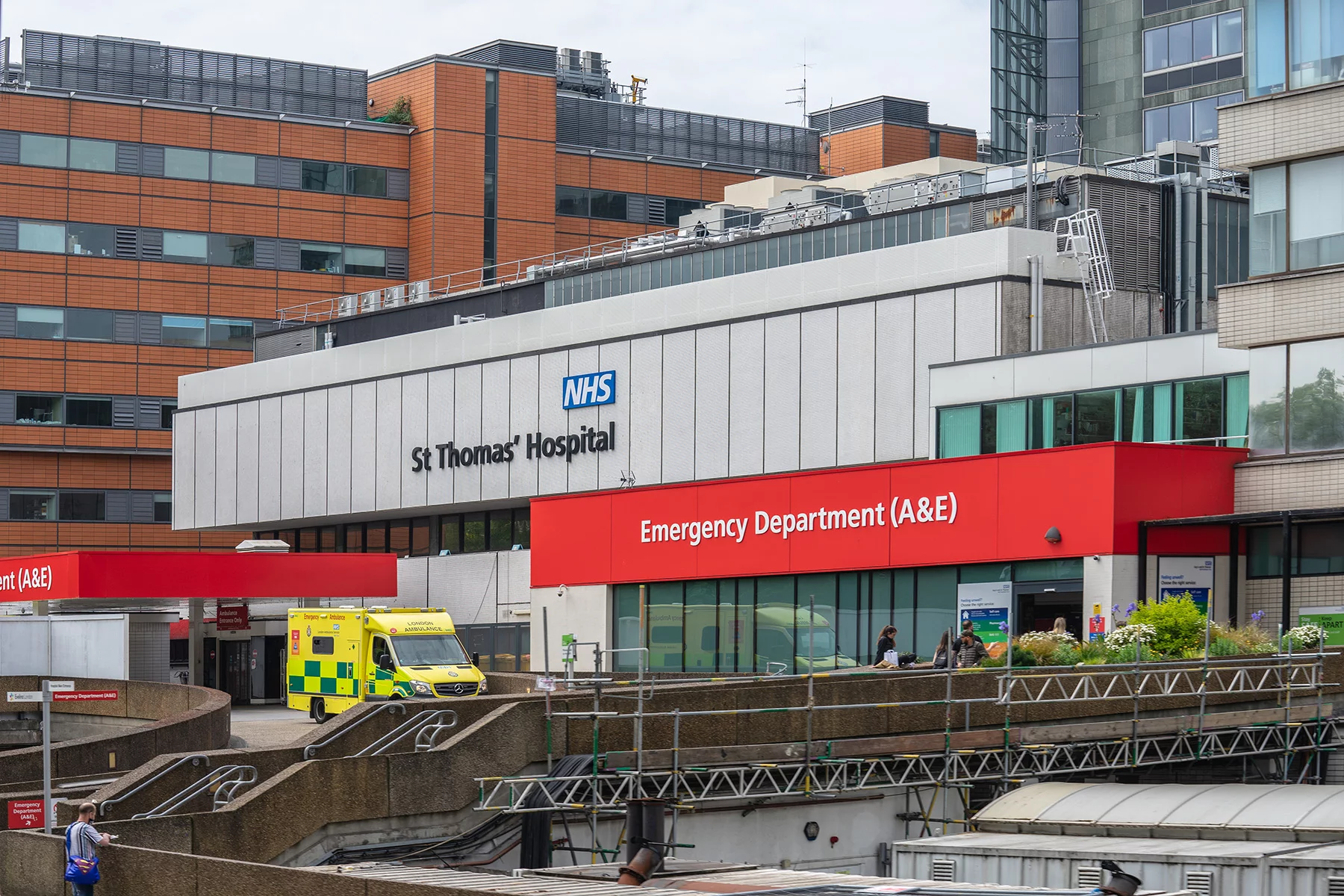
Confidence in vaccinations in the UK is generally high. Over the past 25 years, the government has sent an annual letter to parents asking for their opinions on both the vaccinations and diseases that they protect against; as a result, the British Journal of General Practice reported from a recent survey that only 2% of parents in the UK refused to have their children vaccinated.
Insurance for vaccinations in the UK
Some vaccinations are free of charge and covered by the NHS, including all children’s routine vaccinations from birth to 18 years of age. The NHS also offers the flu vaccine free of charge to pregnant women and those aged 65 or over. Additionally, the NHS covers the vaccinations for shingles, pneumonia, hepatitis B, and chickenpox for adults who are at a high risk of complications.
For coverage on vaccines not under the NHS umbrella, there are a number of health insurance providers in the UK, such as:
Vaccinations for children in the UK
When you become a parent, your child is registered for vaccinations free of charge. Your baby receives a Personal Child Health Record for the purpose of tracking your child’s medical history. As a busy new parent, it can be difficult to remember all the information about the vaccination schedule in the UK.
With this in mind, the NHS provides a timeline that helps with organizing them. As long as your child is registered for vaccinations, you can simply make an appointment with your general practitioner and your child will receive them there. Sugary sweets and candy are normally on hand to reward the child afterwards for their bravery.
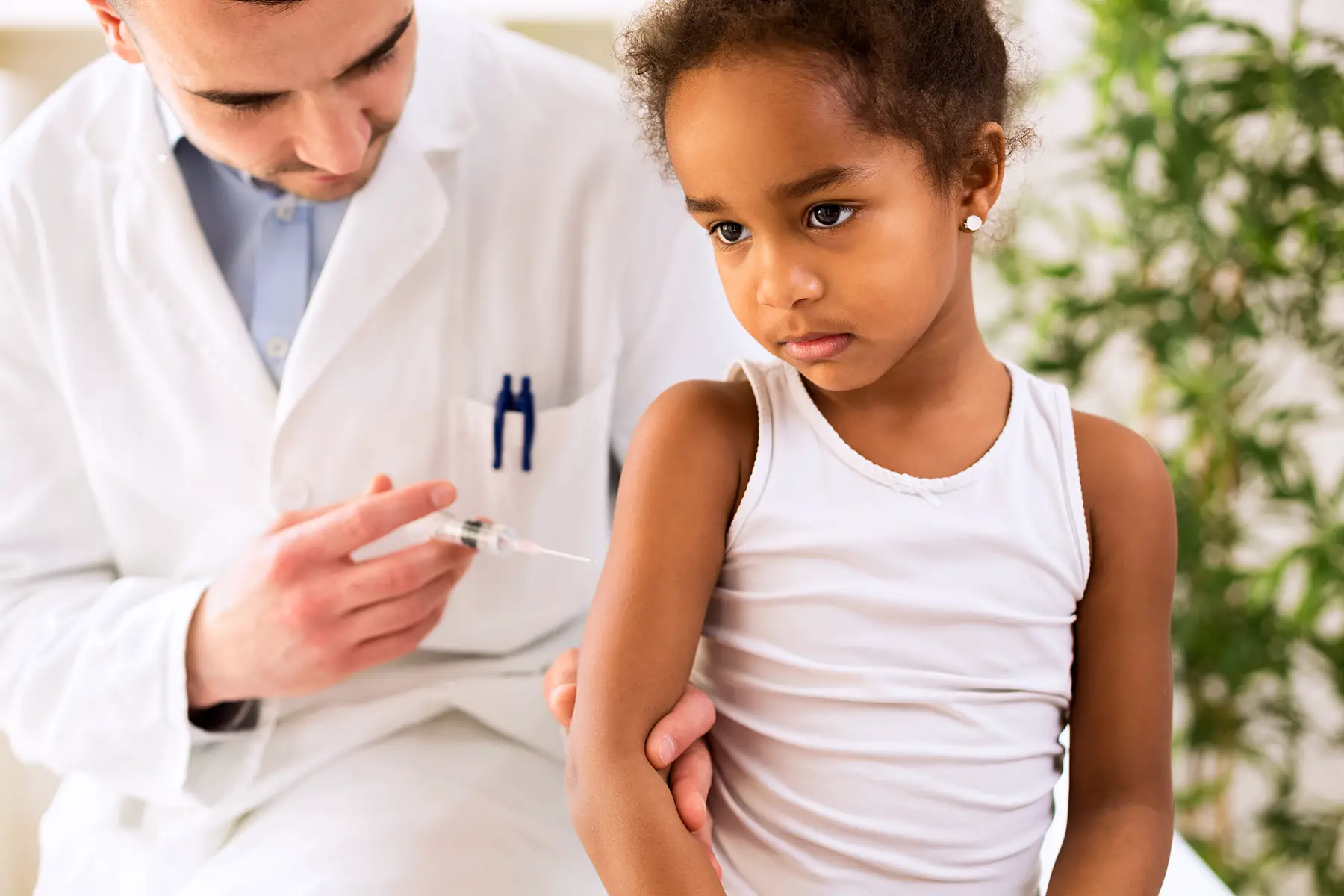
The NHS provides quite a few child vaccinations in the UK for free, such as:
- 6-in-1 vaccine: at eight, 12, and 16 weeks old. Protects against diphtheria, tetanus, whooping cough (pertussis), polio, haemophilus influenzae type b, and hepatitis B.
- Pneumococcal (PCV) vaccine: at eight, 16 weeks, and one year old
- Rotavirus vaccine: at eight and 12 weeks old
- MenB vaccine: at eight, 16 weeks, and one year old
- Hib/MenC vaccine: at one year of age. Given as a single jab containing vaccines against meningitis C.
- Measles, mumps, and rubella (MMR) vaccine: at one year old
- Children’s flu vaccine: at two to nine years. Given annually.
- 4-in-1 pre-school booster: at three years and four months. Protects against diphtheria, tetanus, whooping cough, and polio.
- HPV vaccine (girls only): at 12–13 years old
- 3-in-1 teenage booster: at 14 years old. Protects against diphtheria, tetanus, and polio.
- MenACWY vaccine: at 14 years old.
Vaccinations for pensioners in the UK
The NHS recommends that pensioners and those over the age of 65 receive the following vaccines:
- Chickenpox vaccine: free of charge for those with a weakened immune system at the local GP
- Flu vaccine: free of charge at the local GP. Flu vaccines are strongly recommended for those living in a residential/care home, those more prone to catching the flu (e.g., asthmatic), or those caring for the elderly.
- Pneumococcal vaccine: free of charge to adults who are at a high risk at the local GP
- Shingles vaccine: free of charge for anyone over 70 years of age at the local GP
COVID-19 vaccination in the UK
All over-18s in the UK may receive a COVID-19 vaccination. These are provided all over the country in vaccination centers, hospitals, and pharmacies. The country has both centers where you can book in advance and walk-in venues, where you can simply turn up.
For more information, visit our guide to coronavirus in the UK. In this guide, you can find details about vaccination, testing, and the latest restrictions.
Travel vaccinations in the UK
Although there are no vaccinations officially required for those entering the UK, you might need to take some precautions while traveling to other parts of the world. You should aim to visit your local clinic or private healthcare provider about six to eight weeks prior to traveling to areas with a higher risk of contracting an infectious disease, as some may require more than one injection as part of a course.
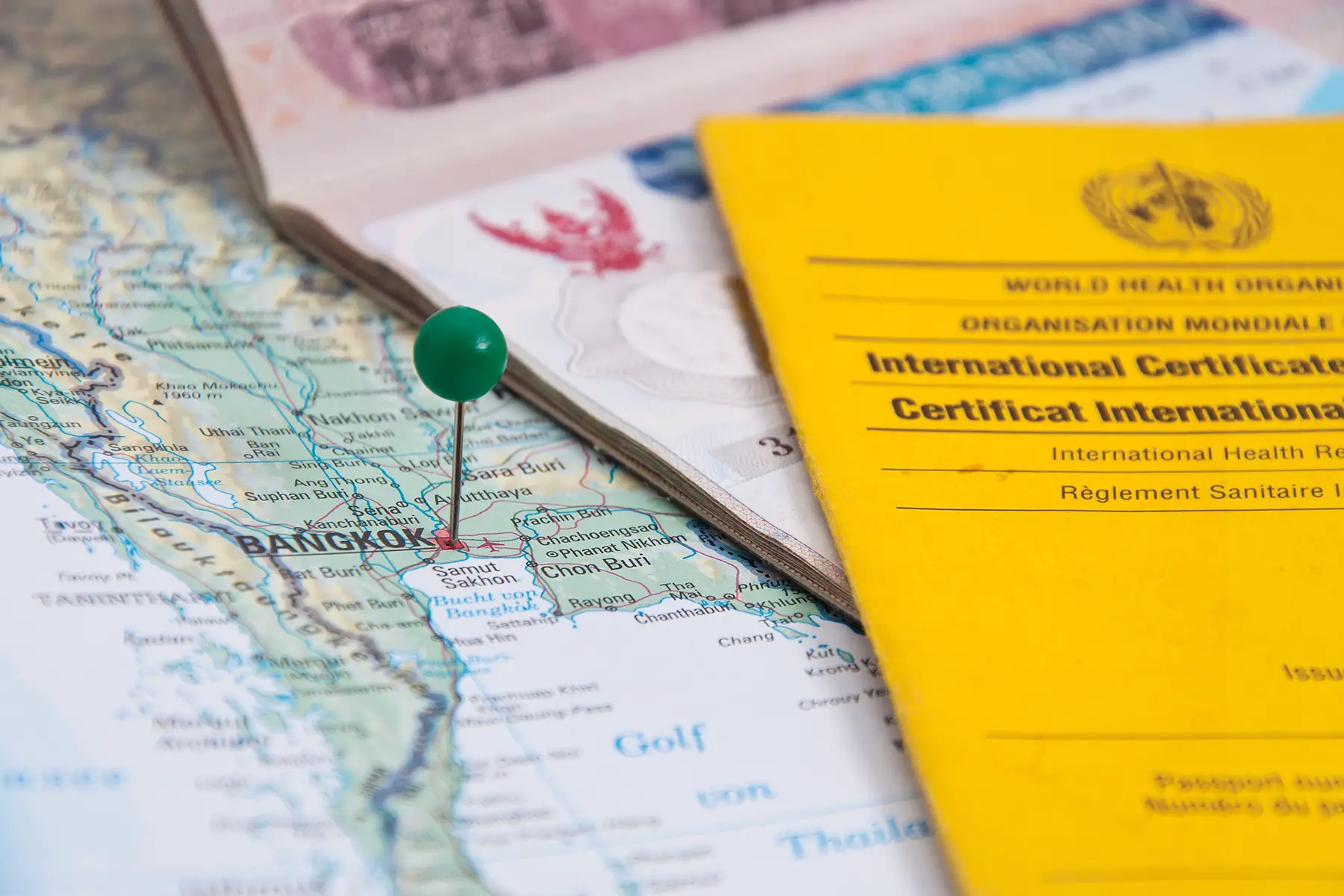
Many travel vaccinations are available for free from the NHS, such as:
- Diphtheria, polio, and tetanus boosters
- Cholera vaccine
- Typhoid vaccine
- Hepatitis A and hepatitis B combined vaccine
Some travel vaccinations, however, incur a fee. These vaccines include:
- Cholera: from £28 per dose. A typical course is two doses.
- Hepatitis A: from £40 per dose. Although protection from hepatitis A is included in the combined hepatitis vaccine, it is also possible to receive a vaccination that only covers hepatitis A. A typical course is three doses.
- Japanese encephalitis: from £89 per dose. A typical course is two doses.
- Malaria tablets: between £8.64 and £36.80
- Meningitis: from £50
- Rabies: from £55 per dose. A typical course is three doses.
- Tick-borne encephalitis: from £65 per dose. A typical course is three doses.
- Typhoid: from £30
- Yellow fever: from £58
Useful resources
Need more information about vaccinations in the UK? There are a number of informative websites from the UK government and British universities, such as:


Did you find this guide helpful?