
'%20id='ico-down'%20stroke='%23000000'%20stroke-width='1.5'%3e%3cg%20transform='translate(1092.250000,%20254.750000)'%3e%3cpolyline%20id='Path-2-Copy-4'%20transform='translate(5.500000,%202.750000)%20scale(1,%20-1)%20rotate(-180.000000)%20translate(-5.500000,%20-2.750000)%20'%20points='0%200%205.5%205.5%2011%200'%3e%3c/polyline%3e%3c/g%3e%3c/g%3e%3c/g%3e%3c/svg%3e)


Health
Healthcare
Vaccinations in Singapore
Unsure which vaccinations you might need in Singapore? From mandatory childhood shots to travel immunizations, here’s everything you need to know.

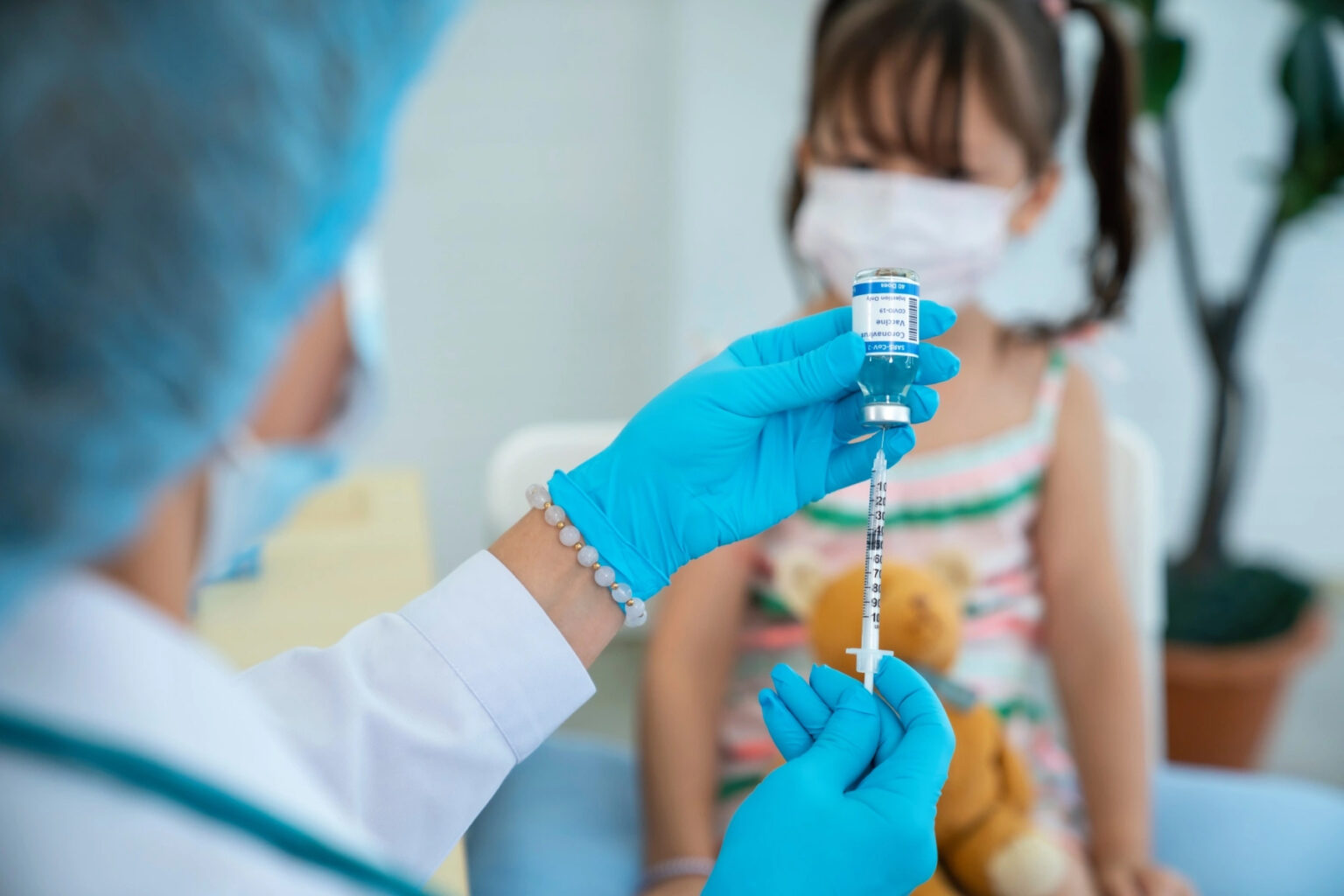
Singapore has a robust healthcare system split across public and private spheres, ensuring newcomers receive the best medical care available, including vaccinations and the country follows a similar immunization plan to its regional neighbors.
To keep yourself protected, learn more about Singaporean jabs with the following topics:
Allianz Care
Allianz Care is a world leader in providing international health insurance. Their various premiums provide professionally designed solutions for a variety of expat lifestyles. So, wherever your life takes you, make sure you have the right health protection for you and your family with Allianz Care.

The vaccination system in Singapore
Following the Infectious Diseases Act (1976), The Ministry of Health (MOH) oversees vaccinations in Singapore. However, it is the Health Sciences Authority (HSA) that assesses and approves them before they are used on the general public.
Immunizations became compulsory on 1 May 1869, when the state enacted Singapore’s Vaccination Ordinance, requiring all newborns to receive the smallpox vaccine.
Subsequently, it became the Quarantine and Prevention of Disease Ordinance in 1915, which required children at government schools also to receive the smallpox vaccine.
Does health insurance cover Singaporean vaccinations?
Notably, you can only access public healthcare in Singapore if you are a permanent resident or citizen. Therefore, most expats (not planning on living permanently in the country) must access vaccinations through the private sector.
Of course, this is more expensive and varies for different shots and across clinics. For example, Raffles Health – a private medical group – charges the least for flu jabs at its clinics but significantly more for the Human Papillomavirus (HPV) vaccines. For exact prices, check which Raffles Health vaccines are available.
While many employers offer private health insurance as part of their salary package, companies are not legally bound to do so. Therefore, you should get your own health insurance plan to cover vaccinations too.
Ensure that your medical insurance plan also includes inpatient and outpatient care, covering routine visits to your doctor (GP) and vaccinations. However, clinics may still require additional copayments for visits.
Only Singaporean citizens and permanent residents can access the country’s public healthcare facilities because they contribute to Medisave through the local social security system. It is the national saving scheme helping locals pay their medical costs.
Consequently, adult Singaporeans can access affordable vaccinations through GP clinics and polyclinics associated with the Community Health Assist Scheme (CHAS).
To get an idea of vaccination prices from CHAS clinics, visit the Ministry of Health website.
How do childhood vaccinations work in Singapore?
Singapore’s Ministry of Health recommends that babies begin the National Childhood Immunisation Schedule soon after birth. This is a series of vaccinations for common, preventable diseases at the appropriate age.
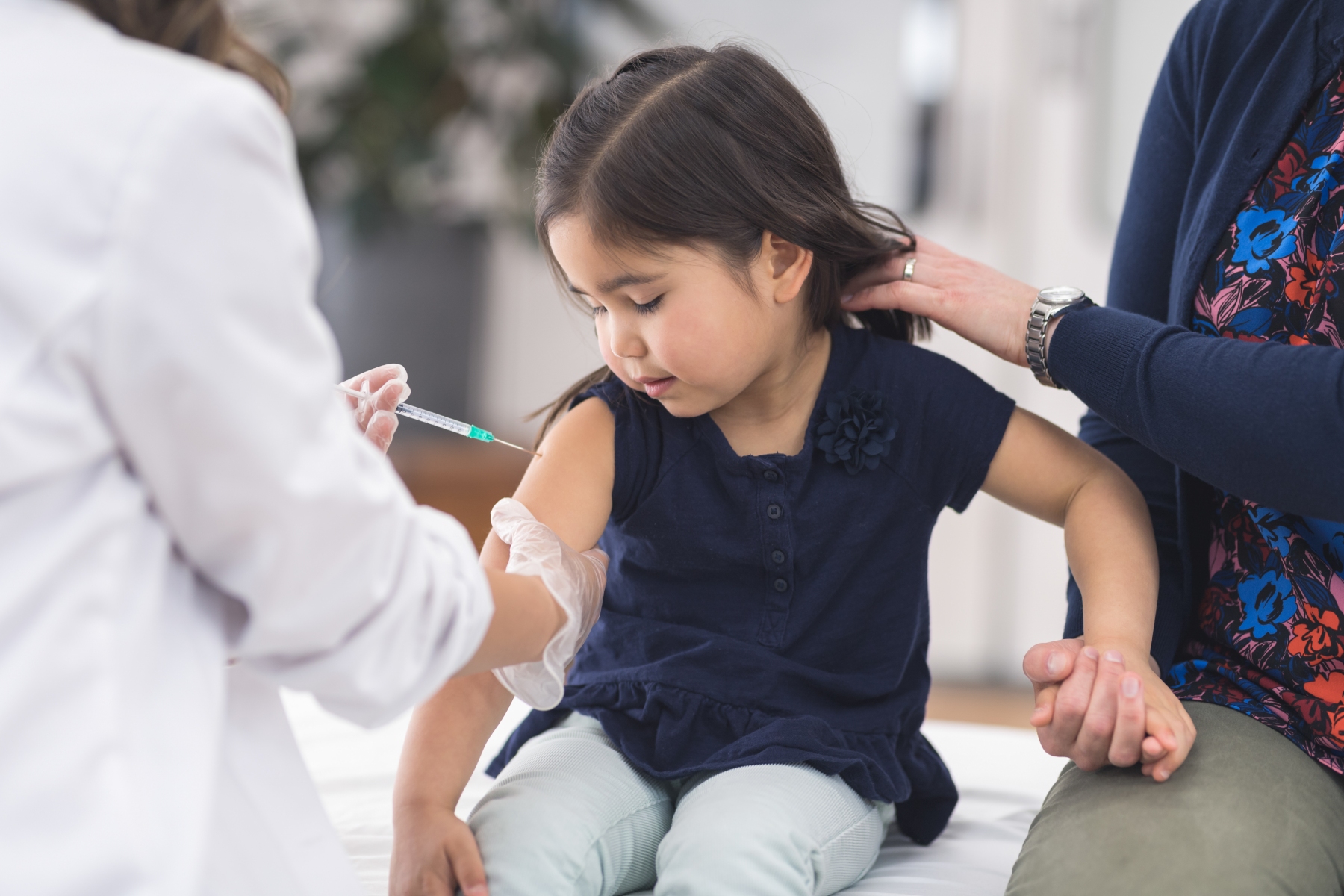
Singaporean children (0–6 years) receive these vaccines free of charge through the public healthcare system at their nearest CHAS polyclinic (PDF) and, sometimes, through local schools.
However, as an expat, you’ll need to access these immunizations through the private healthcare system, and claim the costs back from your health insurance.
Which childhood vaccinations are mandatory or recommended?
By law, children in Singapore only require two vaccinations: diphtheria and measles. However, the recommended immunization schedule accounts for 12 diseases; most receive the complete series.
Still, some combination vaccines – such as DTaP – protect against several diseases (i.e., diphtheria, tetanus, and pertussis) at once. As such, children do not necessarily need to get all 12 shots.

Importantly, any child attending a Singaporean public school must receive all the vaccinations on the immunization schedule. However, most expats send their kids to international schools, which usually only require some.
What optional childhood vaccinations are available in Singapore?
There are also several optional childhood vaccinations available in Singapore, such as:
| Vaccine name | Targeted disease | Number of doses |
| PPSV23 | Pneumococcal polysaccharide (only required if child has specific medical conditions) | One dose for children between two and 17 years |
| Rotavirus | Pneumococcal polysaccharide (only required if a child has specific medical conditions) | Two or three doses |
What is the Singaporean vaccination schedule?
The vaccination program in Singapore recommends immunizing children against various diseases from birth until 17 years old. Below is the recommended schedule:
| Vaccine name | Targeted disease | Number of doses | Age to take the vaccine |
| BCG | Tuberculosis | One | At birth |
| Hepatitis B | Hepatitis B | Three | At birth, two months, six months |
| PCV | Pneumococcal disease | Two, plus one booster | Four months, six months, booster at 12 months |
| DTaP/Tdap | Diphtheria, Pertussis (whooping cough), and Tetanus | Three, plus two boosters | Two months, four months, and six months; plus 18 months for DTaP or 10-11 years for Tdap |
| IPV/OPV | Polio | Three, plus two boosters | Two, four, and six months, plus 18 months and 10-11 years |
| Hib | Haemophilus Influenzae Type B (flu) | Three, plus one booster | Two, four, and six months, plus 18 months |
| MMR | Measles, Mumps, and Rubella | Two | 12 and 15 months |
| Varicella | Chickenpox | Two | 12 and 15 months |
| HPV | Human Papillomavirus | Two (only for females) | 12–13 years and 13–14 years |
| INF | Influenza (flu) | Taken yearly | 6 months onwards |
What about COVID-19 vaccinations?
Singapore’s National Vaccination Programme for COVID-19 offers four vaccines:
- Pfizer-BioNTech (Cominarty)
- Moderna
- Novavax
- Sinovac (Coronavac)
You can register online for these shots via the Ministry of Health’s website, and they are free for all Singaporean citizens, permanent residents, and visa holders.
Vaccinations for pensioners in Singapore
Officially, the recommended vaccinations in Singapore for older adults are similar to some of those recommended for children, including:
- Hepatitis B
- Influenza
- MMR
- Pneumococcal
- Varicella
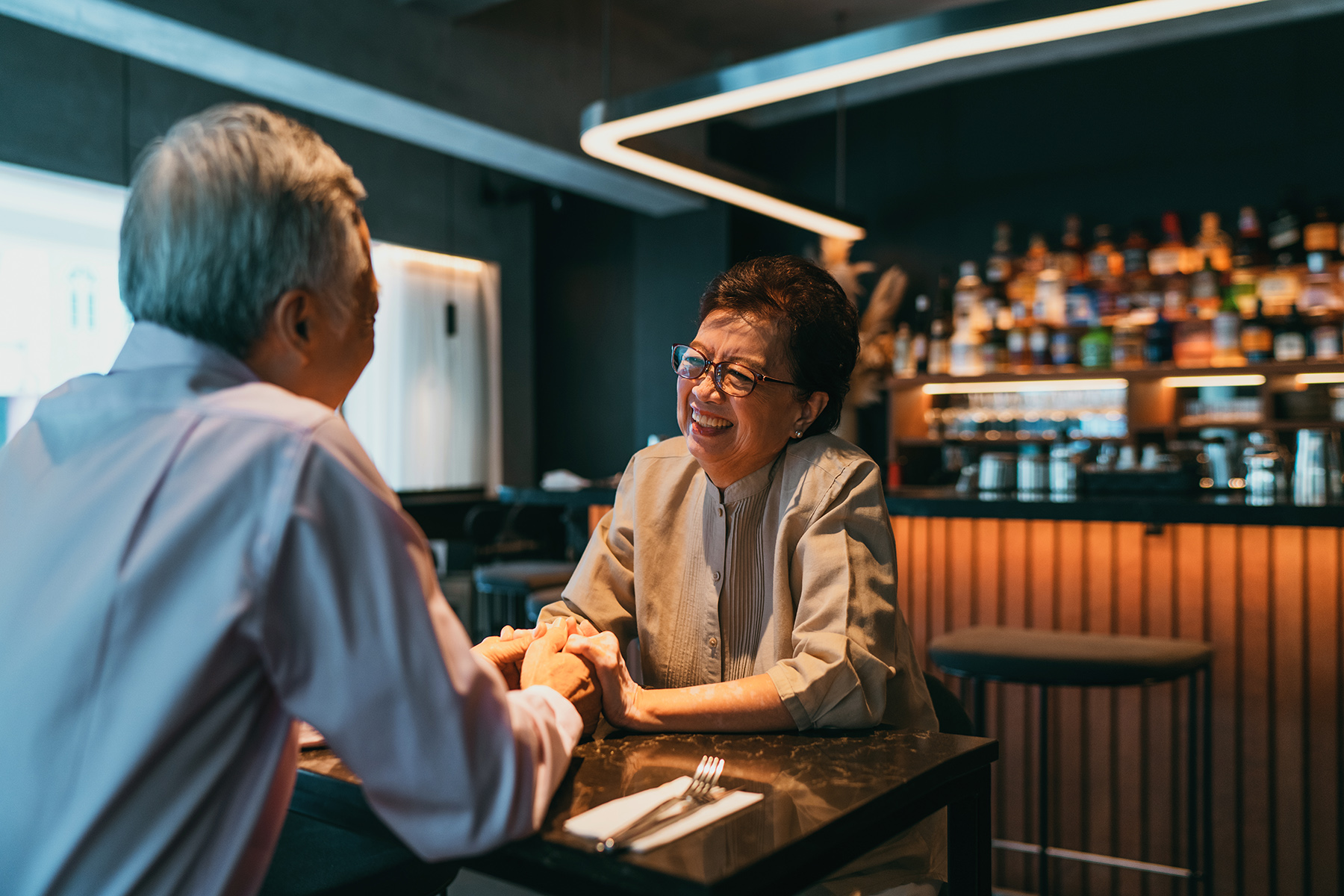
Furthermore, health authorities advise senior citizens to get the flu shot yearly to protect themselves. You can access these vaccines at highly subsidized rates through the CHAS polyclinics or at private clinics where you will pay more, of course.
Are there any vaccinations for special groups?
In addition to all the recommended vaccines, other immunizations in Singapore might be helpful for certain groups of people, such as:
| Vaccine | Targeted disease | Group benefitting from vaccine |
| Shingles vaccine | Shingles | Pensioners and immunosuppressed people |
| Whooping cough vaccine | Pertussis (whooping cough) | Pregnant women |
| Influenza vaccine | Flu | Pregnant women |
Naturally, you should consult your GP or healthcare professional before taking any vaccines to understand the potential adverse effects (however rare) and ensure they suit you.
Travel vaccinations in Singapore
If you plan to travel to certain places, getting specific vaccinations in Singapore before your departure is advisable. You don’t want to get sick overseas, do you?
Some of the most common travel vaccinations in Singapore are:
- Hepatitis A
- Hepatitis B
- H1N1 Influenza (flu)
- Tetanus
- Diphtheria
- Typhoid
- Measles, Mumps, and Rubella (MMR)
- Varicella (Chickenpox)
- Japanese encephalitis
- Pneumococcal disease
- Meningococcal disease
- Rabies
- Yellow Fever
- Dengue
How can I get travel vaccinations in Singapore?
Interestingly, Singapore does not require visitors to have certain vaccinations. However, you must be up-to-date with all the recommended vaccines in your home country before making the trip.
Still, if you arrive from a region at risk for Yellow Fever, you must also show a certificate proving your vaccination status.

If you’re living in Singapore and traveling abroad, the official recommendation is to check which vaccinations you will need for your destination(s) and get them four to six weeks before you go. This will give time for the shots to initiate the immune response, typically around two weeks.
Generally, you can get your travel vaccinations at most outpatient clinics nationwide, but you must make an appointment beforehand. You can either go to any private clinic (e.g., Raffles Medical Group) or public government polyclinics (outpatient clinics) like the ones run by the National University of Singapore.
Prices vary significantly between vaccines and private clinics, and costs are higher if the vaccine requires a doctor consultation beforehand (e.g., for Dengue). Of course, if you are a CHAS cardholder, you can access subsidized vaccines. Therefore, check the cost when making your appointment.
Useful resources
- Healthhub – more about children’s vaccinations from the official government website
- Raffles Medical Group – information about travel vaccines from one Raffles Medical Group
- CHAS clinics – find your nearest community health clinic (PDF)
- Healthhub – a government search tool to discover the recommended vaccinations for your situation
Related Articles



Editor's picks

Did you find this guide helpful?