
'%20id='ico-down'%20stroke='%23000000'%20stroke-width='1.5'%3e%3cg%20transform='translate(1092.250000,%20254.750000)'%3e%3cpolyline%20id='Path-2-Copy-4'%20transform='translate(5.500000,%202.750000)%20scale(1,%20-1)%20rotate(-180.000000)%20translate(-5.500000,%20-2.750000)%20'%20points='0%200%205.5%205.5%2011%200'%3e%3c/polyline%3e%3c/g%3e%3c/g%3e%3c/g%3e%3c/svg%3e)


Education
Language Learning
Learn Arabic in Qatar
Hoping to learn Arabic in Qatar? We review everything you need to sound like a local – from mobile apps to in-person courses.

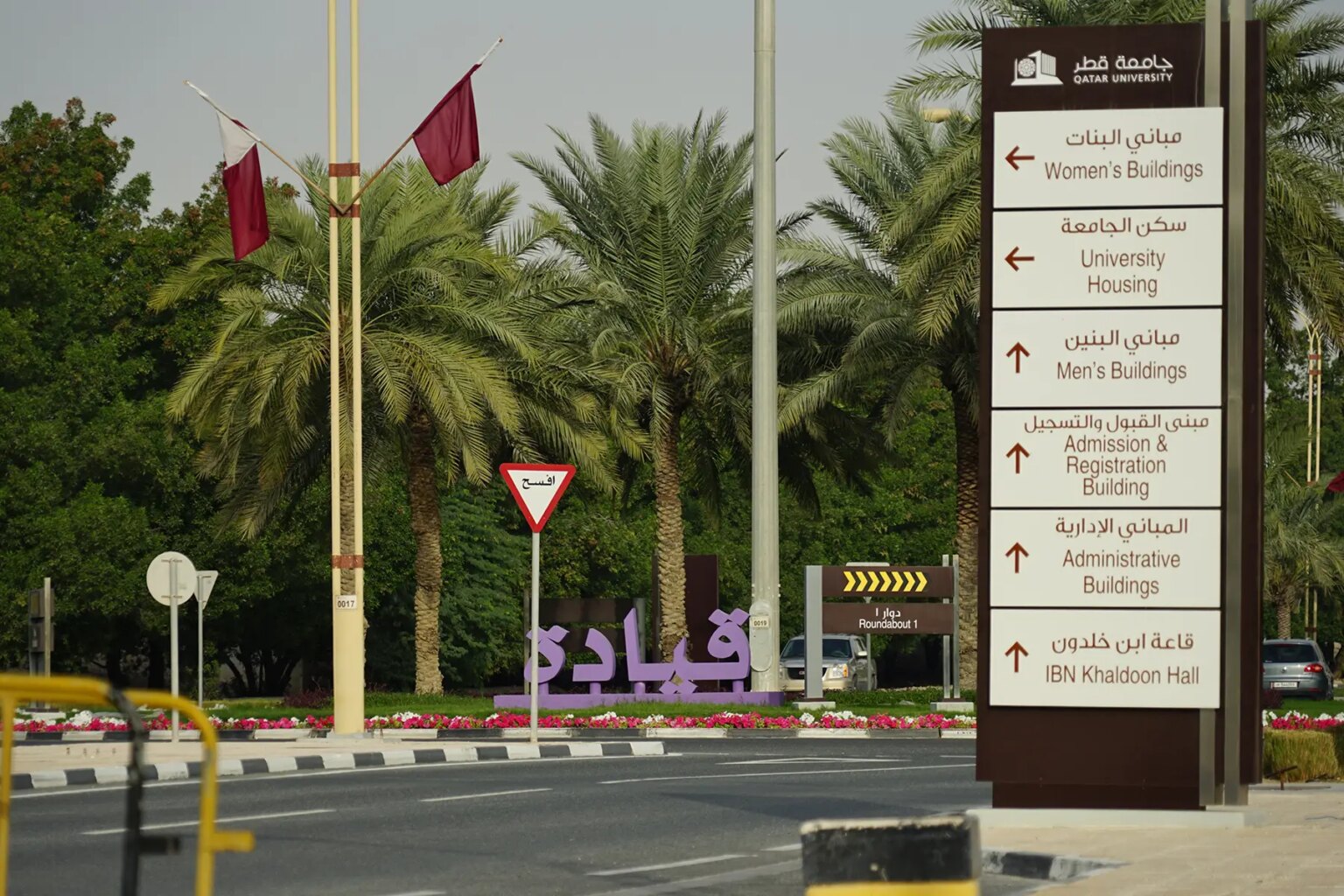
If you’re moving to Qatar, perhaps you’re thinking about learning Arabic. Picking up this language might seem like a challenge at first, especially if you’re not familiar with its alphabet and sounds. Additionally, if you’re moving from outside the region, you’ll also be learning about a new culture.
However, there are many ways to begin, and below, you can find them all. Between classroom instruction and the best apps, dialects, and business Arabic, we review the most effective ways to learn the language in Qatar.
This article explores the following:
italki
Want to learn Arabic without the hassle of the classroom? italki can help. Their online language platform connects you to a whole network of professional teachers, letting you learn one-to-one in a way that suits your lifestyle. Whether you want to learn Arabic or another language, find lessons with italki.

Why learn the Arabic language?
Although Arabic might seem daunting to learn, it is a very useful language. Even if you pick up only a few words, you’ll be practicing the fifth most widely spoken language in the world, with 420 million native speakers. As an international resident in Qatar, learning some Arabic is particularly beneficial. For a start, learning Qatari Arabic automatically begins to bridge the cultural gap that can sometimes exist between locals and expats. Making an effort can go a long way – people will invite you into spaces that most never get to see.

Additionally, though many jobs will hire English speakers, some jobs – especially ones that deal with the local population, like tourism – may reasonably require some Arabic. Although there are no firm numbers on how many migrants learn Arabic, given that Qataris make up less than 15% of the population, the numbers are surely low. This, combined with the sheer difficulty of mastering it – at 2,200 hours required for native English speakers – make it a serious task! That said, it presents a fun and rewarding challenge.
Arabic dialects
Millions of people speak Arabic. However, different regions speak different forms of Arabic. There are three main forms of the language: Qur’anic Arabic, Modern Standard Arabic, and Colloquial Arabic. Qur’anic Arabic is used during prayer and throughout the Qur’an and holy texts. Modern Standard Arabic (also called fus-ha) is used by journalists, in official government correspondence, and in other formal settings. Finally, Colloquial Arabic is the Arabic of daily life and can vary significantly by country and region. For example, the Arabic you will hear in Doha will sound very different from the Arabic spoken in Tunis.

The Arabic spoken in Qatar, the UAE, Oman, and parts of Saudi Arabia, Kuwait, and Iran, is called khaleeji, or Gulf Arabic, and has its own particularities specific to the region. Qatari Arabic is very similar to the Arabic spoken in other parts of the Gulf. However, it does have its own vocabulary and grammatical quirks that set it apart.
Learning Arabic before moving to Qatar
Once you’ve accepted your job offer and are waiting for permits and tickets, consider using some pre-departure time to learn the basics. Practicing Qatari Arabic before you leave will give you an introduction to Qatar and prepare you to handle at least the pleasantries upon arrival. It’ll also help get you excited for the move, giving you a break from the logistics and making everything run smoothly.
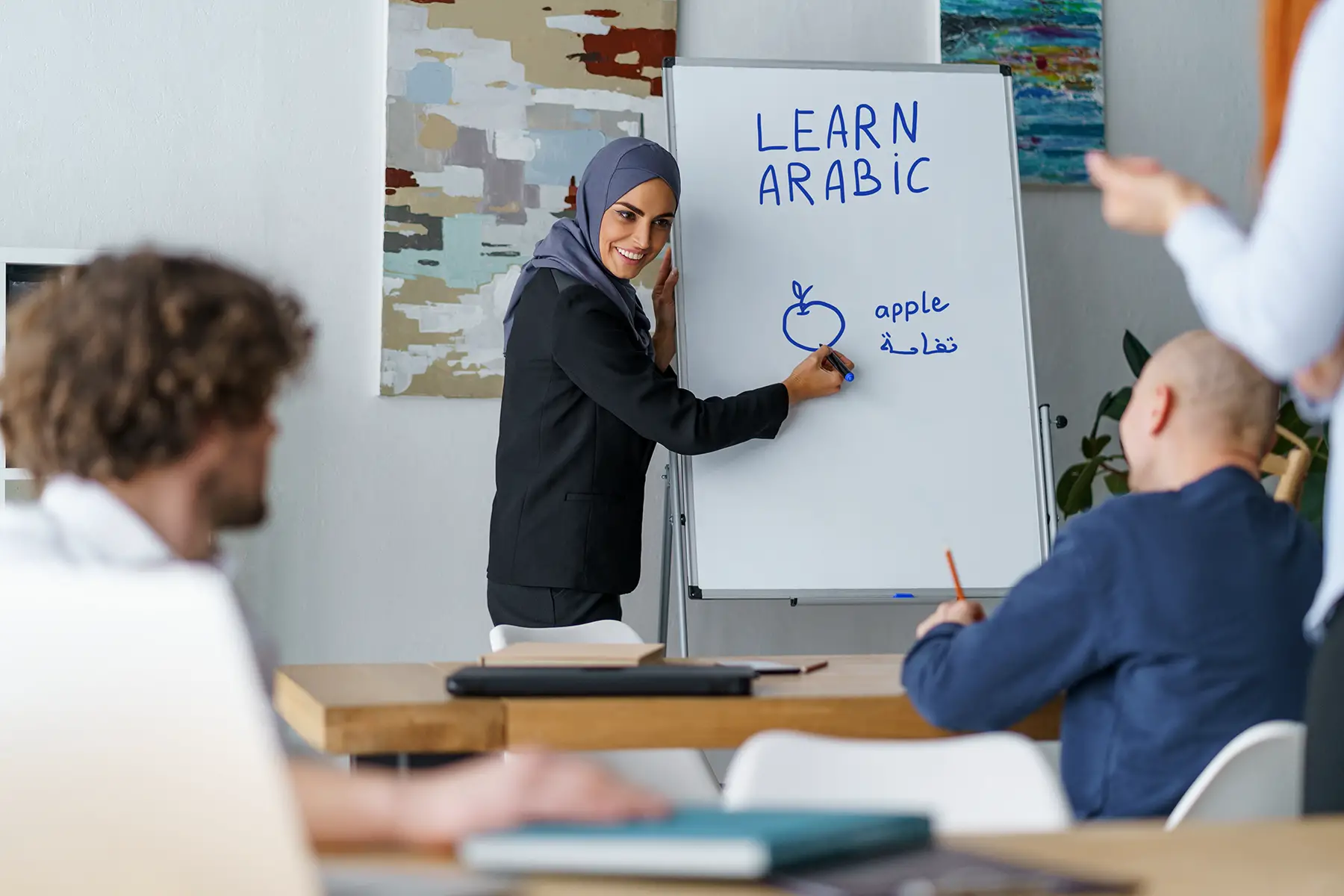
That linguistic familiarity could also be comforting when you arrive, and little else is familiar. Furthermore, having some basics will help you improve your Arabic faster once you’re immersed in your new life.
Here are some good ways to start learning Arabic before you board the plane:
- Visit your local university: Most big cities have at least one university that teaches Arabic.
- Try your local mosque: Since most mosque leaders speak or read Arabic, many mosques offer introductory Arabic for their members or the local community. Although they usually teach Qur’anic Arabic, it can help you begin learning the alphabet and the structure of the language.
- Check out Arabic Online: If you’d like to get familiar with the language without breaking the bank, this resource offers casual learners the basics of speaking, listening, writing, and reading Arabic. Their introductory courses are free.
- Play around with uTalk: If you’re not keen on a classroom setting, try out this games-based learning system that will get you speaking Arabic right away.
- Visit Arab Academy: Arab Academy is one of the oldest online Arabic courses. It offers online lessons for everyone, from absolute beginners to advanced learners.
Learning Arabic in Qatar
Once you land in Qatar and have settled in, consider learning some Arabic – learning a language while you can actively practice it is one of the fastest ways to learn. This is because you can test out your vocabulary and express yourself in. areal life setting. It’s also helpful to learn the language after arriving because you can learn Qatari Arabic, a dialect that is not hugely popular around the world.

Language schools in Qatar
Though Qatar is a tiny country, it offers many different language schools. Here are a few options:
- Berlitz Qatar: Berlitz’s immersion-method instruction is globally renowned and starts with a free placement exam. You can find Berlitz classes in Doha and online.
- Loghati Center: Founded in Doha in 2012, the Loghati Center offers an Arabic for non-natives program that teaches language and culture.
- Excellence Training Center: Focusing primarily on spoken or conversational Arabic, the Excellence Training Center is a good option if you’re interested in a speedy learning process.
- Sheikh Abdulla Bin Zaid Al Mahmoud Islamic Center: For those interested in learning Arabic through a community center, the Sheikh Abdulla Center is a good option. Keep in mind that you’ll need to visit in person to register.
Learning Arabic through institutes or universities
Because Qatar hosts many internationally renowned universities, you’ll find that many offer strong Arabic language programs. Here are some good places to start:
- Doha Institute for Graduate Studies: Offering beginner, intermediate, and advanced Arabic lessons, the Doha institute focuses on comprehensive language study. This includes speaking, listening, reading, and writing skills.
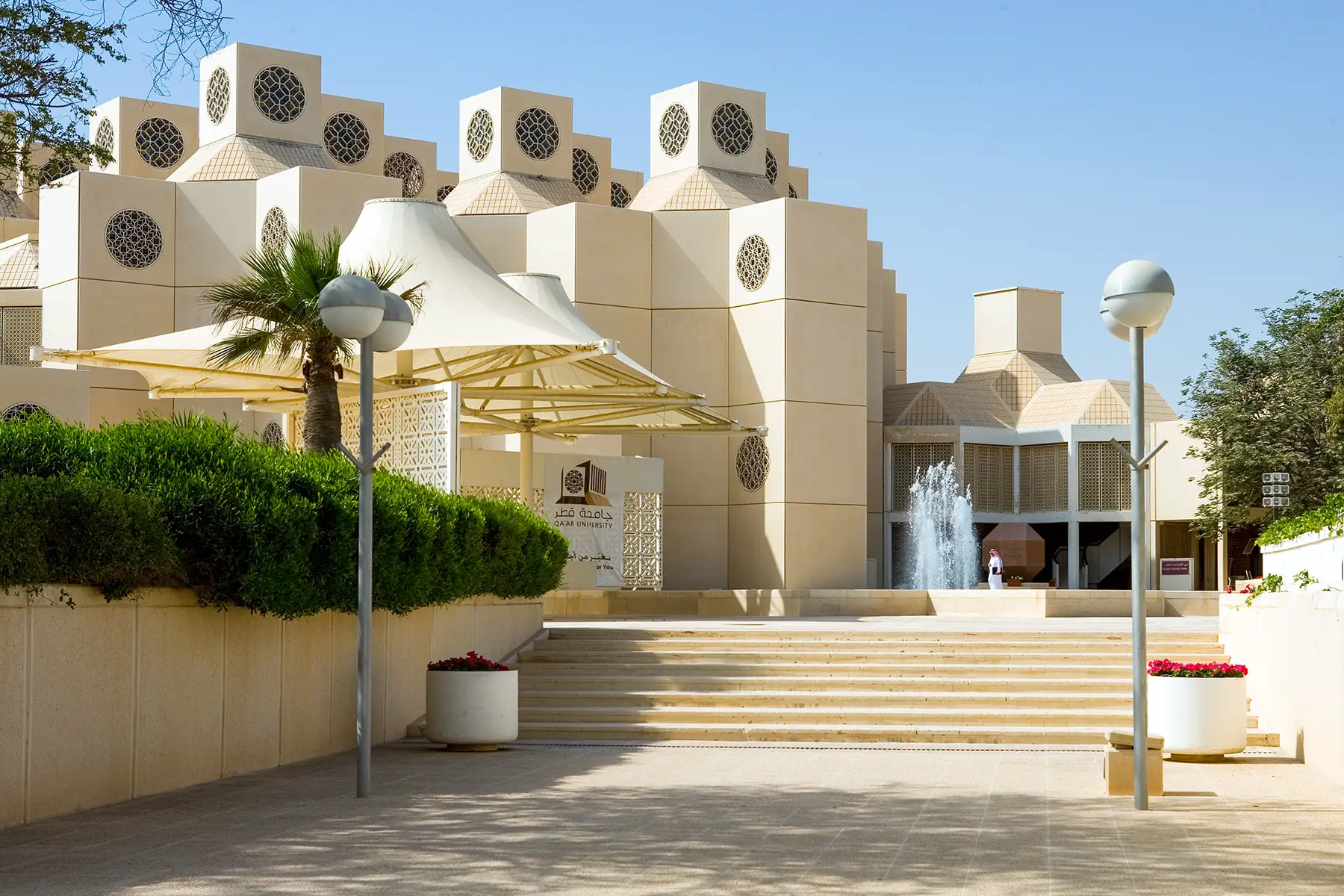
- Qatar University (QU): A leading university in Qatar, QU offers Arabic language certificate programs for non-native speakers across six levels, from beginner to advanced.
- Hamid bin Khalifa University: Hamid bin Khalifa’s Translation and Interpreting institute offers a wealth of Arabic courses, from Survival Arabic to Advanced Conversation.
- Al Rayyan International University College: Al Rayyan offers an eight-week introductory Arabic class geared towards absolute beginners. Keep in mind that the courses teach Modern Standard Arabic, which is quite formal.
Government Arabic lessons in Qatar
Recognizing the need for wider integration of expats, the government has begun prioritizing Arabic study. In fact, they recently launched the Takalam website to expose non-native Arabic speakers to the Arabic language and Qatari culture. Offering 20 interactive, online lessons, Takalam is a great place to get started from the convenience of your phone or computer.
Learning Arabic for free in Qatar
If you’re looking to learn Arabic without breaking the bank, your best bet will be to look to online and app options. Most language centers and institutes charge for their courses, but using websites and apps will allow you to study at your own pace. Keep reading for free apps and websites.
Learn Arabic online
Most language schools in Qatar that offer in-person classes also offer virtual classes. So do your research, find a language school you prefer, and then reach out to ask about virtual options. And to start, here are some good online choices:
- Al Jazeera Learning: This site combines daily news with Arabic learning across different skill levels. Al Jazeera Learning is a great way to incorporate Arabic learning into your everyday life.
- Arabic with Reem: Offering online and in-person classes, this is a good option for those looking for expert, private instruction. Costs depend on the number of instruction hours.

Other handy online Arabic-learning resources
- Qatari Phrasebook: This super helpful app offers 1,500 common phrases and words in the Qatari dialect, as well as spellings and recordings of proper pronunciation by local Qataris.
- Language Learning with Netflix: This computer plug-in allows you to have two sets of subtitles on your Netflix show to compare text between the language you speak and Arabic.
- Gulf Arabic Learner’s Dictionary: This helpful dictionary has Gulf-specific Arabic for those interested in practicing their khaleeji Arabic.
Learn Arabic with a computer or smartphone app
If you learn better on your own, at your own pace, you might like to try using language learning computer software or an app. Here are some great options for studying Arabic:
- Pimsleur: A globally recognized language learning software, Pimsleur can be accessed through CDs, online, and via their app. However, keep in mind that they only teach Modern Standard Arabic, which, though understood by Arabic speakers, is formal and not often used in daily life.
- Rosetta Stone: Rosetta Stone is an award-winning language study tool. Fortunately, they offer free trials if you want to try it out before buying.
- Rocket Languages: Rocket languages is a fun way to learn Arabic through your computer or on your phone. Keep in mind that they only offer study in Egyptian Arabic. However, this dialect is well understood throughout the Middle East thanks to soap operas.
- Instant Immersion: A well-known language learning software, Instant Immersion only offers Modern Standard Arabic.
App options
If you would rather learn exclusively through a mobile app, here are some excellent options:
- Duolingo: Duolingo is an extremely popular language learning app that makes learning fun and easy. Free and paid plans are available.
- Memrise: Memrise is a good choice for the serious Arabic student; it offers lessons on grammar, vocabulary, and conversational Arabic. There are free and paid options.
- Drops: Drops teaches conversational Arabic through quick, easy lessons. It is a great introduction for those with a casual interest in learning the language. Drops offers free and paid plan options.
- Tandem: Tandem teaches language through community. You pair up with a buddy who wants to learn your language and whose language you want to learn, and you teach each other. Free and paid plans are available.
Learning Qatari Arabic outside of the classroom
Learning a language in the classroom doesn’t suit everyone. So, if you are looking for other ways to pick up some Arabic, there are plenty of options. Ask around in expat groups (online or in-person) to see if any Arabic speakers are looking for a conversation partner. If you have a social hobby that you love, like playing a sport or doing trivia, see if there are any local clubs you could join; these could introduce you to Arabic speakers.
If you’re searching for online resources, check out language exchanges where you can find language partners. Otherwise, you can search for a language club or culture club on sites like Meetup.com. Keep in mind, though, that many activities may be segregated by gender.
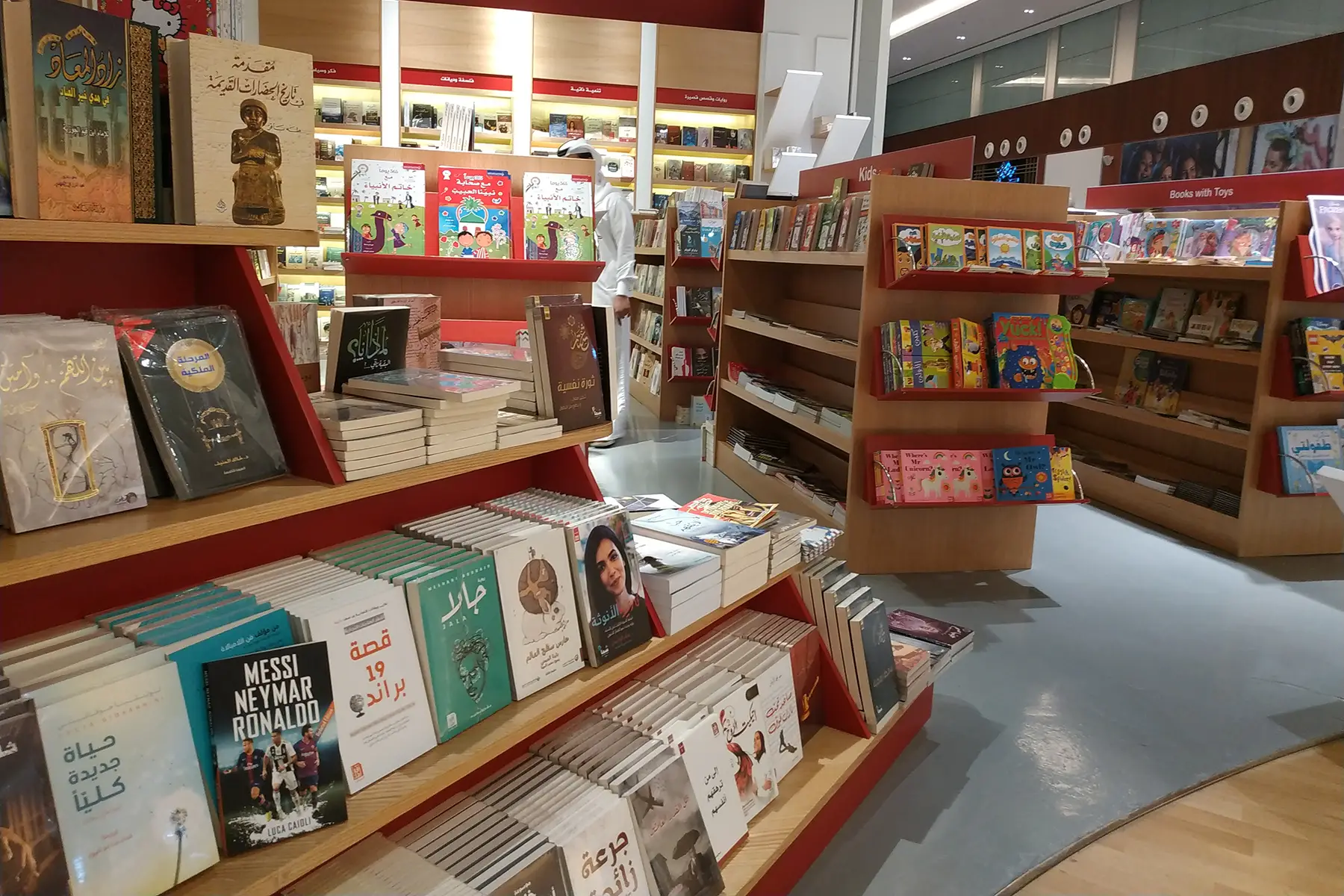
Alternatively, if you have Qatari neighbors, you could ask if they’d be willing to grab a coffee with you sometime and swap languages. If you have children, notice if any of their friends speak Arabic at home – if so, you could arrange immersive playdates that would benefit you and your little ones. And finally, something you could do without any help from anyone is a self-study through Netflix; watching a show in Arabic will help your brain passively pick up words and phrases that you can try out on your next grocery store run!
Learning Arabic for children in Qatar
Most international schools in Qatar offer Arabic language classes; however, it can be difficult to truly absorb the language without dedicated practice. Fortunately, with the spread of Arabic language media, expats can offer their children passive forms of language study by simply watching TV and videos. For those interested in more formal study for their little ones, here are some good places to start:
- Hamad bin Khalifa University: Within the Translation and Interpreting Institute, Hamad bin Khalifa offers children’s Arabic classes starting at age five. They also offer summer classes.
- Berlitz: Berlitz offers interactive group classes for children aged six to 17.
Learning Arabic for business and professionals in Qatar
If you work in a corporate setting or have many interactions with Qatari government officials, you may want to learn some local professional Arabic. An excellent online option for business Arabic is Gulf Arabic. In fact, they offer comprehensive instruction, including conversation, grammar, vocabulary, and language for business settings.
Official language examinations and qualifications in Qatar
There is no Arabic language certificate that is accepted globally. However, there are some ways to measure language proficiency. Different parts of the world have different measuring guidelines. For example, in Europe, they use the Common European Framework for Reference for Languages (CEFR) which tacks language fluency across six levels. In Canada, however, the Canadian Language Benchmarks (CLB) measures fluency across 12 different levels. And in the United States, many follow the guidelines of the American Council on the Teaching of Foreign Language (ACTFL), which measures fluency across five grades. Any of these organizations are a good option for measuring your Arabic language progress.
Useful resources
- Hamid bin Khalifa University – This university’s Translation and Interpreting Institute offers a wealth of Arabic courses for non-native speakers.
- Qatari Phrasebook – Gathers Qatari Arabic vocabulary and enlists local university students to demonstrate proper pronunciation.
- Takalam – A state-funded online resource to help expats learn and understand Qatar’s language and culture.



Did you find this guide helpful?