
'%20id='ico-down'%20stroke='%23000000'%20stroke-width='1.5'%3e%3cg%20transform='translate(1092.250000,%20254.750000)'%3e%3cpolyline%20id='Path-2-Copy-4'%20transform='translate(5.500000,%202.750000)%20scale(1,%20-1)%20rotate(-180.000000)%20translate(-5.500000,%20-2.750000)%20'%20points='0%200%205.5%205.5%2011%200'%3e%3c/polyline%3e%3c/g%3e%3c/g%3e%3c/g%3e%3c/svg%3e)


Moving
About the Netherlands
Where to get the news in the Netherlands
Discover the most reliable Dutch and English-language news sources to stay up to date with current events in the Netherlands and worldwide.

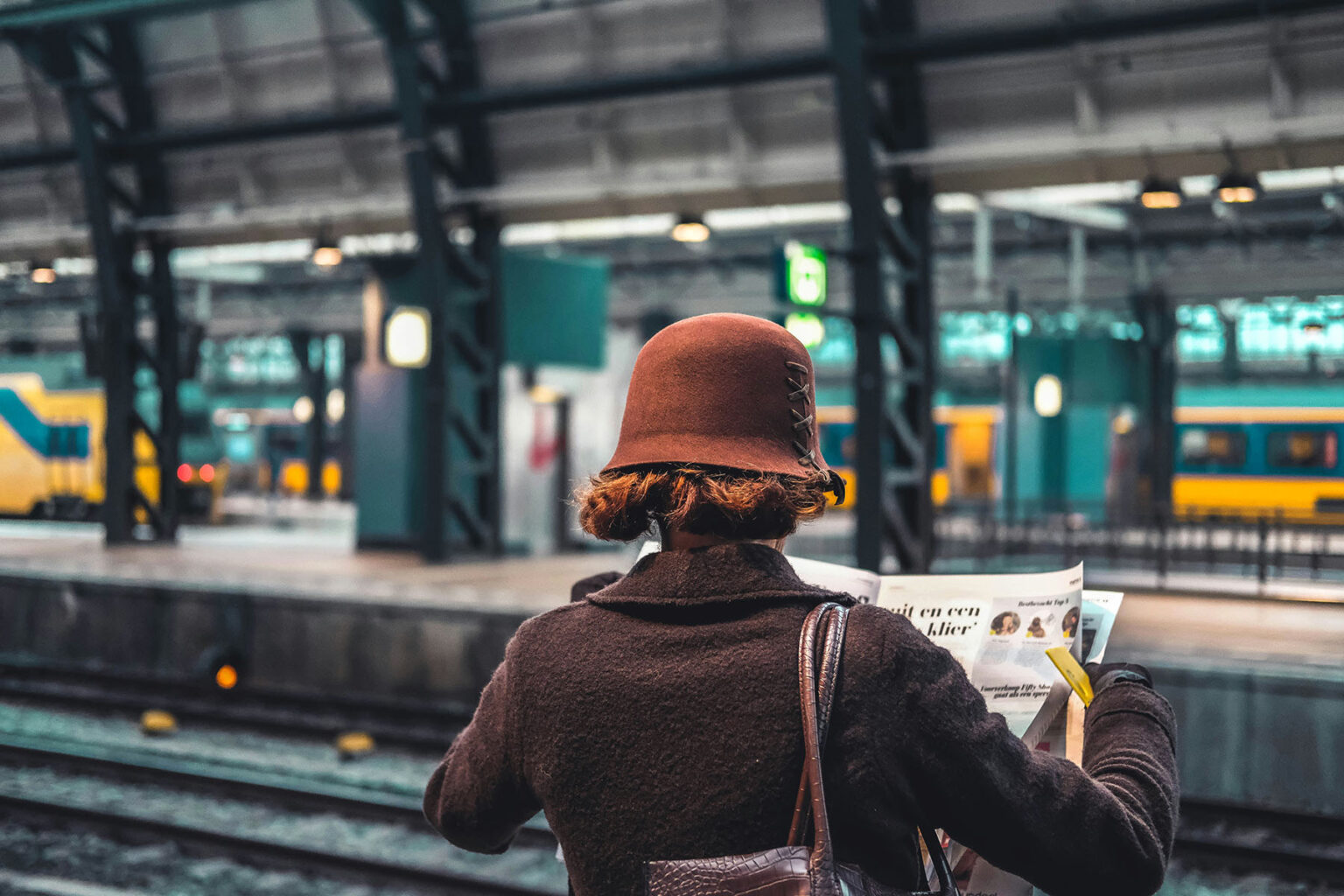
In the Netherlands, keeping up with local and global news requires little effort. Thanks to English-language news sites and increasingly reliable online translators, you can easily access multiple reliable news sources in both Dutch and English.
Not sure where to start, which news outlets to trust, and which channels to steer clear of? Here’s what you need to know:
Ground News
Get every side of the story with Ground News, the biggest source for breaking news around the world. This news aggregator lets you compare reporting on the same stories. Use data-driven media bias ratings to uncover political leanings and get the full picture. Stay informed on stories that matter with Ground News.

The Dutch media landscape
Like the population itself, the news media landscape in the Netherlands is “uniquely open” (Reuters Institute, 2022) and characterized by pluralism. You’ll find many commercial and state-funded media outlets where you can keep up with local and international news, including magazines (tijdschriften), newspapers (dagbladen), radio, TV, and online sources.

Online media sources appear the most popular way to follow the news in the Netherlands. In 2024, the Reuters Institute found that:
- 75% of people access their news coverage online (including social media)
- 62% of people stay up to date by watching TV or listening to the radio
- 37% use social media platforms to access current events
- 24% rely on print media to stay informed
Political bias of the Dutch media
Honesty is a virtue in the Netherlands, and this is reflected in the Dutch news coverage as well. Most media sources are generally trustworthy and factually accurate.
It’s important to understand, however, that news outlets in the Netherlands may adopt a particular political stance or report current events from a specific angle.
While the public broadcaster NOS is legally required to stay objective, other media outlets may favor a particular viewpoint, potentially aligning with your own political preferences. As such, you should always double-check your preferred news source for potential bias.
Freedom of the press in the Netherlands
The Netherlands has a high level of press freedom. The country ranks fourth out of 180 nations worldwide on the 2024 World Press Freedom Ranking, scoring 87.7/100. Reporters Without Borders (RSF) finds that the Dutch government actively protects journalistic freedom, though perhaps “more efficiently in continental Netherlands than in their overseas territories.”
The government does not censor news coverage and journalists. Freedom of speech is protected by the Dutch Constitution, and everyone can say, write, publish, and broadcast whatever they like (provided it doesn’t break the law).

While the Netherlands respects this basic right, it also recognizes the need for regulation. The Dutch Media Act 2008 sets out rules for public and commercial broadcasters; for example, news programs may not be sponsored. The Dutch Media Authority (Commissariaat voor de Media – CvdM) is the legally appointed, independent administrative body that monitors radio and TV channels for compliance.
Journalism safety in the Netherlands
Despite the high rank in press freedom, RSF also raises concerns. For example, in the last few years, aggression against reporters has risen due to intense public debate and society’s increasing polarization. The online and offline abuse especially targets TV crews, photographers, female reporters, and journalists of color.
In 2023, Dutch journalists’ safety initiative PersVeilig counted 214 instances of threats, intimidation, or violence, an increase of 8% compared to 2022.
RSF also warns against attacks from populist political parties. The organization explicitly fingers the Party for Freedom (PVV) as a threat to press freedom in the Netherlands. Indeed, in 2021, party leader Geert Wilders called journalists scum of the earth and has recently announced plans to abolish public broadcasting altogether.
Do the Dutch trust in the press?
Most of the population view the press as reliable, with 54% of adults trusting the news most of the time (Reuters Institute, 2024). This is higher than the world’s average of 40%. The country with the highest level of overall trust in the press is Finland (69%), while Greece and Hungary (23%) record the lowest levels of trust.
That said, a small group of right-wing politicians and voters have recently accused public broadcaster NOS, the primary source of news in the Netherlands, of “continuously [producing] fake news and disinformation.” They especially disagreed with its coverage of the COVID-19 pandemic and vaccinations, as well as the Dutch nitrogen crisis and farming policy.

According to one study (2022), critics of the news organization can be divided into two camps:
- One side feels that the NOS does not meet the standards expected of a public broadcaster, arguing that their news coverage lacks depth. They also believe that the public broadcaster is too commercial, focuses too much on its viewing rates, and uses too much clickbait.
- The second group of critics accuses the NOS of being left-wing partisan. This camp argues that the organization only shows one perspective and deliberately takes information out of context in order to influence the Dutch public. They claim the PSB creates state propaganda, pointing at tax-payer funding for its lack of government scrutiny.
While most of the accusations are based on conspiracy theories and disgruntled voters disagreeing with government policy, you might come across posts and stickers saying “NOS = fake news” here and there. As said before, right-wing populist politician Geert Wilders, who won the 2023 election, intends to do away with public broadcasting altogether.
Public broadcasting system in the Netherlands
The Dutch public broadcasting system (Nederlandse Publieke Omroep – NPO) consists of several independent media outlets with five-year renewable broadcasting licenses.
These Public Service Broadcasters (PSBs) are member-based. Rather than having their own stations, they are allotted airtime on three TV and eight radio networks according to their membership size. New PSBs can apply for airtime and government funding if they can gather at least 50,000 paid subscribers.
The so-called task broadcasters NOS and NTR are exempt from the membership requirement. Instead, they exist on the basis of a legal assignment by the Dutch Media Act 2008.

Despite receiving state funding, the public service broadcasters operate independently from the government. As said before, the NOS has the statutory obligation to remain unbiased. Commercial news outlets do not have that same responsibility and may adopt a particular political viewpoint.
Where to get the news in English in the Netherlands?
English-language newspapers and magazines
Popular English-language newspapers, such as The Guardian, The Financial Times, and The New York Times, can be purchased from selected bookstores and tobacco and convenience stores in most larger cities in the Netherlands. Alternatively, some international newspapers may offer a subscription with home delivery as well.
Expats looking for an English-language paper with a focus on the Netherlands could give these magazines a try:
- The Holland Times – a monthly magazine available at most embassies and consulates; you can also subscribe to home delivery
- The Local Expat – a monthly magazine focussing on The Hague, available at select bookshops, expat centers, and The Hague International Center
English-language news websites and social media
In a country where English is sometimes seen as an unofficial second language, there are many English-language sources that provide Dutch news coverage.

Major platforms include:
- DutchNews.nl – a reputable online-only newspaper with an active social media presence to provide English-language translations of breaking news
- NL Times – a tabloid-style online-only newspaper, complete with a ‘weird news’ section
- Het Parool English – the English-language site of the Dutch newspaper Het Parool
- The Guardian NL – the Dutch section of the website of the UK newspaper The Guardian
- The Northern Times – an online-only newspaper with a focus on news from the northern provinces (Drenthe, Friesland, and Groningen)
- The Telegraph NL – the Dutch section of the website of the UK newspaper The Telegraph
The Dutch TV broadcaster NOS is also experimenting with an AI-generated news service called NOS Lab. This online platform automatically translates Dutch output into English. Still in its early stages, the developers hope the algorithms will learn and improve over time to produce increasingly reliable translations.
The Netherlands also has regional news websites in English, including:
English-language TV, radio, and podcasts
The Netherlands does not produce Dutch news programs hosted in English. However, a standard cable TV package will give you access to foreign English-language news channels. Most TV packages include reputable broadcasts like Al Jazeera English, BBC News, CNN, and Euronews.

Similarly, Dutch radio channels in English – or any other language for that matter – are not available. However, you can catch up with foreign radio broadcasts by streaming them online or getting a digital subscription. Many international news outlets have podcasts that you can get for free. For example:
- Global News Podcast – a BBC news podcast focussing on global news
- Informationen am Abend – a German podcast from Deutschlandfunk
- Le journal de 19h – a French podcast from Radio France
- Morning – an Italian podcast from il Post
- The Daily – an American podcast from the New York Times
- Today Explained – an American podcast from Vox Media
Where to get Dutch-language news in the Netherlands?
National and local print news media
Like elsewhere in the world, newspaper readership is on the decline in the Netherlands. As such, there are only seven national daily and less than 25 regional newspapers left.
Below is a list of best-selling daily newspapers in the Netherlands, ranked by circulation (as of mid-2024):
- Algemeen Dagblad (AD) – the most trusted newspaper with the widest reach; its political leaning is center-right, though its readership mostly votes VVD and CDA
- De Telegraaf – a sensationalist right-wing conservative newspaper with the second-highest readership in the Netherlands. Its readers predominantly vote PVV and VVD.
- De Volkskrant – a high-quality print newspaper with the third highest reach. Traditionally a left-wing journal, its readership votes primarily PvdA. In 2013, the paper won the European Newspaper of the Year Award.
- NRC – a progressive newspaper with well-researched factual reporting; its political leaning is centrist/liberal, with a VVD/D66 following
- Trouw – another winner of the European Newspaper of the Year Award (2012), this protestant christian newspaper has a center/center-left alignment. Interestingly, its readers predominantly vote CDA.
- Het Financieele Dagblad – a traditionally right-wing newspaper that focuses on financial news and geopolitics. The political stance of its readership is unknown.
You can learn more about the differences between the above newspapers on the website Leestfeest.
Regional or local newspapers
While regional journalism seems to be on the decline, a number of local newspapers boast higher circulation figures than some of the national newspapers. And for good reason; they provide a valuable source of information about local businesses, events, and politics.

The 10 largest and most influential regional newspapers in the Netherlands are (as of mid-2023):
- Noordhollands Dagblad
- De Gelderlander
- De Limburger
- Brabants Dagblad (BD)
- De Stentor
- Dagblad van het Noorden (DvhN)
- Eindhovens Dagblad
- AD Rotterdams Dagblad
- AD Haagse Courant
- De Twentsche Courant Tubantia
Specialist magazines and periodicals
The Netherlands has many specialist magazines and periodicals that can help keep you in the loop. Seemingly, if you have an interest, you’ll be able to find a weekly, monthly, or periodical publication dedicated to it.
Covering all manner of topics, available magazines include:
- Current affairs and entertainment: e.g., Nieuwe Revu, Panorama, Privé, Quote, Story, and Wordt Vervolgd
- Opinion: e.g., De Groene Amsterdammer, Elsevier, HP/De Tijd, Maarten!, and Vrij Nederland
- Political: Opzij (feminism) and De Socialist (socialism)
- Product reviews: e.g., Consumentengids, Genoeg, and RADAR+
You can find an almost inexhaustible list of specialist publications on the website tijdschift.startpagina.nl.
Dutch news websites and social media
Most people in the Netherlands (and elsewhere) get the bulk of their news online, whether that’s through social media, websites, or news apps.
Virtually all traditional media outlets have an online presence. Many are free to access, though some have hidden their content behind a paywall for subscribers only.
Popular sources of online news include (ranked by popularity):
- NU.nl – a free-to-access online news outlet that covers national and regional events. Readers can comment on stories by logging in.
- NOS News Online – the free-to-access platform of the PSB NOS
- AD Online – the online version of the AD. Though much of the content is free to access, some articles are paywalled, with various different subscription options on offer.
- RTL News online – the free-to-access platform of the commercial TV channel RTL4
- De Telegraaf Online – the online version of De Telegraaf. Many of the news stories are free to access; however, some content is paywalled, and various subscription options are on offer.

In January 2024, the Netherlands had 15.5 million social media users, which is about 85.5% of the population. Many of these users take to social media to tap into breaking news stories. According to the Reuters Institute, the most popular social media platforms for online news are (2024):
- YouTube
- X (formerly Twitter)
- TikTok
Because social media posts are not editorially filtered for factual accuracy, users risk being subjected to fake news (nepnieuws). In the Netherlands, young people aged 15–24 appear to be particularly vulnerable.
The government has invested in initiatives to counter the effect of misinformation and improve digital literacy among Dutch internet users.

Dutch-language TV, radio, and podcasts
As said before, public broadcasters in the Netherlands are allotted airtime on three TV channels and eight radio stations. The public TV networks are NPO 1, NPO 2, and NPO 3. Commercial channels are plentiful and include RTL4, RTL Z, and SBS6.

Depending on your network of choice, you can watch current events on the following stations:
- NPO 1 – home to NOS Journaal and EenVandaag, a program that offers an in-depth analysis of the news. NOS’ 20:00 broadcast (achtuurjournaal) is the primary source of televised news in the Netherlands.
- NPO 2 – broadcasts the NOS Journaal translated into sign language, as well as Nieuws Uur, a program that provides an investigative analysis of current events
- NPO 3 – hosts the twice-daily NOS Jeugdjournaal, a news program for children aged 9–12. It covers national and international news events, using curated footage and language.
- RTL4 – a commercial TV channel that broadcasts EditieNL (an in-depth look at current events), RTL Boulevard (covering light-hearted topics, including lifestyle and entertainment), and RTL Nieuws (the regular news). RTL4’s 19:30 program (half acht journaal) is the second choice for televised news in the Netherlands.
- RTLZ – a commercial channel that hosts RTL Z Nieuws (focussing on finance)
- SBS6 – a commercial TV channel that broadcasts Hart van Nederland, the Netherlands’ third most-watched news program
You can also tune in to a local TV station for regional news. For example, AT5 covers news stories in Amsterdam, and RTV Rijnmond focuses on the Greater Rotterdam region.
Similarly, all radio stations air the news on the hour. The NOS also hosts the morning radio show Radio 1 Journaal and the late afternoon program Nieuws en Co on NPO Radio 1. Both shows provide in-depth coverage of current events.
A lot of Dutch newspapers and radio stations have their own podcasts as well, including:

Alternative news sources and satire
Several attempts have been made to launch citizen journalism (burgerjournalistiek) platforms in the Netherlands. However, most of these startups (e.g., nwzer) have been bought up by larger media companies or found themselves financially unsustainable.

Dutch news outlets outside of the mainstream include:
- Bellingcat – an award-winning independent news organization
- De Correspondent – a progressive news website with in-depth articles
- Follow The Money – a platform for investigative journalism, focusing on finance and economics
- GeenStijl – a far-right populist news platform that warns its users it is “tendentious, unfounded, and needlessly offensive”
- PowNews – an online streaming show from the public broadcaster PowNed
Alternatively, you can fall back on satire to keep up with current events. As a nation, the Netherlands loves the genre. A well-known example of Dutch satire is the news website De Speld, which also has a successful podcast and a regular column in De Volkskrant.
Other examples of satirical news include the following TV shows:
- De Avondshow met Arjen Lubach – a TV program with Arjan Luback, who famously asked US President Trump if the Netherlands could be second and set up a referendum to annex Russia
- Dit was het nieuws
- Draadstaal
- Even tot Hier
- Makkelijk Scoren
- Plakshot
- Promenade
News sources to avoid in the Netherlands
Ongehoord Nederland (ON!) is an aspirant public broadcaster that has been granted provisional recognition for public broadcasting. However, since its inauguration in December 2020, the ultra-right-wing broadcaster has received many complaints and sanctions. They have frequently been accused of racism, discrimination, and spreading misinformation and conspiracy theories.

In April 2023, the NPO asked the government to revoke ON!’s broadcasting license for repeatedly violating its journalistic code. However, in November of that year, State Secretary Gunay Uslu decided the broadcaster would keep its license as there was insufficient legal basis to withdraw it.
Tips on getting reliable news
There are some resources out there specifically designed to help you assess news articles and sources for accuracy, bias, and reliability. Some of the services operating in the Netherlands include:
The key to stopping the spread of misinformation is learning how to spot it. Here are some top tips from the experts:
- Develop a critical mindset when taking in news coverage. Instead of relying on just one source, cross-check different news platforms across the political divide.
- Consider what might be missing from the news report; fake news often leaves out information
- Double-check whether quotes attributed to a particular person or group have been represented accurately
- Look for fake images. If the story is false, the images may include stock photos, fake pictures, or images that are not relevant to the news story. If the image is found online, you can check it with Google Reverse.
Useful resources
- Dutch Media Authority – official website of the administrative body that monitors compliance with the Dutch Media Act 2008
- European Digital Media Observatory – official website of the EU’s largest network to counter fake news and misinformation
- Dutch Trade Union for Journalists (Nederlandse Vereniging van Journalisten – NVJ) – official website of the trade union for Dutch reporters
- PersVeilig – official website of the journalism safety initiative that arms reporters in the Netherlands against violence and aggression
Related Articles



Editor's picks
 Child benefits in the NetherlandsYou can claim different types of child benefits in the Netherlands, to help with the costs of child-rearing, schooling, and childcare.
 Primary schools in the NetherlandsConfused by the primary school system in the Netherlands? We explain how it works, from educational approaches to international options.
 Secondary schools in the NetherlandsWe explain the complex secondary school system in the Netherlands, including the three public streams and various international options.
Did you find this guide helpful?