'%20id='ico-down'%20stroke='%23000000'%20stroke-width='1.5'%3e%3cg%20transform='translate(1092.250000,%20254.750000)'%3e%3cpolyline%20id='Path-2-Copy-4'%20transform='translate(5.500000,%202.750000)%20scale(1,%20-1)%20rotate(-180.000000)%20translate(-5.500000,%20-2.750000)%20'%20points='0%200%205.5%205.5%2011%200'%3e%3c/polyline%3e%3c/g%3e%3c/g%3e%3c/g%3e%3c/svg%3e)



Finding student housing in the Netherlands is one of the biggest challenges you will face before arriving. A well-documented national shortage means competition for rooms in cities like Amsterdam, Utrecht, and Leiden remains fierce. Fortunately, launching an early search with the right strategy ensures most students successfully secure a place.
This guide breaks down exactly what to expect, from realistic accommodation costs and trusted platforms to your basic legal rights as a tenant. You will also find a step-by-step search plan alongside tips for managing your finances securely from abroad.
Key takeaways
- Start your housing search at least four months before your planned arrival date
- Register on ROOM.nl as early as possible to build queue priority
- You must be able to officially register at your address with the local municipality (gemeente) to obtain a BSN (Burgerservicenummer), which you need for a Dutch bank account, healthcare, and employment
- Never pay a deposit or sign a contract without viewing the room first – scammers specifically target international students who cannot visit in person
- If you have not found housing one month before your studies begin, consider postponing your travel
Why is student housing in the Netherlands so hard to find?
A severe structural housing shortage currently impacts the Netherlands, leaving students among the worst affected. The National Student Housing Monitor estimates a shortage of over 23,000 student rooms, and supply grew by only 2% in 2024 – nowhere near enough to meet demand.
Unlike universities in the UK or the US, Dutch institutions do not typically provide on-campus dormitories for all students. Most Dutch students live in private rented rooms across the city, which means international students compete directly with local students who have often been on waiting lists for years. Students from outside the EU face the additional challenge of not being able to view rooms in person before arriving. Understanding these structural realities is the first step to planning a successful search.
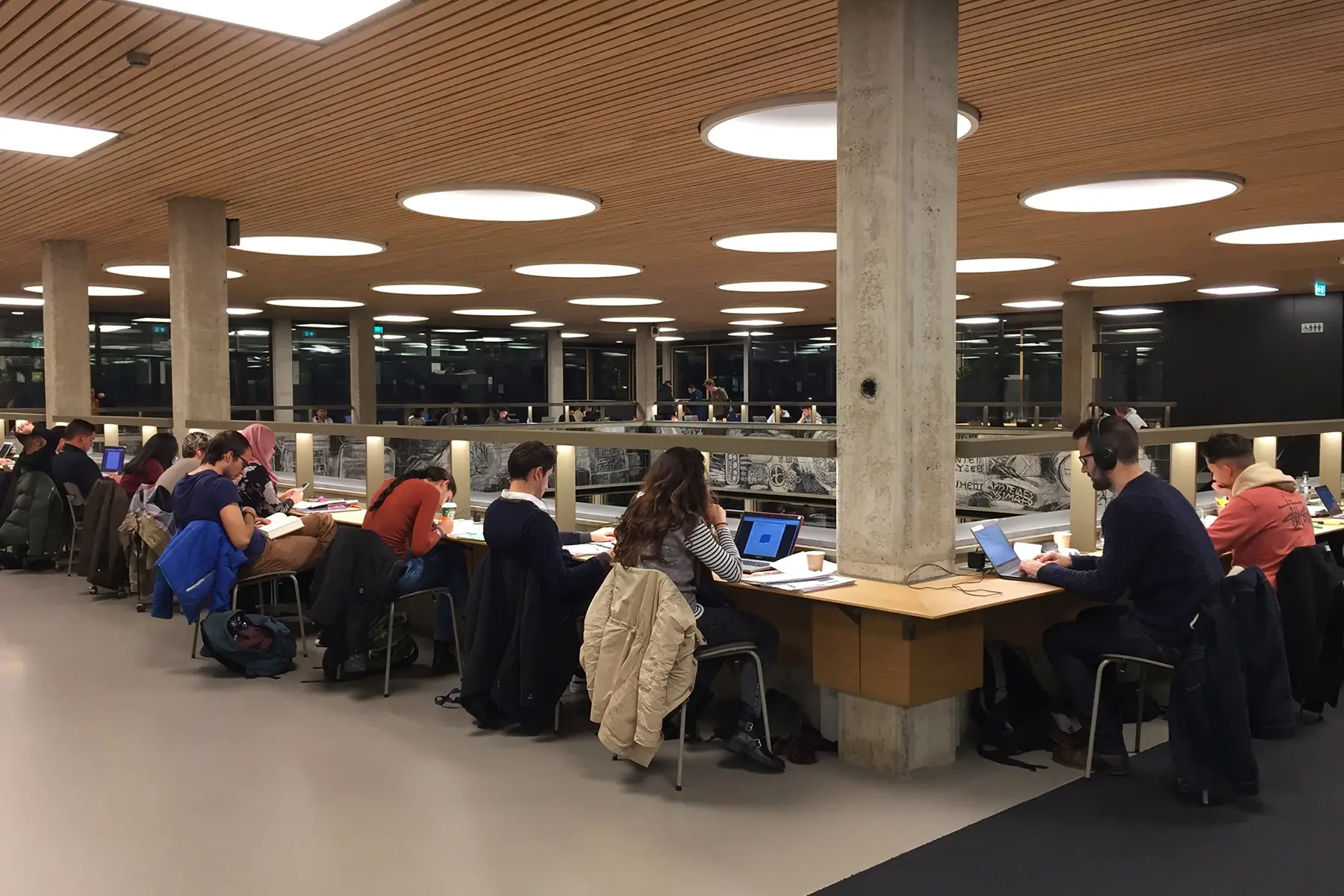
Types of student accommodation in the Netherlands
Knowing what type of accommodation suits your needs and budget will help you search more effectively. The Dutch housing market looks very different to what students in many other countries are used to.

Shared student house (kamer)
The most common option for students is renting a private bedroom in a house shared with other students, known as a kamer. You share the kitchen, bathroom, and sometimes a living room.
Rooms typically cost between €400 and €1,000 per month depending on the city, ranging from furnished to completely empty and often running on the smaller side by international standards. In many shared houses, existing tenants play an active role in selecting new housemates through a process called hospiteren (more on this in the step-by-step section).
Studio apartment
A studio is a self-contained unit with its own kitchen and bathroom. Studios offer more independence and privacy, and typically cost between €750 and €1,250 per month.
Purpose-built student studios through providers like DUWO or SSH are in high demand and usually require early registration. Private market studios through platforms like Kamernet or Pararius are more readily available but tend to cost more.
University or housing provider accommodation
Some universities, including Inholland and VU Amsterdam, arrange limited accommodation for first-year international and exchange students through third-party housing providers. Spots are limited and not guaranteed. This type of accommodation is usually only available for the first year of study – after that, students need to find housing independently. Contact your university’s international office as early as possible to find out what is available and when the deadlines fall.
Homestay or host family
Living with a Dutch host family through providers like Hospi Housing offers a private room alongside shared common areas. Arranging a homestay works perfectly for exchange students or anyone seeking immediate cultural immersion. The setup also serves as a practical short-to-medium-term base, giving you a secure place to stay while conducting an in-person search for permanent accommodation after arrival.
Short-stay and temporary accommodation
Providers such as SSH short-stay and The Social Hub offer furnished temporary rooms for students arriving for one semester or while they search for a permanent place. These options cost more per month but give you a base in the Netherlands, which significantly improves your chances of securing longer-term housing. Arriving with a short-stay confirmed and conducting viewings in person is often the most effective strategy for finding a room quickly.
How much does student housing cost in the Netherlands?
Netherlands student housing prices vary significantly by city and accommodation type. The table below gives a realistic overview based on current market data.
| City | Typical room cost/month | Typical studio cost/month |
|---|---|---|
| Amsterdam | €800–€980 | €1,000–€1,350 |
| Utrecht | €650–€803 | €850–€1,100 |
| Leiden | €450–€750 | €650–€950 |
| Groningen | €450–€650 | €600–€850 |
| Enschede | €397–€500 | €500–€700 |
These figures typically cover basic rent only. Gas, electricity, internet, and municipal taxes are often charged separately, but always ask your landlord what is and is not included before signing regardless.
For deposits, since July 2023, the maximum deposit for new rental contracts is two months’ basic rent. Always get the deposit conditions in writing.
Beyond rent, a realistic monthly budget for living costs as a student (food, transport, health insurance, books, and toiletries) is approximately €600–€800per month, depending on your lifestyle and city. For a fuller picture of what life costs in the Netherlands, read our guide to the cost of living in the Netherlands.

Where to search for student housing in the Netherlands
Using multiple platforms at the same time significantly increases your chances. Each platform has different listings, and competition moves fast.
Social/non-profit student housing platforms:
- ROOM.nl –Aaggregates listings from multiple providers including DUWO, SSH, and Ymere. A one-off registration fee of approximately €35 gives you access to all. Priority is assigned by registration date, so sign up as early as possible.
- DUWO – The largest student housing corporation in the Netherlands, with rooms in Amsterdam, Delft, The Hague, Leiden, and Wageningen.
- SSH (SSHxl) – Multi-city social housing provider that also offers short-stay options.
Private market platforms:
- Kamernet – One of the largest private platforms for rooms and studios. A subscription is required to respond to listings.
- HousingAnywhere – International-facing platform with rooms, studios, and apartments. Useful for students not yet in the Netherlands.
- Pararius – General Dutch rental market; higher prices but useful for studios and self-contained apartments.
- Studentenwoningweb – Specialist portal for student rooms in several Dutch cities.
Facebook groups can occasionally surface listings but carry a significantly higher risk of scams. Always verify any listing independently before making contact. You can also find student accommodation listings in the Expatica Netherlands directory.

Tarah Ren
Insider Tip
Expand your search radius! Living in a smaller town just 20–30 minutes by train from your university can dramatically improve both housing availability and affordability.
How to find student accommodation in the Netherlands: step by step
Step 1 – Register early. On platforms like ROOM.nl, your place in the queue is determined by your registration date. Register the moment you are accepted onto your course, even before your exact arrival date is confirmed.
Step 2 – Contact your university’s international office. Find out whether your university has housing arrangements for incoming international students and what the deadlines are. Always apply even if availability looks limited.
Step 3 – Set up multiple platform accounts. Register on ROOM.nl, DUWO, SSH, and at least one private platform (Kamernet or HousingAnywhere) at the same time.
Step 4 – Prepare a housing profile. Many platforms and landlords ask for a short introduction. Include who you are, your programme and university, your arrival date, and your budget. Attach proof of enrollment if you have it.
Step 5 – Understand hospiteren. In shared student houses, you may be invited to a selection evening where the current housemates vote on who they want to live with. Prepare a brief self-introduction, ask genuine questions about house life, and stay relaxed.
Tarah Ren
Insider Tip
Not being selected during hospiteren is common and shouldn’t be taken personally. Apply to several houses at once rather than waiting for one outcome at a time to increase your chances.
Step 6 – Always view before you commit. Arrange an in-person or live video viewing before signing or paying anything.
Viewing checklist:
- Can you officially register (gemeente inschrijving) at this address? This is mandatory for your BSN
- What is the lease duration and notice period?
- What is included in the rent (utilities, internet, service costs)?
- What is the deposit amount, and what are the conditions for getting it back?
- What is the condition of the heating, kitchen, and bathroom?
- Is the advertised landlord the legal owner? You can verify via Kadaster, the Dutch national land registry
Step 7 – Read your contract carefully. Check for illegal clauses and never pay key money (sleutelgeld) or brokerage fees unless you personally hired the agent. If anything is unclear, get free legal advice from the Juridisch Loket before signing.
For a deeper look at your rights as a renter in the Netherlands, our guide to tenant rights in the Netherlands covers contracts, deposits, and disputes in detail.

How to spot and avoid student housing scams in the Netherlands
The housing shortage makes students a prime target for scammers. International students who cannot view rooms in person are especially vulnerable. Knowing the warning signs can save you thousands of euros.
Common red flags:
- Rent is significantly below market rate for the area
- Landlord can only be contacted by mobile or a generic email address
- You are pressured to pay or sign before viewing the room
- Payment is requested via bank transfer to a foreign account, Western Union, or cryptocurrency
- The landlord claims to be “abroad” and will send the key after payment
- The landlord refuses to do a live video call of the property
How to protect yourself:
- Verify property ownership via Kadaster – only the legal owner may rent out a property, and illegal subletting can cause you serious problems as a tenant
- Use the Huurcommissie Rent Check to verify that the rent being charged is legal
- Always request a written rental contract before paying anything
- Conduct a live video call – scammers typically avoid or refuse these
- File a police report if you are defrauded – this helps prevent others from being targeted
- Contact the Housing Hotline (LSVb) if you need support
Student housing allowance and local taxes in the Netherlands
Understanding the financial side of renting in the Netherlands helps you budget accurately and avoid missing out on support you may be entitled to.
Housing benefit (huurtoeslag): The Dutch government offers a housing benefit to help with rent costs, but most students in shared accommodation do not qualify. To be eligible, your accommodation must have its own front door – shared student rooms with communal facilities generally do not qualify.
Additional conditions include: You must be at least 18 years old, your rent and income must fall below the government’s annual thresholds, you must have a valid rental contract, and you must have a BSN. If you live in a self-contained studio or apartment, it is worth checking your eligibility on the Belastingdienst website once you have your BSN and rental contract. You can also call the Belastingtelefoon on 0800 0543 from the Netherlands or +31 555 385 385 from abroad for assistance.
Local municipal taxes: These are billed separately from your rent. As a single-person household, expect to pay roughly: waste collection €200–€500 per year, water tax €150–€400 per year, and sewage charges €100–€250 per year.
If you stay for less than a full year, you only pay for the months you are resident. Students with a low income may qualify for a waiver – check the letter you receive from your municipality at the start of the year.
BSN and address registration: You cannot get a BSN without being registered at a fixed address in the Netherlands. Without a BSN, you cannot open a Dutch bank account, access healthcare, or apply for housing benefit. This is why confirming that you can officially register at an address is non-negotiable before signing any lease. Our dedicated guide covers everything you need to know about getting your BSN in the Netherlands.
Managing your money as an international student in the Netherlands
Many international students receive money from family abroad, pay tuition in foreign currency, and manage regular expenses in euros. This multi-currency juggle can be costly if you are using a bank, which may apply exchange rate markups and fees that are not always obvious upfront.

There is also a practical timing problem. Opening a Dutch bank account requires a BSN, which requires a registered address. Until you have both, you need a way to pay rent, receive money from home, and handle day-to-day expenses in euros.
Wise, a payment institution, offers a multi-currency account that allows you to hold and spend euros, receive money sent in your home currency, and make transfers with transparent, upfront fees and the mid-market exchange rate. It’s a practical option during the gap period before your Dutch bank account is set up, and a useful long-term tool for managing money across currencies while you study. You can open a Wise account before you arrive in the Netherlands, without needing a Dutch address or BSN.
For a broader look at renting in the Netherlands, including how the rental market works, deposit rules, and your rights as a tenant, read our comprehensive guide to renting a home in the Netherlands.
FAQ
How much does student housing cost in the Netherlands?
Netherlands student housing prices depend heavily on the city. Renting a private bedroom in a house shared with other students typically costs €400–€1000 per month, with Amsterdam averaging close to €980 and Enschede being the most affordable at around €400. Studio apartments range from €750 to €1,250 per month. Always check whether utilities and internet are included, as headline rent prices often exclude these costs. For contracts signed from July 2023, the maximum security deposit is two months’ basic rent.
What is hospiteren, and how does it work?
Hospiteren is a Dutch selection process used in shared student houses. Current tenants invite prospective housemates to an informal evening, ask questions, and vote on who they want to live with. To improve your chances, prepare a brief self-introduction, show genuine interest in the house, and ask practical questions about how the household works. Apply to several houses at the same time – rejection is common and not personal. Platforms like Kamernet and Roomspot both list rooms where this process applies.
Can Erasmus students get guaranteed housing in the Netherlands?
Erasmus and other exchange students may be able to apply for accommodation arranged by their host university, but availability is limited and not guaranteed. Contact the host university’s international office at least four to six months in advance. Erasmus funding covers study and mobility costs – it does not automatically include accommodation. If university housing is not available, short-stay options such as SSH or The Social Hub are a practical fallback for the duration of your exchange.
Is student housing allowance available for international students in the Netherlands?
The Dutch housing benefit (huurtoeslag) is available to international students who meet the eligibility conditions, but most students in shared houses do not qualify. The most common disqualifying factor is that shared rooms with communal facilities do not meet the requirement for a property with its own front door. If you rent a self-contained studio or apartment, it is worth checking your eligibility on the Belastingdienst website once you have your BSN and rental contract.
When should I start looking for student housing in the Netherlands?
Start as early as possible – ideally at least four months before your planned arrival date. On platforms like ROOM.nl, your position in the queue is based on how long you have been registered. Even if you do not know your exact arrival date yet, registering early builds your queue position over time. Inholland and other Dutch universities strongly advise against travelling to the Netherlands without confirmed housing, as you cannot register your address, and without a registered address, you cannot get your BSN.
What should I check before signing a rental contract in the Netherlands?
Check that the address allows official registration (gemeente inschrijving), as this is essential for your BSN. Review the deposit amount and the conditions under which it will be returned. Clarify which utilities are included and which you will need to set up yourself. Check the lease type (fixed-term or indefinite), the notice period, and any house rules or restrictions. Remember that brokerage fees are only payable if you personally hired the agency to find housing for you. If you are uncertain about any clause, the Juridisch Loket offers free legal advice in English.
What happens if I cannot find housing before I arrive in the Netherlands?
Do not travel without at least temporary accommodation confirmed. Without a registered address, you cannot receive your BSN. Without a BSN, you cannot open a Dutch bank account, access standard healthcare, or apply for housing benefit. Short-stay options such as SSH short-stay or The Social Hub can serve as a bridge while you search for longer-term housing in person. In-person viewings are significantly more successful than remote applications. If nothing is available, most Dutch universities advise postponing your travel until accommodation is secured.
Useful resources
- Study in NL – Finding a place to live: The official Dutch government portal for international students, with up-to-date advice on housing, a curated list of student housing providers, and guidance on what to expect from the Dutch rental market.
- ROOM.nl: The main aggregator for non-profit student housing in the Netherlands, bringing together providers like DUWO, SSH, and Ymere in one place. Register here as early as possible to build your queue position.
- Huurcommissie Rent Check: The independent Dutch Rent Tribunal. Use its free online tool to check whether the rent you are being asked to pay is legally permitted, and to raise a dispute if you are being overcharged.
- Housing Hotline (LSVb): A free advisory service run by the Dutch Student Union and Erasmus Student Network, specifically for international students facing housing problems or needing guidance on Dutch rental law.
- Juridisch Loket — Legal desk: Free legal advice in English on rental contracts, tenant rights, and housing disputes. Recommended if you are unsure about a clause in your contract or have a problem with your landlord.