
'%20id='ico-down'%20stroke='%23000000'%20stroke-width='1.5'%3e%3cg%20transform='translate(1092.250000,%20254.750000)'%3e%3cpolyline%20id='Path-2-Copy-4'%20transform='translate(5.500000,%202.750000)%20scale(1,%20-1)%20rotate(-180.000000)%20translate(-5.500000,%20-2.750000)%20'%20points='0%200%205.5%205.5%2011%200'%3e%3c/polyline%3e%3c/g%3e%3c/g%3e%3c/g%3e%3c/svg%3e)


Finance
Money Management
Sending money out of Japan 2026: a guide for expats
If you need to send money out of Japan, the best option depends on what matters most to you: cost, speed, paperwork, or the amount you need to transfer. This guide compares the main ways to transfer money abroad from Japan and shows you how to avoid common delays.


Whether you want to transfer money from Japan to UK accounts, support family overseas, or move funds abroad, the same issues usually come up: fees, exchange rates, ID checks, and transfer times.
For many expats, Wise is a good place to start because it offers online services and setup, transparent pricing, and a multi-currency account. However, it’s still worth comparing it against banks and cash services before you send.
Key takeaways
Sending money abroad from Japan is usually easy when you compare the full cost, not just the visible fee. Many expats start by comparing online money transfer specialists because major Japanese banks often charge a fixed transfer fee, add an exchange rate margin, and may require additional verification or branch visits for some transfers.
| Option | Typical cost pattern | Speed | Good for | Main drawback |
|---|---|---|---|---|
| Wise and similar online specialists | Upfront fee plus mid-market exchange rate | Often within minutes to 2 working days | Most expats sending to bank accounts | Route rules and checks can vary |
| Major local banks | Fixed fee plus exchange rate margin, possible extra bank charges | Often 1 to 5 working days | Large formal transfers or bank-led support | Higher total cost and more paperwork |
| Cash transfer services | Fee varies by route, exchange rate may be less competitive | Minutes to a few days | Cash pickup or recipients without bank access | Can cost more for account-to-account transfers |
| Digital wallets | Often route-specific pricing | Fast on supported routes | Mobile wallet payouts | Limited country and payout coverage |
| Specialist large transfer desks | Can offer lower overall costs on large transfers | Varies | Property, savings, business funds | More checks and slower onboarding |
Wise
Wise can be useful if you need to move inherited money across borders or manage JPY alongside other currencies for planned exchange transactions (subject to transaction limits) without relying fully on a local bank account. It does not replace Japanese filing or tax payment steps, and you should check current product availability, supported currencies, and document requirements for your region before you act.

Your main ways to send money out of Japan
The right option depends on four things:
- total cost
- convenience
- transfer size
- where the money is going
If you regularly send money overseas from Japan, it usually makes sense to compare online specialists, major Japanese banks, and cash transfer services before choosing.
| Route | How it works | Cost pattern | Good for |
|---|---|---|---|
| Online specialists | Set up online, fund in JPY, send to overseas account | Transparent fee and exchange rate shown before you confirm | Regular transfers and busy expats |
| Major local banks | Send from your Japanese bank, sometimes online, sometimes at a branch | Fixed transfer fee, exchange rate margin, possible extra intermediary or recipient-bank bank charges | Formal transfers and some higher value payments |
| Cash transfer services | Send for cash pickup or selected bank and wallet routes | Route-specific fee and rate | Recipients who need flexibility or cash access |
Wise for many expats
For many readers sending money out of Japan, Wise is often one of the first options to check. It uses an online setup, shows the fee before you confirm, and uses the mid-market exchange rate for supported transfers, which makes it easier to compare the real cost rather than guessing from a headline fee alone.
That does not mean it is the right choice for every route or amount. Still, if you need a practical option for regular overseas payments and a multi-currency account for ongoing commitments in Japan and abroad, it is a very good fit for many expats.
If you live in Japan and spend regularly across currencies, you may also want to consider applying for a Wise card for local spending.

Major local banks
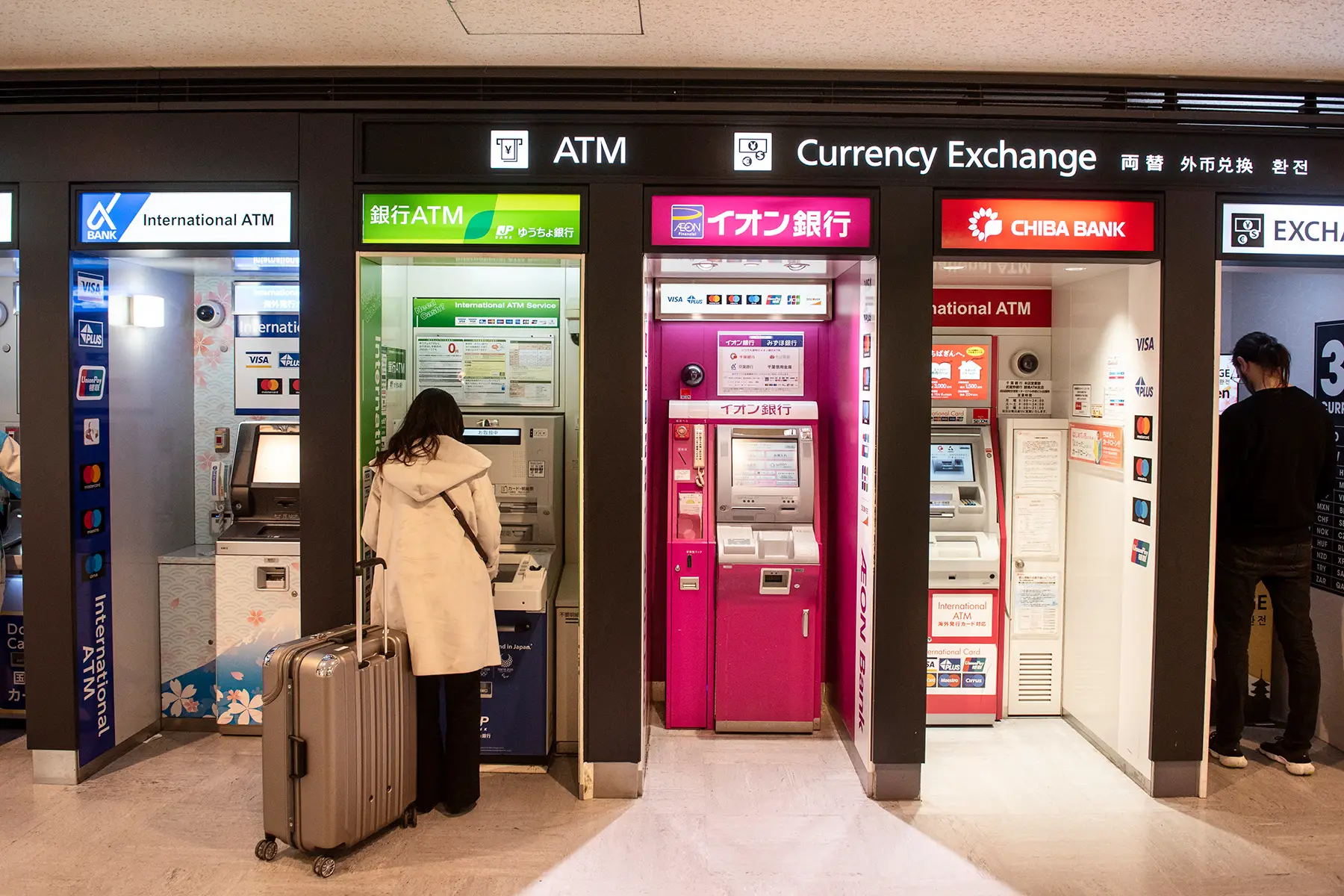
MUFG, SMBC, Mizuho, and Japan Post Bank are among the major Japanese banks providing services for expats, including money transfers. The trade-off is that sending money from a local Japanese bank account might costs more overall once you combine the outward transfer fee, the exchange rate margin, and any receiving or intermediary charges.
One additional thing worth considering is that branch cut-off times for international transfers are often earlier than for domestic transfers.
Be sure to:
- Confirm the full cost, not just the outward transfer fee
- Ask whether intermediary or recipient-bank charges may apply
- Check the bank’s same-day transfer cut-off time and destination-specific processing rules
Cash transfer services
Services such as Western Union Japan can still make sense if your recipient needs cash pickup, does not have easy bank access, or lives on a corridor where wallet and cash payouts are common. That flexibility can be helpful when convenience matters more than the cheapest account-to-account route.
The trade-off is that the fees and exchange rates often differ from those of bank transfer services and online money transfer specialists. A common question is whether cash services are faster and cheaper by default. Sometimes they are faster for pickup, but not necessarily cheaper once you compare the full amount your recipient actually gets.
What you need before you send money abroad from Japan
Most transfer problems happen before the money leaves your account. Spending a few minutes gathering the right information is usually more important than the final click on the payment screen.
Recipient bank details
The exact details depend on the destination country and the payout method. If you are sending money from Japan to an overseas bank account, you will usually need the:
- Recipient’s full legal name
- Bank name and branch, if required
- Account number or IBAN
- SWIFT or BIC code where required
For transfers to the UK, some providers may ask for local bank details instead, such as the recipient’s sort code and account number.

Writer
Gary Buswell
Insider tip
If your provider asks for the account holder’s name exactly as registered, copy it character for character as it appears on the recipient’s bank account. Make sure to match the full legal name, use correct spelling, and include spaces or punctuation.
Documents and compliance checks in Japan
- 🪪 Providers may ask for photo ID and your residence card, especially on your first transfer
- 🧾 Some providers may also ask for your My Number information, depending on the transfer and regulatory requirements
- 💼 Larger or unusual transfers can trigger source-of-funds or purpose-of-transfer checks
- 🔄 Requirements vary by provider, transfer amount, destination country, and payout method, so always check the latest requirements before you send
How to compare the real cost before you send
The visible fee is only one part of the total cost. If you only compare the fee line, you can still end up with less money arriving on the other side.
Fixed fees, exchange rates and recipient charges
A low fee does not always mean a low cost. Provider A may charge a fixed fee plus an exchange rate markup, while Provider B may show a slightly higher fee but a smaller exchange rate markup. The most useful comparison is how much leaves your account and how much your recipient receives.
For example, if you send ¥300,000 from Japan to the UK, one provider might charge a small fixed fee but give a weaker JPY to GBP rate. Another might charge a slightly higher fee but convert at a better rate. If the route uses SWIFT, an intermediary bank may also take a charge before the money lands.
| Cost type | What it means | Why it matters | What to check |
|---|---|---|---|
| Fixed fee | The visible sending charge | Easy to compare, but not the whole picture | Fee before you confirm |
| Exchange rate margin | A markup built into the rate | Often the biggest hidden cost | Compare with the mid-market rate |
| Recipient or intermediary bank charge | Deduction by another bank on the route | Final amount can be lower than quoted | Route notes and payout type |
If you are considering using Wise, check the live Japan pricing page and the official JPY transfer guide before sending. Fees, exchange rates, limits, and availability change.
Transfer limits and larger amounts
Limits are one of the first things to verify when you want to send large amounts from Japan. Different providers may have separate rules for a single transfer, daily totals, funding methods, and transfers sent through local banking systems versus payments through SWIFT.
One thing worth knowing is that extra verification is normal for larger transfers. That does not mean there is a problem. It usually means the provider needs additional information to meet anti-money laundering and regulatory requirements before releasing the payment.
- Check the single-transfer and daily limit
- Ask whether proof of funds or purpose documents may be needed
- Confirm whether sending a larger amount could affect the transfer route, processing time, or total cost
How to send money out of Japan with Wise
If you want a simple international money transfer setup for Japan, Wise is designed to be used online. The exact screens can change, so treat the steps below as the usual flow rather than a fixed rulebook.
Set up and verify your account
If you live in Japan, your first transfer may require account verification. Wise is a financial institution, not a bank, and local rules in Japan can affect what it asks for and which features apply to your account.
Here are the steps to follow:
Create a personal account, or business profile if the transfer is for business use.
Enter your details and confirm your country of residence.
Upload the requested ID and any My Number information if asked.
Wait for confirmation, then check the current route rules before starting your first transfer.
Add the recipient and fund the transfer
The funding method matters because it affects both cost and timing. According to Wise’s current Japan help information, JPY transfers from Japan are usually funded by bank transfer or debit card from your own account, and credit card funding is not available for JPY transfers from Japan.
A common question is whether you can assume the quoted arrival time will always apply. You should not. First-time checks, weekends, Japanese public holidays, recipient-bank reviews, and SWIFT routes can all slow things down.
The main steps to follow are:
Enter the amount, destination currency, and recipient details.
Review the fee, exchange rate, and estimated arrival time before you confirm.
Fund the transfer from your own approved payment method in Japan.
Track the payment in the Wise app or via the Wise website and keep an eye out for any follow-up request.
Note that if you’re sending from your Wise Balance, there is a limit of 1 million JPY per transfer. For transfers sent directly (not from Balance), higher limits may apply.

What can delay your transfer
Even when a service is easy to use, delays still happen. Many can be avoided by checking the details before you send.
Name mismatches and cut-off times
Even a small mismatch between the recipient’s real account name and the name you type can hold up the transfer. This is different from a minor typo on a casual payment app, because international transfers may be screened for regulatory and anti-money laundering purposes.
Writer
Gary Buswell
Insider tip
International transfers through major local banks often have earlier cut-off times than domestic payments, so a transfer submitted later in the day may not begin processing until the next business day.
To avoid delays:
- Check the exact spelling of the account-holder name
- Confirm local bank holidays in both Japan and the destination country
- Consider the destination time zone before expecting same-day arrival
- Review provider cut-off windows and weekend processing rules
How to verify the latest rules before you send
Before you press confirm, check the provider’s live pricing page, help centre, or official bank page. For bank-led transfers, Japan Post Bank’s international remittance page is a useful example of the kind of route-specific notes, service changes, and additional requirements that can affect delivery.
Before confirming your transfer, double-check:
- Fee
- Exchange rate
- Limit
- Documents and arrival estimate
FAQ
Frequently asked questions
Is it legal to send money out of Japan? 
Yes, in general it is legal to send money abroad from Japan. Providers and banks may still ask for ID, My Number information, source-of-funds details, or the reason for the transfer, especially for first-time or larger payments.
What documents do I need to send money abroad from Japan?
For an international money transfer from Japan, you will usually need a photo ID, your recipient’s details, and any provider-specific verification documents. First-time transfers and larger amounts may need extra checks, such as proof of residence, My Number information, or evidence showing source of funds, depending on the provider and the transfer.
How much does it cost to send money from Japan to the UK?
The cost depends on the provider, the amount, the funding method, and the exchange rate on the day. The best way to compare a Japan to UK transfer is to check the full fee, the rate used, and whether any recipient or intermediary charge may reduce the final GBP amount.
How long does it take to transfer money out of Japan?
Transfer times vary by provider, funding method, route, destination-bank checks, and business-day timing. Always use the live arrival estimate as a guide only, because weekends, public holidays, first-time verification, and SWIFT routes can add time.
Can I send large amounts out of Japan?
Yes, you can send large amounts out of Japan, but higher values often bring extra checks and route-specific limits. If you are moving property money, business funds, or larger amounts, plan earlier and, if the tax side is complex, speak to an accountant or tax adviser in Japan.
Is Wise available in Japan for expats?
Yes, Wise is available in Japan for eligible users. Features, verification requirements, and limits can vary by address, amount, and route, so check the latest Japan-specific Wise help pages before you set up a transfer or use the multi-currency account.
Useful resources
- Wise Help Centre: Used for current JPY funding methods, Japan-specific transfer limits, speed caveats, and verification rules for users in Japan, checked on 2026-07-21.
- Wise pricing Japan: Used to direct readers to live Wise fees and pricing because costs and availability can change, checked on 2026-07-21.
- International Remittances – JAPAN POST BANK: Used for Japan Post Bank service details, intermediary charge context, exact-name warnings, and compliance screening notes, checked on 2026-07-21.
- Western Union: Send & Receive Money in Japan: Used for official Japan cash transfer options, payout types, corridor examples, and general sending methods, checked on 2026-07-21.
- Register and Sign-up | Western Union Japan: Used for document examples and verification steps for Japanese and foreign residents in Japan, checked on 2026-07-21.



Did you find this guide helpful?