'%20id='ico-down'%20stroke='%23000000'%20stroke-width='1.5'%3e%3cg%20transform='translate(1092.250000,%20254.750000)'%3e%3cpolyline%20id='Path-2-Copy-4'%20transform='translate(5.500000,%202.750000)%20scale(1,%20-1)%20rotate(-180.000000)%20translate(-5.500000,%20-2.750000)%20'%20points='0%200%205.5%205.5%2011%200'%3e%3c/polyline%3e%3c/g%3e%3c/g%3e%3c/g%3e%3c/svg%3e)



For expats, finding the right credit card involves researching factors such as international spending and cross-border currency management. Cards often come with additional fees for overseas transactions, so it’s important to compare options.
You can also consider alternatives like Wise. Although the Wise card is a debit card rather than a credit card, its multi-currency features and transparent fees can help make international money management easier.
Spend globally with the Wise card
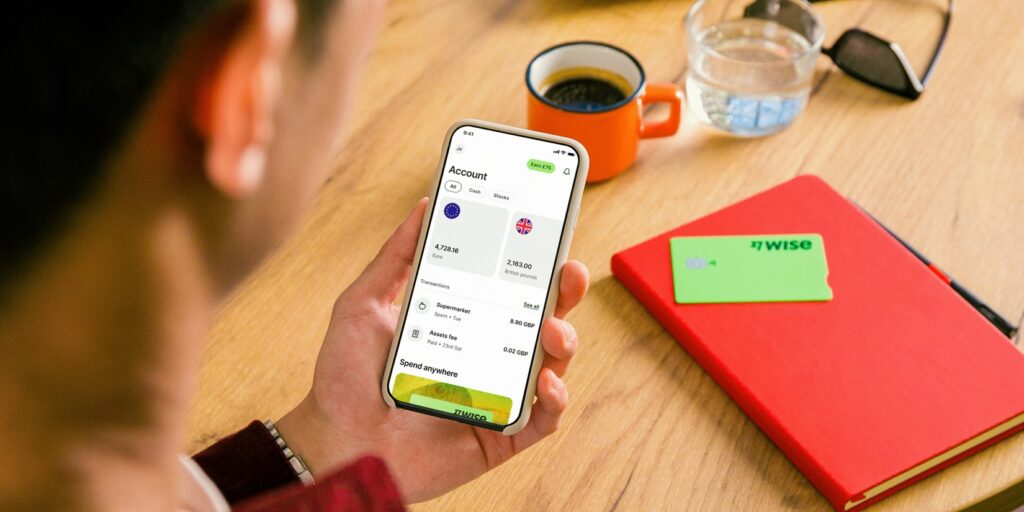
Living between countries often means juggling multiple currencies, but Wise helps make it simple. The Wise debit card allows you to spend in 150+ countries and hold money in 40+ currencies. Every conversion is done at the mid-market exchange rate and free of any hidden markups, so you always know what you’re paying.
The card is built for everyday use: you can pay in local currencies when travelling, easily withdraw cash from ATMs around the world, and manage your money directly in the Wise app. Instant notifications and built-in security controls give you peace of mind, so you can focus on enjoying life at home in Japan or wherever your travels take you.

What makes a credit card “best” for expats?
Key features to look for
- No foreign transaction fees: Many Japanese credit cards charge a fee (usually between 2–4%) when you use them for foreign currency purchases abroad. Check this when looking for a suitable card.
- Competitive exchange rates: Check for hidden markups above the mid-market rate, which can add significantly to purchase costs.
- Global acceptance: Cards on the Visa or Mastercard networks are usually accepted worldwide.
- Travel benefits and protections: Look for extras such as travel protection, travel points, and airport lounge access.
- Reward programs that suit international lifestyles: This could include air miles or rewards that you can use with global brands.
- Easy online management and customer support: Look for 24/7 customer support and the option to manage your card through an app.
Understanding credit card fees for international spending
If you plan to use your Japanese credit card abroad, you’ll need to be aware of the different possible fees which can add up over time. These can include:
- Foreign transaction fees: These are typically within the range of 2–4%, so for example 100,000 JPY spent abroad could cost 108,000 JPY.
- ATM withdrawal fees: You may pay a withdrawal fee plus a currency conversion fee, with interest often accruing immediately.
- Hidden costs in exchange rate markups: Additional margins are often added to the mid-market rate, and these aren’t always clear when you calculate costs.
- Dynamic currency conversion traps: You may have the option to pay in JPY instead of the local currency, but this usually involves extra charges and a poor exchange rate. Choosing the local currency usually works out cheaper.
- Annual fees vs benefits: Some cards charge an annual fee in exchange for benefits (e.g., travel insurance, rewards), which can be a good deal for frequent travellers.
Top 6 credit cards for expats in Japan
The following credit cards in Japan were chosen based on an analysis of the following benefits for expat users:
- Affordability regarding fees and interest rates
- Rewards on offer, such as travel perks, retail benefits, and partner discounts
- Availability to new residents in Japan
1. Rakuten credit card
| Key features | Details |
|---|---|
| Annual fees | None |
| Foreign transaction fees | 3.63% |
| Perks | Travel insurance up to 20 million JPY, 1% points back on spending (3x amount with Rakuten purchases), student card available with tailored perks, ETC card for highways, airport lounge access with premium card |
| Good for | New arrivals or students wanting an easy-to-use card with no annual fees; frequent Rakuten users |
| ✅Pros of Rakuten | ❌Cons of Rakuten |
|---|---|
| No annual feeEasy to apply for (available to all visa holders other than tourist visas) Good points bonus system for frequent shoppers Smartphone-friendly (can link with Google Pay and Rakuten Pay) | High foreign transaction fees ATM fees on withdrawals over 10,000 JPY Best value rewards depend on using Rakuten ecosystem Points often time-limited with expiration date |
2. SAISON GOLD Premium
| Key features | Details |
|---|---|
| Annual fees | 11,000 JPY (waived if annual spending over 1 million JPY) |
| Foreign transaction fees | None |
| Perks | Over 1.4 million discounts including restaurants and cinemas, 5% non-expiring points back on spending, airport lounge access, up to 10 million JPY travel insurance, family card availability, |
| Good for | High spenders, frequent travelers, and long-term residents with good credit history in Japan |
| ✅Pros of Saison | ❌Cons of Saison |
|---|---|
| Good points rewards Premium perks (airport lounge access, dining out) No foreign transaction fees | Annual fee if you don’t reach spending threshold Harder to get than entry-level cards ATM withdrawals abroad incur fees |
3. EPOS visa card
| Key features | Details |
|---|---|
| Annual fees | None |
| Foreign transaction fees | 3.85% |
| Perks | Special benefits at Marui stores, customized card design option, overseas accident insurance, range of discounts (restaurants, amusement parks, hot springs) |
| Good for | New residents and students wanting an entry level card; frequent shoppers at Marui stores |
| ✅Pros of EPOS | ❌Cons of EPOS |
|---|---|
| Quick and easy to obtain (same day if you apply at a Marui store) No annual fee Good range of partner discounts | Low points discount on spending (0.5%) High foreign transaction fees Charges for ATM withdrawals abroad |
4. Orico THE POINT card
| Key features | Details |
|---|---|
| Annual fees | None |
| Foreign transaction fees | 1–2% depending on brand (Visa, Mastercard, etc.) |
| Perks | 1% points back on spending (2% for first 6 months), overseas hotel discounts, ETC and family card availability |
| Good for | New residents and young people with low credit history in Japan, online shoppers who want to earn points |
| ✅Pros of Orico | ❌Cons of Orico |
|---|---|
| No annual fees Easy to access for all residents Links to Apple Pay/Google Pay for contactless payments | Customer service support only in Japanese Foreign transaction feesLimited perks for frequent travellers |
5. Amazon Mastercard
| Key features | Details |
|---|---|
| Annual fees | None |
| Foreign transaction fees | 3.63% |
| Perks | Extra points on Amazon purchases (1.5–2%), higher-level card for Prime members, 5.5% bonus at 7-Eleven stores |
| Good for | Frequent Amazon shoppers, everyday spenders in convenience stores |
| ✅Pros of Amazon | ❌Cons of Amazon |
|---|---|
| No annual fees Easy online application process Good points rewards for everyday in-store and online shopping | Low range of rewards beyond points offerings High foreign transaction fees No travel/insurance perks for international travellers |
6. JCB Platinum card
| Key features | Details |
|---|---|
| Annual fees | 27,500 JPY |
| Foreign transaction fees | Base rate + issuer markup |
| Perks | Luxury dining, entertainment, and travel benefits (including airport lounge access), range of insurance offers (travel, liability, shopping protection), maximum 10% points return at select brands, gifts for new members |
| Good for | Japanese residents looking for a good premium domestic card, frequent travelers who enjoy perks |
| ✅Pros of JCB | ❌Cons of JCB |
|---|---|
| Good range of premium benefits Airport lounge access Premium concierge service | High annual fees Lower acceptance outside of Japan compared to Visa/Mastercard Foreign transaction fees |
The smart alternative: the Wise Card
Credit cards can be useful for expats abroad, but the costs such as transaction fees, interest, and exchange rate markups can quickly add up, making them an expensive way to spend internationally.
The Wise debit card is a useful alternative. Linked to your Wise multi-currency account, you can spend and withdraw cash in 150+ countries, and hold and convert money in 40+ currencies at the mid-market exchange rate with no hidden fees. (Transaction limits apply. Individual card transactions are limited to 1,000,000 JPY in Japan.)
Wise debit card benefits
- Mid-market exchange rates with no hidden markups
- Transparent fees starting from 0.73% (see: Wise JP pricing)
- Hold and manage 40+ currencies and available in 150+ countries.
- Real-time transaction notifications, spending controls with adjustable limits, budgeting tools for money management, and ability to freeze/unfreeze your card if it’s lost or stolen.
Cost comparison: Wise vs. credit cards
Here’s a quick comparison of overseas spending with the EPOS card versus the Wise debit card.
| Spend abroad | Wise debit card | EPOS credit card |
|---|---|---|
| Transaction value | 200,000 JPY | 200,000 JPY |
| Exchange rate | Mid-market rate with no markup | Visa/Mastercard rate plus markup |
| Foreign transaction fee | Small fee starting from 0.73% | 3.85% |
| Total cost | 201,460 JPY | 207,700 JPY plus exchange rate markup |
The additional transaction fee and exchange rate markup costs mean that spending becomes more expensive with standard credit cards, amounting to over 6,000 JPY extra for 200,000 JPY spent in this instance.

When Wise makes more sense than credit cards
If you’re looking to save money on transactions, Wise can often be a better option than most regular credit cards. This could be the case:
- For regular international money transfers: Credit cards aren’t designed for sending money abroad, and using them can be costly. Wise lets you send payments to 140+ countries with transparent fees and mid-market exchange rates. Transfers from your Wise balance are subject to a 1,000,000 JPY limit per transfer.
- When you want to avoid credit card debt: A debit card means you only spend what you have in the balance, so you won’t incur additional fees such as interest.
- For better exchange rates: Credit cards often include a hidden markup rate, whereas the Wise card uses the mid-market rate along with a small transparent fee.
- For transparent, upfront pricing: Wise shows all individual fees upfront, meaning no unclear bundling of fees or hidden markup charges.
How to choose the right credit card as an expat
Step-by-step selection process
- Assess your spending patterns: Think about how and where you’ll use the card. If you travel often, a card with no/low foreign transaction fees makes sense. If most of your spending is local, look for relevant reward programs.
- Calculate potential fees and savings: Weigh up total costs, including transaction fees, annual/monthly fees, and markups against rewards and perks.
- Consider your credit history status: If you’re new to Japan, you may not qualify for some premium cards until you build a good credit history. Check eligibility before applying.
- Evaluate additional benefits needed: Make sure you will use the benefits offered (e.g., travel insurance, airport lounge access).
- Check eligibility requirements: Look into what’s required, for example minimum income, residency requirements, or credit history.
Questions to ask before applying
- What are the total costs of international spending, including fees and markups?
- Do I qualify for this card based on my credit history?
- What additional benefits do I need and will I use?
- How does this compare to alternatives like a Wise debit card?
Application tips for expats
If you want to apply for a credit card in Japan as a new arrival in the country, it pays to understand what providers look for. Here are a few tips.
Improving your approval chances
- Building Japanese credit history: Your home country’s credit history usually won’t count in Japan, so you’ll have to start from scratch. Look for ways to start building credit history, such as opening a basic bank account, taking out a local mobile phone contract, and paying all bills on time.
- Required documentation: Check you meet requirements, which are typically valid ID, Japanese address, and a residence permit.
- Income verification for expats: You may also need to show evidence of stable earnings, which could be bank statements, payslips, employment contracts, or tax returns.
- Address history requirements: Some cards require a minimum residence or credit history period. Check exact requirements before applying.
Common rejection reasons
- Insufficient Japanese credit history: Research credit card options with fewer requirements, and look for ways to build your credit history in Japan.
- Income verification issues: You will need to demonstrate a clear income stream, usually through recent bank statements.
- Address verification problems: Make sure you have necessary proof of your Japanese address, for example a utility bill or official letter.
- Too many recent applications: Multiple applications in a short period often shows on credit reports, and may flag you as a risk.
Building credit history as an expat
One of the biggest hurdles for expats when they move abroad is having to start their credit history again from scratch. This is because countries usually have their own local systems, so foreign credit scores don’t transfer.
You need a good local credit score to access financial products such as loans or mortgages, so it’s a good idea to try and build good credit. Credit cards are a good way of doing this as they show reliability through paying off balances and staying within credit limits on a regular basis.
If you can’t take out a credit card in Japan, you can still build your credit by opening a basic local bank account, taking out a mobile phone contract, or regularly paying bills such as rent and utilities.
Building good credit in Japan can take between six months (when first regular payments start to register) to around two years (building up a strong record of payment stability without defaults).
Managing your credit card abroad
Best practices for international spending
- Always choose local currency over home currency: This helps to ensure a better exchange rate and avoids costly conversion fees.
- Notify your bank of travel plans: This helps avoid payments being flagged as suspicious and cards being blocked.
- Monitor transactions regularly: Check your account using the app or website, and report any unusual activity immediately.
- Keep emergency contact numbers handy: Make a note of your provider’s emergency contact details in the event of a lost or stolen card.
Avoiding common pitfalls
- Dynamic currency conversion traps: Merchants or ATMs may offer you the chance to pay in JPY, but this usually works out more expensive for fees and exchange rates. Always choose the local currency.
- ATM fee accumulation: These can accumulate quickly both from your card provider and local ATM services. Check fees and keep withdrawals to a minimum.
- Overspending due to currency confusion: Keep rough conversion costs in mind, and check your balance regularly to monitor charges.
- Missing payment due dates while traveling: Set up direct debits or standing orders to meet your payment obligations while you’re travelling, as missed payments will harm your credit score.
Frequently asked questions
Can I get a Japanese credit card as a new expat?
Yes, you can get a “foreigner-friendly” card from providers such as Rakuten or EPOS when you first move to Japan. However, you’ll usually have to be a resident for 1–2 years and build up sufficient credit history for higher-level premium cards.
What documents do I need to apply for?
You typically need your Japanese residence card, valid ID, and proof of a Japanese address. You also need a bank account that can make/receive payments in Japan. For higher-level cards, you may need to show proof of income.
What exactly is a foreign transaction fee?
A foreign transaction fee is an extra charge applied by your card provider when you use the card to make a purchase in a foreign currency. In Japan, charges are typically between 2–4%, compared to fees starting at 0.73% with Wise.
How can I minimize costs when spending abroad?
Look for cards with no or low foreign transaction fees, always choose to pay in the local currency, and avoid frequent ATM withdrawals with a credit card.
Conclusion
Choosing the best credit card in Japan depends on what you’re looking for. Do you want something easy and low-cost to use locally that will help you build credit as a new resident, or a more expensive card with higher travel benefits aimed at established residents?
Whichever card you choose, make sure you weigh up all applicable costs as well as benefits, including foreign transaction fees and exchange rate markups. If you do a lot of travelling or multi-currency spending, these can add up quickly.
Credit cards are useful but may be limited for expats compared to products like the Wise debit card, which you can use in 150+ countries and spend in 40+ currencies. Foreign transaction fees are lower than most Japanese credit cards, and currency conversions use the mid-market rate with no hidden fees.