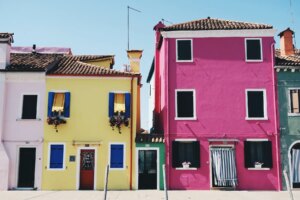
For expats, the hard part usually isn’t finding home insurance (assicurazione casa). It’s working out whether your second home (seconda casa) or holiday home (casa vacanze) needs more specialised cover once long empty periods, condominium rules, or short-term lets come into the picture.
This guide explains what holiday home policies usually cover, which Italy-specific risks to check, how renting to guests can affect your cover, and how to compare providers. Where rules matter, it links to official sources, such as IVASS (Istituto per la Vigilanza sulle Assicurazioni), Italy’s insurance regulator.
This guide is general information, not legal, tax, or insurance advice. Policy terms vary between insurers, so always read the policy documents before you buy.
Key takeaways
- Be clear with your insurer about how you use the property, whether it’s only for your own stays, occasionally let, or regularly rented out short-term. Insurers may treat each of these differently.
- Check the unoccupancy limit first. If the home may stand empty in the off-season, standard cover may be reduced or excluded after a certain number of days.
- If you ever have guests, check the cover for liability towards guests, accidental damage, theft, and loss of rental income, not just buildings and contents.
- If you rent the home out short-term, you’ll need a national identification code (CIN), and you must report your guests to the police through Alloggiati Web. Check your municipality’s rules too.
- If the property is in a condominium (condominio), ask the building administrator (amministratore) for a summary of the building’s policy (polizza globale fabbricati), so you can see what it covers and what it doesn’t.
- Don’t assume your policy covers earthquakes, floods, storms, pools, or outbuildings. Check the limits and exclusions, as well as the franchigia (a fixed amount you pay per claim) and the scoperto (a percentage of each claim you pay).
- Before you buy, check that the insurer and any agent or broker are listed with IVASS, Italy’s insurance regulator.
Wise for paying Italian property costs from abroad
- Hold euros: Keep EUR ready for premiums, repairs and condominium charges
- Pay from abroad: Send money between currencies for Italian bills
- Spend on visits: Use your Wise card for costs during trips to the property

No commitment required
What holiday home insurance in Italy actually covers
Insurers may call this cover second home insurance, holiday home insurance, or vacation home insurance. The name matters less than how you tell the insurer you’ll use the property, because a home used only by your family carries different risks from one that stands empty for months or is rented out to paying guests.
In Italy, you must describe the risk accurately when you take out a policy. Under the Italian Civil Code, inaccurate or incomplete statements can reduce your payout or even void your cover, and you must tell your insurer if the risk later increases, for example, if you start renting the property out. That’s why it’s important to declare how you actually use the home.
Holiday home cover is usually built on standard buildings and contents insurance. Cover for long empty periods or rental use is typically added on top, either as an extra you request or as part of a specialist policy.
| Cover area | Usually core | Often optional | What to verify in the policy wording |
|---|---|---|---|
| Buildings | Yes | Accidental damage, pools, outbuildings | Whether the sum insured would cover the cost of rebuilding, and whether it includes terraces, garages, and storage areas |
| Contents | Yes | High-value items, damage caused by guests | Whether appliances, linen, outdoor furniture, and valuables are included, and whether they have separate limits |
| Liability | Often | Higher limits, legal expenses | Whether responsabilità civile verso terzi covers guest injury and damage to a neighbor’s property |
| Vacancy | Sometimes | Specialist cover for empty homes | How many consecutive days the home can stand empty, and what inspections or security measures are required |
| Rental-related cover | Not usually as standard | Loss of rental income, theft by guests, accidental damage by guests | Whether you’ve declared paid guest use and the insurer has accepted it, and which booking-related losses are covered |
This is a general overview. What counts as standard or optional varies between insurers and policies.
Buildings, contents, and liability cover
Buildings cover usually protects the structure and permanent fixtures of the home, such as walls, floors, fitted kitchens, bathrooms, and built-in systems like plumbing and wiring. Contents cover usually protects the belongings you could take with you, from furniture and electronics to household linen.
Liability cover matters because your responsibility doesn’t stop at your own front door. Third-party liability cover can help if a guest slips on wet steps, or if a leak from your apartment damages a neighbour’s home. Some Italian policies distinguish between liability linked to the property itself and liability for your family’s private life, so check that the cover applies to the holiday home and to the way you use it.
Optional extras worth checking
Optional extras vary between providers and depend on how you use the property. Common ones include:
- Accidental damage cover for fixtures, fittings, and furnishings
- Legal expenses cover for disputes about the property
- Loss of rental income if the home can’t be let because of damage covered by the policy
- Alternative accommodation if the home becomes uninhabitable
- The cost of finding and repairing hidden leaks (ricerca e riparazione del guasto), including opening up walls or floors
- Cover for a pool, garden, garage, or outbuildings
Do you need special insurance for a holiday home in Italy?
If you are starting from the basics, Expatica’s guide to home insurance in Italy covers the wider market. For a second home, the key question is whether the insurer accepts the way you actually use the property.
This question applies whether you already own or are still buying real estate in Italy. For private owners, home insurance isn’t generally required by law, but a lender, a contract, or your building’s arrangements may make some cover necessary in practice. Separate rules apply to businesses: Italy has introduced compulsory natural disaster (CAT-NAT) cover for companies, so if you let the property through a business, check whether this applies to you. IVASS runs a contact center for questions about CAT-NAT policies.
You may need more specialised cover if:
- the home stands empty for longer than a standard policy allows
- you plan to rent it out, even for a few weeks a year
- the property is older, rural, or coastal, or is in an area more exposed to natural hazards
- the property is in a condominium (condominio), and the building’s policy covers only part of the risk
- a lender, purchase contract, or management agreement requires specific coverage

When a standard home policy may fall short
A main-home policy may fall short if the property stands empty. After a set number of consecutive days, coverage for theft or water damage may be reduced or excluded unless you meet extra conditions, such as turning off the water supply or arranging regular inspections.
Some owners need a specialist policy for unoccupied properties rather than an extension to a standard one. The other risk is a mismatch between the policy and how you use the home. If the insurer believes the property is your main home but it’s actually a part-time second home or an occasional holiday let, a later claim could lead to a dispute about whether you’re covered.
When lenders, condo rules, or rental plans change the answer
If you finance through one of the common mortgages in Italy, the lender may require buildings cover from the date you sign the final deed, and each lender may set its own minimum requirements for the policy.
Before buying an apartment, ask for the policy schedule and a summary of the condominium’s insurance. If you might later switch from private use to renting the home to tourists (locazione turistica), tell your insurer early so the policy can be adjusted for that use. Short-term lets in Italy also need a national identification code (Codice Identificativo Nazionale, or CIN), which you request through the Ministry of Tourism’s CIN portal.

Which Italy-specific risks should you check first?
Italy isn’t one uniform insurance market. The level of risk can change by region, municipality, and exact address, and it also depends on the building’s age and construction, and on whether the home is a rural stone house, a coastal villa, or an apartment in a shared block.
Checking the specific property matters more than general labels. Your goal is to match the policy to the risks the property actually faces, rather than assuming that a familiar brand or a long list of features will cover everything.
When you compare policies, check:
- the earthquake cover, including any exclusions, lower limits, and separate franchigia or scoperto amounts
- how flood, storm, and wildfire damage are treated at your specific address
- water damage cover, especially for older buildings or homes that are shut up in the off-season
- theft cover after long periods when the home is empty
- for apartments, what the condominium’s policy already covers
You can check the natural hazards for a specific area using official tools:
- Earthquakes: the Civil Protection Department publishes Italy’s seismic classification, which places every municipality in one of four zones, from highest to lowest hazard. You can download the list by municipality. The National Institute of Geophysics and Volcanology (INGV) also publishes a more detailed seismic hazard map.
- Floods and landslides: ISPRA, the national environmental research institute, runs IdroGEO, a platform that shows flood and landslide hazards across Italy.
Earthquake, flood, storm, and wildfire exposure
Earthquakes are a risk across Italy. According to the Dipartimento della Protezione Civile, any Italian municipality can be affected by earthquake effects. Flood, storm, and wildfire risks depend more on local factors, such as soil, slope, drainage, closeness to the coast, surrounding vegetation, and the condition of the building.
For each type of event, check whether it’s covered, excluded, or capped, and whether a separate franchigia or scoperto applies. For example, an old stone house in a hill town may raise different questions from a newer coastal apartment, even in the same region
Empty-property conditions and security requirements
The rules on empty properties are a common source of problems with holiday home claims. Some insurers reduce cover after a set number of consecutive days, while others keep cover in place only if you follow specific security and maintenance steps.
Read these conditions before you buy the policy, and again before you close the home for the off-season. A missed inspection, an unlocked shutter, or failing to drain or monitor the water system could affect a later claim.
Check the policy for:
- the maximum number of consecutive days the home can stand empty
- any requirements for alarms, locks, or shutters
- instructions on turning off the water or keeping the heating on
- how often the home must be inspected, and who can carry out the inspections
- what evidence to keep, such as messages, invoices, or a caretaker’s log
What changes if you rent the property to guests?

The main change is that the home is no longer just a private second home. Even if you only rent it out occasionally, it starts to carry some of the risks of a business. Some insurers cover both private and rental use under one policy, while others offer separate holiday let insurance.
If you are weighing occasional guest stays against fuller buy-to-let in Italy plans, be precise about what you will actually do. Policy needs change again if the property becomes a regular locazione turistica rather than a mostly private casa vacanze.
Before you take bookings:
- Tell your insurer about any paid guest use, even if it’s only seasonal or occasional.
- Check the liability limits for guest injuries and damage to neighbouring properties.
- Ask whether accidental damage and theft by guests are included, excluded, or capped.
- Check the loss of rental income cover, including whether it pays if bookings are cancelled because of damage covered by the policy.
- Make sure you meet current national and local rental rules before you list the property. At national level, these include getting a national identification code (Codice Identificativo Nazionale, or CIN) through the Ministry of Tourism’s CIN portal and showing it in every listing. Properties let for tourist purposes must also have gas and carbon monoxide detectors, where there are gas appliances, and fire extinguishers. Regions and municipalities may have extra rules, so check with the local tourism office or municipality
Guest liability, loss of rent, and rental-use disclosure
Once paying guests stay in your home, telling your insurer how you use the property matters as much as how much cover you have. If a guest is injured, third-party liability cover could make the difference between a manageable problem and a serious financial loss.
A burst pipe shows how quickly problems can multiply. You may have to deal with repair costs, damage to a neighbour’s home, and cancelled bookings all at once. If the use you declared to your insurer doesn’t match how you actually use the property, every part of the claim could become more complicated. As explained earlier, an inaccurate declaration can reduce your payout or even void your cover.
CIN, Alloggiati Web, and local compliance checks
- Check the national identification code (CIN) rules. Use the Ministry of Tourism’s BDSR / CIN portal to check the current rules for your listing and type of property.
- Confirm your duty to report guests to the police. If you let your property for less than 30 days, you must send your guests’ details to the police (Questura) through Alloggiati Web. Check the portal for the current deadlines and procedures.
- Check your municipality’s requirements. Check with your municipality (comune) and, where it applies, the one-stop shop for business procedures (Sportello Unico per le Attività Produttive, or SUAP). Local obligations can include tourist tax, displaying your CIN, safety equipment, and registration procedures.
- Check condominium and building rules before you list the property. Some owners assume that occasional guest stays are automatically allowed, but some condominium regulations restrict short-term lets. Building rules and local regulations can also affect both your legal obligations and your insurance.
What if your property is in a condominium?

This is an easy place to make the wrong assumption. A condominium (condominio) may have its own building policy, often called a polizza globale fabbricati, but that doesn’t mean your own apartment is fully insured.
The building’s policy may cover the shared structure and common parts. Your own policy may still need to cover interior finishes, contents, liability, and any use by guests.
| Item | Covered by the building? | Covered by your own policy? |
|---|---|---|
| Roof, shared walls, stairs, entrance hall | Often | Not usually, although your liability or legal expenses cover may apply in some cases |
| Interior finishes and fixtures inside your unit | Sometimes partly | Often, if they’re included in your buildings or contents cover |
| Contents in the unit, cellar, or garage | Not usually | Usually, if those spaces are named in the policy or accepted by the insurer |
| Guest-related liability or loss of rent | Not usually | Only if your own policy includes it |
What the building’s master policy may cover
A building policy may cover the common parts, the main structure, and some damage that spreads between apartments. It may also handle claims involving shared roofs, facades, stairwells, or pipes that serve the whole building. Italian law defines which parts of a building are common property in article 1117 of the Civil Code.
Coverage varies between buildings, so ask the building administrator (amministratore) for the policy summary, including its limits, exclusions, and how costs are shared between owners. Don’t rely on a verbal assurance that the building is insured.
What you may still need to insure yourself
Your own policy may need to cover your contents, liability linked to your apartment, any interior upgrades, and fittings you’ve installed yourself. If you have guests, it may also need to cover damage caused by guests and loss of rental income.
Check balconies, private terraces, gardens, garages, cellars, and storage rooms one by one against the policy schedule. These spaces can be grey areas for second home owners, because it isn’t always clear whether they’re covered by the building’s policy, your own policy, or neither.
How should expats compare policies and providers?

Compare policy wording carefully, because a familiar insurer name does not guarantee the cover fits your situation. Names such as Generali, UnipolSai, Allianz, AXA, and Reale Mutua can help you map the market, but you still need like-for-like comparisons across cover, exclusions, vacancy terms, and claims handling.
To check that an insurer is supervised by IVASS, see the regulator’s list of insurers’ and intermediaries’ websites, which is updated weekly. If you buy through an agent or broker, you can also check that they’re listed in the register of insurance intermediaries (Registro Unico degli Intermediari, or RUI).
For a wider view of the market, Expatica’s guide to insurance in Italy is a useful companion. When you ask for quotes, you’ll usually need to give the home’s size in square metres, its type of construction, and how often it’s occupied.

| What to compare | Why it matters | Where to verify | Italian term | Red flag |
|---|---|---|---|---|
| Covered events | Policies that sound similar can treat earthquakes or floods very differently | Policy schedule and exclusions | eventi coperti | Natural hazards are mentioned in marketing material but not in the policy terms |
| Franchigia and scoperto | A fixed and percentage excess change claim value in different ways | Quote and conditions | franchigia / scoperto | The amounts are hidden in an annex |
| Policy limit | A low limit may not cover the cost of rebuilding or a liability claim | Schedule | massimale | A single low limit covers everything |
| Claims timing | Reporting a claim late can reduce or cancel your payout | Claims conditions | sinistro | No clear reporting deadline or contact channel |
| Authorization | The insurer and any agent or broker must be properly authorised | IVASS lists and registers | impresa autorizzata / intermediario iscritto al RUI | You can’t find the firm in IVASS’s lists or the RUI |
Questions to ask before you buy
Ask the insurer these three questions first: how long can the home stay empty, are earthquake and flood standard or optional, and is occasional paid guest use accepted? Then work through the rest.
- What is the maximum unoccupancy period before cover changes?
- Are earthquake, flood, storm, and wildfire covered, excluded, or capped?
- If I host paying guests a few weeks a year, is that accepted under this policy?
- How are high-value items, outdoor furniture, and linens treated?
- Are pools, terraces, garages, and outbuildings included?
- After a sinistro, how quickly must I report it, and are repairs settled on a new-for-old basis or another basis?
How to verify an insurer in Italy
IVASS’s consumer section, available in English, links to the official registers of insurers and intermediaries. It also links to warning lists of unauthorised insurers and irregular insurance websites, and explains how to make a complaint. Checking these before you buy is particularly useful if you’re comparing policies from outside Italy.
If something goes wrong, send a written complaint to the insurer’s complaints office first. According to IVASS’s complaints page, the insurer must reply within 45 days. If it doesn’t reply within that time, or if you’re not satisfied with the reply, you can complain to IVASS.
How expat-friendly providers and cross-border tools can help
For expats, good communication can matter more than extra features. English-language support, digital documents, a clear claims process, and the ability to share the policy with family or a property manager can all make life easier when your holiday home is in another country. When you compare home insurance as an expat in Italy, it’s worth weighing service alongside price.
Cross-border payment tools solve a different problem: moving money rather than providing insurance. They can help when your insurance premiums, contractor bills, condominium charges, or tax payments are in euros but your main income is in another currency.
Where Wise fits for cross-border property payments

Wise is a payment tool, not an insurer. If you need to send money between currencies, hold euros, and spend with a card in more than one country, it can be a practical option for paying insurance premiums, repairs, or costs during visits to the property. It can also help if you manage utilities, maintenance, and property taxes in Italy from abroad.
Before you choose a policy
Compare policy wording line by line, check the local Italian requirements that apply to your property, and then get quotes from providers that offer cover suited to how you use the home.
Final thoughts
Insuring a holiday home in Italy is less about finding any policy and more about finding one that matches how you actually use the property. A home that stands empty for weeks, sits in an area exposed to earthquakes or floods, is part of a condominium, or is let to paying guests can each change what you need from your cover.
Before you buy, be clear with your insurer about how you use the home, and check the unoccupancy limit, the exclusions, and the franchigia and scoperto amounts. If the property is in a condominium, ask the administrator (amministratore) for a summary of the building’s policy, so you know what you still need to insure yourself. If you plan to host guests, even occasionally, tell your insurer and make sure you meet the CIN, Alloggiati Web and local requirements.
Finally, compare policy wording line by line rather than relying on a familiar brand name, and check on the IVASS registers that the insurer and any broker are authorised. Once the right cover is in place, you can enjoy your second home in Italy knowing that you’ve covered the main risks, even when you’re not there.
FAQ
Frequently Asked Questions about holiday home insurance in Italy
Is holiday home insurance mandatory in Italy? 
For private owners, generally not. However, a lender, a purchase contract, or your building’s arrangements may make some cover necessary in practice. Separate rules apply to businesses: since 2025, companies in Italy have been required to insure against natural disasters, so if you let the property through a business, check whether this applies to you.
Does standard home insurance cover a second home in Italy?
Not always. A standard home policy may fall short if the property stands empty for long periods, or if you rent it to guests without telling your insurer. Check the policy’s rules on empty properties, and make sure the use you’ve declared matches how you actually use the home, before relying on your main home policy.
Do I need special insurance if I rent out my holiday home in Italy?
Possibly. Paid guest stays change the risks your insurer is covering, so you’ll need to tell your insurer and may need a policy that explicitly accepts rental use. Check the cover for liability towards guests, accidental damage, and loss of rental income. You’ll also need a national identification code (CIN) for short-term lets.
Does holiday home insurance in Italy cover earthquakes?
It depends on the policy. Earthquake cover may be included, offered as an optional extra, or excluded, and it may have its own limits, franchigia, or scoperto. Check the policy wording rather than assuming it’s included. Earthquakes are a risk across Italy: according to the Civil Protection Department, any Italian municipality can be affected.
Sources
Expatica’s experts are all about providing the most up to date and accurate information. All guides are fact checked, and whenever we use external sources (like government websites or research papers) we’ll make a note of them here so you can check them out too.
- IVASS For consumers, IVASS
- CIN (CODICE IDENTIFICATIVO NAZIONALE), BDSR
- Seismic risk. Are you prepared?, Civil Protection Department
- IVASS Complaints, IVASS