
'%20id='ico-down'%20stroke='%23000000'%20stroke-width='1.5'%3e%3cg%20transform='translate(1092.250000,%20254.750000)'%3e%3cpolyline%20id='Path-2-Copy-4'%20transform='translate(5.500000,%202.750000)%20scale(1,%20-1)%20rotate(-180.000000)%20translate(-5.500000,%20-2.750000)%20'%20points='0%200%205.5%205.5%2011%200'%3e%3c/polyline%3e%3c/g%3e%3c/g%3e%3c/g%3e%3c/svg%3e)




'%20fill='%23000000'%3e%3cg%20id='icons'%20transform='translate(56.000000,%20160.000000)'%3e%3cpath%20d='M144,7339%20L140,7339%20L140,7332.001%20C140,7330.081%20139.153,7329.01%20137.634,7329.01%20C135.981,7329.01%20135,7330.126%20135,7332.001%20L135,7339%20L131,7339%20L131,7326%20L135,7326%20L135,7327.462%20C135,7327.462%20136.255,7325.26%20139.083,7325.26%20C141.912,7325.26%20144,7326.986%20144,7330.558%20L144,7339%20L144,7339%20Z%20M126.442,7323.921%20C125.093,7323.921%20124,7322.819%20124,7321.46%20C124,7320.102%20125.093,7319%20126.442,7319%20C127.79,7319%20128.883,7320.102%20128.883,7321.46%20C128.884,7322.819%20127.79,7323.921%20126.442,7323.921%20L126.442,7323.921%20Z%20M124,7339%20L129,7339%20L129,7326%20L124,7326%20L124,7339%20Z'%20id='linkedin-[%23161]'%3e%3c/path%3e%3c/g%3e%3c/g%3e%3c/g%3e%3c/svg%3e)
'%20fill='%23000000'%3e%3cg%20id='icons'%20transform='translate(56.000000,%20160.000000)'%3e%3cpath%20d='M335.821282,7259%20L335.821282,7250%20L338.553693,7250%20L339,7246%20L335.821282,7246%20L335.821282,7244.052%20C335.821282,7243.022%20335.847593,7242%20337.286884,7242%20L338.744689,7242%20L338.744689,7239.14%20C338.744689,7239.097%20337.492497,7239%20336.225687,7239%20C333.580004,7239%20331.923407,7240.657%20331.923407,7243.7%20L331.923407,7246%20L329,7246%20L329,7250%20L331.923407,7250%20L331.923407,7259%20L335.821282,7259%20Z'%20id='facebook-[%23176]'%3e%3c/path%3e%3c/g%3e%3c/g%3e%3c/g%3e%3c/svg%3e)

This guide focuses on that very situation for German citizens living abroad, looking at who might still have to file returns or pay German taxes from overseas, how to file or pay from other countries, how to prevent being taxed twice on the same income, and much more. It also details how Wise can help expats deal with currency conversion international payment challenges when filing taxes from abroad:
- Do I have to file/pay German taxes as a German citizen living abroad?
- Will I be double-taxed on my income? (Double taxation and exemptions for German expats)
- German tax exemptions, deductions, and credits for expats
- Reducing your tax liabilities when filing German taxes abroad
- How and when to file your German taxes from abroad
- What to do when leaving Germany
- Returning to Germany
- Useful resources
Do I have to file/pay German taxes as a German citizen living abroad?
In short, you do not have to file a tax return or pay German taxes as a German national living abroad if you no longer live or work in Germany. The German tax system is based on residency rather than citizenship. Tax residents pay German tax on their worldwide income, while non-residents are taxed only on German-source income.
You will maintain tax obligations in Germany after moving abroad if you:
- Continue to earn income from German sources, for example through remote work for a German employer or investment income from German assets.
- Still have a permanent home (or domicile) in Germany, meaning you could still qualify as a German tax resident.
Because each country sets its own rules on tax-residency and tax obligations, this can become complex for expats and sometimes lead to failure to file or pay taxes owed abroad. If you are a German living abroad and uncertain about your tax status, it’s a good idea to speak to a qualified tax adviser in your new home country.

Who is considered a German resident for tax purposes?
German tax residency is primarily based on habitual abode (Gewöhnlicher Aufenthalt) and domicile (Wohnsitz). You are generally considered a German tax resident (and therefore taxed on your worldwide income) if either of the following applies:
- Habitual abode: You live in Germany for more than 183 days (six months) in a calendar year, or a continuous six-month period that overlaps two years.
- Domicile: You maintain a permanent home or dwelling in Germany, either owned or rented, that is available for you to use at any time (even if you don’t spend much time there).
If you are unsure whether or not you meet German tax residency requirements, you can contact the Federal German Tax Office (Bundeszentralamt für Steuern – BZSt) or speak with a tax professional who understands German tax law.
Who is exempt from filing their German taxes?
Most salaried employees and those receiving a German state pension do not have to file a German tax return (Einkommensteuererklärung). This is because income tax is already deducted at source – taken directly out of their salary or pension payments.
However, self-employed individuals and those receiving income from other sources must submit annual tax returns.
For German expats living overseas, this means you won’t have to file German taxes unless you:
- Receive German-source income that is not taxed at source (e.g., rental or investment income), if you are not a German tax resident.
- Earn German income not taxed at source OR foreign income of any kind, if you qualify as a German tax resident.
What taxes do I have to pay if I’m a German citizen/resident living abroad?
If you are a German citizen living abroad, you may have to pay the following taxes:
- Income tax (Einkommensteuer) – on German-source income if you are no longer a tax resident, or on worldwide income if you are still a tax resident. Rates are progressive, up to a top rate of 45%.
- Property tax (Grundsteuer) – an annual tax if you own property in Germany, payable to municipal tax authorities with rates generally varying between 0.2% and 1% of the property value.
- Capital gains tax (Abgeltungsteuer) – on profits from the sale of assets, including real estate if sold within the first 10 years of purchase. Flat rate of 25%.
- Inheritance tax (Erbschaftssteuer) – on worldwide assets if a tax resident, and on German assets only if a non-resident. Rates vary between 7-50%.
German tax rates are mostly the same for residents and non-residents. However, non-residents normally do not qualify for the basic tax-free allowance (€12,096 in 2025). This means their taxable income is taxed from the first euro, starting at the lowest progressive rate of 14%.
Will I be double-taxed on my income? (Double taxation and exemptions for German expats)

In most cases, German citizens working or living abroad do not have to pay tax twice on the same income. Germany has double taxation agreements (Doppelbesteuerungsabkommen) with nearly 90 countries worldwide, including the UK, the US, Australia, and all EU member states. These agreements decide which country has the right to tax your income and how the other country must prevent double taxation.
If you live in a country without a tax agreement with Germany, double taxation can often still be avoided. In many cases, you can apply for a foreign tax credit or another form of tax relief – either in Germany or in your country of residence, depending on your situation.
German tax exemptions, deductions, and credits for expats
If you are a German citizen living abroad, the tax benefits you can claim in Germany depend on whether you are considered a tax resident or non-resident.
- Tax residents (unlimited tax liability) generally have access to the same allowances and deductions as people living in Germany.
- Non-residents (limited tax liability), who are taxed only on their German-source income, usually cannot claim most personal allowances. This includes the basic tax-free allowance, employee expense deductions, and most special-expense deductions.
One common exception is the foreign tax credit. If you receive income from a German state pension, tax is typically withheld in Germany, and you can often claim a foreign tax credit in your country of residence to avoid being taxed twice.
Because the rules can be complex—and your eligibility depends on your personal situation—it’s a good idea to consult a tax adviser who specializes in German and cross-border taxation. They can help ensure you claim all the allowances and credits you’re entitled to when living abroad.
Reducing your tax liabilities when filing German taxes abroad
If you move overseas from Germany, there are a few things you may want to consider when it comes to planning your taxes. For example:
- Are you better off being taxed as a resident or a non resident? Residents are taxed on their worldwide income. However, they can avoid double taxation through tax treaties/credits and are eligible for the full range of tax allowances and benefits.
- What deductions, credits, and allowances do you qualify for? Tax residents can access the basic personal tax-free allowance (€12,096 in 2025) as well as deductions for employment and family expenses, while non-residents are generally only entitled to foreign tax credits to prevent double taxation.
- What income tax has already been withheld? If this is the case, such as with income from regular employment or the German state pension, you don’t need to include it on your tax return.
- How does your tax liability affect your German pension if you move abroad? You can still receive a state pension if you leave Germany, with the amount depending on your contribution rates. However, you can no longer contribute to a government-subsidized Riester pension if you move outside the EU, and may have to repay subsidies and tax benefits received.
- What are the implications on your savings? Consider if transferring your savings into an offshore or tax-free savings account could have benefits. If needing to transfer money abroad, you could benefit from a Wise account which allows you to send, hold, and receive in 40+ currencies, as well as make low-fee transfers using the mid-market rate.
Non-residents can sometimes apply for optional tax residency in Germany. This is usually possible if either:
- They earn 90% of their worldwide income in Germany.
- Their non-German income is below the tax-free threshold in Germany.
How and when to file your German taxes from abroad

The German tax year runs the same as the calendar year, from 1 January to 31 December. Tax returns (Mantelbogen) are generally due by 31 July the following year if you file them yourself. The date is later if you file using a tax adviser (Steuerberater) – usually around the end of February the year after that.
You will need to file your return with the Federal tax authorities (BZSt). If you owe local taxes, such as property tax, these are handled separately by the local municipality where the property is located.
Filing methods and required forms
You can file your German tax return from abroad using:
- the ELSTER online portal
- a registered tax adviser
- commercial tax software, such as Taxfix
- paper forms sent by post
Whichever method you choose, you will need your German tax ID number (Steuer ID). You can apply for this through the BZSt if you don’t have it.
The primary income tax forms are:
- ESt1 A – if you are filing as a tax resident
- EST1 C – if you are filing as a non-resident
You may also need to file additional schedules (Anlagen), such as:
- Anlage N (salary from German employment)
- Anlage N-AUS (salary from employment abroad)
- Anlage AUS (other income from outside Germany)
- Anlage V (rental or property income from Germany)
If you’re a non-resident and want to be classed as a German tax resident, you will need to provide:
- Bescheinung EU/EWR if you live in the European Union (EU) or European Economic Area (EEA)
- Bescheinung außerhalb if you live outside the EU/EEA
These certificates confirm your foreign income so the German tax office can determine your eligibility.
The German Federal MInistry of Finance has PDF copies of the main 2024 tax forms on its website.
In addition to your tax ID number, you will generally need to provide information and documentation on your income (e.g., payslips or bank statements) and receipts for expenses or deductions you are claiming.

What foreign income should I declare on my German tax return?
You must declare all types of foreign income on your German tax return. These commonly include:
- Employment income (salaries, wages, bonuses)
- Business profits from self-employment or freelancing
- Pensions and other retirement benefits
- Investment income, such as interest, dividends, or capital gains
- Rental income from overseas property
If you need to convert currencies when reporting foreign income on your tax return, you can use Wise currency conversion tools to get the latest up-to-date conversion rates.
How to pay your German taxes from abroad
After you submit your German tax return, the tax office (Finanzamt) will review it and send you an assessment notice (Steuerbescheid). This usually arrives within two to three months. The notice tells you whether you owe tax and how much you must pay. Payment is normally due within one month of the date on the notice. Large bills can usually be paid in quarterly instalments.
You can pay your German tax bill from outside Germany using:
- An international bank transfer (SEPA within the EU/EEA, SWIFT from outside Europe)
- A money transfer service, such as Wise, as long as it sends the money to a German IBAN
To make the payment, you will need:
- The bank details (IBAN and BIC) of the local tax office listed on your assessment notice
- Your German tax number – include this as the payment reference (Verwendungszweck)
Bear in mind that if you pay from outside the EU/EEA via SWIFT transfer, your bank may charge fees and currency costs may apply.

If you need to convert from another currency, services like Wise can be a good low-cost option. Transfers are quick, secure, and use the mid-market exchange rate with no hidden fees. Account and SWIFT details are available for 20+ currencies.
Whichever method you choose, be careful to pay on time. The German tax office charges late-payment interest of 1% for each month (or part of a month) that the payment is overdue. This makes Wise an even more suitable provider that can offer fast transactions.
Late tax returns and penalties in Germany
Germany’s tax fines and penalties for late, incorrect, or deliberately false tax returns include:
- A late filing surcharge (Verspätungszuschlag) of €25 or 0.25% of the tax amount owed (whichever is greater) for each month (or part of a month) that the return is overdue
- An interest charge of 1% of the outstanding tax bill amount per month, along with full payment of bill, for incorrect tax return information that leads to underpayment of tax
- Fines of up to €50,000 for deliberately misleading information, or errors due to gross negligence
Deliberate tax evasion (Steuerhinterziehung) is a criminal offense. Penalties can include:
- Large financial penalties, and
- Imprisonment of up to 5 years
- In especially serious cases, imprisonment of up to 10 years
Examples of “especially serious” cases include large-scale evasion, organized schemes, or repeated intentional offenses.
If you think that you may have problems filing returns or paying tax on time, contact your local German tax office as soon as you can. It might be possible to arrange an extension or payment plan. If you’re concerned about filling in a tax return correctly, consult a German tax adviser.
Managing currency exchange
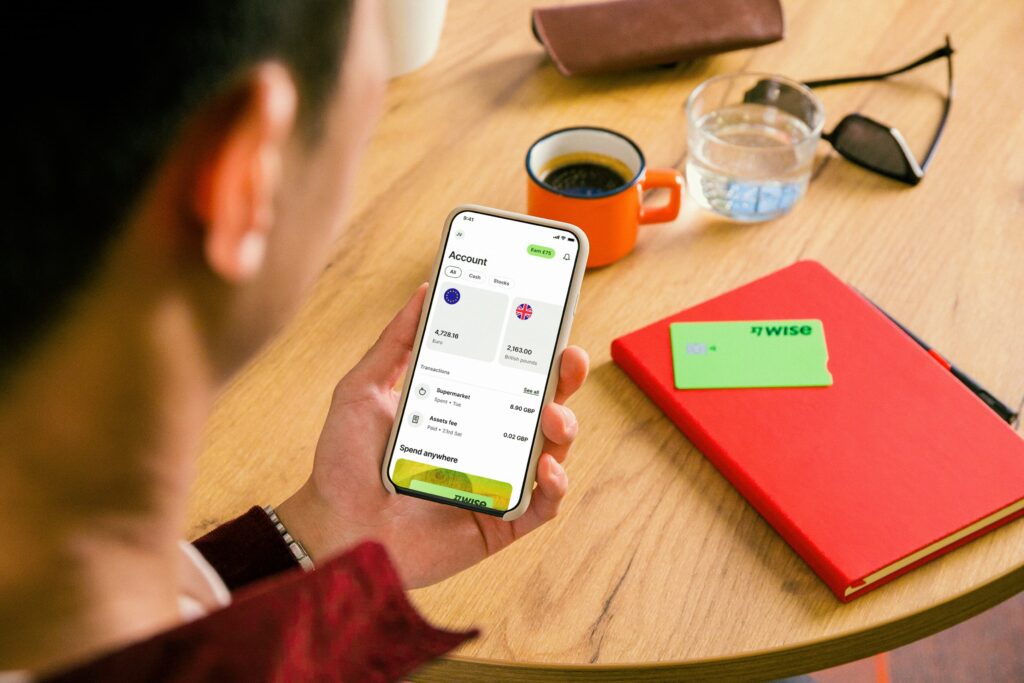
If your tax affairs involve more than one currency, it’s important to consider how exchange rate changes can affect your finances. For example, if you live outside Germany and earn income in a currency other than the euro, you may need to convert your money to euros in order to pay your German tax bill.
Exchange rates do not change the amount of tax you owe in Germany, but they can affect how much your euro payment costs in your local currency. A better exchange rate can reduce your conversion costs when you transfer money.
For those managing money across different currencies, Wise offers a multi currency account solution. With a Wise account, you can hold and send money in 40+ currencies, and receive payments in 20+ currencies. You can also transfer money to 140+ countries, including Germany. Payments use the mid-market rate that avoids expensive conversion fees. This can make it easier and cheaper to convert your local currency into euros when paying your German tax bill from abroad.
What to do when leaving Germany
If you’re moving abroad, you should deregister (abmelden) your address at your local Citizens’ Office (Bürgeramt) before you leave. They will notify the tax office of your departure.
You normally need to file a final income tax return for the year in which you leave Germany. If you were employed and had income tax withheld from your salary (Lohnsteuer), you may receive a refund. This often happens if your employer withheld tax based on a full 12-month salary but you only worked part of the year before leaving.
Ensure that you give the tax office your new foreign address, along with up-to-date bank account details for any refund.
Things you may want to consider before leaving are:
- Your tax residency: You generally stop being a tax resident once you deregister your address. However, you can remain a resident for tax purposes if you keep significant ties to Germany, such as a permanent address. Whether this is beneficial depends on where you are moving and any tax treaty between Germany and your new country.
- Savings and investments: You may want to review whether to keep movable assets in Germany or move them abroad. This may depend on tax rules and rates in your new country, and the details of any double tax treaty with Germany.
If you expect to manage finances in more than one currency, a multi-currency account can make things easier. You can set up a Wise account before you move in minutes using your existing ID and address. This will enable you to receive, hold, exchange, and send money in 40+ currencies, which can be helpful when transferring money out of Germany before you leave, paying any final bills once you’ve moved, or receiving an income tax refund.

Returning to Germany
If you have been living abroad and move back to Germany, you must register your new address at your local Citizens’ Office within two weeks of your return. This registration also re-establishes your official residence status, which can affect your tax obligations if you were considered a non-resident while living abroad.
Once you are a tax resident in Germany again, you must declare your worldwide income on your German tax return. You will also regain access to standard tax allowances, such as the basic personal allowance.
Before leaving your previous country of residence, make sure you understand any tax filing requirements that still apply for the period you lived there. Some countries require a final tax return or continued reporting.
Because Germany’s tax year aligns with the calendar year, returning early in the year can make your tax paperwork simpler. For personalised guidance, it’s a good idea to speak with a qualified German tax adviser.
Useful resources
- Bundeszentralamt für Steuern (BZSt) – official website of the Federal Central Tax Office in Germany
- Find your local tax office – search function on the BZSt website
- ELSTER – online portal for filing German income tax returns
- List of German tax treaties and agreements with other countries
- Amtliches Steuerberaterverzeichnis – electronic directory of certified tax advisers in Germany
- Wise – for low-cost international payments around the world