'%20id='ico-down'%20stroke='%23000000'%20stroke-width='1.5'%3e%3cg%20transform='translate(1092.250000,%20254.750000)'%3e%3cpolyline%20id='Path-2-Copy-4'%20transform='translate(5.500000,%202.750000)%20scale(1,%20-1)%20rotate(-180.000000)%20translate(-5.500000,%20-2.750000)%20'%20points='0%200%205.5%205.5%2011%200'%3e%3c/polyline%3e%3c/g%3e%3c/g%3e%3c/g%3e%3c/svg%3e)



'%20fill='%23000000'%3e%3cg%20id='icons'%20transform='translate(56.000000,%20160.000000)'%3e%3cpath%20d='M144,7339%20L140,7339%20L140,7332.001%20C140,7330.081%20139.153,7329.01%20137.634,7329.01%20C135.981,7329.01%20135,7330.126%20135,7332.001%20L135,7339%20L131,7339%20L131,7326%20L135,7326%20L135,7327.462%20C135,7327.462%20136.255,7325.26%20139.083,7325.26%20C141.912,7325.26%20144,7326.986%20144,7330.558%20L144,7339%20L144,7339%20Z%20M126.442,7323.921%20C125.093,7323.921%20124,7322.819%20124,7321.46%20C124,7320.102%20125.093,7319%20126.442,7319%20C127.79,7319%20128.883,7320.102%20128.883,7321.46%20C128.884,7322.819%20127.79,7323.921%20126.442,7323.921%20L126.442,7323.921%20Z%20M124,7339%20L129,7339%20L129,7326%20L124,7326%20L124,7339%20Z'%20id='linkedin-[%23161]'%3e%3c/path%3e%3c/g%3e%3c/g%3e%3c/g%3e%3c/svg%3e)
'%20fill='%23000000'%3e%3cg%20id='icons'%20transform='translate(56.000000,%20160.000000)'%3e%3cpath%20d='M335.821282,7259%20L335.821282,7250%20L338.553693,7250%20L339,7246%20L335.821282,7246%20L335.821282,7244.052%20C335.821282,7243.022%20335.847593,7242%20337.286884,7242%20L338.744689,7242%20L338.744689,7239.14%20C338.744689,7239.097%20337.492497,7239%20336.225687,7239%20C333.580004,7239%20331.923407,7240.657%20331.923407,7243.7%20L331.923407,7246%20L329,7246%20L329,7250%20L331.923407,7250%20L331.923407,7259%20L335.821282,7259%20Z'%20id='facebook-[%23176]'%3e%3c/path%3e%3c/g%3e%3c/g%3e%3c/g%3e%3c/svg%3e)

If you’re an expat settling into your new home, you’ll undeniably go through some rites of passage. Whether you’re setting up your Wi-Fi or buying furniture, some experiences are essential to settle into your new lifestyle. Recycling is something you’ll have to deal with as soon as you arrive in France and, since the environment is a growing concern, it’s important to do it right.
Get a tailored action plan for moving to France
Let us plan your relocation to France for you. Expatica’s relocation tool asks you a series of questions and generates you a tailored, interactive checklist for your move.
You can see everything you need to do ahead of your move and outstanding tasks once you arrive. Create a profile with Expatica to save your checklist and tick off tasks as you complete them.
Try the relocator tool here – it only takes 2 minutes.
To learn how to sort your waste the French way, read on to find out about the following issues:
Wise account
Are you an expat or thinking of moving to France? Managing your money across borders shouldn’t be complicated. With a Wise account, you can hold over 40 currencies and pay with a Wise debit card in more than 150 countries. Whether you need to spend abroad, receive or send money home, Wise can help make international money management simpler.

The recycling system in France
In 2023, France’s public waste service collected 37.8 million tonnes of household and similar waste, or 559 kilograms per person. Plastic packaging remains a particular challenge: in June 2026, the French government reported that 26% of plastic packaging was recycled in France.

France’s anti-waste rules have progressively restricted plastic overpackaging for fresh fruit and vegetables sold in supermarkets. The country’s legal objective is to end the placing on the market of single-use plastic packaging by 2040, rather than all single-use plastics. You can read more on the French government’s anti-waste and circular economy page.
Once collected, waste is sent to different treatment routes depending on the material and the local system. Recyclable materials are sorted for recycling, separately collected biowaste can be composted or used for anaerobic digestion, and residual waste may be incinerated or landfilled. The French government states that disposal by landfill or incineration without energy recovery should be reserved as far as possible for waste that cannot be otherwise recovered.
How to recycle in France
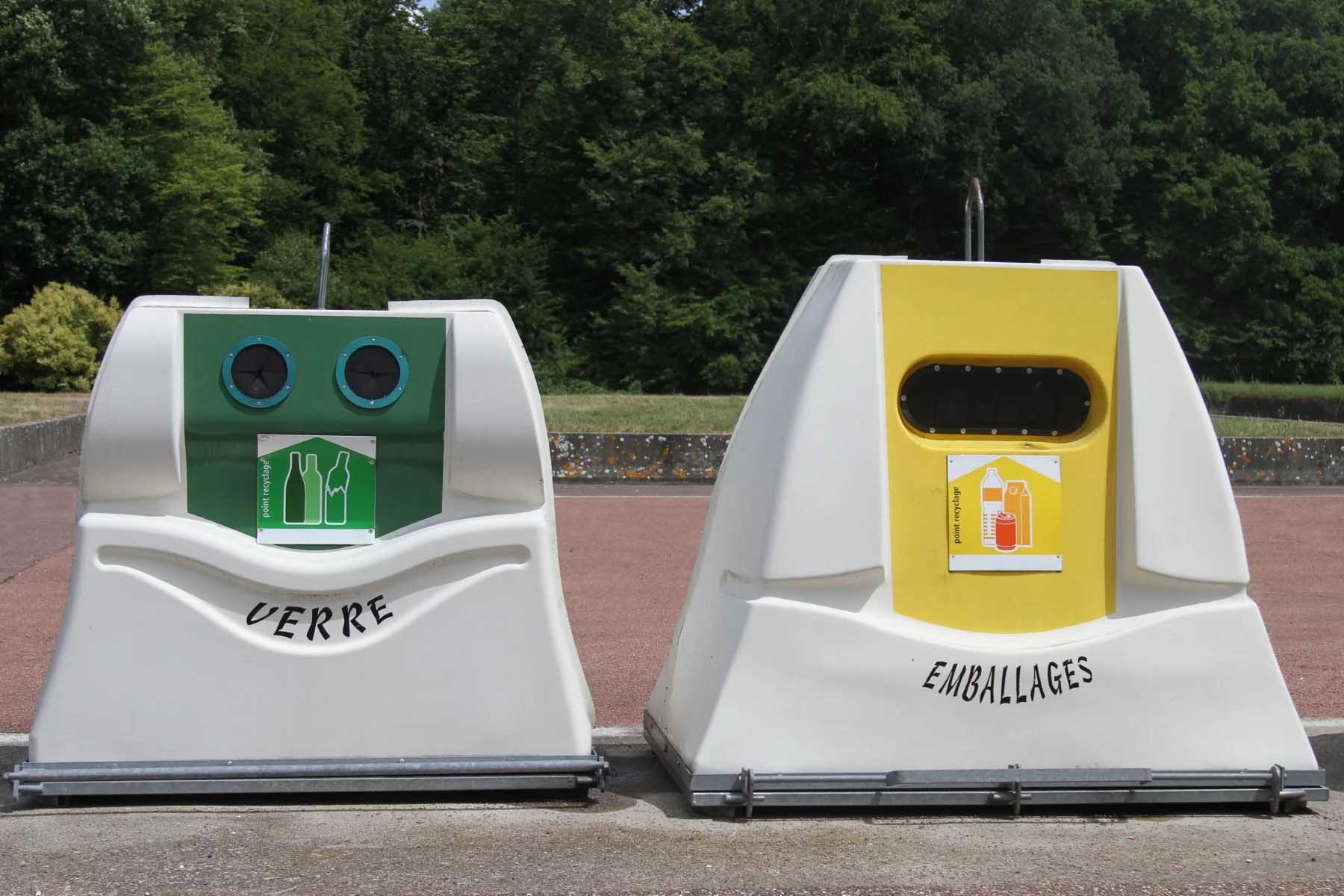
Before waste collection, separate your materials according to the local system. National sorting instructions have been simplified so that all household packaging and paper are sorted, while glass packaging goes into a dedicated glass container. The sorting bin is often yellow, but its color and format can vary locally. If you are unsure where an item belongs, use ADEME’s Que faire de mes déchets? directory and check your municipality’s local guidance.
Pay attention to the Triman and Info-tri labels on products and packaging. The Triman logo indicates that an item is subject to a sorting instruction, while the accompanying Info-tri tells you where to take or dispose of it. Material symbols such as PET, PAP, or ALU identify the material but are not, by themselves, reliable sorting instructions.
Recycling paper in France
Paper (papier) is sorted with household packaging in the local bin, bag, or container for paper and packaging. This is often yellow, but the color and format can vary locally. You can recycle the following here:
- Newspapers and magazines
- Advertisements and flyers
- Books that are too damaged to reuse
- Envelopes
Collection schedules are set locally, so check with your municipality or intermunicipal waste authority. Paper towels, tissues, and paper napkins should not go in the paper-and-packaging recycling stream; follow your local guidance for disposing of or composting them. At the recycling plant, sorted paper can be processed into new paper or cardboard products.
Recycling plastic in France
Along with paper, all household plastic packaging can go in the local paper-and-packaging sorting bin, bag, or container. This includes water bottles, shampoo bottles, yogurt pots, food trays, films, and bags. The container is often yellow, but local colors and formats can vary. Plastic objects that are not packaging, such as toys or toothbrushes, do not belong in this recycling stream.
Do not use the plastic resin number from one to seven as your main sorting rule. In France, the everyday rule is based on whether the item is packaging: all household plastic packaging goes into the packaging sorting stream. Packaging for dangerous products, such as motor oil or drain cleaner, is an exception and should go to a recycling center or another dedicated collection point.

Collection schedules vary locally. Plastic packaging should be emptied before sorting, but there is no need to rinse it. Put packaging into the sorting container loose rather than inside a bag or nested inside other packaging. ADEME advises against crushing plastic bottles from top to bottom; if you need to save space, flatten them instead. During the recycling process, plastics are separated by material and processed for recycling or, where recycling is not yet possible, other recovery routes.
Recycling glass in France
Glass packaging (verre), such as bottles, jars, and glass food pots, is sorted separately in a dedicated glass container. The color, type of container, and whether glass is collected from your home or at a communal drop-off point depend on the local authority. Check your municipality or ADEME’s glass-container locator for the arrangements where you live.

Empty glass packaging does not need to be rinsed before sorting. For bottles, ADEME says you can leave the cap on; metal or plastic lids from jars should go in the paper-and-packaging sorting stream. Do not put drinking glasses, crockery, mirrors, window glass, or other non-packaging broken glass into bottle-bank containers. Use ADEME’s glass guidance or your local instructions for these items.
Recycling metal in France
Household metal packaging (métal) – including steel and aluminum cans, food tins, aluminum trays, and metal lids – goes in the local paper-and-packaging sorting stream. The packaging should be empty, but it does not need to be rinsed. Collection schedules and container colors vary locally. Packaging that contains or has contained certain dangerous products should go to a recycling center or dedicated collection point rather than the household sorting bin.
Recycling cardboard in France
Cardboard (carton) packaging is sorted with paper and other household packaging and should be flattened where possible. Large boxes that do not fit can be taken to a recycling center. Food packaging such as pizza boxes can also go in the sorting stream once food leftovers are removed. Plastic-coated or otherwise non-compostable cardboard should still be placed in the paper-and-packaging sorting stream rather than home compost. Recycled cardboard is processed into new paper and cardboard products.
Recycling clothes and clothing materials in France
Although you may be itching to get rid of your unwanted clothes, you should not put textiles or shoes in the household packaging recycling bin. Instead, take clothes, shoes, underwear, and household linen to a dedicated textile collection point. You can find a current collection point using Refashion’s locator.
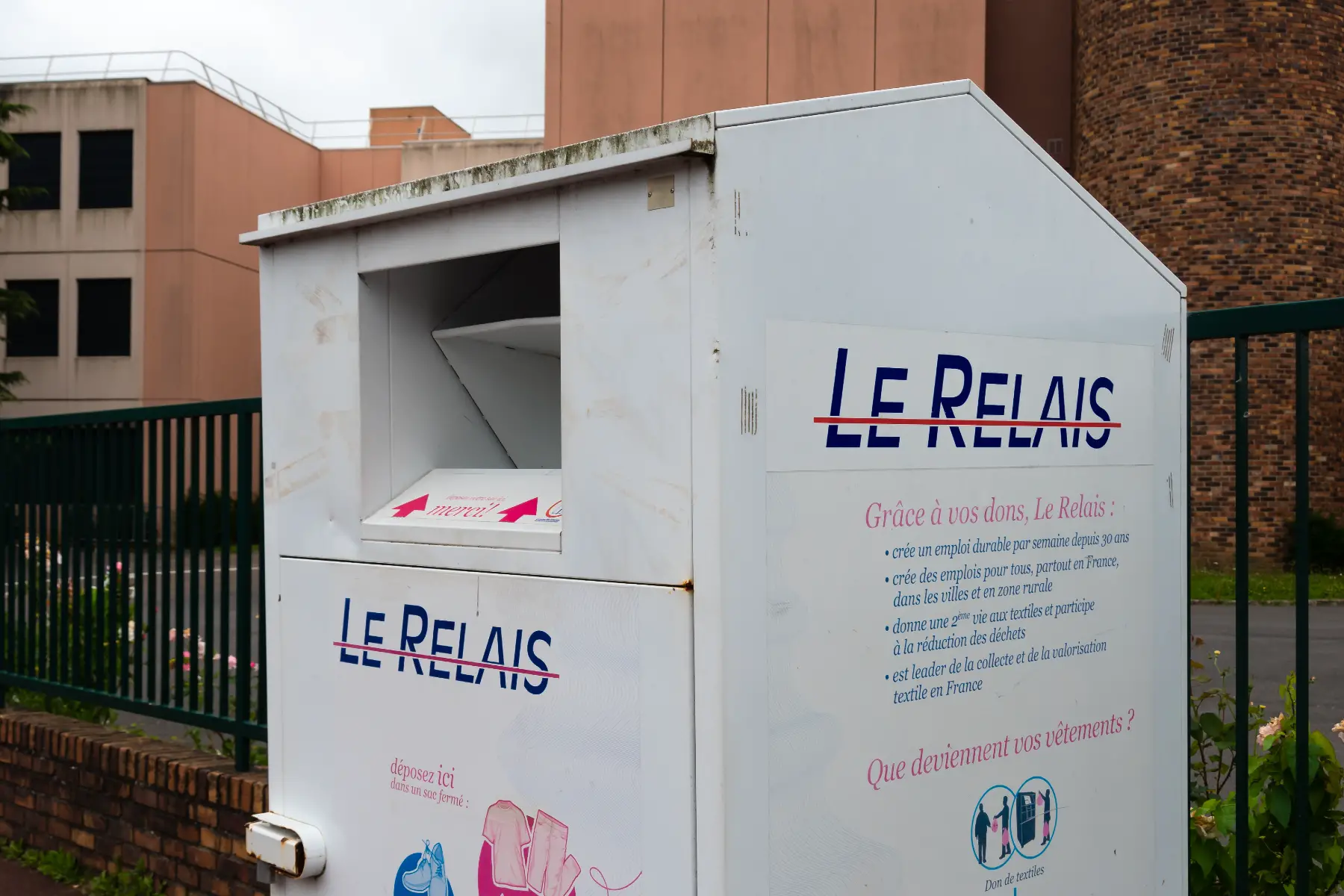
Before depositing your items, make sure textiles and shoes are clean and dry. Worn or damaged items can still be accepted, while shoes should be tied together in pairs. Textiles stained with paint or other chemicals are not recyclable through this stream and should go in household waste. Depending on their condition, collected textiles may be reused or sent for material recovery.
Put textiles together in a securely closed bag before depositing them. Refashion specifies a maximum bag size of 30 liters for container deposits. Do not leave bags on the street if a collection container is full; use another collection point or follow the operator’s instructions.
Recycling other household items in France
Alongside the materials above, there are plenty of other items you can recycle in France. Here are the most common ones:
- Batteries: Do not put loose batteries or small rechargeable batteries in household waste or the paper-and-packaging recycling bin. Take them to a dedicated collection point instead. Shops that sell batteries must take used batteries back free of charge, and ADEME provides a collection-point locator.
- Mobile phones: You can take old mobiles and smartphones to suitable collection points or use jedonnemontelephone.fr, a free postal collection service supported by the nonprofit eco-organization ecosystem. Phones are sent to Ateliers du Bocage for reuse where possible, with unsuitable devices directed to recycling.
- Household appliances: Looking to get rid of your bulky fridge or tiny toaster? When you buy a new appliance to replace an old one, the retailer is required to take back the old equivalent free of charge at the point of sale or delivery under the “1-for-1” take-back rule.
If you are still unsure what to do with an item in your commune, use ADEME’s Que faire de mes déchets? service and check the sorting guide published by your municipality or intermunicipal waste authority.
Tips for recycling at home
Alongside recycling your waste carefully, there are even more actions you can take to live a healthier, more sustainable lifestyle that will benefit yourself and your community. These include:
- Reduce your use: Less waste means less time spent recycling. Why not take your Tupperware or a reusable bag to the supermarket to save on excess waste? Or buy reusable make-up pads to avoid throwing out cotton rounds?
- Opt for sustainable materials: Some household essentials are available in biodegradable materials, which are eco-friendly and affordable. Some options include bamboo toothbrushes, bamboo dishcloths, and biodegradable diapers.
- Do your research: When you move to a new commune, familiarize yourself with their recycling rules. Educate yourself on your local recycling system and consult with your city council.
- Pack your lunch: Meal prepping before work or school can help you cut down on extra food packaging when buying lunch on the go.
Composting in France
Composting food waste
After you’ve finished making a traditional French meal at home, it’s time to deal with vegetable peelings, stalks, eggshells, and other food scraps. Since 1 January 2024, households in France must sort biowaste at source so that it can be recovered separately from residual household waste. However, there is no single nationwide “brown bin” system: the municipality or intermunicipal authority can provide home or shared composters, a separate collection service, drop-off points, or a combination of these.
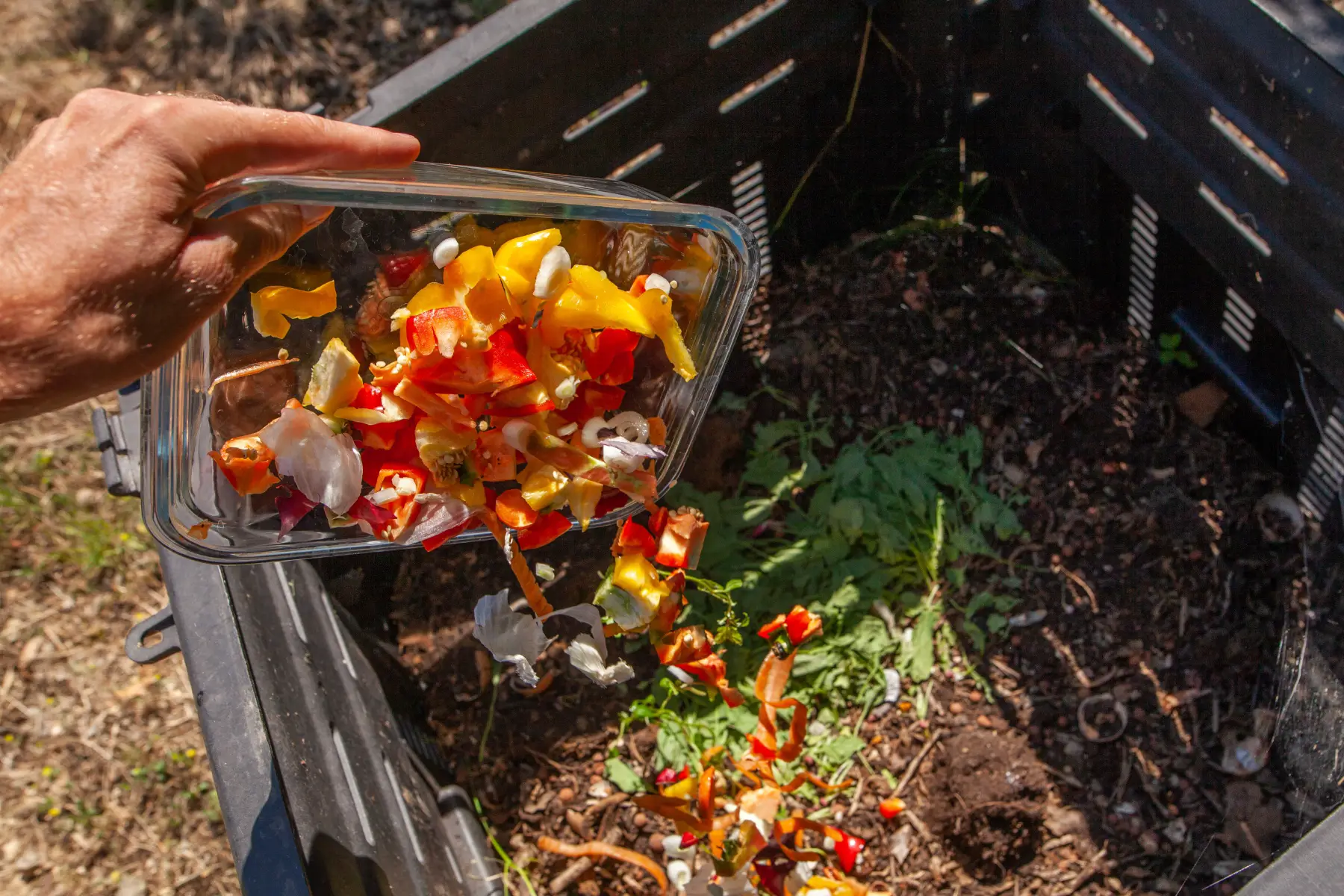
What you can put into a local biowaste collection or composter depends on the system provided where you live. Check your municipality’s guidance for accepted food scraps, paper products, and any other compostable material. If your area provides a separate collection service, its frequency is set locally rather than by a single national weekly schedule.
Composting garden waste
Green waste, including grass clippings, dead leaves, and garden debris, is also biowaste, but it should not automatically be put into the same container as food waste. Local authorities can set different arrangements for garden waste, such as home composting, dedicated drop-off points, recycling centers, or separate collections. Check the rules where you live before putting garden waste out for collection.
Do note that it is generally forbidden to burn green waste in the open air or in a garden incinerator. Breaching the ban can result in a fine of up to €750.
Garbage collection in France
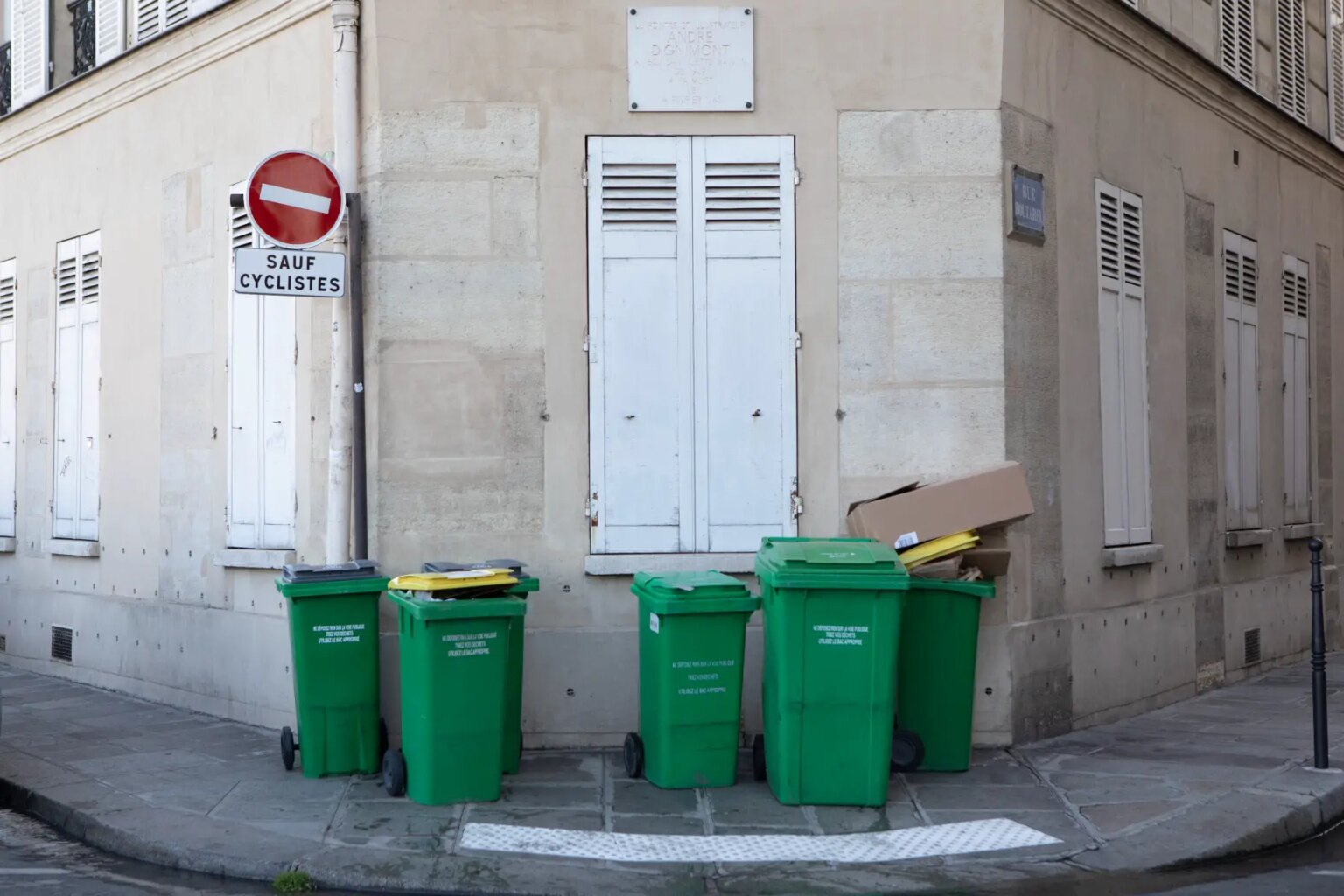
Now that you know what to do with recyclables and biowaste, what about the rest of your trash? Put residual household waste in the bin, bag, or communal container designated by your local authority. Bin colors, collection methods, and rules about when containers can be placed outside vary by area, so follow your local collection guide rather than relying on a nationwide color code.
Waste collection varies depending on where you live in France and is managed by the municipality or an intermunicipal authority. Collection frequencies are set locally according to factors such as the type of housing, geography, waste volumes, and seasonal population. Check your local authority’s website for your schedule. Some participating areas also use services such as Montri to provide collection calendars and local waste information.

Your local authority determines which collection containers it provides and how residents obtain or replace them. For example, some municipalities provide standardized bins, while communal collection points may be used elsewhere. Check locally before buying a bin from a homeware store, as a privately purchased container may not meet local collection requirements.
If you live in an apartment block, you can usually find communal bins in a yard or in a designated area on the property. Those living outside the big cities may need to recycle their waste in a more central location, as household collection may not be an option. Check with your city hall if you are unsure where to deposit your waste.
Because schedules and collection methods are local, your municipality or intermunicipal waste authority is the best source for collection days, drop-off points, and any rules about placing bins on the street.
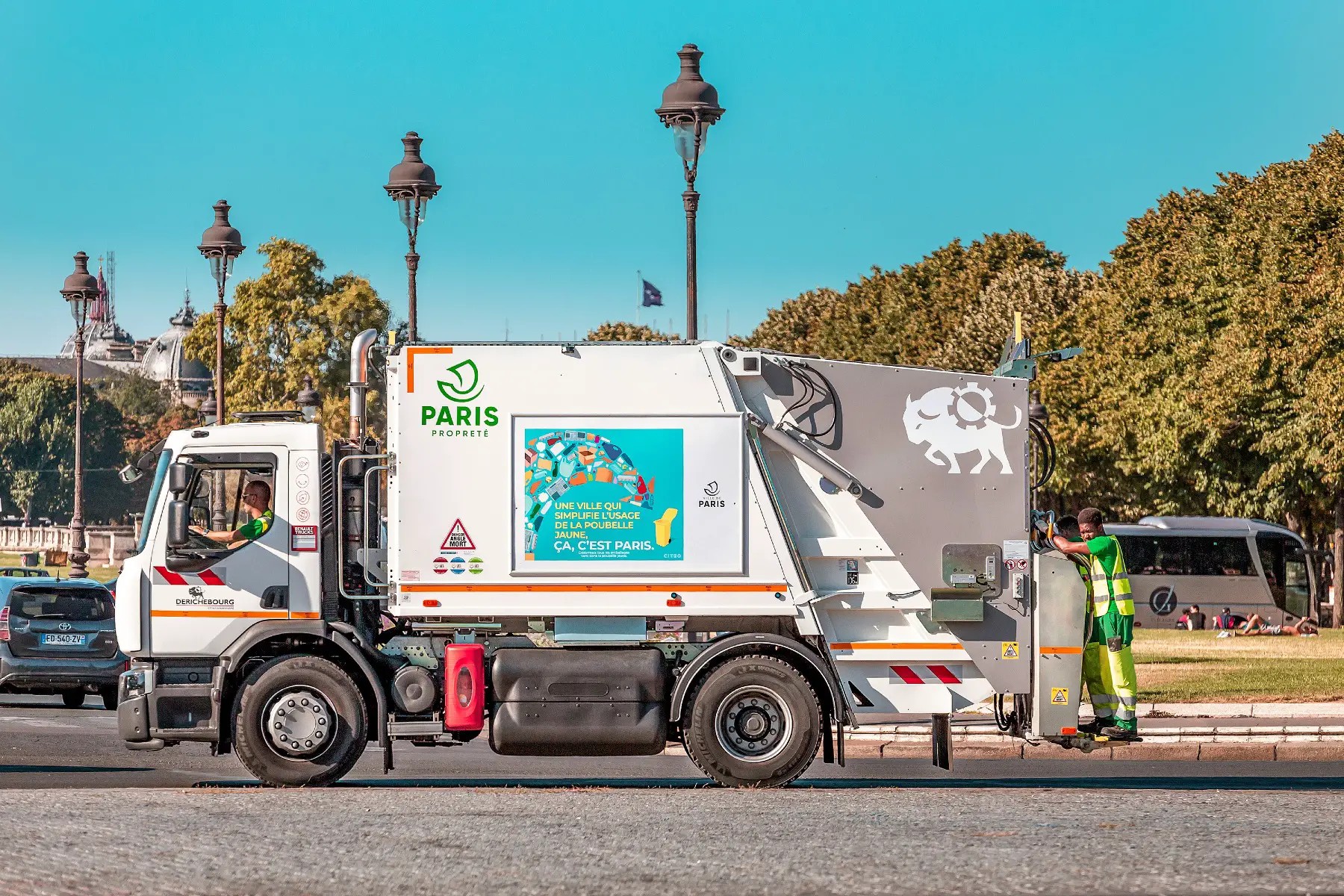
How household waste collection is funded depends on the local authority. A municipality or intermunicipal authority can use the Taxe d’Enlèvement des Ordures Ménagères (TEOM) or the Redevance d’Enlèvement des Ordures Ménagères (REOM). Where TEOM applies, it appears on the same tax notice as taxe foncière and is assessed in the name of the owner or usufructuary. If the property is rented out, the owner can generally recover the TEOM from the tenant as a recoverable charge, excluding management fees. Under REOM, the person using the waste service pays according to the local charging system.
Be aware that your municipality’s waste regulations could be strict, so it is important to dispose of your trash properly or you risk a fine.
For expatriates settling in France, managing these local systems and associated costs is just one aspect of establishing your new life abroad—alongside setting up banking, utilities, and managing finances across borders with services like Wise.
Penalties for illegally dumping waste or recycling in France
For abandoning waste in the street, the standard fine is €135 if paid within 45 days. It rises to €375 after that deadline, and a judge can impose up to €750; the fine can reach €1,500, with possible confiscation of the vehicle, if a vehicle was used to transport the dumped waste. Separately, failing to follow local collection rules on containers, days, times, or sorting can result in a €68 fine if paid immediately or within 45 days, rising to €180 after that; a judge can impose up to €450. For the current rules, see the government’s waste-fines guidance.
Useful resources
- ADEME – Que faire de mes déchets? – National guidance and local drop-off information for sorting different waste
- Service Public – Household sorting, biowaste, collection, and local waste rules
- Ministry of Ecological Transition – Info-tri – How to read France’s Triman and Info-tri sorting labels
- Refashion – Find a textile and shoe collection point
- Ville de Paris – Waste collection in Paris