'%20id='ico-down'%20stroke='%23000000'%20stroke-width='1.5'%3e%3cg%20transform='translate(1092.250000,%20254.750000)'%3e%3cpolyline%20id='Path-2-Copy-4'%20transform='translate(5.500000,%202.750000)%20scale(1,%20-1)%20rotate(-180.000000)%20translate(-5.500000,%20-2.750000)%20'%20points='0%200%205.5%205.5%2011%200'%3e%3c/polyline%3e%3c/g%3e%3c/g%3e%3c/g%3e%3c/svg%3e)




'%20fill='%23000000'%3e%3cg%20id='icons'%20transform='translate(56.000000,%20160.000000)'%3e%3cpath%20d='M144,7339%20L140,7339%20L140,7332.001%20C140,7330.081%20139.153,7329.01%20137.634,7329.01%20C135.981,7329.01%20135,7330.126%20135,7332.001%20L135,7339%20L131,7339%20L131,7326%20L135,7326%20L135,7327.462%20C135,7327.462%20136.255,7325.26%20139.083,7325.26%20C141.912,7325.26%20144,7326.986%20144,7330.558%20L144,7339%20L144,7339%20Z%20M126.442,7323.921%20C125.093,7323.921%20124,7322.819%20124,7321.46%20C124,7320.102%20125.093,7319%20126.442,7319%20C127.79,7319%20128.883,7320.102%20128.883,7321.46%20C128.884,7322.819%20127.79,7323.921%20126.442,7323.921%20L126.442,7323.921%20Z%20M124,7339%20L129,7339%20L129,7326%20L124,7326%20L124,7339%20Z'%20id='linkedin-[%23161]'%3e%3c/path%3e%3c/g%3e%3c/g%3e%3c/g%3e%3c/svg%3e)
'%20fill='%23000000'%3e%3cg%20id='icons'%20transform='translate(56.000000,%20160.000000)'%3e%3cpath%20d='M335.821282,7259%20L335.821282,7250%20L338.553693,7250%20L339,7246%20L335.821282,7246%20L335.821282,7244.052%20C335.821282,7243.022%20335.847593,7242%20337.286884,7242%20L338.744689,7242%20L338.744689,7239.14%20C338.744689,7239.097%20337.492497,7239%20336.225687,7239%20C333.580004,7239%20331.923407,7240.657%20331.923407,7243.7%20L331.923407,7246%20L329,7246%20L329,7250%20L331.923407,7250%20L331.923407,7259%20L335.821282,7259%20Z'%20id='facebook-[%23176]'%3e%3c/path%3e%3c/g%3e%3c/g%3e%3c/g%3e%3c/svg%3e)

For some expats, their dream home will be an airy apartment in central Paris. For others, it’ll be a gite on the French Riviera. Wherever la vie française takes you, one of the first things you’ll need to do is set up your home communications.
If you’re a new arrival, the prospect of setting up your TV, home phone, and internet connection in France can seem challenging. But it doesn’t have to be. That’s why we’ve put together our expert guide on getting your home connected, including information on the following:
Communications in France
If you’ve just arrived in France, you might be pleasantly surprised to realize just how competitive the country’s telecoms sector is. There is a growing number of providers for you to choose from, with many offering a range of services. However, your ability to choose your provider will depend on where you live, as we discuss later in this article.
If you are able to shop around for TV, home phone, and internet connections, the biggest telecoms providers in France include the following:
These providers often offer discounted packages if you choose to take out more than one service. Some offer deals on mobile phone subscriptions, too. Shop around to see if you could save some additional money on your phone bill.
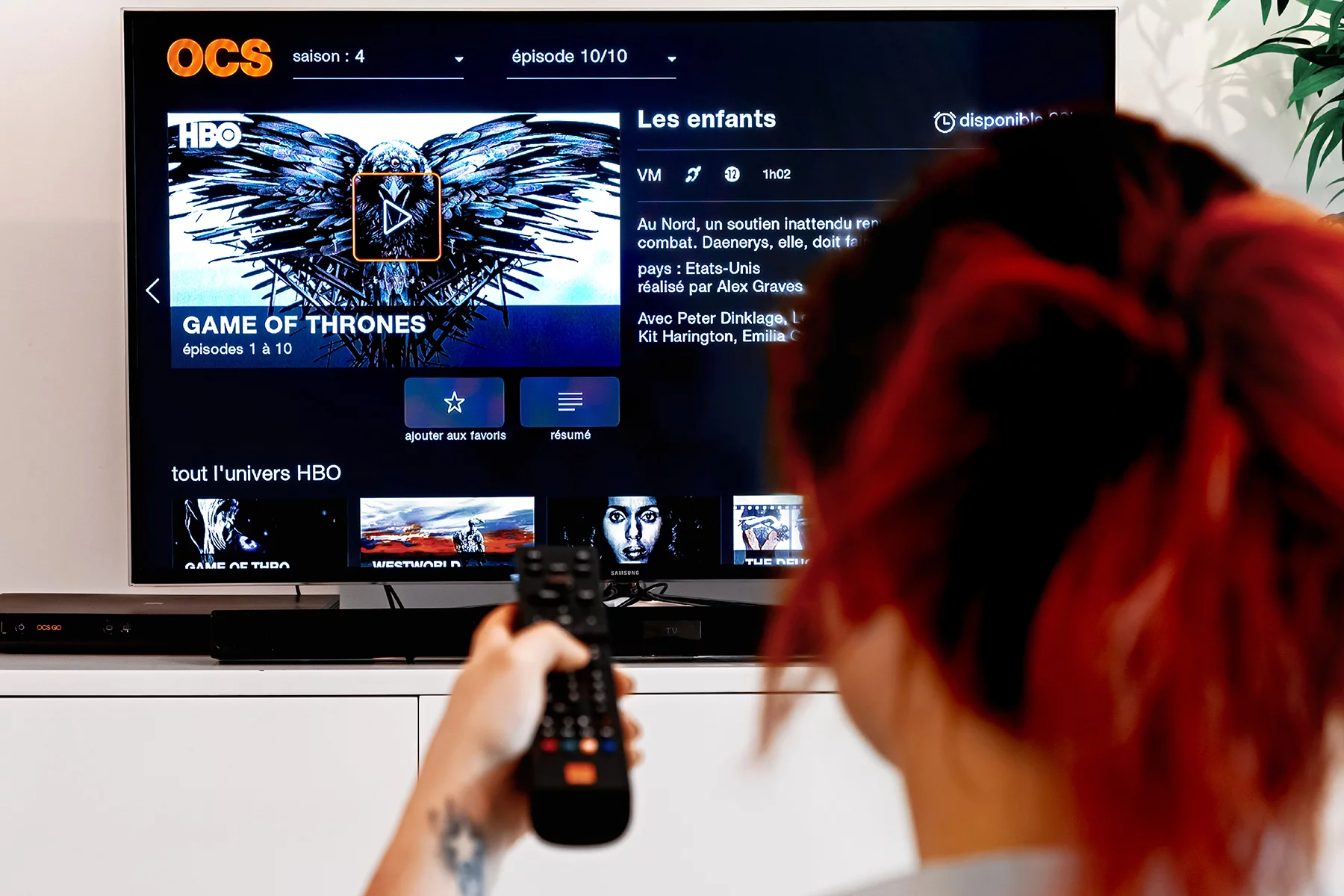
However, you don’t have to get your services from one of the main suppliers, and it often pays to shop around to ensure you get the right deal for you. You can do this easily using an online comparison service, such as Je Change and Que Choisir. Be aware that these websites are in French, though, so you may want to brush up on your language skills ahead of time.
Getting connected in a new home
Whether you’re renting in Rouen or buying in Biarritz, setting up your own TV, phone, and internet connection will probably be high on your to-do list when you move in.
If you’re renting, your new home might already be connected to these services. If so, your landlord will likely include the cost in your monthly payments. However, it is important to clarify this with them before you sign any paperwork so you know exactly what your rental payment includes, what ends up in your name, and what the contract cancellation or change involves (such as fees).
Generally speaking, communication services will be included as a standard should you rent a serviced apartment. You may then be able to choose another provider or continue using the existing connections. You’ll likely be able to find a cheaper deal elsewhere, however, changing providers may not be worth your while if you’re planning a short stay.
Tip: Setting up internet often involves upfront costs (activation, installation, or equipment fees). If you’re paying from a non‑euro account, a multi-currency option like Wise can help you convert to EUR and pay online or by card.
Getting a landline telephone in France
While many people in France rely on mobile phones day-to-day, a home phone (“téléphone fixe”) is still common — especially as part of a home internet box package. The big change in recent years is how fixed-line phone service is delivered.
Today, most “landlines” are provided via your internet box (VoIP) over fibre (or sometimes cable / fixed 4G/5G), rather than through the old copper telephone network. Traditional analogue fixed lines on the old switched telephone network (RTC) are no longer sold, and France’s copper network (ADSL/telephone via the “T” wall socket) is being phased out progressively, with a national end-of-life planned by the end of 2030.
What this means for you
- If your phone or internet is plugged into the old “prise en T” (T-shaped wall socket), you’ll likely need to migrate to fibre or another technology as the copper shutdown reaches your area.
- If you already have fibre and your phone runs through your box, you shouldn’t need to do anything.
- A “landline-only” (basic voice) offer may be available in some areas/operators, but it’s increasingly common (and often cheaper) to take a bundled box plan.
Before choosing a provider, check what’s actually available at your address (fibre, cable, DSL if still open locally, fixed 4G/5G, satellite). A good starting point is ARCEP’s official coverage tool.

How do I set up my landline telephone in France?
In most cases, setting up a fixed phone line is now part of setting up your internet connection.
1. Check your address eligibility and copper shutdown status:
- Use https://maconnexioninternet.arcep.fr/ to see which technologies are available and whether DSL is being closed in your area.
2. Choose how you want your fixed phone service delivered:
- Via your internet box (VoIP) (most common): you plug a standard phone handset into the box.
- Voice-only (basic telephony) over fibre/alternative tech: availability depends on the operator.
- Keep your number: you can usually port your number when switching providers.
3. Order your plan with the operator of your choice. You’ll typically be asked for:
- Proof of identity (passport / residence permit)
- Proof of address (rental contract or recent utility bill)
- Bank details for direct debit (prélèvement)
4. Installation / activation:
- If fibre is available but not yet installed in the home, an engineer may need to fit a fibre outlet (PTO – prise terminale optique).
- Timelines vary (from a few days to a few weeks), especially in busy periods or if new cabling is required.
Important practical note (power cuts): if your home phone is provided via the internet box, it generally won’t work during a power cut unless you have battery backup (e.g., a UPS) or an alternative such as a charged mobile phone.
Setting up an internet connection in France
France’s home broadband market is competitive, and most households can choose between several providers — but the best option depends on what’s available at your address.
Fibre-first reality (and the end of ADSL)
Fibre (fibre optique / FTTH) has become the default in many areas, and it continues to expand nationwide. At the same time, the older copper-based network (ADSL/VDSL and phone service via the “T” socket) is being switched off progressively, with full technical closure planned by 2030. If your home still relies on ADSL, you should plan to move to fibre (or another solution) when it becomes available.
What types of home internet are available?
Depending on where you live, you may have access to:
- Fibre (FTTH) – best performance and reliability in most cases
- Cable (where available)
- DSL (ADSL/VDSL) – legacy technology; availability is shrinking due to the copper shutdown
- Fixed 4G/5G home broadband – useful where fibre isn’t available yet
- Satellite internet – an option in remote areas
To check what you can get (and the expected speeds), use ARCEP’s “Ma connexion internet” tool.
Once you know what’s available, you can compare “triple-play” bundles (internet + TV + téléphone fixe) versus internet-only plans. Providers often advertise these as “box” packages, and pricing depends on speed, TV content, Wi‑Fi performance, and call options.

How do I set up my internet connection in France?
1. Check availability at your address
Start with https://maconnexioninternet.arcep.fr/ to confirm fibre/cable/DSL availability and realistic speeds.
2. Compare offers and contract terms
When comparing providers, don’t just look at the headline monthly price. Also check:
- Installation/activation fees
- Equipment included (router, TV decoder)
- Wi‑Fi standard and coverage options
- Contract length (engagement) and early cancellation fees
- Any promo period and the price after it ends
3. Order the service and book installation (if needed)
For fibre, an installation appointment may be required to connect your home and install a PTO. In apartments, access to building infrastructure can sometimes affect timelines.
4. Set up your box and test your connection
Providers either send equipment by post or supply it during installation. Setup guides are usually in French, but the process is typically plug-and-play.
5. If you’re switching providers, arrange number portability and returns
If you’re keeping a fixed number, portability is usually handled by your new provider. Don’t forget to return old equipment to avoid extra charges.
Paying for home internet while you get settled in France
Setting up home internet in France can involve upfront fees and monthly payments in euros. Many providers bill by SEPA direct debit—a non‑French SEPA IBAN is often accepted, but some may still require a French IBAN. If you’re newly arrived and don’t yet have local banking set up, Wise can help you hold and convert euros and pay providers (for example by card or bank transfer) in the meantime.

Getting a VPN in France
When moving abroad, it’s more important than ever to ensure your privacy and security while surfing online. For many expats, this means getting a virtual private network (VPN). VPNs can help you browse with more anonymity and privacy wherever you are in the world. They can also help unblock online content, letting you access your favorite sites and platforms from home and abroad. VPNs available in France include:
Setting up TV in France
New arrivals to France might not find the quality of the local TV service as good as they’re used to, but French TV is decent and widely accessible across the country. France has a digital terrestrial system called TNT (Télévision Numérique Terrestre), which is similar to the UK’s Freeview service. In metropolitan France, TNT broadcasts 26 national channels (including 25 free-to-air and 1 pay channel) plus numerous local/regional channels. To receive TNT, you’ll need a TV with a built-in TNT tuner (or an external TNT decoder).

Many expats prefer the range of choice offered with these services. Indeed, if you want to watch international sport or the latest movies and series from around the world, you’ll need to take out an additional TV subscription.
Increasingly, these subscriptions are included in package box deals with home broadband connections. Therefore, the biggest TV providers in France include:
What you end up paying for these TV services will largely depend on the channels you want to watch. Some platforms will offer a basic package of channels, including news/current affairs and entertainment. However, for live sport, international channels, you will need to sign up for an additional package. For example, SFR offer dedicated packages for English TV, Indian TV, and many more.

Alternatively, depending on your location in France, you may prefer to sign up for a satellite TV service that will allow you to watch free TV channels from the UK. Satellite pay-TV is also available via CANAL+ (satellite reception options depend on location and equipment). For more information on free-to-air television, satellite connections and more, read our guide to TV and radio in France.
How do I set up my TV in France?
Decided which TV provider offers the right channels for you and your family? Now it’s time to get your home connected. Providing you have an internet connection, setting up your TV service is usually straightforward. If you’re starting from scratch, you’ll generally need to set up your home internet first (often fibre), then add TV services. This can take a few weeks. For any satellite services, you will need a professional to install the dish.
Your TV provider will likely provide you with a box (also called a decoder) that connects to your TV and internet port. Each provider offers a range of these boxes which depend on your chosen package, so follow the instructions carefully. Generally speaking, installation is fairly straightforward, although be aware that any instructions are likely to be in French, so you may need to brush up on some terminology beforehand.
Paying for your bills
When signing up for telecoms in France, you’ll likely need to provide your bank details as part of the process. Some providers also require an activation charge, so be aware of any additional fees when setting up your connections. Having a French bank account will make the process much easier, so check out your banking options ahead of time.
If you’re moving from abroad, you may also need a simple way to pay one-off setup costs (activation fees, equipment deposits) and manage ongoing payments while you get settled. Services like Wise let you hold and convert euros, send money to France, and pay by card — which can be useful while you’re arranging your day-to-day banking.
French telecoms companies will generally expect you to pay bills by automatic monthly collection (SEPA direct debit) from your bank account. Generally speaking, this is the easiest way to make payments, although each provider has their own system. In most cases, companies should accept a SEPA IBAN from another EU country, but some may still ask for a French IBAN. If you don’t yet have a local account, Wise can help you manage euros and pay providers (for example by card or bank transfer) until everything is fully set up.
Failing to make a payment could see your service canceled, so make sure you keep up to date with your bills.
Be aware that many providers will charge you early cancellation fees, so if you’re not staying for a full year, check your contract for cancellation clauses that allow you to exit without paying fines — or a full 12 months’ subscription that you don’t need.
Making a complaint about a telecoms company
Do you have an issue with one of your French telecom services? Whether you have a billing or customer service problem, your first port of call should be the complaints department of your provider. You should be able to find this information on their website.
However, if your issue hasn’t been resolved within a month or you remain unsatisfied, you can make a complaint to the National Consumer Service. Each provider has their own consumer service, so check online for information on the service for your telecoms supplier. Should you still fail to find a resolution, you can then contact La Médiation des Communications Électronique, the national impartial mediator for the telecoms sector.
Useful resources
- La Médiation des Communications Électronique – French telecoms mediation service
- ARCEP – Regulatory body for French telecoms