
'%20id='ico-down'%20stroke='%23000000'%20stroke-width='1.5'%3e%3cg%20transform='translate(1092.250000,%20254.750000)'%3e%3cpolyline%20id='Path-2-Copy-4'%20transform='translate(5.500000,%202.750000)%20scale(1,%20-1)%20rotate(-180.000000)%20translate(-5.500000,%20-2.750000)%20'%20points='0%200%205.5%205.5%2011%200'%3e%3c/polyline%3e%3c/g%3e%3c/g%3e%3c/g%3e%3c/svg%3e)


Lifestyle
Food & Drink
French eating habits: 7 rules for dining like a local
Want to impress your new local friends by dining like a true Frenchie? Then make sure you’re clued up on these seven unique French eating habits.


Nothing makes you feel more integrated into a new country than eating like a local. And if you happen to be moving to France, there are several unique French eating habits that you should know about in order to pull it off. After all, the country has one of the most sophisticated and revered cuisines in the world; therefore, it’s only natural that it comes with its own set of dining rules and etiquette.
So, if you want to leave your dinner guests with a dazzling impression, here are seven simple guidelines to help you:
1. Forget everything you think you know about French eating habits
Let’s start with some hard truths. The most important first step you will need to take as part of your initiation into the world of French eating habits is ditching the stereotypes. That’s right, believe it or not, not every French person spends their day knocking back caviar and Dom Pérignon; all the while dressed in stripes and a beret.
While it’s true the country is home to such frivolous delicacies as foie gras and frog legs, not everyone enjoys scoffing them, let alone every day. That said, when it comes to less extravagant food and drink such as wine, cheese, and baguettes, the clichés are pretty accurate.
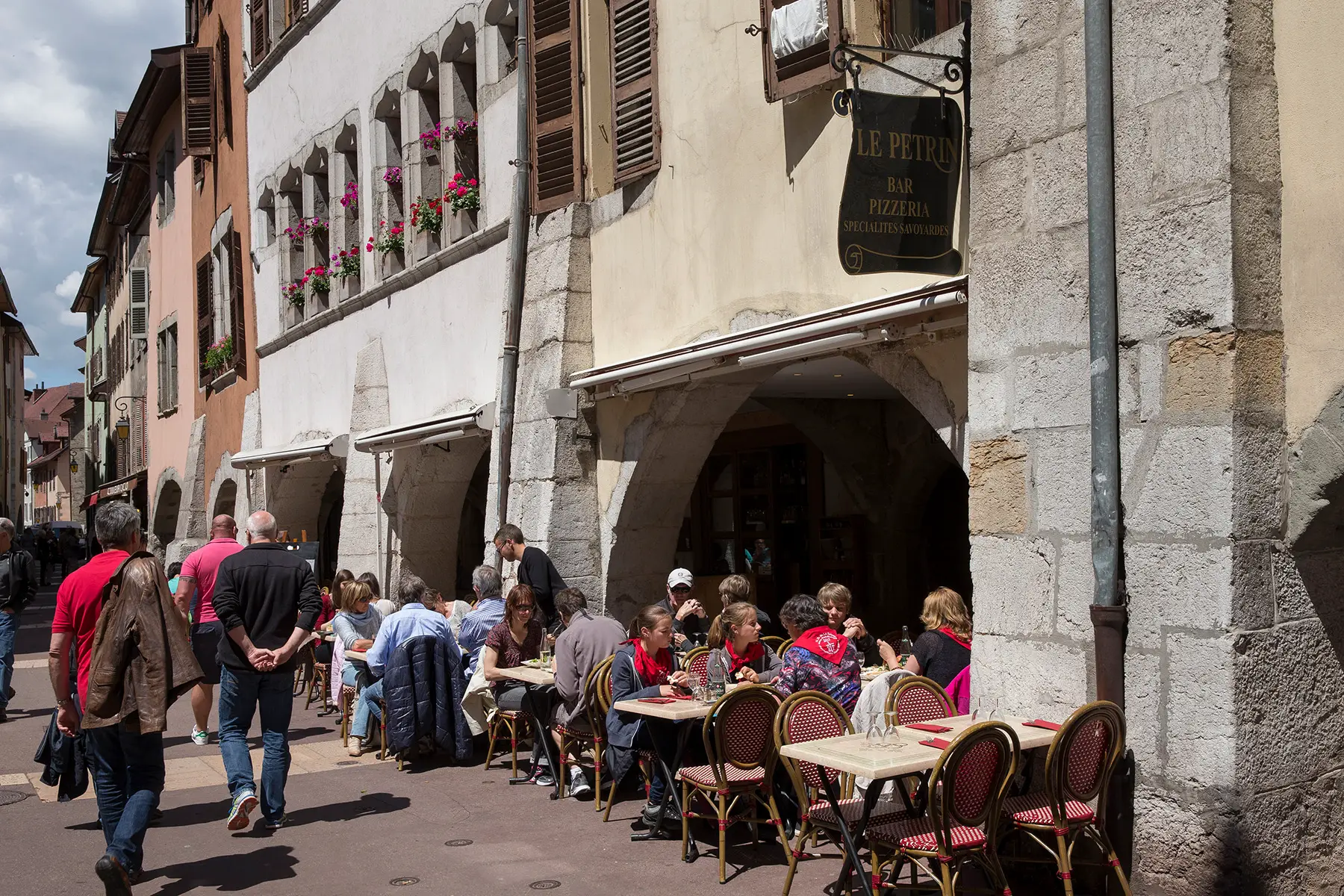
Indeed, in France, you’ll find baguettes on most breakfast, lunch, and dining tables; not to mention restaurant baskets. In fact, the standard baguette itself comes in three slightly different forms, while bakeries also sell related breads such as the flute, bâtard, and ficelle.
Wine remains a major part of French drinking culture: according to the French Monitoring Centre for Drugs and Drug Addiction (OFDT), wine accounted for more than half of alcoholic drinks sold in France in 2024. Cheese is another staple, with consumption averaging 26 kilos per person in 2024, according to the French Ministry of Agriculture. And with around 1,200 varieties to explore, from brie and camembert to Comté or Brocciu, there is plenty to try.
2. Expect to eat dinner a little later
Dinner in France is often later than newcomers may be used to. The latest published INSEE time-use data, collected in 2009–2010, found that the evening meal peaked at around 20:15, with later dinners becoming more common. INSEE is collecting a new time-use survey in 2025–2026, so there is not yet a newer official benchmark. In practice, dinner times vary by household, age, work schedule, and region.

If you are also trying to combat jet lag, you may already be adjusting your daily routine to local time. Treat 20:00 as a useful cultural reference point rather than a hard rule, and follow the rhythm that works for your household.
3. Don’t expect to dine at fancy restaurants every night
Contrary to popular belief, not all French people can be found wining and dining at fancy restaurants every night of the week. But the idea that restaurant reservations are usually only made for special occasions is too sweeping. Eating away from home is a major part of the French food market: FranceAgriMer estimates around 7.4 billion out-of-home foodservice occasions in 2024. Whether you need to book depends on the venue, location, day, and time. And with so many mouthwatering French recipes to whip up at home, cooking for yourself is always an option too.
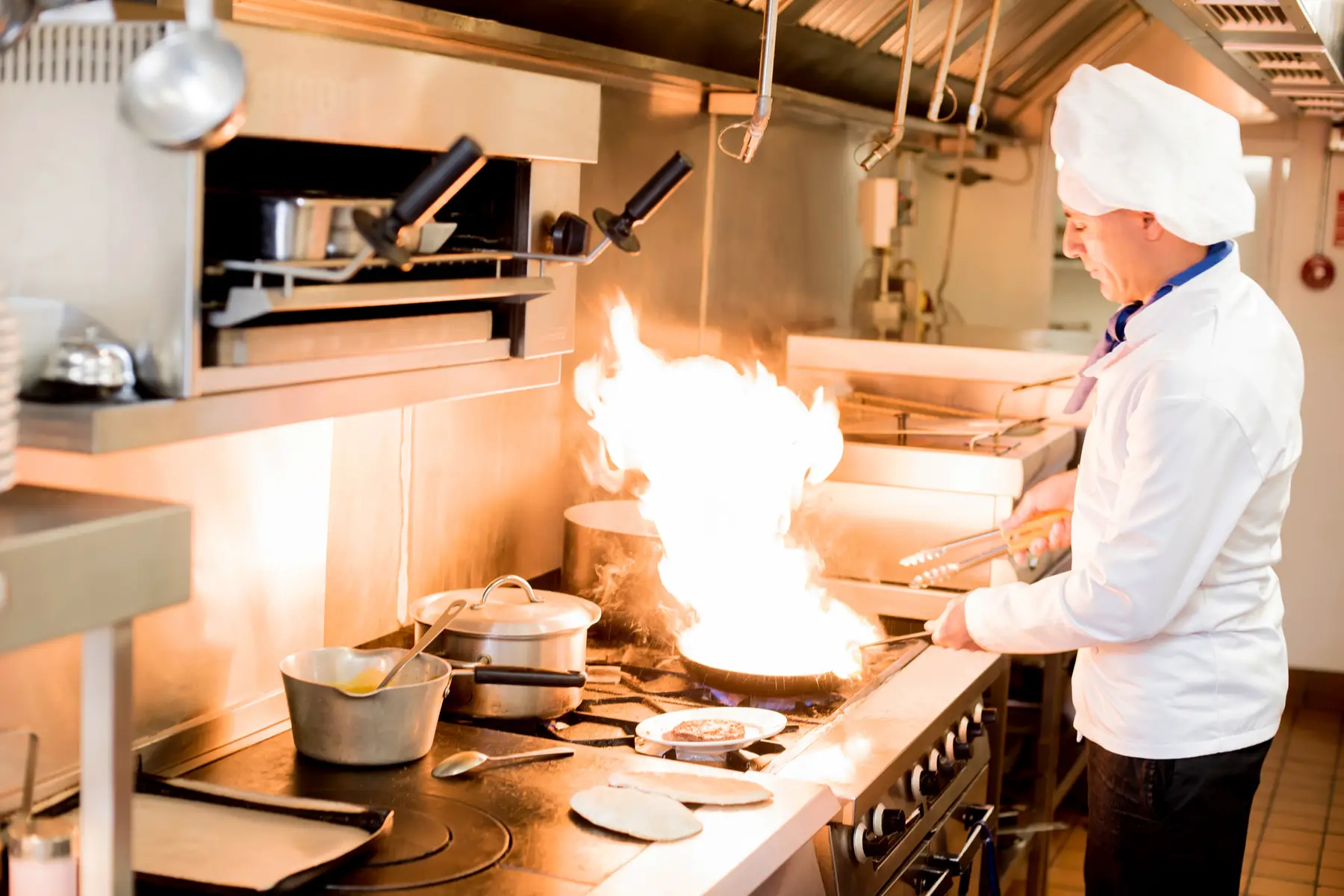
That said, if you happen to find yourself in Lyon, then that’s another story. After all, it would be a crime to miss out on all the exquisite haute-cuisine on offer in the gastronomic capital of the world. Cooking is a major part of French food culture, and French cuisine is known for techniques such as braising, flambéing, and poaching. So why not take a leaf out of the French cookbook and whip up some top-notch meals at home? You never know, you could be the next Raymond Blanc!
4. Get ready to up your grocery shopping game
It is a truth universally acknowledged that the French are mad about food. So when it comes to shopping at your nearest French supermarket or grocery store or your local Auchan, be prepared to enter a world of sumptuous delights. French supermarkets come in all shapes and sizes. Furthermore, they sell an overwhelming selection of fantastic food and drink to try, buy, and fall in love with. After all, they don’t call it a hypermarché for nothing.

Put it this way, when you live in France, supermarket shopping will never be a chore again. But to navigate the aisles with ease – and pleasure – it pays to learn some basic French terms and phrases. Fortunately, there are plenty of online resources, such as French for Dummies and Talk in French to get you started. Of course, you could always take it one step further and sign up for some French classes. No pressure.
5. Eating on the go is less traditional—but it happens
French food culture still places plenty of value on sitting down for a meal, but saying that French people never eat on the go is too absolute. FranceAgriMer’s 2024 market data show a large fast-food sector and dynamic alternative channels such as bakeries and pâtisseries, so takeaway and quick meals are clearly part of modern food habits. On public transport, the practical rule is to avoid inconveniencing other passengers.

There is also no published RATP rule specifically banning Époisses de Bourgogne on the Paris Métro. The RATP rules instead prohibit items that are dangerous or that may inconvenience passengers because of their nature, quantity, or inadequate packaging. So the famous “banned cheese” story is better treated as a myth than as a specific legal rule. Check out these other weird French laws.
6. Expect structured meals—but snacking still happens
France still has a strong tradition of structured meals, but the idea that French people simply do not snack is too absolute. In 2024, FranceAgriMer estimated that impulse channels generated nearly €15 billion in sales of snacking products, including sandwiches, pastries, confectionery, biscuits, chips, ice cream, and soft drinks. So expect regular mealtimes alongside a very real snacking culture.

Lunch can still be an important meal in France, but it is not universally the biggest or most indulgent meal of the day. Schedules and habits vary, and quick lunches are also part of modern working life. If you want to explore the more traditional meal structure, take a look at Expatica’s guide to the French diet and mealtimes without assuming that every household follows the same routine every day.
7. Don’t assume one standard portion size
Portion sizes in France vary by meal, venue, household, and individual, so it is safer not to treat “smaller portions” as a universal French rule. A traditional multi-course meal can also make each individual serving look modest even when the overall meal is substantial.
If you prefer smaller servings, they can leave room to sample more than one course, but portion size alone does not determine whether someone will “stay trim.” For inspiration, these mouthwatering French home recipes are a good place to start. Bon appétit!


Did you find this guide helpful?