'%20id='ico-down'%20stroke='%23000000'%20stroke-width='1.5'%3e%3cg%20transform='translate(1092.250000,%20254.750000)'%3e%3cpolyline%20id='Path-2-Copy-4'%20transform='translate(5.500000,%202.750000)%20scale(1,%20-1)%20rotate(-180.000000)%20translate(-5.500000,%20-2.750000)%20'%20points='0%200%205.5%205.5%2011%200'%3e%3c/polyline%3e%3c/g%3e%3c/g%3e%3c/g%3e%3c/svg%3e)



'%20fill='%23000000'%3e%3cg%20id='icons'%20transform='translate(56.000000,%20160.000000)'%3e%3cpath%20d='M144,7339%20L140,7339%20L140,7332.001%20C140,7330.081%20139.153,7329.01%20137.634,7329.01%20C135.981,7329.01%20135,7330.126%20135,7332.001%20L135,7339%20L131,7339%20L131,7326%20L135,7326%20L135,7327.462%20C135,7327.462%20136.255,7325.26%20139.083,7325.26%20C141.912,7325.26%20144,7326.986%20144,7330.558%20L144,7339%20L144,7339%20Z%20M126.442,7323.921%20C125.093,7323.921%20124,7322.819%20124,7321.46%20C124,7320.102%20125.093,7319%20126.442,7319%20C127.79,7319%20128.883,7320.102%20128.883,7321.46%20C128.884,7322.819%20127.79,7323.921%20126.442,7323.921%20L126.442,7323.921%20Z%20M124,7339%20L129,7339%20L129,7326%20L124,7326%20L124,7339%20Z'%20id='linkedin-[%23161]'%3e%3c/path%3e%3c/g%3e%3c/g%3e%3c/g%3e%3c/svg%3e)
'%20fill='%23000000'%3e%3cg%20id='icons'%20transform='translate(56.000000,%20160.000000)'%3e%3cpath%20d='M335.821282,7259%20L335.821282,7250%20L338.553693,7250%20L339,7246%20L335.821282,7246%20L335.821282,7244.052%20C335.821282,7243.022%20335.847593,7242%20337.286884,7242%20L338.744689,7242%20L338.744689,7239.14%20C338.744689,7239.097%20337.492497,7239%20336.225687,7239%20C333.580004,7239%20331.923407,7240.657%20331.923407,7243.7%20L331.923407,7246%20L329,7246%20L329,7250%20L331.923407,7250%20L331.923407,7259%20L335.821282,7259%20Z'%20id='facebook-[%23176]'%3e%3c/path%3e%3c/g%3e%3c/g%3e%3c/g%3e%3c/svg%3e)

If you live in Germany and earn rent from a flat or house in Slovenia, you need to know where that income is taxed first under the Slovenia-Germany double tax treaty. You also need to know how Germany should relieve double taxation when you file at home.
For Germany-based expats, the difficult part is often working out what the treaty means in practice, from tax residence and treaty residence to German reporting, proof of tax paid, and the records your Finanzamt (local tax office) may ask for. This guide looks at who usually taxes the rent first, what to keep on file, and when to ask a Steuerberater (tax advisor) for help.
Table of contents
- Key takeaways
- Who the treaty applies to and why residency matters
- Which country taxes Slovenian rental income first?
- How Germany should relieve double taxation
- What expenses, filings, and records should you prepare?
- Common pitfalls for expats with Slovenian property income
- Managing rent payments between Slovenia and Germany
- Useful resources
This is a general guide based on official treaty and tax authority sources checked on 12 August 2026. It focuses only on the treaty path for Slovenian rental income and is not personalised tax, legal, or investment advice.
Key takeaways
- Primary taxing right: Slovenia usually has the primary right to tax rent from property located there.
- German tax obligations: If you are a tax resident in Germany, your German tax return and treaty position still matter.
- Double taxation relief: Germany generally uses an exemption method for this income while maintaining its own administrative filing rules.
- Essential records: Maintain clear files including the Slovenian tax assessment, proof of tax paid, rental contracts, expense receipts, and currency conversion notes.
- Professional advice: Seek expert guidance for complex situations involving dual residence, joint ownership, losses, mixed usage, or conflicting tax authority treatment.

Who the treaty applies to and why residency matters
The treaty starts with residence, not with the building itself. This guide is aimed at people connected to Germany who receive income from real property in Slovenia.
When you are tax resident in Germany, Slovenia, or both
If you are a tax resident in Germany, foreign rental income can still affect your German tax return even where Slovenia taxes it first. If Slovenia also treats you as resident, or if you moved during the year, the filing position becomes more complex.
How the tie-breaker works if both countries claim you
If both countries claim you as resident, the tie breaker process to decide which jurisdiction can claim tax looks at:
- Your permanent home
- Your centre of vital interests
- Your habitual abode
- Your nationality
If those tests still do not settle it, the competent authorities can step in.

Which country taxes Slovenian rental income first?
This is the core treaty question for most readers. The answer usually starts with the location of the property, not the location of your day to day life.
How the treaty treats income from immovable property
The key rule is in the Germany-Slovenia treaty text. Article 6 says income from immovable property may be taxed in the state where the property is situated, and paragraph 3 makes clear that this includes income from letting the property. In plain English, rent from a Slovenian flat is usually taxed first in Slovenia because that is where the real estate is located.
What this means in practice for a German-resident landlord
If you live in Germany and rent out a flat in Ljubljana, the rent arises in Slovenia. Slovenia can tax that income first, and Germany then has to apply its own return rules and treaty relief method.
Bear in mind that paying tax in Slovenia doesn’t necessarily end the matter as declaring income in Germany may still be required.
How Germany should relieve double taxation
A double tax treaty does not mean the income disappears from German administration. It means you check the relief article and then apply current German filing rules to the income type you actually have.
Credit vs exemption: what readers need to verify
| Issue | Exemption method | Credit method | Why it matters |
|---|---|---|---|
| What it does | Germany leaves the foreign income out of the taxable base, though treaty wording can still affect the rate on other income. | Germany taxes the income and gives credit for foreign tax already paid. | The German return can look very different. |
| What to check here | German residents mainly look for exemption for this kind of income. | The same article lists specific categories where credit applies instead. | Foreign rental income is not handled like every other foreign payment. |
| Reader action | Match the income to the treaty article and current German practice. | Do not assume a treaty automatically means a tax credit. | Using the wrong method can overstate or understate tax. |
When domestic German rules still matter
Even where treaty relief is available, you may still need a German return, the right supporting forms, and consistent figures for your local tax office.
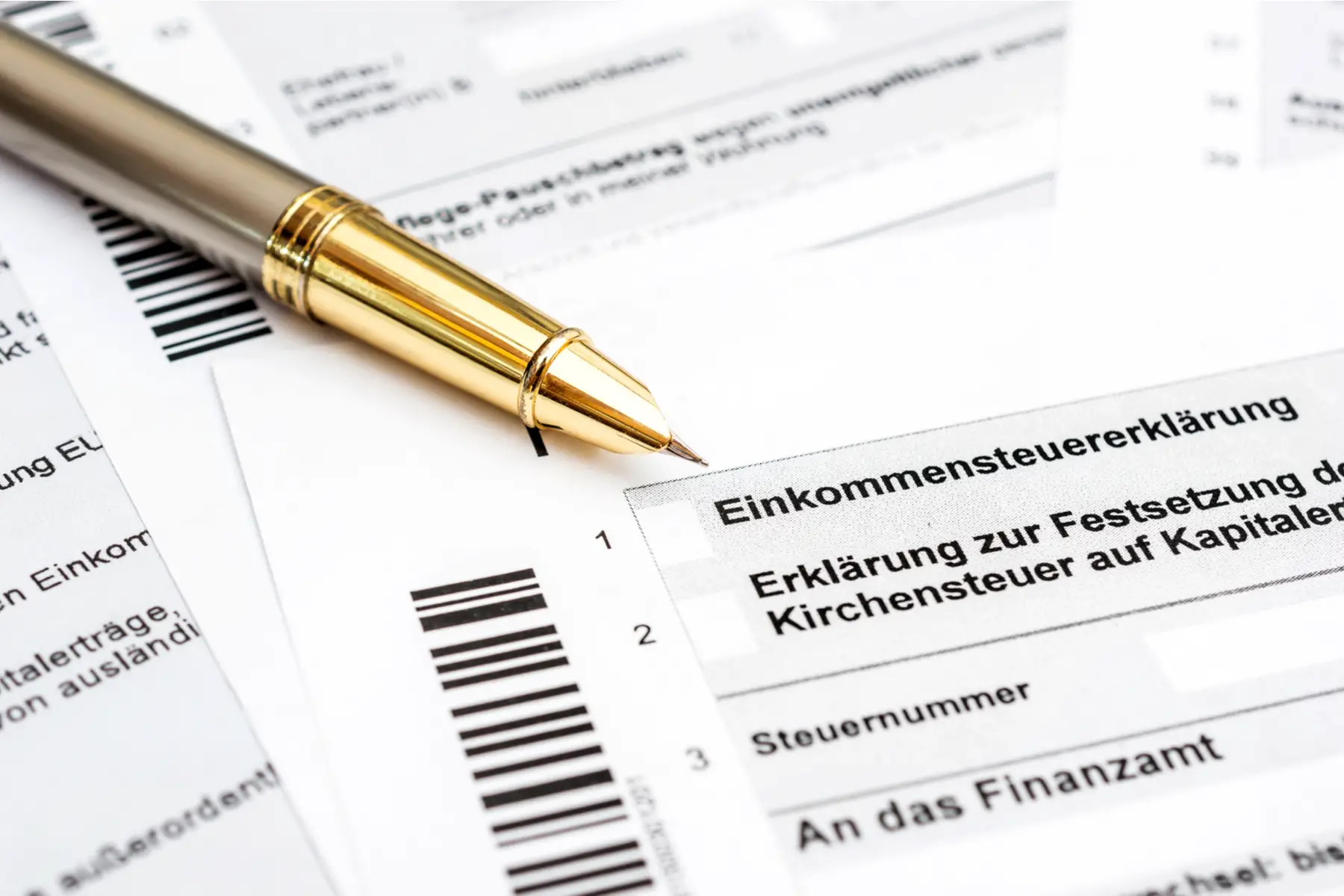
Filing mechanics, including income tax in Germany are set by the German system, and often require online filing through ELSTER.
Under the Slovenia-Germany double tax treaty, Germany generally exempts rental income for German residents but keeps the right to take exempt income into account when setting the rate on other income, so do not assume you can ignore this income when completing your German tax returns.
What expenses, filings, and records should you prepare?
This is where many compliant expats still run into problems. Clean records make it easier to support both treaty relief and any deductible rental expenses.
Documents to keep for both tax authorities
Keep a simple file with:
- rental contract and proof of ownership
- annual rent summary and related bank statements
- invoices and receipts for deductible property costs
- mortgage interest evidence, where relevant
- Slovenian tax assessment or final annual notice
- proof of tax paid in Slovenia and any refund or adjustment papers
- short English or German labels for key documents
Expatica Tip
A final Slovenian tax notice is usually more useful for a German relief claim than a folder of monthly rent receipts on its own.
If you also own property locally, do not confuse this issue with property taxes in Germany, which are a separate German topic.
Currency conversion, deadlines, and proof of tax paid
Check which exchange rate basis your German filing expects and use it consistently for income, expenses, and tax paid. Also keep the statement or assessment that shows Slovenian tax was actually charged, not just estimated.
To avoid mismatches, reconcile the yearly Slovenian total with the amount you enter in Germany before you file, and confirm Slovenia-side process points through FURS, the Financial Administration of the Republic of Slovenia, which is the national tax and customs authority.
Common pitfalls for expats with Slovenian property income
The treaty answer is often straightforward for a simple case, but the facts around it may not be. That is where overpayment, underreporting, or weak records usually start.
Joint ownership, mixed use, and negative rental income
Your tax treatment can be more complex in the case of joint ownership, mixed use, and negative rental income:
- Joint ownership: check how income and expenses are split between owners.
- Mixed use: private stays can affect what part of costs belongs to the rental activity.
- Negative rental income: a loss in Slovenia does not automatically produce the same result in Germany.
- Furnished or business style letting: extra services can change the analysis.
If any of these apply, do not assume the standard treaty reading is enough.
When to get a tax adviser or use the mutual agreement procedure
Get advice if Germany and Slovenia appear to classify the same income differently, if you moved mid-year, or if the ownership structure is not simple.
If normal filing does not resolve inconsistent taxation, the treaty allows a mutual agreement procedure, and the BZSt page on mutual agreement procedures explains the route. This is a specialist remedy, not a quick or routine step. Get professional support if you need to pursue your own tax mattress this way.
Managing rent payments between Slovenia and Germany
The tax issue and the money movement issue are different, but they meet in your records. If rent comes in, repairs are paid out, and tax is settled across two countries, clear separation can save time at year end.

Major local banks such as Deutsche Bank, Commerzbank, and Sparkasse may work well if everything stays in euros and you only need standard transfers. If you want clearer transfer references, easier exports, or a simpler way to separate property money from day to day spending, a cross-border service or multi-currency account may help.
Wise can be useful here for receiving rent, holding euros, paying Slovenian property costs, and keeping transaction histories clear. Wise has multi-currency accounts for expats and people living internationally which use the mid-market exchange rate for currency exchange, and have low, transparent fees you can see before you transact. You can receive EUR and other currencies to your account with local account information, and send money conveniently locally and internationally, with speedy, secure transfers.

FAQ
FAQ
Do I pay tax in Germany on rental income from Slovenia? 
Often, you still need to deal with the income in Germany even though Slovenia usually has the primary taxing right. The key point is to separate source-country taxation from German reporting and relief.
How does Germany stop double taxation on Slovenian rental income?
Germany should apply relief under the double taxation treaty together with current domestic filing rules. For this treaty, the German side generally points to exemption for this kind of income, but you still need proper proof of tax paid and a correctly prepared German return.
Do I need to declare Slovenian rental income in Germany if I already paid tax in Slovenia?
Yes, in many cases you still need to report or at least account for it in Germany if you are a tax resident there. Paying Slovenian tax first does not automatically remove German filing obligations.
What records should I keep for foreign rental income in Germany?
Keep the annual Slovenian tax notice, proof of tax paid, rental contracts, and expense records. A simple folder with clear English or German labels can make year end filing much easier.
What if I am a tax resident in both Germany and Slovenia?
You may need the treaty tie-breaker to work out your treaty residence. In that situation, professional advice is often sensible before you assume the filing path is straightforward.
Useful resources
Checked 12th August 2026
- German Federal Ministry of Finance treaty text – Official source for the Germany-Slovenia treaty
- Bundeszentralamt für Steuern – German federal tax office for international tax rules
- ELSTER – German online portal for tax filings
- European Commission tax treaty directory – Database for EU double taxation conventions
- Financial Administration of the Republic of Slovenia – Slovenian authority guidance for non-resident taxation