
'%20id='ico-down'%20stroke='%23000000'%20stroke-width='1.5'%3e%3cg%20transform='translate(1092.250000,%20254.750000)'%3e%3cpolyline%20id='Path-2-Copy-4'%20transform='translate(5.500000,%202.750000)%20scale(1,%20-1)%20rotate(-180.000000)%20translate(-5.500000,%20-2.750000)%20'%20points='0%200%205.5%205.5%2011%200'%3e%3c/polyline%3e%3c/g%3e%3c/g%3e%3c/g%3e%3c/svg%3e)


Finance
Money Management
Getting a car loan in Germany: a guide for expats
Navigate Germany car loans with this practical expat guide covering eligibility, SCHUFA checks, costs, and more.


Buying a car can make life in Germany much easier, especially if you live outside a major city or regularly travel for work. However, paying for one upfront is not always practical. Car loans and dealer finance can help spread the cost, but expats may face additional requirements around residency, income, and SCHUFA credit history.
This guide explains how a car loan in Germany works, who can apply, what documents you need, and how to compare your options before signing an agreement.
Key takeaways
- Eligibility: Check income, employment, residence permit, and budget before applying.
- Documents: Prepare ID, proof of address, Meldebescheinigung, and recent payslips.
- Loan types: Compare bank loans, dealer finance, and balloon options by total cost, not just monthly payments.
- SCHUFA: Use a Konditionsanfrage to compare terms without initiating a formal credit application.
- After approval: Secure motor insurance (obtain an eVB number) and complete vehicle registration.
How car loans work in Germany
In Germany, a car loan is usually called an Autokredit. It is a loan intended specifically for buying a vehicle, although the exact structure varies between lenders.
Some car loans use the vehicle as security. In these cases, the lender may require the Zulassungsbescheinigung Teil II (vehicle registration certificate Part II) to be submitted or held as part of the agreement until the loan is repaid. Other car loans work more like standard instalment loans, so always check the lender’s terms.
German banks, local Sparkassen, specialist lenders, and car dealerships can all offer ways to finance a vehicle. Interest rates, repayment structures, deposits, and security requirements vary, so compare the full agreement rather than choosing on the lender or dealer name alone.
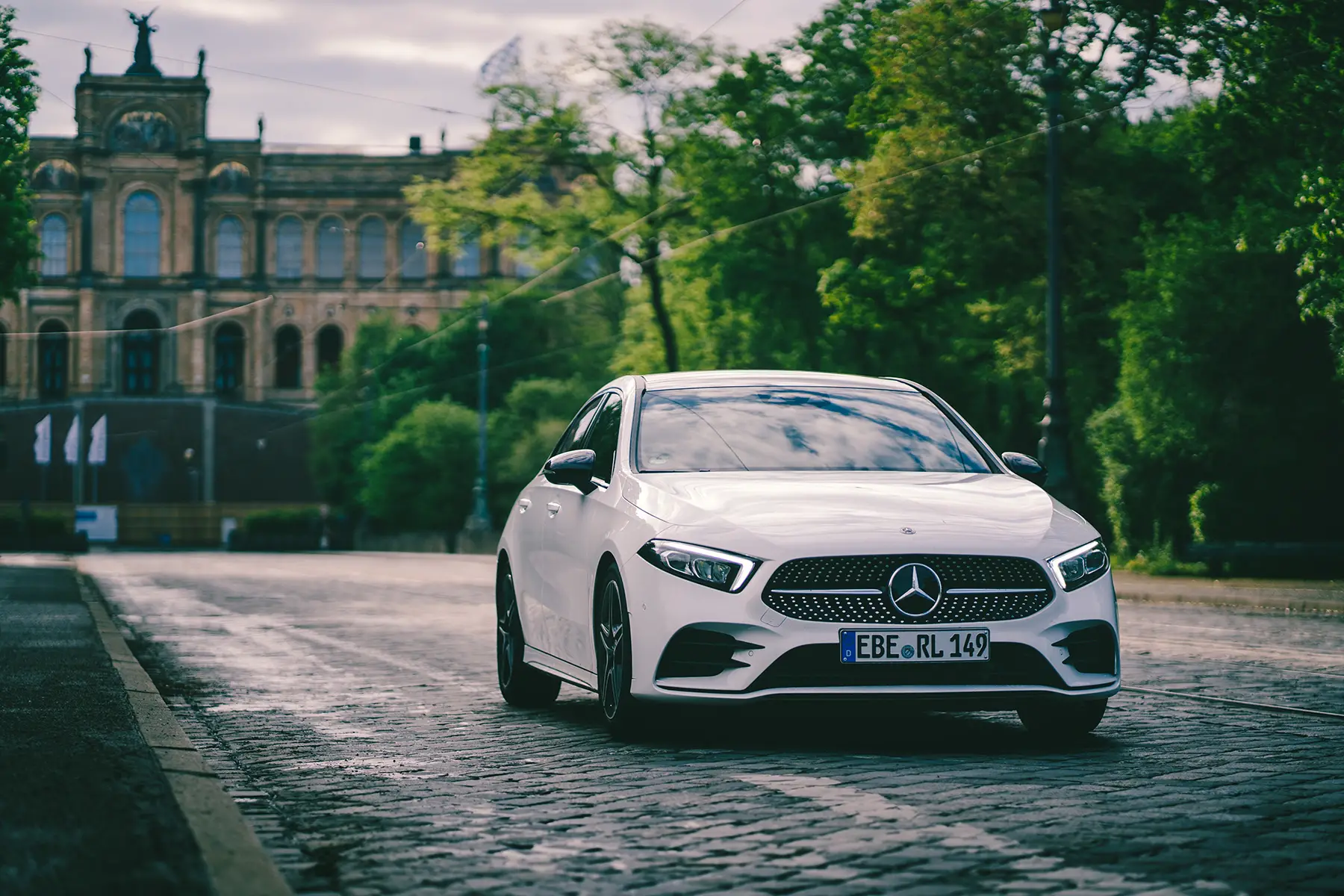
Car loan vs dealer finance vs personal loan
| Type | Purpose | Flexibility | Vehicle title | Best for |
|---|---|---|---|---|
| Bank car loan | Specifically for buying a vehicle | Medium | Often held by lender as security | Buyers who want a standard car loan in Germany |
| Dealer finance | Arranged through the seller | Lower to medium | Often tied into the finance agreement | Buyers who want convenience at the point of sale |
| Personal loan | Money can often be used more freely | Higher | Usually stays with you | Private seller purchases or buyers who want greater flexibility |
What balloon finance and 0% offers really mean
Balloon finance (Ballonfinanzierung) keeps monthly payments lower by leaving a large final instalment, called the balloon or Schlussrate or Ballonrate, until the end.
This reduces your monthly costs during the agreement, but you need a plan for the final payment. Depending on the agreement, you may pay it from your savings, refinance the remaining amount, or sell the car to cover it.
A 0% finance is not automatically the cheapest option overall. Compare the full purchase price, deposit, fees, optional or linked products such as insurance, and any final payment. Focus on the total cost of buying and financing the car rather than the advertised monthly payment alone.

Can expats get a car loan in Germany?
Car finance for expats in Germany is available for many, but approval depends on the lender and your individual circumstances. Lenders may consider factors such as your income, employment situation, residence status, existing financial commitments, and creditworthiness.
For recent arrivals, the main challenge is often showing financial stability rather than nationality itself. If you have only recently started your job, are on a fixed term contract, or are still in Probezeit (probationary period), the lender may view you as higher risk even if your salary is good.

Writer
Gary Buswell
Insider Tip
If you are still in Probezeit, check the lender’s eligibility requirements before applying. Depending on the lender and your circumstances, waiting until your probation period ends may improve your borrowing options.
How residence permits, income, and SCHUFA affect approval
Your residence status can affect your options. For example, some lenders may take the remaining validity of a temporary residence permit into account when deciding whether to lend and for how long. Requirements vary, so check the lender’s eligibility rules before making a full application.
SCHUFA is Germany’s main private credit bureau, and lenders use SCHUFA information and scores as part of their assessment of your creditworthiness.
Before you apply for car credit in Germany, it’s worth checking the information held about you and requesting corrections if you find inaccurate data.
Having limited credit information in Germany is not the same as having negative SCHUFA entries. If you have recently arrived, there may simply be less German financial data available about you.
Common rejection reasons and how to improve your chances
- Short employment history or probation: Some lenders may be more cautious, so consider waiting until your employment is more established or applying for a smaller loan.
- Limited disposable income: A high level of existing financial commitments can make approval more difficult. A cheaper car or larger deposit can reduce the amount you need to borrow.
- Missing documents: Prepare the identification, residence, address, and income documents required by your chosen lender before applying.
- Multiple formal credit applications: Compare offers first and ask whether the lender will make a Konditionsanfrage(request for loan terms) rather than a formal Kreditanfrage when you are initially shopping around.
What documents and costs to prepare before you apply
Start with a simple checklist. Requirements vary by lender but you may need to provide:
- ID or passport
- Residence permit, if applicable
- Meldebescheinigung (registration certificate)
- Recent payslips and employment contract
- Bank details, often from your current account
- Vehicle and seller details, once you have chosen the car
- Purchase agreement or invoice, if required
Do not budget for the loan alone. You also need to think about your:
- Deposit
- Insurance
- Registration fees
- Vehicle tax
- Fuel
- Servicing
- Tyres
- Repairs
These costs are particularly important when buying a used car, where age, mileage, condition, and maintenance history can affect your overall budget.
If you don’t have a German bank account, or your deposit or savings are still abroad, an international transfer service or multi-currency account such as Wise can make it easier to convert funds into euros. Remember to compare options before transferring money from and to Germany, especially when moving large sums.
Simplify your car deposit with Wise
If you need to move funds from abroad for your car deposit, bank transfers can be expensive due to intransparent fees and poor exchange rates. With a Wise multi-currency account, you can hold and convert funds at the real mid-market rate and make local payments in euros quickly, ensuring more of your money goes toward your new vehicle.

How to compare car finance offers safely
If you are not sure whether two offers are truly different, start with five checks:
- Effective annual interest rate
- Total repayable amount
- Loan term
- Additional costs (e.g., early repayment)
- Whether the lender keeps the vehicle title (in other words, the vehicle is used as security).
Remember, a lower monthly payment can still cost more overall if the loan runs for a much longer period.
Here are the steps to follow:
Check the standard pre-contract information and find the effective annual interest rate and total amount payable.
Compare any deposit, optional insurance or other linked products, and the conditions for early repayment.
Confirm whether you are simply requesting loan terms or making a formal application, and ask whether the lender will make a Konditionsanfrage rather than a formal Kreditanfrage with SCHUFA.
| What to compare | Why it matters | How to verify |
|---|---|---|
| Effective annual interest rate | Provides a standardized measure for comparing the cost of borrowing | Check the pre-contract information and credit agreement |
| Total repayable amount | Reveals what you pay across the full term | Compare this figure side by side, not just the monthly instalment |
| Term length | Longer terms reduce monthly payments but can raise total cost | Compare different repayment periods before deciding |
| Early repayment rules | Early repayment fees may apply | Check the early repayment section of the agreement |
| Collateral and title | Some lenders keep Zulassungsbescheinigung Teil II as security | Ask who holds this document during the loan |
A common mistake is to compare only the monthly payment. A longer term can make the loan more affordable each month, but it can also increase the overall cost and leave you repaying the car for longer.
What to check in the contract before signing
Before you sign, you should check:
- The withdrawal period and your withdrawal rights
- Early repayment conditions
- Optional add ons
- Restrictions connected with the ownership of the vehicle title, which may affect selling the car or moving it abroad
German consumer credit agreements generally come with a 14-day statutory withdrawal period. You can also generally repay a consumer loan early, although the lender may be entitled to limited compensation in some circumstances.
For general consumer loans, this is normally capped at 1% of the amount repaid early, falling to 0.5% when no more than one year remains. Check the exact conditions in your agreement.

Mistakes that can make car finance more expensive
- Stretching the term simply to reach a more comfortable monthly payment.
- Ignoring the total repayable amount.
- Accepting bundled insurance or other products without checking whether you need them or what they cost.
- Focusing on an advertised rate without checking additional fees, deposit, or the final balloon payment.
- Assuming dealer finance is automatically the cheapest option without comparing the vehicle price and total financing cost with other offers.
What happens after approval?
Once your loan receives final approval, the money is paid out according to the lender’s process and you can complete the vehicle purchase. You will also need to arrange insurance and complete the required registration before driving the car on public roads.
The exact process varies between lenders and dealers. If the car is being used as security for the loan, you may also have instructions about submitting the Zulassungsbescheinigung Teil II after purchase. Check the lender’s requirements before collecting the vehicle.
Insurance, eVB, and registration
To register a car in Germany, you need motor liability insurance (Kfz-Haftpflichtversicherung). Your insurer provides an eVB number, short for elektronische Versicherungsbestätigung, which confirms your insurance electronically for the registration process.
You will also need the required identification and vehicle documents, and normally a SEPA mandate for collecting vehicle tax. The exact registration requirements can vary according to the vehicle and your circumstances, so check with your local Kfz-Zulassungsstelle before your appointment.
Arrange your insurance and eVB number before your registration appointment. Without the required proof of insurance, you cannot complete the normal registration process.
If your finance agreement requires broader cover, make sure the policy matches before collection day. Assurland Car Insurance can be a practical option once you are ready to compare policies.
Make sure your driving licence is also valid for driving in Germany.
The vehicle documents, used cars, and selling later
The Zulassungsbescheinigung Teil II is the registration document that replaced the old Fahrzeugbrief. It is important when registering, financing, and selling a vehicle, but it is not itself proof of legal ownership.
Some car lenders require the Zulassungsbescheinigung Teil II to be held as part of the security arrangement while the loan is outstanding. If this applies to your finance agreement, selling or exporting the vehicle before repaying the loan may require you to make arrangements with the lender first.
When buying a used car, consider its age, mileage, condition, service history, and likely resale value alongside the cost of finance. Individual lenders may also have their own rules about the vehicles they will finance.
If you expect to sell the car within a few years, check the early repayment conditions and how any security over the vehicle will be released.
This guide is for general information only, not financial advice. Terms, fees, insurance conditions, and residency requirements vary by lender and situation, so check the current details with the lender and official sources before you apply.
FAQ
Frequently asked questions about car loans in Germany
Can foreigners get a car loan in Germany? 
Yes, many foreigners can get a car loan in Germany, subject to the lender’s eligibility and credit checks. Lenders may consider your income, employment, German residence, residence or work permit where applicable, and credit history. Recent arrivals may have limited SCHUFA information, but this is not the same as having negative entries.
Is dealer finance better than a bank car loan in Germany?
Not necessarily. Dealer finance can be convenient because you arrange the car and financing together, while a bank loan lets you compare borrowing costs separately from the vehicle price. Compare the effective annual interest rate, total amount payable, term, deposit, and any final balloon payment before deciding.
What documents do I need for a car loan in Germany?
Requirements vary by lender, but you may need ID, proof of address or residence, proof of income, employment details, and information about the car. Self employed applicants may also need financial statements, tax or business records, bank statements, or other evidence of income.
Does applying for car finance affect my SCHUFA?
It can, depending on the type of check. Ask whether the lender is making a Konditionsanfrage (request for loan terms) or a formal Kreditanfrage, and check how the SCHUFA enquiry will be handled before submitting multiple applications.
Useful resources
(checked 10th August 2026)
- ADAC guide to vehicle registration – Explains the official process for registering a vehicle in Germany.
- German Civil Code on early repayment compensation – Details rules on fees lenders can charge for early loan repayment.
- German Civil Code on withdrawal rights for consumer loans – Outlines your statutory right to withdraw from credit agreements.
- Santander Germany Kfz credit FAQ – Provides answers to common questions about auto loans.


Did you find this guide helpful?