
'%20id='ico-down'%20stroke='%23000000'%20stroke-width='1.5'%3e%3cg%20transform='translate(1092.250000,%20254.750000)'%3e%3cpolyline%20id='Path-2-Copy-4'%20transform='translate(5.500000,%202.750000)%20scale(1,%20-1)%20rotate(-180.000000)%20translate(-5.500000,%20-2.750000)%20'%20points='0%200%205.5%205.5%2011%200'%3e%3c/polyline%3e%3c/g%3e%3c/g%3e%3c/g%3e%3c/svg%3e)


Education
Language Learning
Learn Arabic in the UAE
Looking to learn Arabic in the UAE? Read on for the ins and outs of language schools, courses, and online resources.


Depending on your native language, Arabic might not be the most straightforward second language to learn. Fortunately, because English is so widely used in the UAE, you can learn Arabic at your own pace, with little pressure.
Though it can be intimidating to learn a new language as an adult, especially one with a new alphabet, there are many ways to get started. For example, you could join a class, download an app, or participate in a conversation group. This article will cover the following:
Why learn the Arabic language?
Arabic is the official language of the UAE and is spoken by around 420 million people globally. In fact, it is the official language in 23 countries. Although there are no official numbers on how many expats learn Arabic, given the prevalence of English – and the fact that it takes 2,200 hours of study for a native English speaker to become fluent – the number is probably relatively low.
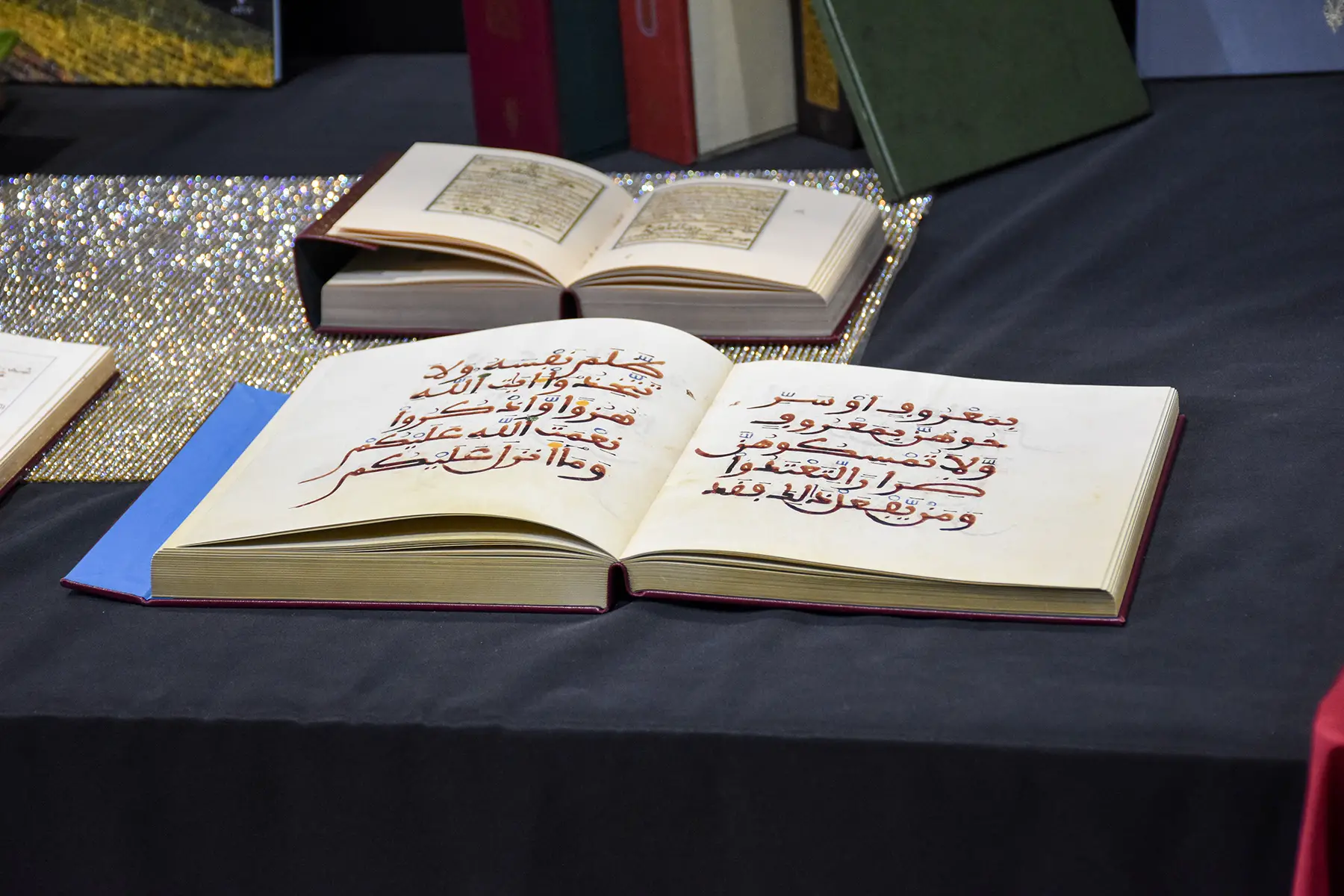
However, although most people living in the Emirates do not speak Arabic as their first language, there are still some good reasons to learn it. Firstly, learning a few phrases will help you understand Emirati culture better, which will allow for a smoother transition. Furthermore, it can open up career options that are only available to Arabic speakers. Finally, keep in mind that the farther you travel from Dubai and Abu Dhabi, the less likely you are to find English speakers. Therefore, if you plan to travel to other Emirates, you might want to learn some Arabic pleasantries.
Arabic dialects
Although Arabic is spoken by millions of people, not everyone speaks the same dialect. There are three main forms of the language: Classical (or Qur’anic) Arabic, Modern Standard Arabic, and Colloquial Arabic. Qur’anic Arabic is the form of the language used during prayer and in the Qur’an. Modern Standard Arabic (also called fus-ha) is used in official government correspondence, newspapers, and other formal settings. Finally, Colloquial Arabic is a term that encompasses many dialects. These are used in everyday language and vary significantly by country and region. For example, the Arabic spoken in the UAE sounds very different from that spoken in Morocco.

The Arabic of the UAE, Bahrain, Qatar, and parts of Oman, Saudi Arabia, Kuwait, and Iran, is called Gulf (or khaleeji) Arabic and has particularities unique to the region. Emirati Arabic is very similar to Arabic in other parts of the Gulf, but it has specific vocabulary and grammatical quirks that set it apart.
Learning Arabic before moving to the UAE
Fortunately, you can always decide to start learning some basic Arabic before you board the plane. Studying Arabic before arrival may be a good idea, as it gives you time to learn the new language in a familiar environment. It can be challenging to fit in language study at the same time as settling into a new culture and employment. Plus, having basic Arabic will also allow you to greet people and recognize common words. You can also set your own learning pace through self-instruction, in-class learning, or online. And finally, practicing Arabic creates excitement and anticipation high for your big move.

Here are some ideas for how to learn Arabic before arrival:
- Check out your local university – Arabic is a very popular language to learn and many universities offer Arabic courses.
- Visit Arab Academy – For those interested in online learning, Arab Academy is one of the oldest online Arabic courses. Its lessons range from beginner to advanced.
- Try out Arabic Online – If you’d like to learn some Arabic without breaking the bank, check out Arabic Online, a language-learning resource that teaches casual learners the basics of speaking, listening, writing, and reading.
- Have fun with uTalk – If classroom learning isn’t your thing, try out uTalk, a games-based learning system that gets you speaking Arabic right away.
- Contact your local mosque – Mosques often bring together people who speak Arabic, so many offer introductory classes. Though it may be Qur’anic Arabic, it can help you to begin to pick up the structure, grammar, and alphabet.
Learning Arabic in the UAE
Learning a language is always easier through immersion. That means taking what you learn in the classroom and applying it in your everyday life. Whether that’s something urgent, like looking for a restroom, or just getting to know someone new, learning a language upon arrival is extremely useful.
Language schools in the UAE
If you’d like to enroll in an official language school in the UAE, you have some great options. Here are some good places to start:
- Eton Institute: With Arabic classes in Abu Dhabi, Dubai, and online, the Eton Institute is a well-regarded place to learn Arabic. Classes are divided into skill levels, and you begin by taking a placement test.
- Berlitz: Berlitz offers group and individual Arabic instruction in various locations in Abu Dhabi and Dubai. There are classes for a range of skill levels, and new students can take trial lessons to see if they are a good fit.
- The Mother Tongue: Offering classes in Abu Dhabi and online, The Mother Tongue is a strong choice for those who are serious about their study. They have classes for various skill levels and even offer an intensive summer program.

Government Arabic lessons in the UAE
The UAE is very proud of its language and culture. So, in recent years, the Emirati government and language-learning centers have been making it easier for expats to learn Arabic.

For example:
- Arabic Language Academy in Sharjah: This center seeks to increase Arabic language access to non-Arabic speakers. One of the ways they make learning the language more accessible is through free Arabic language courses several times a year.
- Arabic Language Center: Located in Abu Dhabi, the ALC offers a digital and physical library, book fairs, and online tutorials to practice beginner’s Arabic. Access to most events is free.
Learning Arabic for free in the UAE
Fortunately, learning the basics of Arabic doesn’t have to cost you an arm and a leg. As well as the free courses at the Arabic Language Academy in Sharjah, there are a few resources you can take advantage of:
- Headway Institute: The Headway Institute offers a free introductory class for learners based in Dubai. Though you do have to pay for subsequent classes, this is a good option to get started.
- The Language Club (TLC): TLC offers free, volunteer-based Arabic instruction. Classes are weekly and take place online. Classes are divided into skill levels – for example, beginners, upper beginners, intermediate, and advanced.
Learn Arabic online
Nowadays, many language schools that offer in-person classes also likely have online options. This flexibility is very convenient for expats in the UAE, where people often live for short periods. So, it’s a good idea to find a language school you’re keen on and reach out directly for online options, including costs and start dates. Some schools with online options include:
Alternatively, those who prefer studying at their own pace can check out language-learning apps.

Other handy online Arabic-learning resources
- Gulf Arabic Learner’s Dictionary: For those interested in practicing Gulf Arabic vocabulary, this dictionary app is a great learning tool.
- Language Learning with Netflix: This computer plug-in creates two sets of subtitles while you watch your Netflix show; this way, you can compare your native language and Arabic in real-time.
- MAWARIDARABIYYA: This website brings together many valuable resources for learners and teachers of Arabic; these include books, scholarship opportunities, language centers, and online learning options
Learning Arabic with a computer or smartphone app
If you study best on your own time, an app or computer software may be a good way to go. Here are some excellent options for studying Arabic:
- Instant Immersion: Instant Immersion offers a well-known Arabic-learning software; however, they also only have lessons in Modern Standard Arabic.
- Pimsleur: Pimsleur is a well-known language learning software; it’s offered in CD form, online, and in their app. Keep in mind they only offer Modern Standard Arabic, which is quite formal.
- Rocket Languages: Rocket Languages is an innovative and fun way to learn Arabic on your phone or computer. It’s got great reviews but bear in mind that their lessons teach the Egyptian Arabic dialect.
- Rosetta Stone: Rosetta Stone is an incredibly popular language study tool with a long history of success. They also offer free trials.
App options
If you’d prefer to exclusively use an app to learn Arabic, here are some good places to start:
- Drops: Drops focuses on conversational Arabic through quick, bite-sized sessions. This is great if you want a casual introduction to the language. Drops has free and paid options.
- Duolingo: One of the most popular and recognizable language apps in the world, Duolingo is a fun, free, and easy way to start learning Arabic.
- Memrise: For those who are serious about learning Arabic, Memrise offers comprehensive instruction on vocabulary, grammar, and conversational Arabic. Memrise has free and paid options.
- Tandem: Tandem focuses on language learning through community. You pair up with someone who wants to learn your language and whose language you want to learn – and you teach each other. Tandem offers free and paid options.
Learning Arabic outside of the classroom
If you would rather learn Arabic outside of a classroom, or if you’d like to supplement your study, there are plenty of ways to learn the language creatively. Firstly, consider reaching out to those around you – do you have colleagues, neighbors, or friends of friends who speak Arabic? Might they be willing to be a conversation coach, or do they know someone who would? Can you practice Arabic with your butcher or your gym instructor? Every little bit of practice helps, no matter how brief.

If you have children, organizing a playdate with their Arabic-speaking friends could help you and your little ones pick up a few words. You could also pick up a hobby such as volleyball that would organically introduce you to Arabic speakers, but bear in mind that many activities in the UAE might be segregated by gender. Are you more introverted? You might enjoy listening to local music or watching your favorite movie in Arabic with subtitles in your native language – or if you’re feeling adventurous, no subtitles at all!
Keep in mind you can also seek a learning community online or in person. For example, search Meetup.com for informal language exchange groups. Or you can search in Facebook groups such as UAE Mums, for anyone offering language tutoring.
Learning the language for children in the UAE
Although many international schools offer Arabic instruction, learning the language without real-life practice can be challenging. For expat parents, it can feel intimidating to find spaces where your child can learn Arabic, especially if most of your circle are fellow expats.
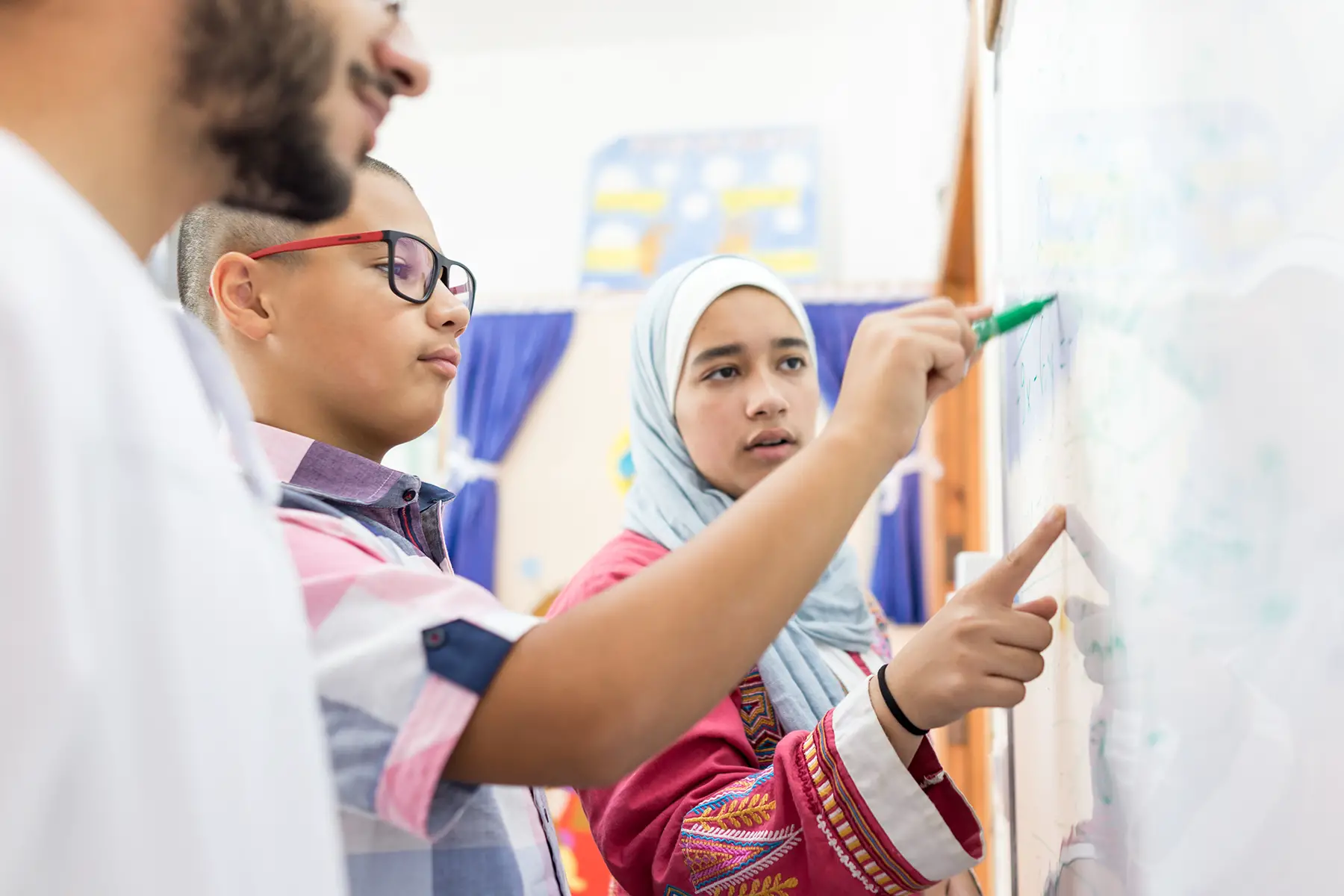
However, you can always seek more passive forms of learning, such as watching Arabic cartoons or setting up playdates with Arabic-speaking children. Alternatively, if you’d like to enroll your child in more formal Arabic study, here are a few good options:
- Berlitz: Berlitz offers courses especially for kids and teens in Abu Dhabi, Dubai, and online.
- Time Master: For those based in Abu Dhabi or Mussafah, Time Master offers Arabic classes for children.
- The Arabic Language Center: The Arabic Language Center offers Saturday and seasonal camps and private children’s classes for Dubai-based families.
Learning Arabic for business and professionals in the UAE
If your job requires you to interact with Emirati officials or other Arabic speakers, you may want to learn Arabic for a professional setting. An excellent online option to study business Arabic is Gulf Arabic. They offer comprehensive instruction, including conversation, grammar, vocabulary, and business-setting Arabic.
Official language examinations and qualifications in the UAE
Although there is no universally accepted Arabic language certificate, there are different ways to measure proficiency. In fact, different regions of the world have their own measuring sticks: in the United States, many follow the guidelines of the American Council on the Teaching of Foreign Language (ACTFL), which measures fluency across five grades; for Canada, however, the Canadian Language Benchmarks (CLB) determines levels of fluency across 12 levels. In Europe, the Common European Framework for Reference for Languages (CEFR) measures fluency across six levels. These organizations can be a good guidepost to measure your progress and set reasonable goals.
Useful resources
- Arabic Language Center, Abu Dhabi – A physical and digital library that hosts cultural and literary events, as well as online Arabic tutorials.
- MAWARIDARABIYYA – An excellent online language learning tool, offering resources for students and teachers of Arabic alike.
- Arabic Language Academy in Sharjah – An organization seeking to increase cross-cultural understanding within the UAE by introducing non-native speakers to the Arabic language and culture.



Did you find this guide helpful?