
'%20id='ico-down'%20stroke='%23000000'%20stroke-width='1.5'%3e%3cg%20transform='translate(1092.250000,%20254.750000)'%3e%3cpolyline%20id='Path-2-Copy-4'%20transform='translate(5.500000,%202.750000)%20scale(1,%20-1)%20rotate(-180.000000)%20translate(-5.500000,%20-2.750000)%20'%20points='0%200%205.5%205.5%2011%200'%3e%3c/polyline%3e%3c/g%3e%3c/g%3e%3c/g%3e%3c/svg%3e)


Education
Children's Education
Primary schools in Qatar
Find out more about primary schools in Qatar, including the education system, the types of schools, enrollment processes, and curriculums.

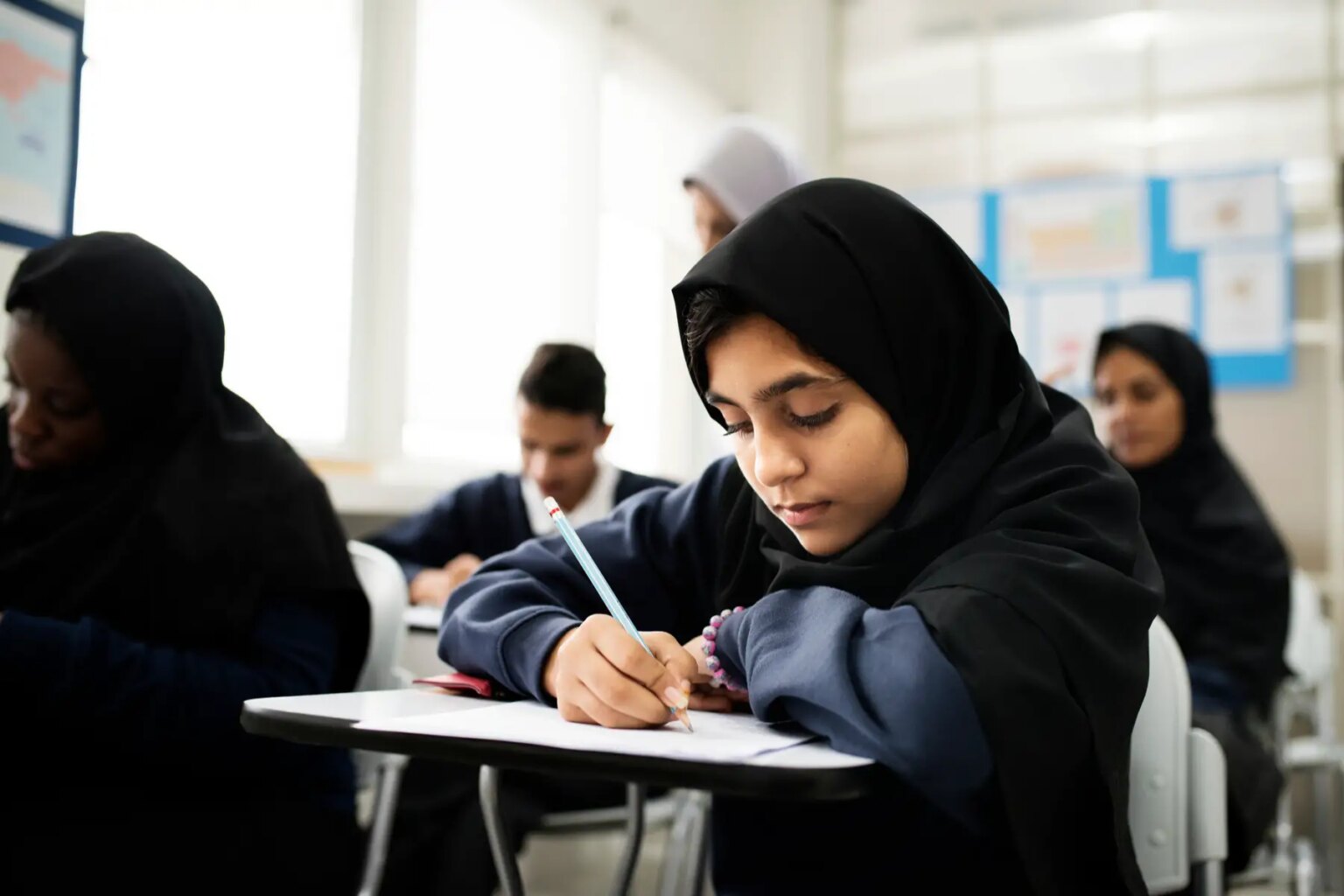
As a small country that attracts international families from all over the world, Qatar can feel familiar, foreign, and everything in between. And when it comes to choosing between the range of public, private, and international primary schools on offer, the task can feel overwhelming; especially given the varying costs, languages of instruction, and curriculums.
Luckily, this guide is here to outline the ins and outs of primary education options on the Arabian peninsula, including the following:
The primary education system in Qatar
The Ministry of Education and Higher Education (MOEHE) oversees all education in Qatar. Generally, public schools follow a K-12 system which refers to the 12 years of mandatory schooling, from ages six to 18.
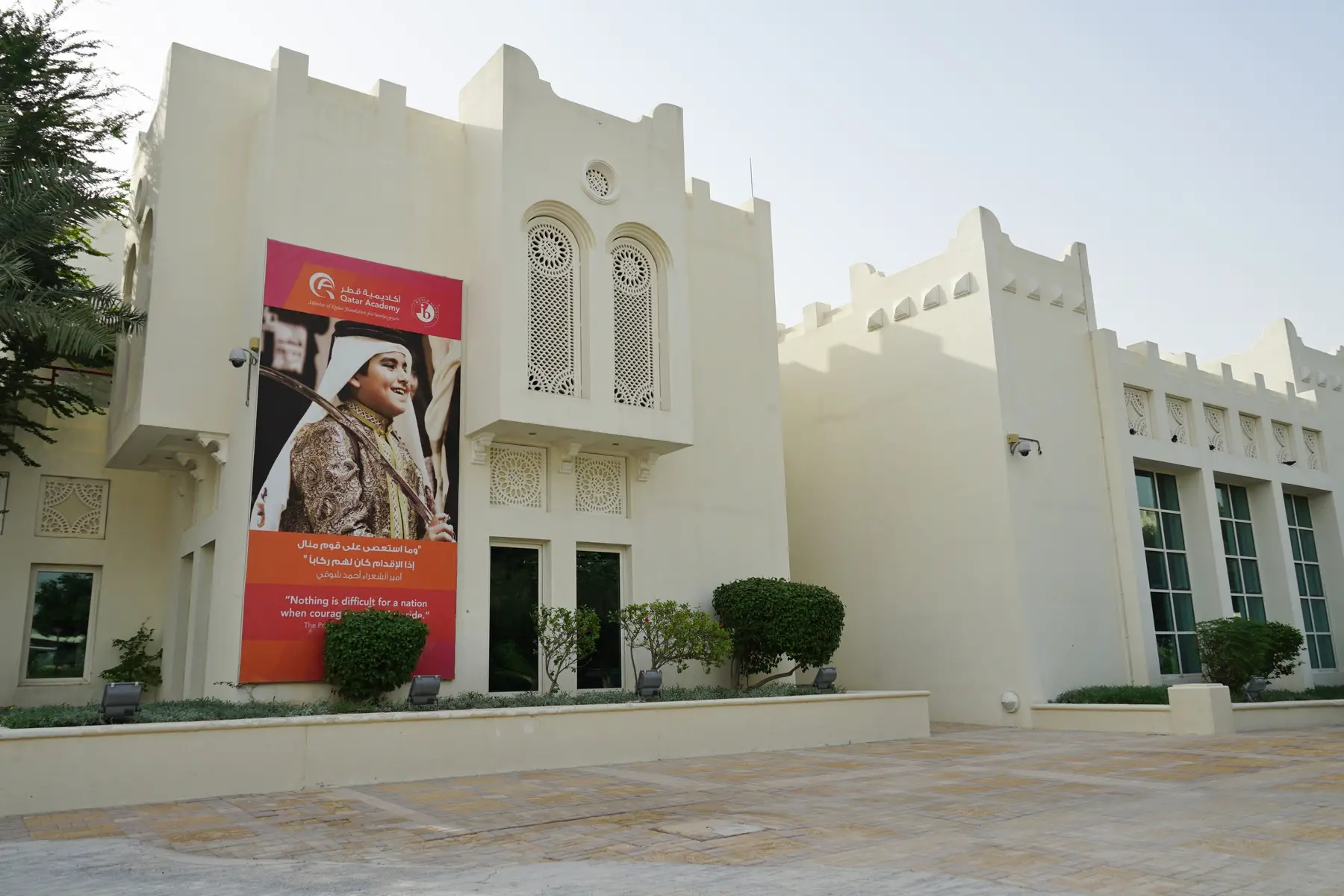
Moreover, there are four educational stages, as follows:
- Kindergarten (ages three to five)
- Primary school (ages six to 12)
- Preparatory school (ages 13 to 15)
- Secondary school (ages 16 to 18)
Below is an overview of the primary and preparatory stages of education in Qatar.
Primary stage (6 – 12)
- Primary schools – 315
- Pupils – 161,888
- Teacher-to-student ratio – 12.3
- Percentage of female pupils – 49%
- Percentage of male pupils – 51%
You can find a full overview of the education infrastructure in Qatar, including primary schools, in the Annual Statistics of Education in the State of Qatar for 2019-2020.
Preparatory stage (13 – 15)
- Prepatary schools – 190
- Pupils – 62,637
- Teacher-to-student ratio – 12.6
- Female students – 48.9%
- Male students – 12.6

Public schools, which are also called ministry or independent schools, are government-funded and free for Qataris, but not for non-Qataris who must pay fees. Conversely, private schools charge fees, offer differing curriculums, and cater to a variety of nationalities. There are also international schools in Qatar, which are the most popular choice among international families.
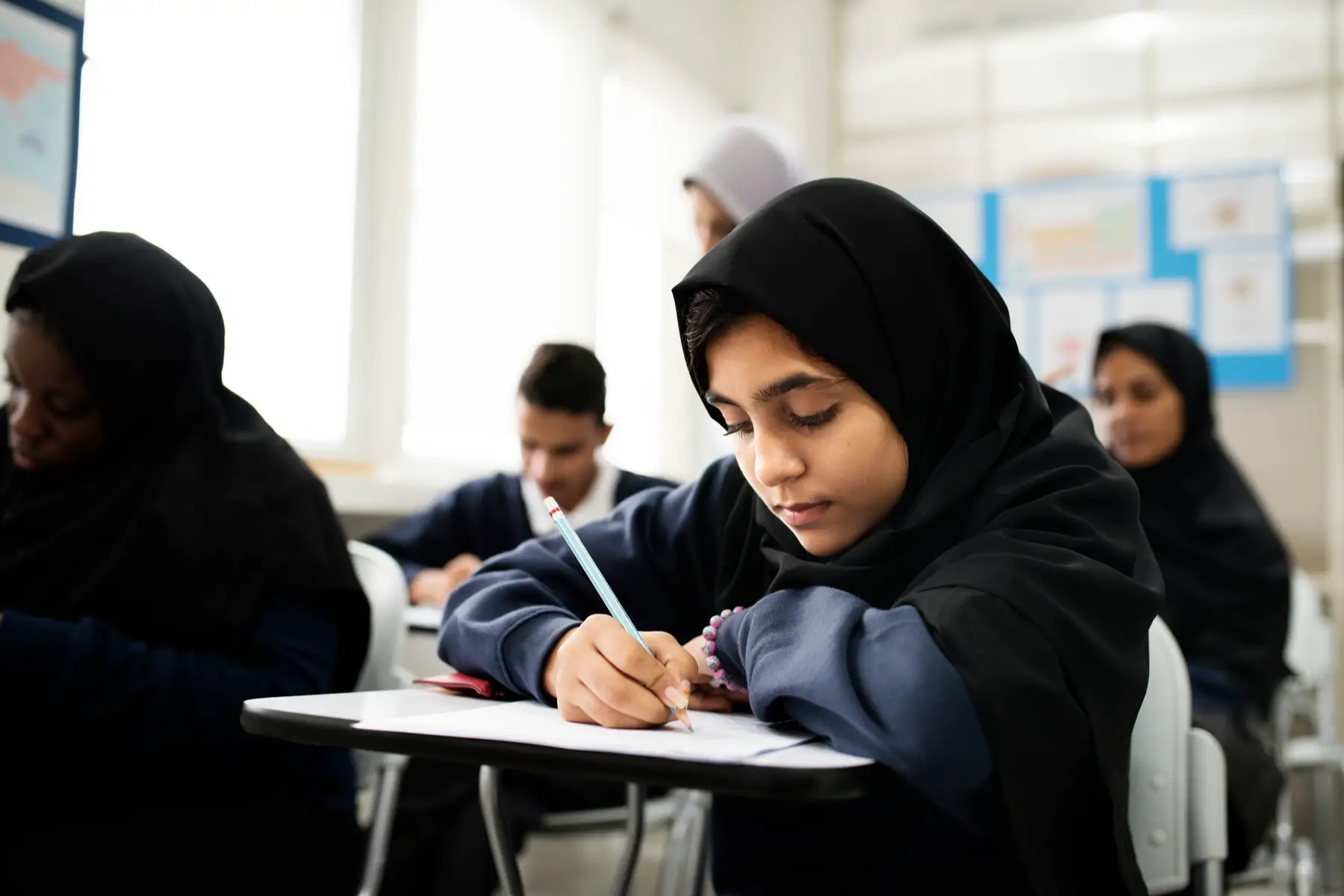
Overall, there are more private schools in Qatar (332) than public schools (207), and these cater to 211,000 students, compared to 196,000 students. You can find details of all the schools in Qatar on the Ministry of Education (MOEHE) website. Additionally, you can check out our comprehensive guide on education in Qatar.
State/public primary schools in Qatar
There are 207 public schools (and 68 kindergartens) in Qatar that serve almost 125,000 Qatari and non-Qatari students. These include co-educational, boys, and girls schools. Because the Qatari government has committed to providing its citizens with a high-quality education, government schools are free to attend. In fact, Qatari students can even apply for vouchers to attend private schools at no cost.
Public primary schools in Qatar teach primarily in Arabic, which makes it difficult for an international pupil to enroll. And if they do choose to attend one, they will need to pay tuition fees.
The curriculum in state primary schools in Qatar
The weekly schedule of public primary schools in Qatar usually runs from Sunday to Thursday. The school year also starts in September and ends in June, which is similar to the US, the UK, and European countries. Schools usually have shorter breaks in December and March and a longer holiday during the summer months.
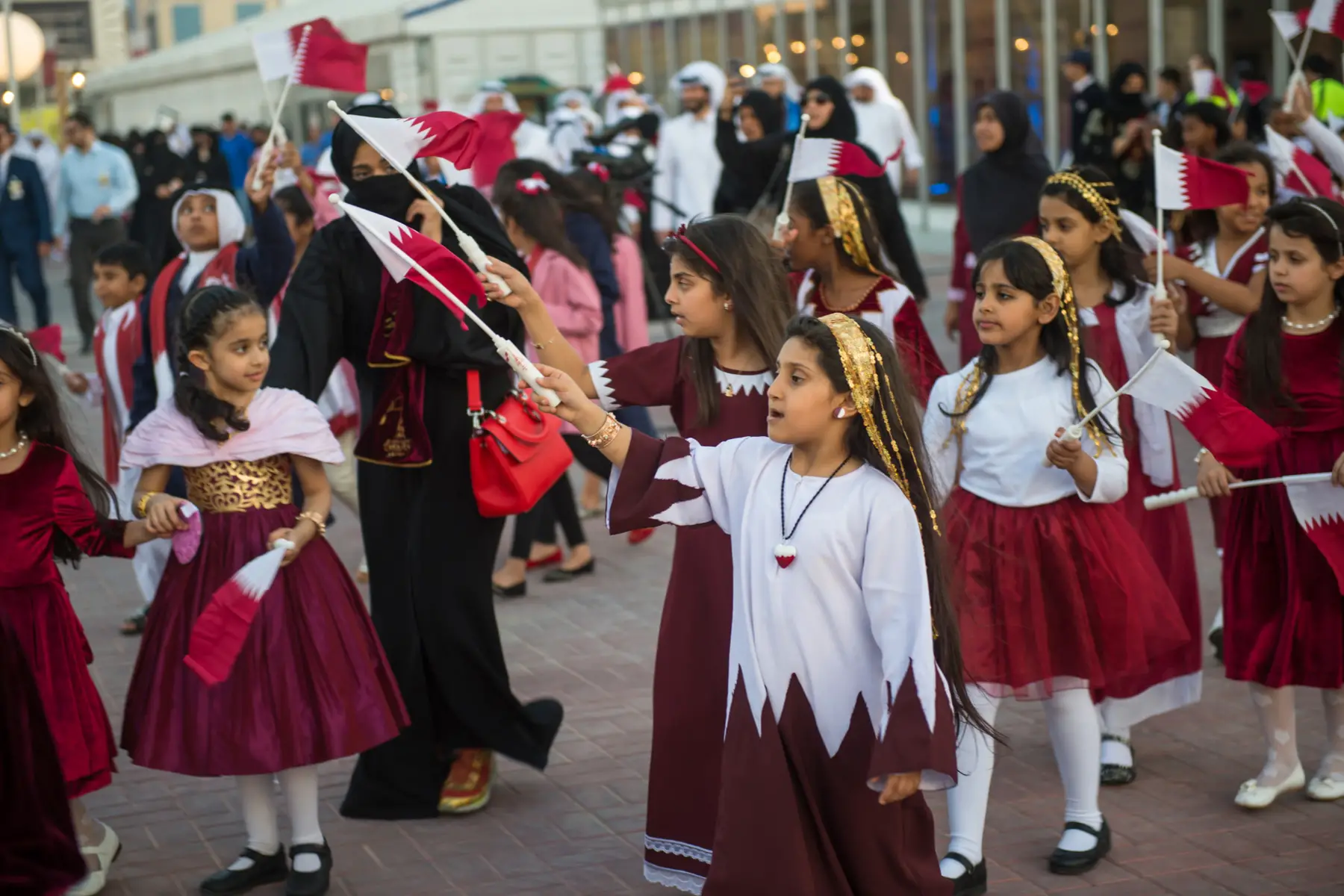
The curriculum for public primary schools in Qatar covers math, science, Qatari history, Arabic, English, and Islamic Studies. Although each school is different, frequent examinations and rote memorization are common throughout the Qatari public education system. However, extra-curricular and physical education options tend to vary between individual schools. On average, there are between 20 and 23 students in a class.
The pros of state primary schools in Qatar
If you manage to enroll your child at a public primary school in Qatar, they will gain a unique insight into an otherwise private culture. Your child will also make friends with Qataris and learn Arabic, which they wouldn’t experience in an international school.
The cons of state primary schools in Qatar
Attending a public primary school in Qatar would also mean that your child would be learning exclusively in Arabic, which might prove to be a frustrating process. It is also more challenging to research schools and their standard of teaching, as much of this information comes from word-of-mouth or is presented in Arabic. Your lack of Arabic may also hamper your communication with your child’s school as a parent.
Applying to state primary schools in Qatar
Registering for public primary schools in Qatar is a fairly straightforward process for Qataris. You can do it all online by submitting your registration request alongside the required identification documents. Non-Qatari’s, on the other hand, need to apply for a specific dispensation to register at a government school. Everyone, including parents and students, must have a Kahramaa (KM) number to apply.

This is the reference number found on your apartment’s door frame, the electricity box of your villa, or on a water and electricity consumption bill. Residents use it as a form of identification for service applications. You can submit the request here after which you will receive further information about how to proceed.
Documents needed for school registration
Aside from your KM number, you will also need to gather the following documents when registering for school:
- Valid identity card or the original passport with which the applicant is registered (and a copy)
- Original birth certificate (and a copy)
- Valid residency permit (and a copy)
- Two recent photos
- Health record file from health centers
- Vaccination certificates in accordance with the national vaccination program in Qatar
- A letter of employment for one of the parents
- A certificate of success at the end of the academic year showing the student’s grades (the original final report).
- The parent is obliged to submit it to the school after the end of the exams for students coming from schools in the country
- Qatari students coming from schools outside Qatar must get the certificate attested by the certificate equivalency department
- Students of other nationalities coming from schools outside Qatar must get it certified by the Qatari Ministry of Foreign Affairs
- A copy of the parent’s ID cards
Private primary schools in Qatar
Qatar currently has 332 private schools which host about 211,000 students. Furthermore, there are two categories of private primary schools in Qatar:
- Local private schools – these follow the Ministry of Education (MOEHE) guidelines and may teach in Arabic
- International schools – these follow international curriculums and usually teach in English or other international languages
Although the curriculums and extra-curricular offerings may vary, all private schools in Qatar must offer Arabic and Islamic education classes.
Furthermore, Qatar’s local private primary schools often have Arabic entrance exams or requirements to establish if the student can study in Arabic. The costs of private primary schools in Qatar depend on the institution and the age level. However, these generally range from QR15,000 to QR75,000 per year.
Method schools
While method primary schools such as Montessori and Waldorf-Steiner schools don’t exist in Qatar, homeschooling for international children is legal and allowed. However, Qatari parents need a waiver from the Supreme Education Council (SEC) in order to homeschool their children.
International schools in Qatar
Most expats moving to Qatar choose to enroll their children in an international school, many of which cater to students from the first to the twelfth grade.

The pros of international schools
International schools offer several advantages. Above all, they provide expat students with educational stability, as they often follow the curriculum of their home country. They can also be beneficial because their language of instruction might be your child’s first language.
Another advantage of international schools is that they offer an internationally recognized education for your child, which can ease their transition back home or to another country. Given that they provide a multicultural environment, your child will also befriend children from all over the world. Fortunately, you will find all kinds of international schools on offer, including American, British, Swiss, Indian, Philippine, Pakistani, and Finnish, among others.
The cons of international schools
However, international schools do have their drawbacks. For one, they are costly, and you can expect to pay anything between QR20,000 and QR80,000 per year (depending on the school and grade). Additionally, they can serve as a bubble that insulates students from opportunities to engage culturally with their Qatari peers in school, as most other pupils are also internationals.
Useful resources
- Ministry of Education (MOEHE) – the official government website for education in Qatar
- MOEHE public schools – an interactive map of public schools in Qatar
- MOEHE private schools – an interactive map of private schools in Qatar
- International school search – a global database that allows you to search for international schools in Qatar
- Qatar educational directory – a Qatar-based directory of public, private, and international schools



Did you find this guide helpful?