'%20id='ico-down'%20stroke='%23000000'%20stroke-width='1.5'%3e%3cg%20transform='translate(1092.250000,%20254.750000)'%3e%3cpolyline%20id='Path-2-Copy-4'%20transform='translate(5.500000,%202.750000)%20scale(1,%20-1)%20rotate(-180.000000)%20translate(-5.500000,%20-2.750000)%20'%20points='0%200%205.5%205.5%2011%200'%3e%3c/polyline%3e%3c/g%3e%3c/g%3e%3c/g%3e%3c/svg%3e)



The Netherlands has plenty to offer, from the historic, winding canals of Amsterdam and Utrecht to the striking, avant-garde architecture of Rotterdam. For many internationals, the combination of a high quality of life, a world-class public transport network, and a flat organisational work culture makes it an ideal place to call home. While the idea of moving to this innovative corner of Europe is exciting, navigating the paperwork for a long-term stay as a remote worker takes some careful preparation.
While the Netherlands doesn’t officially offer a dedicated Digital Nomad Visa, most remote workers apply for the Self-Employed Residence Permit (Verblijfsvergunning voor zelfstandige ondernemers). This residence permit can be a game-changer for non-EU citizens, providing a legal way to live in the country for up to an initial two years with the option to extend. It effectively bridges the gap between a quick holiday and a permanent move, allowing you to enjoy the famous Dutch gezelligheid (cosiness) while working for yourself.
This guide covers everything you need to know for 2026, from legal eligibility and financial requirements to the practical steps for settling in. You’ll find clear instructions on the application process and helpful tips to make your transition in the Dutch system as smooth as possible.
The digital nomad landscape in the Netherlands
The Netherlands is a major hub for remote work, boasting an average internet speed of 112 Mbps and a sophisticated digital infrastructure that makes working from anywhere seamless.
Depending on where you choose to set up your desk, you’ll discover a completely different professional atmosphere. Amsterdam remains the ultimate destination for tech start-ups and digital entrepreneurs, offering endless networking opportunities and a massive international community. Rotterdam provides a modern, innovative alternative centered around striking architecture and a rapidly growing freelance scene, while Utrecht combines historical charm with a quieter, university-town vibe perfect for those seeking a balanced lifestyle.

Tarah Ren
While Amsterdam is the top choice for tech and international networking, consider exploring Rotterdam for its modern freelance scene or Utrecht for a quieter, balanced lifestyle.
Making the transition to the Self-Employed Residence Permit is a significant step up from a standard 90-day Schengen tourist stay. Relying on a tourist entry means you are strictly limited to three months out of every 180 days and have no legal right to work for local or international clients while on Dutch soil. By securing the official self-employed permit, you gain the security of living in the Netherlands for up to two years initially, transforming your journey from a temporary trip into an opportunity to establish a legitimate base in Europe.

Having an approved residence permit card allows you to formally register with the Chamber of Commerce (KvK), open local digital banking accounts, and sign secure rental leases. Instead of constantly watching the calendar and stressing over a ticking clock on your passport, you get a clear, fully compliant pathway that could eventually lead to permanent residency or citizenship after five consecutive years.
Who is eligible for the digital nomad visa in the Netherlands?
Before you start gathering your documents, you’ll need to check if you fall into the right category for this permit. Because the Netherlands doesn’t have a traditional digital nomad setup, your pathway relies on treating your remote work as a registered freelance business or enterprise.

Understanding the self-employed criteria
To qualify for the Self-Employed Residence Permit, non-EU/EEA/Swiss nationals must demonstrate that their independent work or business structure adds clear value to the Dutch economy.
The Netherlands Enterprise Agency (RVO) evaluates this on behalf of the IND using a strict points-based system. To get the green light, your application will need to score enough points across three main categories:
- Personal experience: Your professional background, educational credentials and proof of a solid portfolio matching your business field.
- Business plan: A thorough market analysis, operational roadmap and realistic pricing strategy proving your services are actively needed in the local market.
- Economic contribution: Evidence that your business introduces innovation, provides specialised knowledge, or has the potential to create local jobs.
If you hold a US passport, you are completely exempt from the rigorous points-based scoring system and the added value test. Thanks to the historic Dutch-American Friendship Treaty (DAFT), American entrepreneurs can secure the permit simply by establishing a legitimate business structure and maintaining a minimum capital investment of 4,500 EUR in a Dutch business bank account.
Financial thresholds
Proving you can support yourself comfortably without relying on public funds is a major part of the application process. While the IND doesn’t enforce a rigid income requirement for freelancers, your revenue should show long-term sustainability.
As a general benchmark for a successful application, you should aim to demonstrate:
- 1,500 EUR to 2,000 EUR per month as an absolute baseline (comparable to the Dutch minimum wage standards).
- 2,500+ EUR per month to present a significantly stronger, more competitive case to the RVO.
Having ongoing, recurring retainers or signed contracts with long-term clients will carry far more weight than irregular, one-off project payments.
Health and character
The Netherlands takes healthcare coverage very seriously. While basic international travel insurance or global expat plans might get you through your initial entry, they are not accepted for the final residence permit card. Once you are officially living and operating as a registered freelancer, you are legally required to switch over to standard Dutch basic health insurance.
Beyond healthcare, a clean criminal record is mandatory. You’ll need to complete and sign an official antecedents certificate as part of the IND security protocol, confirming you have no history of criminal offenses or legal violations.
Applying for your visa: A step-by-step guide
Getting your business up and running in the Netherlands means working within a highly structured system run by the Immigration and Naturalisation Service (IND). For most non-EU nationals, everything flows through a single track called the Entry and Residence Procedure (TEV), which groups your long-stay entry visa (MVV) and your actual residence permit together.
While sorting out Dutch admin can feel like a lot of heavy lifting, following these steps makes the entire process a lot more manageable.

Step 1: Prepare your business strategy
Before you fill out a single official form, you need to clearly map out your business structure and determine how you fit into the local market. If you fall under the standard points-based framework, your professional portfolio will need to be air-tight. Take the time to build detailed cash-flow forecasts and secure letters of intent or initial contracts from prospective clients to prove your market relevance.
Step 2: Establish your business foundation
Your immigration path relies entirely on running a working enterprise. At this stage, sorting out exactly how you plan to generate income is key, alongside prepping for your official registration with the Dutch Chamber of Commerce (Kamer van Koophandel or KvK). Many nomads arrange a quick trip to the Netherlands using their 90-day Schengen allowance to finalise this corporate setup in person, since an active KvK profile serves as a vital foundation for the rest of your application.
Step 3: File your application with the IND
With your business plan, portfolio and registration paperwork organised, you can officially submit your application package to the IND. This can be initiated through the Dutch embassy or consulate in your home country, or directly within the Netherlands if you are already staying there legally. The standard government application fee for the self-employed residence permit is 423 EUR in 2026. Make sure all your foreign documents, such as birth certificates, are officially translated and apostilled, as incomplete folders will trigger delays.
Step 4: Wait for a decision
After submission, the IND will assess your application package. For most freelancers, this phase involves a thorough evaluation under the points-based system.
The standard processing time can take up to 90 days, though it may take slightly longer depending on the overall complexity of your setup. If you are applying under a simplified treaty arrangement like the DAFT framework for US citizens, you can generally expect a much quicker, more straightforward decision path. Once your permit is approved, you will simply collect your visa sticker or visit a local IND office to pick up your physical residence card.
Step 5: Complete your local registration
Securing your permit is a massive milestone, but trading legally or setting up daily life requires one final step. Within your first few weeks, a visit to the town hall of your new municipality is essential to register your physical address in the national database (BRP).
Completing this local sign-in unlocks your BSN (Citizen Service Number), which you’ll need to open local digital banking accounts and set up mandatory Dutch health insurance. Once your BSN is active, the KvK automatically links it to your business profile to trigger your official VAT number (BTW-id) from the Tax Administration, getting you fully ready to send compliant invoices.
Financial planning for your move
Moving to a new country is an exciting milestone, but it also requires some strategic financial planning to avoid any surprises. One of the most important things to account for is the settling-in cost, which can be higher than many expect when you factor in rental deposits and the initial lack of a local bank account.
Initial costs
When securing an apartment, you will likely need to pay a housing deposit. In the Netherlands, this is typically equivalent to one to two months of rent. With a serious housing shortage driving rental prices up, especially in Amsterdam where a one-bedroom apartment routinely runs between 1,500 EUR and 2,000 EUR per month, your upfront deposit can easily reach several thousand euros.
Understanding the cost of international transfers
Transfering large sums of money for a rental deposit or to prove your financial stability can be expensive if you rely on traditional methods. Many people assume their local bank is the easiest option, but it often comes with a hidden price tag.
Tarah Ren
Moving large sums for a rental deposit via banks can often result in 3–5% losses due to hidden exchange rate markups. Many providers claim to have low fees but use a less favourable exchange rate to make up the difference.

Manage your Euros with Wise
Using a specialist provider like Wise can simplify the way you handle your finances as you settle in. You can use a Wise account to hold and convert Euros (EUR) at the mid-market rate, which is the same rate you would usually see on Google. This allows you to pay your Dutch landlord or cover government fees without the immediate bureaucracy of a traditional bank account in your first few weeks.
A Wise multi-currency card also helps you avoid foreign transaction fees from your home bank while you are buying essentials. Choosing this route provides a practical way to bypass the wait for local paperwork and start living like a local from day one.

Putting it into practice: A common freelancer hurdle
Many internationals moving to the Netherlands face a “chicken and egg” situation: you often need a residence permit and a BSN to sign a long-term lease, but you cannot secure your local registration without a physical address.
Booking a short-term serviced apartment or an expat-friendly co-living space for your first month is an excellent way to break this cycle. Choosing a short-term provider that officially allows address registration gives you the vital paperwork needed to unlock your BSN at the town hall immediately. Always confirm with your accommodation provider that they allow registration before booking, or your entire visa process could stall before it even begins.
Tarah Ren
Booking a short-term serviced apartment that officially permits town hall registration is an excellent workaround. This ensures you can unlock your BSN immediately, keeping your visa and business setup process moving forward without delay.
Taxes and social security in the Netherlands
Understanding the Dutch tax and social security system is an absolute must to keep your remote business fully compliant. While the paperwork requires a bit of getting used to, the system is highly optimised for self-employed professionals.
Navigating tax residency and the 183-day rule
Your tax liability in the Netherlands is mainly driven by where you live and how long you stay. Generally, if you spend more than 183 days within a 12-month window in the country, or if you establish your main life and home here, you are officially classified as a Dutch tax resident.
Being a tax resident means you are liable for Dutch income tax on your worldwide income, not just the money you make from Dutch-based clients.
The Netherlands uses a progressive income tax system split into categories called boxes. Your freelance business profits are taxed under Box 1 (income from work and home). For 2026, the tax brackets are as follows:
- Up to €38,883: Taxed at 35.75% KVK
- From €38,883 to €78,426: Taxed at 37.56% KVK
- Above €78,426: Taxed at 49.50%
Tax breaks for freelancers
To help independent professionals thrive, the Dutch Tax Administration offers built-in tax deductions that can dramatically lower your taxable income. If you hit the required minimum of 1,225 hours per year dedicated to running your business, you can claim:
- The self-employed deduction (zelfstandigenaftrek): Valued at 1,200 EUR for 2026.
- The starter’s deduction (startersaftrek): An additional tax break for new businesses during their first few years of operations.

Mandatory social security and insurance
Unlike regular employees, freelancers in the Netherlands are entirely responsible for organising their own social security safety nets. While your personal income tax automatically covers contributions toward the state old-age pension, you will need to sort out your own insurance for disability or private pension plans if you want extra coverage.
Additionally, anyone living and working as a self-employed professional in the Netherlands must register for standard Dutch basic health insurance (zorgverzekering). You are also required to charge 21% VAT (BTW) on most standard services sold to Dutch customers, which you will report via quarterly digital tax filings.
Setting up your life: Housing & healthcare
Finding a home and choosing the right insurance are the two biggest practical hurdles to clear once you land. Because the Dutch system for both is very specific, touching down with a clear plan will save you significant time, money, and unnecessary stress.
Strategies for the competitive housing market
Securing a long-term apartment in major hubs like Amsterdam, Rotterdam, or Utrecht is notoriously difficult due to a massive national housing shortage. Many nomads start by booking an expat-friendly serviced apartment or a short-term furnished co-living space for their first month.

Since you can’t fully finalise your self-employed residence permit without a local address registration, choosing a short-term accommodation provider that allows you to register at the town hall is essential. Once you have your registration paperwork sorted and your BSN in hand, you can take your time navigating the local rental market, which typically involves attending competitive in-person viewings and proving steady freelance income.
Understanding your healthcare options
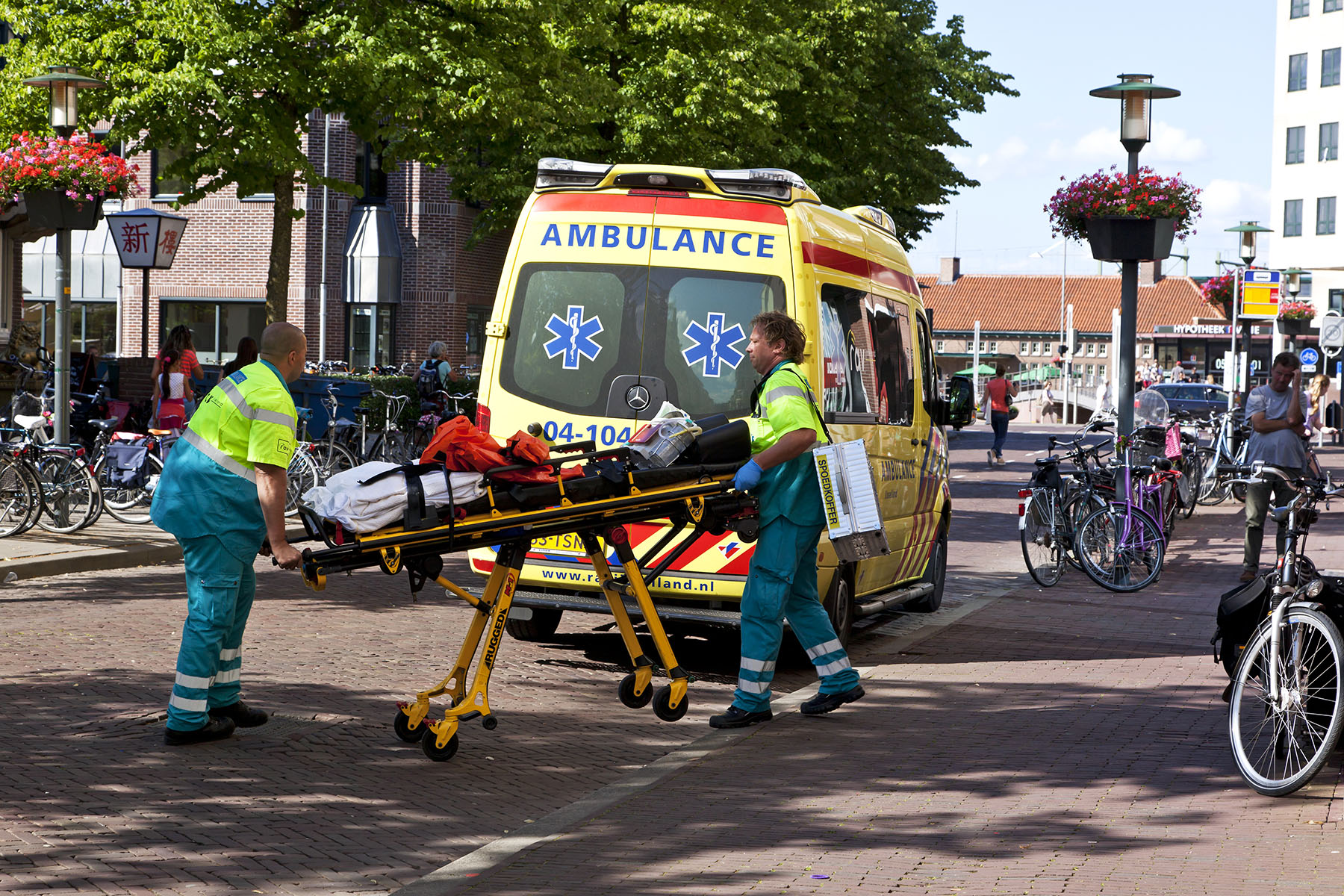
In the Netherlands, health insurance is a strict legal requirement for all residents. As a self-employed professional, you must register for standard Dutch basic health insurance (basisverzekering) within four months of registering your address at the town hall.
The Dutch healthcare model is universal, meaning private insurance companies handle the plans, but the government strictly regulates the minimum coverage included in the basic package. For 2026, here’s what you need to know about your healthcare costs:
- Monthly premium: The average premium for a basic health insurance package is around 159 EUR per month.
- The deductible (Eigen Risico): The standard out-of-pocket annual deductible is set at 385 EUR per year. This means you pay the first 385 EUR for certain medical services (like hospital care or prescription medications) before your insurance takes over.
- Supplementary add-ons: Basic insurance covers essential medical care and emergencies. If you want coverage for extra services like regular dental checkups, physiotherapy, or vision care, you can customise your plan by purchasing optional supplementary modules for an additional monthly fee.
Banking and managing money as a nomad
Financial freedom in the Netherlands starts with having the right tools to handle Euros without a bureaucratic headache. While the country is almost entirely cashless – with many local supermarkets and cafés exclusively displaying pinnen (debit card only) signs – digital payments and local bank transfers are the backbone of your professional life and monthly bills.
Secure your local IBAN for the essentials
You will eventually need a local Dutch IBAN to navigate daily life. Most local utility providers, mobile phone companies, and gym memberships rely on SEPA direct debits to pull payments automatically.
Having a local account also makes you much more client-friendly, as Dutch businesses prefer domestic transfers over international wires.
Master the daily grind without the fees
Avoid the sting of foreign transaction fees from your home bank by using a Wise debit card for your daily Euro spending. Whether you are grabbing a coffee or paying for your transit pass, spending directly in EUR saves you from the hidden markups banks often sneak into the exchange rate.
Expatica advice: Banks can often result in 3–5% losses due to hidden exchange rate markups on international transfers. Look for providers that offer the mid-market rate to ensure your money goes further when paying your high initial costs like rental deposits.
You can open a Wise account before you even pack your bags to get instant access to EUR account details to pay your landlord or receive your first freelance invoice at the mid-market rate. It’s the fastest way to start living like a local from the moment you step off the plane.
Useful resources
- Immigration and Naturalisation Service (IND): Access the official IND portal to download application forms, review fee updates, and track the latest self-employed residence requirements.
- Expatica’s Guide to Healthcare: Navigate the complexities of the Dutch health system with this comprehensive breakdown of insurance options.
- Wise EUR Account: Open an account to receive and manage Euro expenses at the mid-market rate without the usual bank bureaucracy.
Checklist: Before you go
- Passport Validity: Ensure your passport has at least 12 months remaining before it expires.
- Local Market Proof: Secure initial client contracts or formal letters of intent to show the IND that your freelance work has a clear place in the Dutch market.
- Health Insurance Setup: Budget for a local basic health insurance policy (basisverzekering) to replace your travel coverage within four months of moving.
- Currency Setup: Open a Wise account to safely hold, convert, and spend Euros without traditional banking friction the moment you arrive.