
'%20id='ico-down'%20stroke='%23000000'%20stroke-width='1.5'%3e%3cg%20transform='translate(1092.250000,%20254.750000)'%3e%3cpolyline%20id='Path-2-Copy-4'%20transform='translate(5.500000,%202.750000)%20scale(1,%20-1)%20rotate(-180.000000)%20translate(-5.500000,%20-2.750000)%20'%20points='0%200%205.5%205.5%2011%200'%3e%3c/polyline%3e%3c/g%3e%3c/g%3e%3c/g%3e%3c/svg%3e)


House + Home
Utilities + Telecom
Setting up internet, TV, and home phone in Japan
Learn how to keep your household connected in Japan, from setting up the TV, home phone, and internet to paying bills and reporting faults.

Your first week in Japan will be a whirlwind of getting started with renting or buying a home, opening a bank account, and setting up utilities. In addition to a Japanese mobile phone or SIM card, you’ll probably need home internet access too.
Fortunately, the country has high-quality telecommunications services readily available nationwide, especially in major cities. You’ll have plenty of options in Japan, no matter how you plan to use your home internet connection.
Keep reading for more on the following topics:
NordVPN
Do you want to watch films and series securely online in Japan? NordVPN provides seamless, uninterrupted streaming without bandwidth limits. Sign up today with NordVPN and enjoy all your favorite TV programs from home.

Television, phone, and internet in Japan
It is fairly easy to connect your television (テレビ), phone (電話), and internet (インターネット) services at your home in Japan. Many providers offer bundles that work out more cost-effective than registering for each individual product. Different bundles include unique combinations of services, so you can select the ones you need. For instance, some companies offer mobile phone plans, insurance, smart home features, and even telehealth medical services in the same contract.
Keep in mind that fees for an apartment and a house differ in Japan; the latter will have higher charges.
If you’re relocating for work, ask your company if they plan to assign a sponsor to help set up services. If not, you can hire one or ask your realtor for recommendations. For example, companies like The Relocator and Relo Japan can help with moving, including setting up telecommunications and utilities.
Japanese television
If you own a television in Japan, you will need to purchase a license known as a Broadcast Receiving Contract (地上契約). This contract is available from the Japan Broadcasting Company (日本放送協会 – NHK) and costs about ¥14,000 annually. Bundled internet and television packages often include the contract fee, but check with your network provider to be sure.
Both digital cable (ケーブルテレビ) and satellite television (衛星放送) are widely available in Japan. You’ll find a range of options whether you’re looking for just a few local channels or hundreds worldwide.
Japan has two public and five commercial networks:
- NHK General TV (NHK総合テレビジョン)
- NHK Educational TV (NHK教育テレビジョン – NHK E)
- Fuji TV (フジテレビ)
- Nippon TV (日本テレビ)
- TBS (TBSテレビ)
- TV Asahi (テレビ朝日)
- TV Tokyo (テレビ東京)
You may even want to skip television services altogether if you already subscribe to streaming platforms. International streaming services will help you stay updated on your favorite shows no matter where you are.
Landline phones
The number of landline users in Japan is steadily declining, while mobile phones are consistently rising. In 2020, Japan had 11.4 times more mobile phone contracts than landline agreements. Although landlines are decreasing in popularity, it may still be worth connecting one if you run a business from home that requires making many calls.
You can get an analog or fiber optic telephone line in Japan. Analog telephones require a subscription fee of ¥36,000, plus contract and usage expenses. You’ll need to pay the costs and show an ID card or passport to apply. After that, you’ll pay a monthly subscription and some call charges.
Fiber optic telephones and the internet use the same wiring, so bundling them together in a subscription is the way to go. You’ll also pay a lower monthly fee and use less calling time per minute.
Mobile phones
You can buy a new phone or SIM card (SIMカード) from any of Japan’s major mobile providers. These include:
- au by KDDI
- NTT Docomo (NTTドコモ)
- Rakuten Mobile (楽天モバイル)
- SoftBank (ソフトバンク)
NTT Docomo is the most popular provider in Japan, with 36.9% of total subscribers. KDDI is next with 27.1% of the market, and SoftBank has 21.1%.
To get a mobile phone contract, you’ll need to prove your identity and residence in Japan. So remember you bring your resident card or other identification when you sign up at the store. You can pick up a pre-paid SIM card at an airport or electronics store for quicker and temporary phone needs.
Japanese phone numbers and dialing codes
Japanese phone numbers (電話番号) have nine digits, preceded by a 0 when calling from a different area code (市外局番) within the country.
Fixed line phone numbers
The phone number’s first five digits refer to its geographical area code. For example, 3 is Tokyo (東京), 46-8 is Yokosuka (横須賀), and 75 is Kyoto (京都). The rest of the digits direct you to a unique phone line.
Imagine you are trying to call the Tokyo National Museum from within Japan. First, dial 0, then the area code for Tokyo (3), followed by the museum’s phone number: 03-3822-1111.
Mobile phone numbers
Japanese mobile numbers (携帯電話番号) have area codes 70, 80, 90, and 701. When calling within Japan, include the 0 if your number starts with a different code than the one you’re dialing.
Calling internationally
Japan’s country code (国番号) is 81, and its exit code is 010. You should drop the initial 0 used for domestic calls within Japan when calling from outside the country.
Suppose you want to call the Tokyo National Museum from the Seoul National Museum of Modern and Contemporary Art. You first need to dial South Korea’s exit code (001), then Japan’s country code (81), then the number: 001-81-3-3822-1111. Likewise, to reach the Seoul museum from the Tokyo museum, begin with Japan’s exit code and then South Korea’s country code: 010-82-2-3701-9500.
Internet in Japan
Given Japan’s reputation for innovative technology, it’s unsurprising that internet coverage is fast, reliable, and widespread. There is a high penetration rate, with 94% of the population accessing the internet (2022).
Japan’s median broadband download speed in March 2023 was 146.90 megabytes per second (Mbps), ranking it among the 20 fastest countries in the world. In the same month, mobile download speeds averaged only 42.48 Mbps, and Japan ranked 52nd in the world.
There are many internet providers in Japan, including:
- Asahi Net (アサヒネット)
- au HIKARI (auひかり)
- GTN Mobile (GTNモバイル)
- NTT Docomo (NTTドコモ)
- NURO Hikari (NURO光) (in Japanese)
- Sakura Mobile
- SoftBank (ソフトバンク)
Sakura Mobile and GTN Mobile feature customer support in English and other languages. NURO Hikari, on the other hand, is owned by Sony (ソニー) and is known for having the fastest internet speeds in Japan.
Pocket wifi (ポケットwifi) and fiber optic (光回線) are the most popular choices for internet plans. Monthly costs vary based on speed and length of the contract but expect to pay ¥3,000–7,000. Some contracts offer a cheaper introductory rate that will increase after the first year. Remember that bundling internet services with a mobile phone, landline, or television can save you money in the long run.
Connecting to the internet in Japan
There are a lot of options for getting internet connection in Japan. If you plan to live in the country briefly or move around a lot, pocket wifi might be the way to go. Contracts are easier to set up and cancel. With Sakura Mobile, for example, pocket wifi contracts are a maximum of 90 days long.
If you stay in Japan long-term or need a fast home internet connection, fiber optic is the best choice. The contracts are much less flexible, but you’ll have reliable access to the internet for all your home devices. Finally, if you’re getting a home phone or television plan, you can bundle that together with fiber optic but not usually with pocket wifi.
Depending on where you live, certain companies may already have fiber optic cables in your building. Talk to your landlord or neighbors if you need to know which providers operate locally.
Installing fiber optic cables can be expensive – up to about ¥47,000 – and can take up to a month to get an appointment. Still, this be a good option for households with multiple people who plan to stay several years in Japan and want to bundle internet with television or other services.
VPNs for internet in Japan
A virtual private network (VPN) can help you access sites that may be restricted in your region. This includes television shows from other countries and localized search engine results in your browser. More importantly, it can also protect your privacy by restricting who has access to your internet history.
Check out these popular VPN services for more information:
Japanese telecommunications bills
In Japan, most providers charge television and internet bills monthly to the card or bank account you have on file. Other options include getting a paper copy of the invoice by mail and paying it in cash at a local convenience store.
Another option is to pay in person at a provider store. This is the way to go if you get behind on your bill and must pay to prevent service cancelation. You need to settle most telecommunications bills within 30 or 60 days, and you can call the company for clarification on the due date.
Telecommunications repairs
Contact your provider directly if your Japanese television, landline, or internet service needs repair. You can check the company’s website for contact services online, like a chat or email form. You can also call the company or visit a physical store for faster assistance.

If the customer service representative can’t resolve the issue, they might send a technician to your home. Some providers offer customer support in English and other languages, or you can ask a Japanese-speaking friend, coworker, or neighbor for help.
Finally, if there is a severe electrical or fire safety issue, call emergency services directly before contacting the provider.
Making a complaint about a telecommunications company
If you have a complaint against a telecommunications company, you can reach out to the National Consumer Affairs Center of Japan (NCAC – 国民生活センター). This public organization has taken consumer complaints from foreign nationals living in the country since 1970. You can search for your local consumer services agency on the NCAC website.
For example, if you live in Tokyo, you can file a complaint with the Tokyo Metropolitan Comprehensive Consumer Center (東京都総合消費生活センター). In addition to speaking Japanese, they also operate in English, Chinese, and Korean.
Alternative communication platforms in Japan
You can access many alternative communication platforms in Japan while waiting for your household communications to be connected.
VoIP and instant messaging
Many people in Japan use popular free apps for messaging and calling. Download one of these and start chatting right away.
- KakaoTalk: Popular Korean messaging app (less common in Japan) for making free audio or video calls
- LINE: The most commonly used social media app in Japan for messaging friends, posting photos, listening to music, or even having a telehealth appointment
- WhatsApp: Less common in Japan than LINE or KakaoTalk, but useful for contacting friends and family abroad
Internet cafes in Japan
Need a quiet place to check email? Are you looking for somewhere to make calls or print documents? At an internet cafe (インターネットカフェ) in Japan, you can find that and much more. Japanese internet cafes are open to remote workers, families, students, and anyone looking for a place to hang out for a few hours.
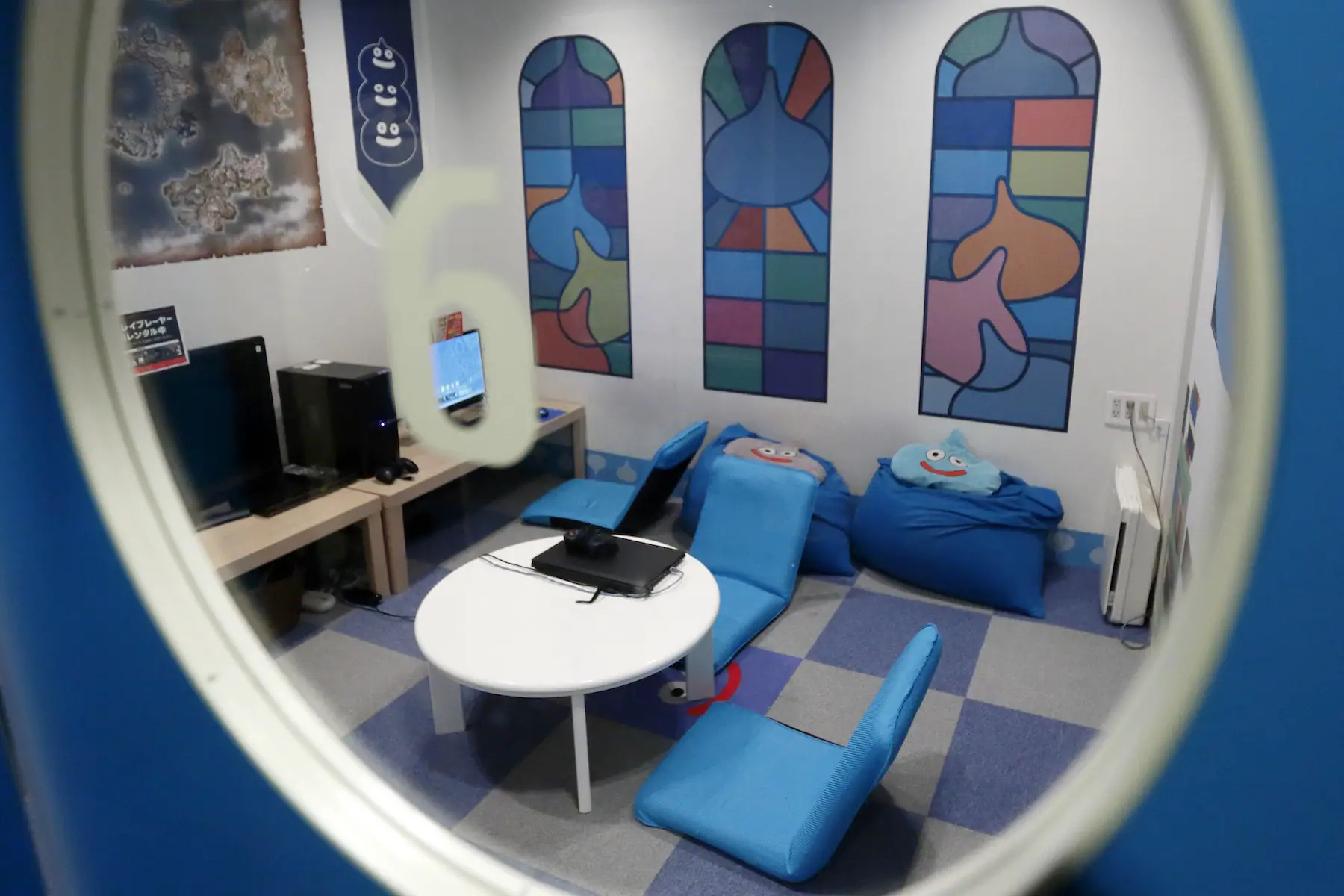
Some even offer laundry machines, showers, private karaoke (カラオケ) rooms, manga (マンガ) libraries, and unlimited soft drinks or miso soup. There’s so much to do at Japanese internet cafes that they’re usually open 24/7, and staying all day or night is not uncommon.
Note that many internet cafes require a membership and occasionally a reservation. Prices start around ¥200 for the first 30 minutes and increase with time and additional features. Sign up for a membership online, and bring your passport or other valid ID on your first visit.
Some of the popular internet cafes in Japan include:
- icafe (アイ・カフェ) (in Japanese)
- Kaikatsu Club (快活CLUB) (in Japanese)
- Manga Cafe Iwakiya (漫画喫茶いわき家) (in Japanese)
Public phones in Japan
In March 2020, there were about 146,000 public phones (公衆電話) across Japan. These are usually gray or bright green and are available for domestic and international calls. You can find them in train stations, schools, and even department stores.
NTT operates most pay phones, and the map system is split regionally into West and East Japan. Calls start at around ¥10 per minute within the local area. Most public pay phones accept coins or prepaid phone cards (プリペイドカード) at convenience stores.
Useful resources
- TIPS – the Tokyo Intercultural Portal Site (TIPS) for Tokyo Life giving useful information for expats in the city
- National Consumer Affairs Center of Japan (NCAC – 国民生活センター) – list of consumer services agencies around the country
- Speedtest – Japan’s mobile and broadband speeds indicator



Did you find this guide helpful?