
'%20id='ico-down'%20stroke='%23000000'%20stroke-width='1.5'%3e%3cg%20transform='translate(1092.250000,%20254.750000)'%3e%3cpolyline%20id='Path-2-Copy-4'%20transform='translate(5.500000,%202.750000)%20scale(1,%20-1)%20rotate(-180.000000)%20translate(-5.500000,%20-2.750000)%20'%20points='0%200%205.5%205.5%2011%200'%3e%3c/polyline%3e%3c/g%3e%3c/g%3e%3c/g%3e%3c/svg%3e)


Finance
Money Management
How to send money to Japan for expats: 2026 guide
Compare the best way to send money to Japan for rent, relocation costs, family support, business payments, and more.


Whether you’re relocating to Japan and moving your finances or simply sending a one-off payment, you’ll want to choose the best option that suits your needs. The best way to send money to Japan is not just about finding the lowest upfront fee. It also means choosing a service that offers competitive exchange rates, reliable delivery, strong security, and a smooth transfer process.
This guide explains the different ways to send money to Japan and how each option works. It is for informational purposes only and does not constitute financial, legal, or tax advice. Exchange rates can change quickly, so always check the current rate before you send your money.
Key takeaways
- For many expats, a specialist international money transfer provider with domestic JPY payouts is one of the easiest places to start.
- Compare the total amount your recipient will receive in JPY, not just the transfer fee, because exchange-rate markup can cost more than the visible charge.
- A major bank can still be a good choice for high-value transfers or when a landlord, business, or institution prefers a bank transfer.
- If you use Wise, check the live quote, the payout method, and any Japan-specific limits before you confirm your transfer.
- Get the recipient’s bank name, branch, account type, account number and registered account name from an official source rather than a copied message.
Wise
Wise can be useful if you need to move inherited money across borders or manage JPY alongside other currencies for planned exchange transactions (subject to transaction limits) without relying fully on a local bank account. It does not replace Japanese filing or tax payment steps, and you should check current product availability, supported currencies, and document requirements for your region before you act.

What is the best way to send money to Japan?
For many expats, a specialist international money transfer provider that pays out locally in JPY is often the easiest and most cost-effective way to send money to Japan, rather than using a traditional bank-to-bank SWIFT transfer.
This approach offers clearer pricing, can reduce the risk of intermediary fees, and may provide a smoother experience for everyday payments such as rent, living costs, or family support.
A common question is whether a bank is safer by default. In practice, the better choice depends on the amount, urgency, recipient type, and whether the recipient can receive a furikomi (Japan’s standard domestic bank transfer) instead of an international SWIFT transfer.
| Option | Cost visibility | Speed | Good use case |
|---|---|---|---|
| Major local bank | Often less transparent | Varies, often slower | Large documented transfers, existing bank relationship |
| Specialist provider | Usually clearer | Often faster for local payout | Rent, living costs, family support |
| Cash pickup service | Clear upfront, but route dependent | Can be quick | Emergency cash when a bank account is not usable |
| Multi-currency provider | Clear if quoted properly | Varies | Regular self-transfers and managing more than one currency (subject to transaction limits and restrictions on fund holding) |
When a major local bank may still make sense
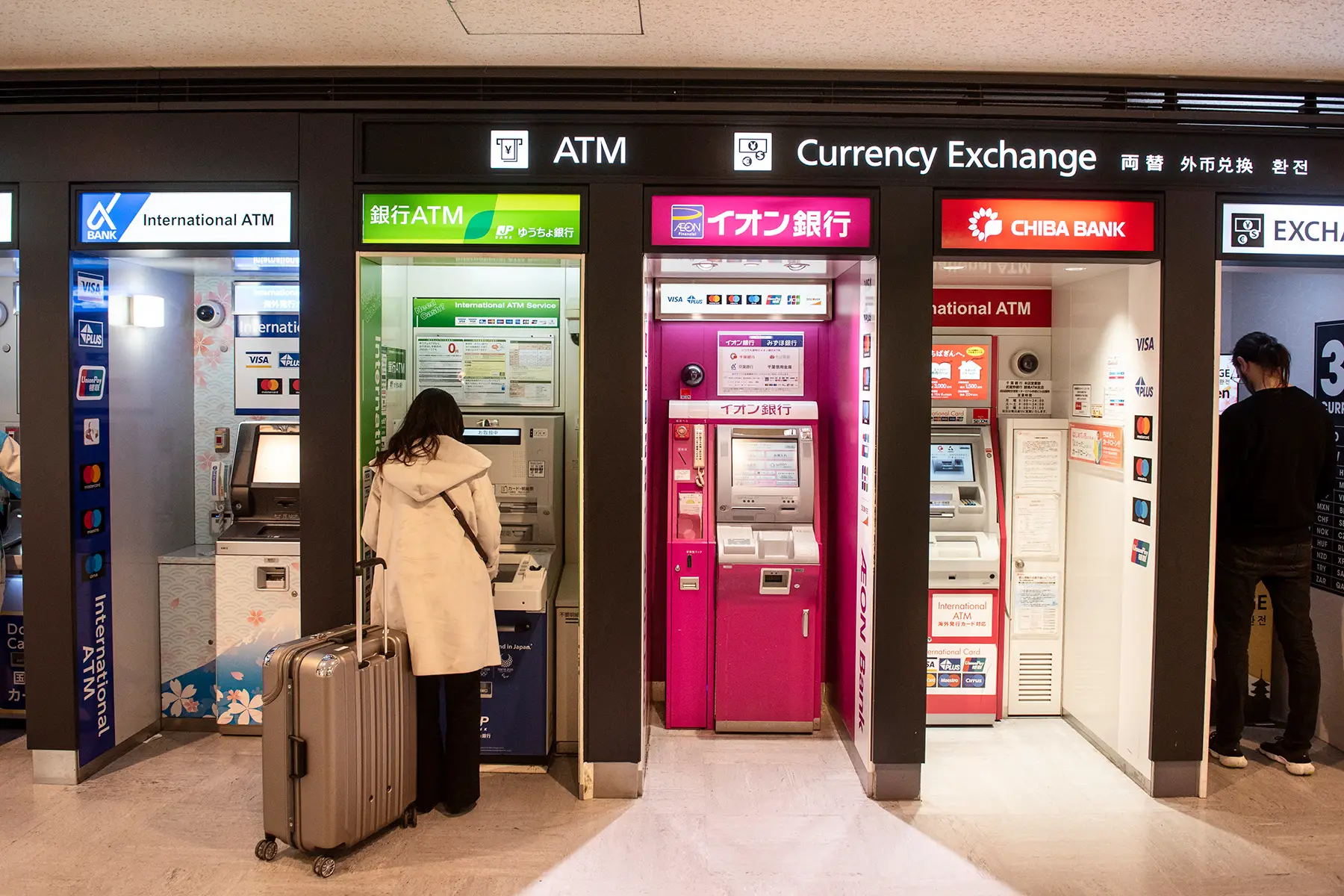
Japanese banks such as MUFG, SMBC, Mizuho and Japan Post Bank can still make sense when you already bank in Japan, need a well-documented high-value transfer, or when the recipient prefers a transfer sent directly from a bank account.
The trade-off is that you need to check the exchange-rate markup, branch fees, cut-off times and any extra paperwork before you start.
Sending by bank transfer makes sense when:
- You already hold the funds with that bank
- You need supporting documents for a large payment
- The recipient prefers or requires a bank transfer
When Wise or another specialist provider might be a better fit
This might be the better route if you want a clear quote before you send, especially for rent deposits, regular top-ups or payments to family.
A Wise transfer to Japan can suit expats because it shows the fee, exchange rate and estimated arrival time up front, supports local JPY bank transfers, and can work alongside a multi-currency account when you manage money across borders.
One thing worth knowing is that route details matter in Japan. If you live in Japan or plan to use the Wise account there, verify the current JPY holding rules, transfer caps, and route availability on Wise’s JPY transfer guide before you rely on it for a time-sensitive payment.
You should check:
- Total fee
- Exchange rate used
- Delivery estimate
- Recipient details
- Payout method, local bank payout or SWIFT
- Current limits and verification needs
Note that in Japan, balance transfers are subject to a 1 million JPY limit per transaction, and you should only hold funds you plan to use for exchange transactions.
Step-by-step: transferring funds to a Japanese bank account
If you are wondering where delays usually occur, they are often caused by the recipient details, the payment method, or verification checks rather than the transfer form itself.
Here are the steps to take when sending money to Japan:
Compare quotes on the same day and look at the amount the recipient will get in JPY after fees.
Choose the payout type. For most personal and business payments in Japan, a local JPY bank transfer is simpler than SWIFT if the recipient can give standard furikomi details.
Set up the transfer and complete verification if the provider asks for identity, source-of-funds or purpose-of-payment checks. Larger transfers often trigger more review, so leave extra time.
Enter the recipient details exactly as supplied. For a Japanese account, even a small mismatch in the registered name, branch or account type can delay the payout.
Check the final quote before you confirm, especially the exchange rate, total fee and expected arrival time in Japan.
Track the payment after you send it and watch for any request for extra documents. If the transfer is urgent, avoid sending close to a weekend or Japanese public holiday because processing may continue on the next business day.
Note: In Japan, credit card payments are not available as a funding method for transfers.

What details Japanese recipients usually need
To send money to a Japanese bank account, you usually need:
- Bank name
- Branch name or code
- Account number
- Account type, often futsuu (ordinary), touza (current/checking), or chochiku (savings)
- Exact account-holder name, often copied from the bank app or bankbook
Some recipients will send this in English, but many give it in the domestic format their bank uses.
This is different from a simple international beneficiary form. Japanese banks often expect exact name matching, and the registered account name may appear in Katakana, which is the phonetic script commonly used by Japanese banks for account names.

Writer
Gary Buswell
Insider tip
Ask the recipient for a screenshot from their banking app or a photo of the inside bankbook page instead of retyping details from a chat. Branch names, account types and the registered name are where many first-time transfers run into problems.
What to check before you press send
- Total fee and the final delivered JPY
- Exchange rate and whether any markup is built in
- Delivery estimate for that funding method and route
- That the recipient’s name matches the bank’s registered account name
- Any transfer limit, verification request, or business-payment reference field
Confirm everything from an official source such as the recipient’s banking app, bank statement, invoice, or bankbook page rather than a copied chat message.
Breaking down the real cost of a Japan transfer
The visible transfer fee is only one part of the total cost. Another major factor, especially on larger payments, is the exchange-rate markup. This is because even a small difference between the provider’s rate and the mid-market rate can significantly affect how much JPY your recipient receives.
It’s also worth knowing that SWIFT transfers may involve intermediary bank fees, and some recipient banks may charge a fee for receiving the payment. That is why the most useful comparison is the final amount delivered in JPY, not just the advertised transfer fee.
| Cost element | What it means | Where it appears | How to check |
| Transfer fee | The visible charge for sending | Quote or checkout | Compare like-for-like on the same day |
| Exchange-rate markup | The difference between the provider’s exchange rate and the mid-market rate | Often hidden inside the quote | Compare the rate and the final JPY |
| SWIFT or intermediary charge | Extra banks in the chain may deduct fees | Usually only on SWIFT routes | Ask whether a local payout is possible |
| Recipient bank charge | A receiving bank may charge a fee | Route and bank dependent | Ask the recipient to confirm before you send |

Which option is best for your situation?
If you’re not sure whether to prioritise price, speed or paperwork, start with the purpose of the transfer. The best route for a rent deposit is not always the best route for a monthly top-up or a business invoice.
Paying rent deposits and moving costs
For larger relocation payments, exchange-rate differences can have a much bigger impact because the amounts are higher and payment deadlines are often fixed.
- Prioritise a competitive exchange rate and full tracking
- Send early enough to avoid move-in delays
- Ask the landlord or agent how the payment reference should appear
Sending money to yourself or family
For regular support payments or personal top-ups, fee transparency matters more over time than a one-time promotional offer. If your income and expenses sit in different currencies, a multi-currency setup can make repeat transfers easier to manage.
- Use the same provider and route each time if it works well
- Compare the delivered JPY, not just the pay-in fee
- Check whether scheduled or repeat transfers fit your cash flow
Paying a Japanese business
Business payments usually require more detailed records than personal transfers. The recipient may want the exact company account name, a specific branch, an invoice number in the reference field and proof of payment for reimbursement or compliance.
- Copy the company details exactly as shown on the invoice
- Check whether the business wants a domestic bank payout
- Keep the quote, receipt and payment confirmation for your records
Writer
Gary Buswell
Insider tip
In Japan, landlords, schools and businesses often prefer payment by domestic bank transfer. Ask in advance whether they require a particular payment reference, customer number, or payer name so the payment can be identified correctly.
Common mistakes, delays and safety checks
Transfer delays are rarely caused by the currency itself. More commonly, they result from avoidable issues such as a name mismatch, the wrong branch, the wrong account type, or a payment sent too close to a banking cut-off time.
The risk is not only delays but also fraud. If you are paying a landlord, seller, or unfamiliar business, verify any invoice or changed bank details through a trusted second channel before you send, and do not rush a payment just because the message sounds urgent.
- Check the recipient’s registered account name matches the bank’s records
- Confirm the branch and account type
- Allow extra time for a first transfer or high-value payment
- Avoid last-minute payments before weekends or public holidays
- Treat any sudden change of bank details as a fraud warning
FAQ
Frequently asked questions
What is the cheapest way to send money to Japan? 
The cheapest way to send money to Japan depends on the provider, transfer amount, funding method, payout route, and exchange rate offered at the time of the transfer. Compare the final amount your recipient will receive in JPY, not just the visible fee, because a low-fee route can still cost more if the rate is worse.
How long does it take to send money to Japan?
That varies by provider, pay-in method, payout route and recipient bank. A local JPY payout can be quicker than a SWIFT transfer, but first-time verification, weekends, Japanese public holidays and late cut-off times can all slow things down.
What details do I need to send money to a Japanese bank account?
You will usually need the bank name, branch name or code, account number, account type and the exact registered account name. Ask for the details from an official source such as a bank app, invoice or bankbook page, because formatting and name matching matter in Japan.
Can I send large amounts to Japan?
Yes, but larger transfers often trigger extra identity, source-of-funds or purpose-of-payment checks. If the payment is time-sensitive, confirm current provider limits and document requirements before you start so the transfer is less likely to be delayed during review.
Can I use Wise in Japan for transfers and a multi-currency account?
Wise can be useful for sending money to Japan and managing multiple currencies, but the features available depend on your country of residence and current Wise account eligibility. If your registered address is in Japan, check the live Wise help pages for current transfer routes, JPY holding rules, transfer limits, and any product restrictions before relying on it.
Additionally, if your address is in Japan, you cannot receive salary payments into your Wise account, and there is a 1 million JPY limit on balance transfers and spending transactions.
Useful resources
(checked 22nd July 2026)
- Bank of Japan foreign exchange rates, official daily JPY reference rates
- Financial Services Agency licensed institutions list, to check regulated banks and other financial institutions in Japan
- Japanese Bankers Association financial institutions guide, for an overview of Japan’s bank categories
- Wise guide to JPY transfers, for live recipient detail formats, limits and route notes
- Wise send money to Japan, to check a live quote before you transfer



Did you find this guide helpful?