
'%20id='ico-down'%20stroke='%23000000'%20stroke-width='1.5'%3e%3cg%20transform='translate(1092.250000,%20254.750000)'%3e%3cpolyline%20id='Path-2-Copy-4'%20transform='translate(5.500000,%202.750000)%20scale(1,%20-1)%20rotate(-180.000000)%20translate(-5.500000,%20-2.750000)%20'%20points='0%200%205.5%205.5%2011%200'%3e%3c/polyline%3e%3c/g%3e%3c/g%3e%3c/g%3e%3c/svg%3e)




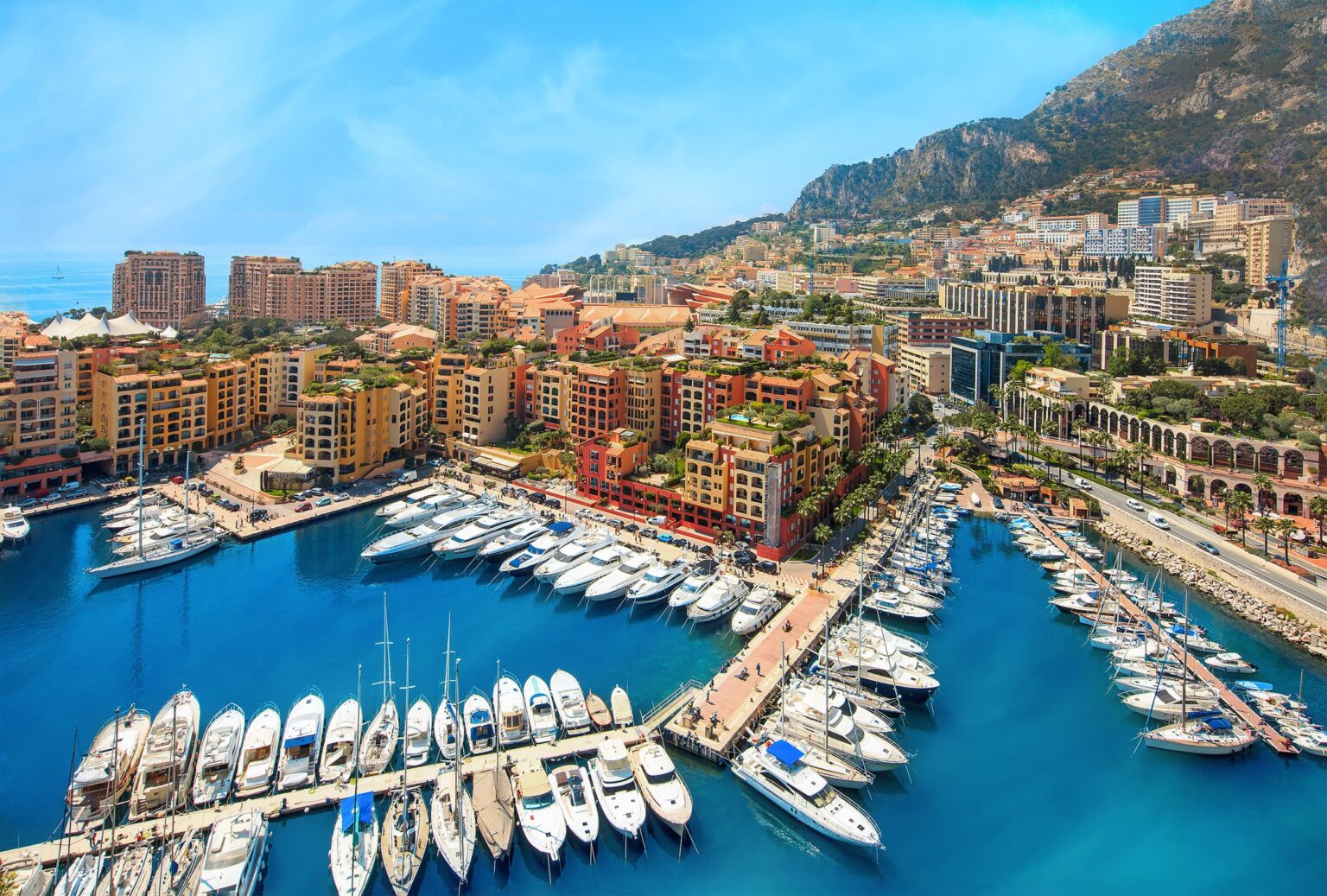
If you are thinking about buying property in Monaco, start with the rules and the numbers. Monaco welcomes international buyers, yet it remains one of the smallest and most expensive housing markets in the world.
Buyers come for security, location, and scarce supply, but they also need to fund the purchase cleanly, document the money, and absorb the ongoing costs.
This guide uses Monaco government pages and the IMSEE Real Estate Observatory 2025 as its main reference points. It is for general information only, not legal, tax, investment, or mortgage advice.
Key takeaways
- Foreigners can generally buy property in Monaco, including as non-residents.
- Buying property does not automatically give you a carte de séjour, which is Monaco’s residence permit.
- Prices are extremely high. IMSEE estimated the 2025 transaction price at €57,569 per square metre across the market.
- Your budget needs to cover duties, legal formalities, transfer costs, and ongoing building charges as well as the purchase price.
- Source-of-funds checks are strict, so gather financial paperwork early.
- District choice matters because price, building age, atmosphere, and resale profile can differ significantly within a very small territory.
Wise for paying for a Monaco property from abroad
- Hold EUR and convert large sums at the real exchange rate (where available).
- Send international transfers for deposits and completion, with upfront fees.
- Track transfer limits and costs before you move money for a purchase.

No commitment required
Can foreigners buy property in Monaco?
Yes. Monaco is generally open to foreign buyers, and you do not need to be a Monegasque national or resident to purchase property.
Ownership is relatively straightforward. Compliance is where buyers can be delayed: you still need to clear identity, source-of-funds, and transaction checks, and none of that creates residency rights.
Before you start viewing properties, check the basics below:
- Whether you are buying personally or through a structure
- Whether you need cash or finance
- Whether home-country tax, inheritance, or reporting rules still follow you
- Whether you can document the lawful origin of the funds
Buying property versus becoming a resident
Owning or renting suitable accommodation can support a residence application, but ownership alone does not grant a permit. Many buyers confuse that with Monaco residency requirements.
Official guidance says anyone aged 16 or over who wants to live in Monaco for more than three months a year must apply for a permit. Non-EEA nationals may also need a French long-stay visa before applying for Monaco residency.
Documents, proof of funds, and buyer checks
Monaco expects buyers to be well documented, especially when large sums are involved. Problems can arise when the money trail or purchase structure is unclear.
Start gathering these documents before you make an offer:
- Valid passport and proof of address
- Evidence of purchase funds, such as bank statements, sale proceeds, salary records, or business accounts
- Bank reference or proof of funds, if relevant
- Criminal record extract if you also plan to apply for residency
- Company or beneficial-owner papers if you are buying through a structure
What does property in Monaco cost?
IMSEE reported 493 property transactions in 2025, with a total value of €5.9 billion. It also estimated the overall price per square metre at €57,569.
There is no low-cost corner of Monaco. Even lower-priced districts by local standards sit at levels many markets would treat as prime, and the total cash requirement runs beyond the asking price.
Purchase prices by district and property type
Monaco property prices vary sharply by district. IMSEE’s 2025 estimates show a gap of more than €27,000 per square metre between Larvotto and Les Moneghetti.
| District | Estimated 2025 price per m² | What you are usually buying into |
|---|---|---|
| Larvotto | €71,167 | Seafront stock and very limited supply |
| Monte-Carlo | €54,009 | Central luxury apartment stock |
| Fontvieille | €52,518 | Newer buildings and marina surroundings |
| La Condamine | €52,104 | Busy central streets near daily amenities |
| La Rousse | €51,265 | Larger apartment buildings and mixed price points |
| Jardin Exotique | €45,168 | Hillside homes and steeper streets |
| Les Moneghetti | €43,797 | Residential hillside stock at the lower end of Monaco pricing |
The market is apartment-led. Houses are rare, so buyers usually compare building quality, view, outdoor space, parking, and service level.
One-off buying costs and ongoing owner costs
Current Monegasque legislation applies a 4.75% registration-duty rate to certain qualifying purchases. Other rates can apply depending on the buyer and ownership structure, while transactions subject to VAT follow separate rules. Ask the notaire to confirm the applicable regime in writing.
| Cost area | What to budget for | What to verify |
|---|---|---|
| Registration duty | 4.75% for certain qualifying purchases; other rates may apply | Ask which rate applies |
| Land publication | Fixed €10 in main resale duty cases | Ask whether VAT changes this |
| Notaire and legal formalities | Varies | Get a written breakdown |
| Agency fees | Varies | Confirm who pays |
| Mortgage-related costs | Varies | Check valuation and arrangement fees |
| Ongoing ownership costs | Building charges, insurance, upkeep, reporting, or tax costs | Review annual service charges |
How to buy property in Monaco step by step
Monaco purchases usually follow four stages, and problems are more likely when buyers start searching before their funding file is ready.
Set your euro budget and appoint advisers.
Search, shortlist, and check the building as well as the flat.
Sign the preliminary agreement and arrange the deposit safely.
Complete notarial checks, transfer the balance, and sign the final deed.
Get your budget, bank, and advisers ready
Start with a budget in euros, not only a home-currency estimate. Leave room for duties, fees, transfer costs, and exchange-rate movement before completion.
Decide early whether you are buying with cash or borrowing, then line up a notaire, any legal adviser, and any cross-border tax adviser. If you may need finance, speak to lenders before you deepen the search.
Search, shortlist, and make an offer
Listings come through agencies, brokers, and private networks. Off-market stock matters because supply is limited.
Check more than the postcode. Look at the building’s age, service level, parking rights, renovation limits, monthly charges, and whether the district fits your actual use.
Sign the preliminary contract and pay the deposit
If your offer is accepted, the next step is usually a preliminary agreement, often called a compromis de vente, or preliminary sale contract. This is when the deposit becomes live.
Read the draft carefully, understand the commitment, and confirm any conditions before you sign. Verify payment instructions directly with the notaire or authorised professional before sending money abroad.
Complete notary checks and final completion
The notaire is the public official who handles the legal formalities, registration process, and final deed. Between offer and completion, the notaire checks title, prepares the deed, and handles registration.
You still need to verify ownership structure, contract wording, timing, encumbrances, building issues, and the route for sending the balance. Deals can stall if the source-of-funds file is incomplete, so have certified paperwork ready before the deposit stage.
How do financing and international payments work?
Most international buyers focus on financing and moving large amounts into euros. Lenders, sellers, and notaires all care about timing and traceability, and many buyers also need a plan for moving your finances abroad.
Mortgage availability for non-resident buyers
Financing is possible for some non-resident buyers, but decisions are usually profile-driven and document-heavy. Do not expect a standard retail home loan.
Compare lenders on deposit expectations, proof of income and assets, source-of-funds evidence, decision timing, and comfort with international profiles. Buyers may approach Monaco-based institutions such as CFM Indosuez Wealth Management or Société Générale Private Banking Monaco, although lending availability and terms depend on the buyer’s profile and the property.
Moving money into euros without avoidable FX costs
International buyers often move money more than once, for the deposit, legal costs, and the final balance. On a large purchase, even a small exchange-rate margin can materially change the total cost.
Some buyers compare banks with money transfer providers. Where available in your region, a Wise account may help you hold euros, watch rates, and send money internationally, but features vary by location, and Wise is a financial institution, not a bank. It does not replace a Monaco bank relationship or the notaire’s client account.
Compare the full cost, including fees, exchange-rate margin, transfer limits, and timing.

Which Monaco areas suit different buyers?
The best areas to buy property in Monaco depend on what you need from the property. In a tiny territory, atmosphere, stock, and price can change quickly over a short walk.
| Area | Often suits | Main trade-off |
|---|---|---|
| Monte-Carlo | Buyers who want central prestige | Higher pricing and constant activity |
| Larvotto | Buyers who prioritise the seafront | Highest prices in the market |
| Fontvieille | Buyers who prefer newer buildings | Less historic character |
| La Condamine | Full-time living and walkable daily life | Livelier streets and mixed stock |
| La Rousse | Buyers who want more choice in larger buildings | Quality varies building by building |
| Jardin Exotique | Buyers seeking relative value | Hilly terrain and steeper access |
| Les Moneghetti | Quieter residential use and lower entry points | Smaller pool of stock |
Monaco-Ville is distinctive and historic, but transaction volumes are thin, so averages are less useful there. In every district, the building matters almost as much as the neighbourhood.
What legal and tax points should you check before buying?
Monaco’s local tax position attracts attention, but foreign buyers still need to think about succession, disclosure, and home-country rules before choosing a structure.
Before you commit, check these points with qualified advisers:
- Whether to buy personally or through a structure
- How the property would pass on death or incapacity
- Which disclosures, duties, and formalities apply
- Whether home-country tax or asset reporting still applies
Ownership structure, inheritance, and home-country tax
Some buyers purchase in their own name, while others use a company or family-planning structure. The right route depends on nationality, estate planning, reporting duties, and intended use.
A structure that looks efficient at purchase can cause later problems if it complicates succession, disclosure, financing, or exit. Speak to a Monaco notaire and a cross-border tax adviser before you choose one.
Registration duties, local taxes, and what Monaco tax advantages do not mean
Monaco property taxes and fees are not the same thing. Official guidance says there is no wealth tax, annual property tax, or council tax in the Principality, but that does not make every buyer tax neutral.
Transfer-related duties still apply, and the applicable rate depends on the transaction and ownership structure. Current legislation includes a 4.75% registration-duty rate for certain qualifying purchases, while other rates and separate VAT rules can apply. Monaco’s regime also does not erase exposure in another country where you are tax resident or report worldwide assets. French nationals should get tailored advice.
Common pitfalls and how to avoid them
- Underestimating building charges. Ask for recent statements and the building budget, not just a monthly headline.
- Assuming ownership equals residency. Check Monaco residency requirements separately, and do not treat a purchase as a permit shortcut.
- Relying on old fee summaries. Confirm duties, visa steps, and process points against current official pages before you sign.
- Sending money before checking instructions. Verify bank details directly with the notaire or authorised professional through a trusted channel.
- Buying for prestige alone. Match the flat, building, and district to how you will actually live in or hold the property.
If you expect to pay from another currency, compare transfer routes early. If you are still weighing Monaco against other destinations, broader guidance on buying a house abroad can help you compare process risk as well as price.

Conclusion
Buying property in Monaco is open to international buyers, but the market demands careful preparation. High purchase prices, strict source-of-funds checks, transaction costs, and separate residency rules all need to be considered before committing. Confirm the legal, tax, and payment arrangements with qualified professionals and current official sources before signing.
FAQ
Frequently asked questions about buying property in Monaco
Can non-residents buy property in Monaco? 
Yes. Foreigners can buy property in Monaco, including as non-residents, but identity and source-of-funds checks still apply.
Does buying property in Monaco give you residency?
No. Buying property does not automatically grant residency, though suitable accommodation can support a residence application if you meet the wider permit and visa rules.
How much deposit do you need to buy property in Monaco?
A deposit is commonly requested at the preliminary-contract stage, but the amount and conditions should be confirmed in the contract and with the notaire. Borrowers may also need substantial equity.
What are the notary fees when buying property in Monaco?
There is no single official all-in notary fee quoted on Monaco government tax pages. Ask for a written breakdown of the notaire’s charges and transfer costs.
What is the cheapest area to buy property in Monaco?
IMSEE’s 2025 estimates place Les Moneghetti at €43,797 per m² and Jardin Exotique at €45,168 per m², near the lower end of the district range. Both remain extremely expensive.
Sources
Expatica’s experts are all about providing the most up to date and accurate information. All guides are fact checked, and whenever we use external sources (like government websites or research papers) we’ll make a note of them here so you can check them out too.
- Residence permit requirements, accommodation evidence, financial means, and application process, Monaco Government — How to apply for a residence permit
- Official overview of taxation in the Principality, Monaco Government — Tax in Monaco
- Current registration duties, property transfer rates, and fixed transcription charges, Legimonaco — Law No. 580 of 29 July 1953 on registration and mortgage duties
- 2025 property transactions, market values, and district-level price estimates, Monaco Statistics — Real Estate Observatory 2025
- Monaco-specific long-stay visa requirements and supporting documents, France-Visas — Monaco
- Anti-money laundering requirements, customer due diligence, and evidence of the origin of a client's wealth, Legimonaco — Law No. 1.362 of 3 August 2009 on anti-money laundering and related obligations
- Legal framework concerning notary publics in Monaco, Monaco Government — Ordinance of 04 March 1886 concerning notary publics