'%20id='ico-down'%20stroke='%23000000'%20stroke-width='1.5'%3e%3cg%20transform='translate(1092.250000,%20254.750000)'%3e%3cpolyline%20id='Path-2-Copy-4'%20transform='translate(5.500000,%202.750000)%20scale(1,%20-1)%20rotate(-180.000000)%20translate(-5.500000,%20-2.750000)%20'%20points='0%200%205.5%205.5%2011%200'%3e%3c/polyline%3e%3c/g%3e%3c/g%3e%3c/g%3e%3c/svg%3e)




'%20fill='%23000000'%3e%3cg%20id='icons'%20transform='translate(56.000000,%20160.000000)'%3e%3cpath%20d='M144,7339%20L140,7339%20L140,7332.001%20C140,7330.081%20139.153,7329.01%20137.634,7329.01%20C135.981,7329.01%20135,7330.126%20135,7332.001%20L135,7339%20L131,7339%20L131,7326%20L135,7326%20L135,7327.462%20C135,7327.462%20136.255,7325.26%20139.083,7325.26%20C141.912,7325.26%20144,7326.986%20144,7330.558%20L144,7339%20L144,7339%20Z%20M126.442,7323.921%20C125.093,7323.921%20124,7322.819%20124,7321.46%20C124,7320.102%20125.093,7319%20126.442,7319%20C127.79,7319%20128.883,7320.102%20128.883,7321.46%20C128.884,7322.819%20127.79,7323.921%20126.442,7323.921%20L126.442,7323.921%20Z%20M124,7339%20L129,7339%20L129,7326%20L124,7326%20L124,7339%20Z'%20id='linkedin-[%23161]'%3e%3c/path%3e%3c/g%3e%3c/g%3e%3c/g%3e%3c/svg%3e)
'%20fill='%23000000'%3e%3cg%20id='icons'%20transform='translate(56.000000,%20160.000000)'%3e%3cpath%20d='M335.821282,7259%20L335.821282,7250%20L338.553693,7250%20L339,7246%20L335.821282,7246%20L335.821282,7244.052%20C335.821282,7243.022%20335.847593,7242%20337.286884,7242%20L338.744689,7242%20L338.744689,7239.14%20C338.744689,7239.097%20337.492497,7239%20336.225687,7239%20C333.580004,7239%20331.923407,7240.657%20331.923407,7243.7%20L331.923407,7246%20L329,7246%20L329,7250%20L331.923407,7250%20L331.923407,7259%20L335.821282,7259%20Z'%20id='facebook-[%23176]'%3e%3c/path%3e%3c/g%3e%3c/g%3e%3c/g%3e%3c/svg%3e)

Moving to France is a grand adventure but finding the right property can involve a fair amount of legwork. There are certain rules to renting housing in France that a newcomer should be aware of before signing a French rental contract.
Table of contents
- Renting in France
- Popular places to rent in France
- Buying vs renting in France
- Types of property to rent in France
- Finding a place to rent in France
- How to rent a property in France
- Rental costs in France
- Social housing in France
- Tenancy contracts in France
- Utilities and telecommunications in France
- Moving in and moving out in France
- Tips for renters in France
- Useful resources
AnyVan
Stressed about moving to France? Not anymore. AnyVan is your all-in-one answer to a smooth, affordable international move- without the chaos. Whether you’re relocating a few boxes or your entire life, AnyVan’s expert movers, unbeatable prices, and zero-hassle service make it feel effortless. They handle everything – packing, customs, paperwork, logistics – so you can just breathe. With trusted pros, flexible scheduling, and savings up to 40% compared to other companies, it’s no wonder over 3 million people have chosen AnyVan.

Renting in France
If you move to France and need to sort out accommodation, renting is a popular option. Around 36% of the French population rent their home, which is on par with the EU average. This includes many expats who choose to rent, especially during the initial period of their stay.
Just over half of those renting in France rent their homes on the private market, and there are many websites, agencies and brokers through which you can search for and find accommodation. As in many countries, types and price of accommodation can vary greatly. Understandably, big cities such as Paris are more expensive than other parts of the country.
Similar to elsewhere in Europe, the housing market experienced a downturn following the 2008 global financial crash but has risen steadily since 2015.
The Ministry of Territorial Cohesion and Relations with Local Authorities is the French government department currently responsible for housing.
Popular places to rent in France
France is a diverse country with distinct regional variations. Where you choose to live can be based on many factors such as lifestyle offered, employment opportunities, cost of living or expat community life.
Some of the most popular places in France include:
Paris
The capital and economic hub of France, understandably popular with foreigners of working age. Like many capital cities, Paris is cosmopolitan, culturally rich and has a vibrant city nightlife. It’s a multicultural city with just over 20% of the population foreign-born, according to the 2011 census.
However, it’s the most expensive city in France. Renting a three-bedroom apartment can cost upwards of €2,500.
See our guides on where to live in Paris and the suburbs around Paris for more detailed information.
Montpellier
Located in the south of France, Montpellier offers a more gentle pace of life than Paris while still remaining culturally interesting, vibrant and with plenty to offer expats. It’s a place popular with British expats – between 15–20% of the British population in France live in the city.
It’s more affordable than Paris too, with a single-bedroom property costing around €600-€650 a month.
Nice
Based in the Provence-Alpes-Cote d’Azur region, Nice is a coastal city in the south that offers a warm climate and stunning scenery. Another popular French city with expats, especially retirees drawn to the slower pace of life. It’s more expensive than Montpellier but you can still find one-bed apartments for around €750 a month.
Dordogne
This French department located just outside Bordeaux in southwest France is choc-full of rural villages and picturesque countryside. As such, it’s perfect for expats looking to escape the bustling city life. It is home to many expat retirees who come for the weather, cuisine, and idyllic views.
Accommodation costs vary although in general, it is cheaper to live in the Dordogne than in any of the major cities. See our guide to moving to the Dordogne for more information.
Other regions of France popular with expats
- La Drôme in southeast France is very popular with Dutch and British expats (and tourists during the summer months) French country life is peaceful and less expensive or bureaucracy-heavy than in the big cities.
- Lyon, the third biggest city in France, is famous for its gastronomy and rich cultural life, but its bourgeois traditions can make it a bit more socially rigid.
- Marseille on the Mediterranean Coast is a huge bustling metropolis that has a big foreign population (mostly from Northern Africa). Diversity has triggered some social tensions, but Marseille’s colorful personality nevertheless has a lot of fans.
Buying vs renting in France
While people in rural French areas typically own their homes, in cities it’s common to rent an apartment, even for very long periods. When deciding whether to buy or rent property in France, you should consider the various factors and decide what makes the most sense for you.
For example, renting can be a good idea when you first move to the country or if you’re not sure how long you will stay. You have flexibility, less responsibility, and enjoy tenant protections afforded in France.
However, you won’t have a place that you can truly call your own and may be restricted when it comes to making changes to the property. It can also be tricky finding affordable rents in some of the more desirable areas.
Buying can save money in the long-term and will give you the freedom to renovate at will. However, France has significant acquisition costs (“frais d’acquisition”, often called “notaire fees”) which are mostly taxes, and they vary depending on whether the property is old (ancien) or new (neuf) and by department. In practice, they are typically around ~7–8% for an older property and lower for a new build (reduced tax regime), but you should estimate using an official calculator for the specific location and purchase type. This means that if you anticipate moving within 3–5 years, the additional costs associated with buying are likely to outstrip any profit you may make.
If you’re looking for assistance with getting a mortgage in France, companies such as Societe2Courtage specialize in helping internationals.
Types of property to rent in France
You can find various different property types to rent in France. If you are renting in the city, most accommodation will be either apartments (appartements) or houses (maisons). Maisons can be detached, semi-detached, or terraced.
In rural and suburban areas, you can find a wider range of houses built in different styles. Some of the property types you can find for rent in France include:
- Bastide: detached, square stone buildings with flat roofs, typically found in countryside areas
- Domaine: an estate property that typically comes with additional land (e.g., vineyards)
- Ferme/Fermette: country farmhouse, typically with land attached
- Pavillion: French bungalow
- Longere: long, rectangular one-story property, sometimes a converted barn
- Mas: traditional farmhouse found in Provence
You can find both furnished and unfurnished rentals in France. Furnished rentals are more typically associated with short-term rents. Unfurnished (vide) properties usually offer more tenant protection, flexibility to make changes, and longer lease periods. Furnished (meublée) properties typically come with a one-year lease, whereas a standard contract on an unfurnished property is three years.
French landlords have in the past sometimes tried to pass off unfurnished properties as furnished in order to benefit from shorter contracts and fewer tenant rights. However, the French government has stipulated that furnished accommodation needs to meet certain requirements to be classified as such.
Legally, a furnished property should include bedding, cooking facilities (oven or microwave), fridge, freezer, crockery, kitchen utensils, tables and seating, storage shelves, lighting, and housekeeping equipment.
If you decide to rent a furnished property in France, make sure that these are included.
Finding a place to rent in France
You can find rentals in France through a number of different methods, including websites, estate agents (agences immobilières) and classified ads in newspapers. Rural properties can be harder to find, both online and in person, so you may need an agent.
Advertisements typically list the property size in square meters, but what is legally counted depends on the metric used. For rentals, the legally defined “surface habitable” excludes balconies/terraces/loggias/cellars/garages and areas under 1.80m height, while internal circulation areas (e.g., hallways inside the flat) are generally included (as they are part of the interior floor area).
If an ad shows a larger figure, it may be using another metric (e.g., “surface au sol”, “surface totale”)—so always verify what surface is being quoted.
Online portals
You can find rentals on a number of different property websites that allow you to search by region, price, length of stay, etc. Many are in French but you can translate if using a browser such as Google Chrome.
Some popular sites for temporary housing in France are:
Spotahome
Looking for somewhere to rent in France? Spotahome takes the hassle out of househunting by doing the hard work for you. Their online platform lets you find, view, and book rental properties all from the comfort of your own home. Take the stress out of househunting in France with Spotahome.
Property agents
Property agents in France are called agences immobilieres. They handle a lot of the rented property in France and many expats prefer to use an agent, especially if renting for the first time.
Many agences immobilieres have websites as well as physical offices that you can visit. To use services, you may need to sign up and attend an appointment at the local branch.
All agents in France must by law possess a carte professionnelle, which is a guarantee that they have the necessary qualifications and experience for the role. Most should be a member of one of the three main professional bodies in France, which are:
- Federation Nationale de l’Immobilier (FNAIM)
- Syndicat National des Professionels Immobiliers (SPI)
- Union Nationale de la Propriete Immobiliere (UNPI)
If using an agent, it is wise to make sure they belong to at least one of these bodies and can produce a carte professionelle.
Agent Immobilier fees vary. However, most fees are capped and agencies should publish a list of fees in their office or on their website so you can see how much costs will be. Some fees are split between landlord and tenant while others are levied solely on the landlord, although landlords may take fees into account when setting the rent.

Agencies specialized in furnished rentals
If you are looking for furnished accommodation, there are agencies that specialize in furnished apartments and holiday lets, such as Paris Attitude. These are typically for shorter rental periods than unfurnished homes, with leases running anything from a few months to a year.
Agencies specialized in expat rentals
You can find specialist expat agencies offering English-speaking services and knowledge of the expat market in France. These will often be brokers that have contacts with a number of agences immobilieres in France.
Providers include:
- French Property
- Long Term Lettings
- Paris Attitude (for apartments to rent in Paris)
Student housing
If you are studying in France, you have the option of renting a dorm on the university campus or searching for private accommodation (either solo or as a flatshare).
Student halls are the cheapest option but are often oversubscribed, especially in cities such as Paris, so it’s advisable to start making inquiries months in advance.
University accommodation is managed by the Centre National des Oeuvres Universitaires et Scolaires (CNOUS) and there is information on the website about how to apply for on-site accommodation as well as for looking for private student accommodation.
Costs for rooms in university halls of residence can be as cheap as 120€ a month outside Paris. Private options are slightly more expensive but there are still plenty of affordable places. Good websites to try are:
- Association for Economic Development and Accommodation of Students (ADELE)
- Center for Student Accommodation in France (CLEF)
- Residences Estudines

Flatshares
Flat sharing can be a great way of reducing accommodation expenses if you don’t mind living with others. Many of the online portals have the option to search for flat or house shares, as do the student accommodation sites. You can also try specialist sites such as EasyRoomMate or Roomlala.
When looking for a flatshare, you will have to take additional factors into consideration such as finding suitable people to live with, coming to agreements about cleaning rotas, and sorting out splitting household bills.

When renting a shared property, the contract should have the names of all tenants on the agreement. Sometimes tenants sublet rooms to others, which isn’t against the law but means that newer tenants have fewer legal protections.
If you rent a room that is being sublet, ask for a written agreement that includes some of the basics such as rent amounts and notice periods. This doesn’t have to be lengthy – just a single side of A4 including key points to protect you during your stay.
How to rent a property in France
Renting through a property agency
If you go through an agent immobilier when renting in France, you will usually have to pay an administration fee. This covers agency work such as finding and showing you the property, sorting out the tenancy contract, and providing you with the keys.
Renting through an agency is typically higher than renting directly from a landlord in France. This is because the agency charges a monthly management fee to the landlord (often around 10–15%); landlords may factor this into the rent level.
The agency will typically charge you a minimum of one months’ rent, the security deposit, and the administration fee upfront. Most agencies will want to undertake a credit check to make sure there are no outstanding debts, especially for tenants coming from overseas.
If you need to transfer the deposit from outside France, you can use Wise to send euros directly to the landlord/agency bank account.
You will usually need to provide:
- Passport or valid ID
- Proof of French residency status
- Proof of income is usually provided via authorised documents such as pay slips (e.g., last 3 payslips) and/or the latest tax notice, plus other allowed evidence depending on your situation.
- References from previous landlords (if you rented in France before)
You can read the government’s full list (in French) of documents a landlord is legally allowed to ask for; they cannot request anything not included on that list. In return, the landlord is obliged to provide the tenant with certain documents, which can include an energy rating, a lead report, and a risk/safety report of the property.
Renting directly through a landlord
Private renting directly through the landlord in France is known as particulier à particulier (person to person). This is cheaper and easier than renting through an agent immobilier, but can be riskier if not done properly so make sure that everything is fully contracted.
You can find private landlord rentals on some of the sites mentioned in the sections above as well as in local newspapers, public noticeboards, and listings sites such as ParuVendu.
Most rentals done directly through landlords in France are unfurnished properties with longer (three year) leases. This is because the landlords understandably don’t want to be dealing with multiple tenant changeovers. Tenancy agreements, including notice periods, deposits, and landlord responsibilities, should be broadly the same as agency contracts. If you are not sure about anything, ask a solicitor well versed in housing rights in France to take a look at the contract before signing it.
Rental costs in France
Monthly rent
Rents vary widely across France depending on factors such as region, neighborhood and property type. Furnished properties will typically include bills within costs while unfurnished places are usually advertised based on rental costs alone. However, this is not always the case so make sure you check upfront.
According to Numbeo, current average rents across France are:
- €525–665 a month for a one-bedroom apartment
- €965–1,300 a month for a three-bedroom apartment
Costs are higher in the bigger, more populated cities. For example, current average prices in Paris are:
- €850–1,150 a month for a one-bedroom apartment
- €1,750–2,600 a month for a three-bedroom apartment
In France, “zone tendue” (tense area) and “encadrement des loyers” (rent level caps in certain cities) are not the same thing:
- In most tense areas, rules mainly limit how rents can increase at renewal/re-letting (depending on circumstances).
- In some specific municipalities within tense areas, “encadrement des loyers” applies: the rent level is capped using reference rents (loyer de référence, majoré/minoré).
To check whether a municipality is covered and which rules apply, use the official simulator.
Landlords can only increase rent if the lease allows it and the increase is limited (typically by the IRL index).
However, in metropolitan France since 24 August 2022, rent revision/increase is prohibited for privately rented dwellings rated F or G (DPE) for leases signed, renewed or tacitly renewed after that date.
Also, France has a tightening “energy decency” timeline for rental property performance in metropolitan France:
- from 1 Jan 2023: final energy consumption must be < 450 kWhEF/m²/year
- from 1 Jan 2025: at least DPE class F
- from 1 Jan 2028: at least DPE class E
- from 1 Jan 2034: at least DPE class D
You will typically be charged rent upfront on a monthly basis. The most convenient way of doing this is to set up a direct debit or standing order with your bank, although it is illegal for your landlord to insist that you set this up.
Paying rent from abroad?
If you’re moving from abroad, you may need to pay the deposit and first month’s rent before you’ve opened a French bank account. Services like Wise can help you send euros at a low cost and pay by bank transfer.
Rental deposit
Most agents and landlords in France will ask for a security deposit to be paid upfront when you move into rented accommodation. This is to cover costs such as damages and unpaid bills.
The maximum security deposit depends on the lease type (separate rules also exist depending on whether rent is paid monthly/quarterly):
- Unfurnished (location vide): max 1 month’s rent excluding charges
- Furnished (location meublée): max 2 months’ rent excluding charges
It is recommended that the deposit is paid into a shared escrow account that requires signatures of both landlord and tenant before the money is withdrawn. Otherwise, ensure you get a receipt stating the amount transferred is under security deposit (dépôt de garantie).
Agency/administration fees
If you rent through an agency, there will typically be fees attached. Some of these are split between landlord and tenant, some are solely the responsibility of the landlord. With fees that are split, the tenant cannot be charged more than the landlord.
Fees are capped for the tenant and the agency should publicize them clearly on their premises and websites.
Tenant-paid agency fees are capped and depend on whether the property is in a very tense / tense / non-tense zone. In 2026, caps (incl. tax) are:
- For viewings + tenant file + lease drafting (tenant share):
- €12.10/m² (very tense)
- €10.09/m² (tense)
- €8.07/m² (non-tense)
And the tenant cannot pay more than half the total fee charged.
- For the move-in inventory (état des lieux d’entrée) (tenant share): €3.03/m², and again no more than half.
Rental management costs are charged to the landlord and not the tenant. However, landlords may well take these fees into consideration when setting the rent, leading to more expensive rents.
Other costs
When renting in France, you will have to budget for a number of other accommodation costs. These can include:
- French utilities and bills from French telecommunications providers
- For a main residence, taxe d’habitation was abolished from 1 January 2023. It is still due for second homes, and can apply to tenants only if they occupy a furnished dwelling as a second home. Also note that property tax (taxe foncière) is paid by the owner, not the tenant.
- Insurance in France – some landlords insist that home insurance is purchased. Even if this is not the case, you may want to consider contents insurance to protect your possessions.
- Furnishings: if your French apartment is rented unfurnished, you may well have to budget for furniture such as sofas, beds, tables, and kitchen equipment.
Help with costs
There are three types of housing allowances in France. These are:
- Personalized housing allowance (APL)
- Family housing allowance (ALF)
- Social housing allowance (ALS)
Read more on these allowances here. You can also read about getting assistance for funding your rental deposit or acting as a guarantor for unpaid rent and expenses.
Social housing in France
In addition to housing allowances and benefits for tenants in the private sector, France has a social housing scheme. Social homes in France are called Habitations a loyer modere (HLM).
The obligation comes from Article 55 of the SRU law (Solidarité et Renouvellement Urbains) of 13 December 2000. For certain municipalities, it requires at least 25% social housing, or 20% in less “tense” territories (rules depend on municipality criteria).
HLMs are provided by both public and private housing associations. Many of these are regional organizations, such as Paris Habitat. Rents are reduced, typically between 50-66% of market prices.
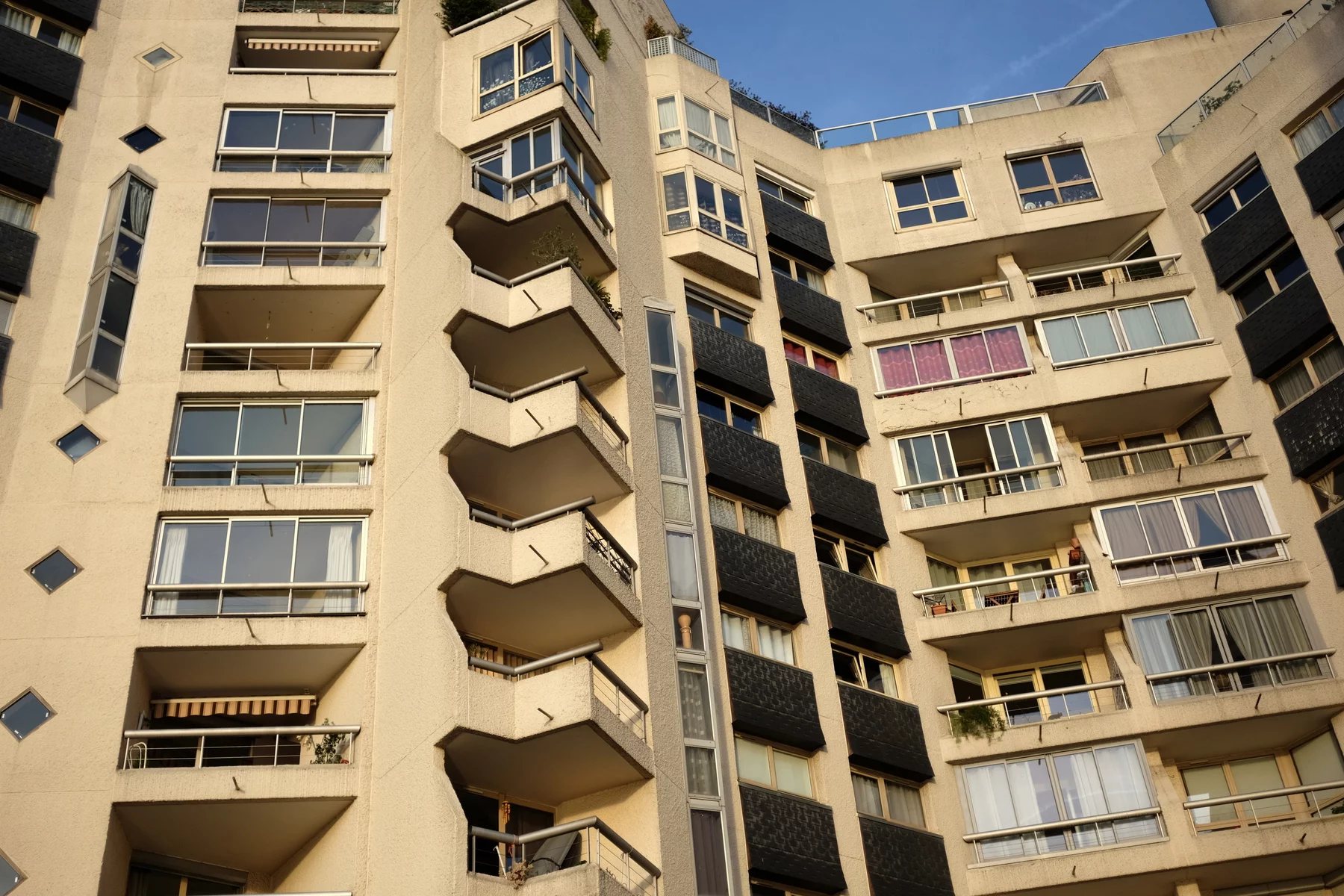
As in other countries such as the UK, demand for social housing is greater than supply and the waiting lists are long. To qualify for HLM accommodation, you need to earn less than a low-income ceiling (based on geographic area and level of need). Priority is given to certain groups such as:
- Homeless people
- Families with young children or expectant mothers
- Those with disabilities
- People in sudden financial difficulty
You can find more information about applying for HLM on the French government website. To register a request for social housing, visit the government’s housing website.
Tenancy contracts in France
The tenancy agreement (contrat de bail) is the written contract between tenant and landlord/agency. It should be signed on the day of or before the start of the term of tenancy. The tenant will need to pay the first rent installment and deposit at this point.
Tenancy contracts in France should include as a minimum:
- Names of tenant(s) and landlord
- Details of the property being rented
- Contract start date
- Duration of agreement (e.g., one year or three years)
- Rent and rental deposit amounts
- Details of any other charges payable to the landlord (e.g., utility bills)
- Information on notice periods
- Landlord and tenant rights and obligations
- Size of property (unfurnished only)
- Landlord and tenant signatures
Tenancy agreements should also come with a condition report, inventory, and energy performance report attached. Unlike property sales contracts, rental agreements do not have to be witnessed by a notary (notaire).
Your rental contract – whether for an unfurnished or furnished property – will be renewed automatically unless the landlord or tenant gives appropriate notice.
You can view sample contracts for furnished and unfurnished rentals here.
Tenant rights and obligations in France
The French legal system is strongly pro-tenant. Once the keys have been handed over, the landlord does not have the right to enter the property without the tenant’s consent and may be charged with trespass or harassment for doing so.
The landlord does not have the right to check up on the tenant, for example, annual property inspections, unless this has been agreed in the rental contract. However, they do have the right to enter the property to undertake essential works and routine maintenance (although not improvements to the property), and the tenant must allow this.
Full details of rights and obligations should be detailed in the tenancy contract. In general, the duties of the tenant will be to:
- Pay the rent and any bills on time
- Follow the house rules as set out in the contract
- Carry out minor repairs and routine maintenance (e.g., garden maintenance, fixing basic interior damage, attending to minor plumbing/gas/electrical issues)
- Pay for the repair of any damage caused by themselves
It is also legal to sublet in France, provided you have official written approval from your landlord and the sublease does not exceed the amount paid by the main tenant. Major alterations of fixtures and fittings usually require the prior consent of the landlord.
Landlord rights and obligations in France
The landlord has the right to visit the property to carry out major repair works or if the tenant has breached the terms of the lease. However, sufficient notice (usually 24–48 hours) should be given.
Landlords in France have the right to terminate the tenancy agreement if they can provide good reasons for doing so, for example, non-payment of rent, but they need to follow strict legal procedures.
In the event of non-payment of rent, the landlord will need to apply to the courts for a judicial termination if there is no termination clause in the lease. The judge will assess the situation – including the tenant’s financial situation – and can grant a termination. The tenant will be issued with an order to vacate, usually two months from receiving the order, although judges have the power to grant extensions to this. See here for more information.
Landlord duties in France generally include:
- Carrying out major repairs where necessary
- Respecting the privacy of the tenant, only visiting to carry out repairs and giving sufficient notice when doing so
- Providing decent and secure accommodation
- Paying for major repairs and replacing broken equipment that was provided along with the accommodation (e.g., washing machine), unless the tenant was responsible for the damage
- Providing the tenant with a receipt for rents paid
Under French housing law, landlords must also allow tenants to keep pets if they want to.
Where to go in the event of a dispute
If you have a disagreement with your landlord, you can contact the Commission Department of Conciliation (CDC), which helps resolve disputes between landlords and tenants. You can also check ANIL (French only), the national organization for information on housing, which can provide free legal advice.
If you have a problem with neighbors, for example, if they are consistently noisy or anti-social, you can report the problem to the local authorities.
Utilities and telecommunications in France
Depending on the property you move into and your tenancy agreement, you may be responsible for setting up accounts for things such as electricity, gas, internet, phone, and TV when renting in France.
In some rentals, especially furnished ones, the landlord deals with these and will bill you along with your rent. They should provide you with a breakdown of these costs.
If you are responsible for these things yourself, you can find out what needs to be done in our guides to setting up utilities in France and telecommunications in France.
Moving in and moving out in France
Once you have signed the tenancy agreement and paid the first rent installment, deposit, and any other owed fees, you should get the keys to your accommodation straight away.
In addition to the tenancy agreement, you should be provided with an inventory (état des lieux) describing the nature and condition of any items belonging to the landlord in the property. This includes furniture, fixtures, and fittings.
This will form the basis for negotiations around returning the deposit when you move out. You shouldn’t be charged for normal wear and tear, but will generally be expected to return the property as found. If items need replacing due to wear and tear during your tenure, it’s best to alert your landlord and ask for a replacement at the time rather than waiting until you leave.
Check the inventory thoroughly before signing it and flag up any inconsistencies straightaway to prevent them from becoming an issue when you leave.
Moving out
If either side wants to give notice, this needs to be done in writing. You should do this by registered letter (lettre recommandée avec accusé de réception), delivered by a commissaire de justice (formerly huissier de justice), or delivered by hand with acknowledgment of receipt and annotated. You can find registered recommandé at any post office for a few euros.
Minimum notice periods in France are:
- Furnished rentals: one month when given by tenants, three months when given by landlords
- Unfurnished rentals: 1–3 months from tenants (depending on region and tenant circumstances), six months from landlords
Landlords can only terminate the agreement if the tenant doesn’t pay the rent/bills, breaks the terms of the contract or if the landlord wants to sell or reoccupy the property. Tenants can give notice at any time. Landlords have to wait until there is six months or less on the agreement, unless they want to go to court.
Your deposit must be returned to you within two months of you leaving the property if there are disputes, or one month if there are no issues. If you don’t receive your deposit after this time, you can submit a complaint to the Commission Department of Conciliation (CDC).
Use this checklist of things you need to do before moving out of your apartment in France to ensure everything is settled correctly. If you need help with your move or cleaning, it’s often worth enlisting extra help. For example, you could hire a helper or professional contractor from an online platform such as TaskRabbit, or book a removals service with Anyvan.
Tips for renters in France
- Explore all avenues when looking for accommodation (websites, agents, classified ads, etc.) to maximize your chances of finding somewhere good, and be prepared to sign quickly when you find a suitable place.
- Read the tenancy contract before signing to make sure you’re happy with it and to familiarize yourself with rules and obligations. If there’s anything you don’t like, ask for it to be changed or removed.
- Take meter readings for utilities when you move in and out to avoid being charged for periods when you were not there.
- If you are concerned about rental costs, check if you are eligible for social housing or housing benefits.
Useful resources
- Service-Public – French government website with information on renting accommodation in France
- Demande de Logement Social – portal for information and services connected to social housing
- Agence Nationale pour l’Information sur le Logement (ANIL) – information and advice on housing and tenants’ rights