Moving to France does not make your UK tax links disappear, and the UK-France double tax treaty can be hard to decode when you want a practical answer. It can reduce double taxation, but it does not automatically remove filing, withholding, or paperwork in either country. The treaty sits on top of UK and French domestic rules and does not replace them, so your result still depends on tax residence, income type, and how each country classifies that income. This guide will help you check residency, sort common UK income, understand relief, and prepare the main forms and records.
This guide is general information only, not personalized tax, legal, or financial advice.
Key takeaways
- Residency comes first. Check where France, the UK, or both may treat you as tax resident before looking at pensions or property.
- The treaty sets taxing rights. Domestic rules and forms still decide how relief is applied.
- You may still file in both countries. A French return can still include UK-source income, and some people keep UK reporting duties.
- Income types follow different rules. Pensions, rent, salary, dividends, interest, and gains are not one category.
- Inheritance is separate. The income tax treaty is not the same as the UK-France inheritance tax treaty.
Wise for managing pounds and euros
- Hold British pounds and euros while tax admin is in progress.
- Convert funds when moving money between the UK and France.
- Wise does not determine tax treatment or filing obligations.

What is the UK-France double tax treaty?
As of October 2026, the main agreement is the 2008 UK-France tax convention, later modified by international rules. For British expats in France, it is a framework for allocating taxing rights and reducing double taxation, not a personal tax answer.
It matters because the same salary, pension, or rental stream can appear in both tax systems even when you only pay once in the end.
Which taxes and people does it cover?
It mainly matters for individuals with cross-border income or gains and covers residents of one or both countries. Typical readers include:
- Employees with UK-linked work
- Retirees with UK pensions
- Landlords with UK property
- Freelancers or investors with UK income
This guide is about individuals, not company tax.
What the treaty does not do automatically
It does not automatically stop UK withholding, remove a French filing duty, or classify income for you. Domestic rules in both countries still control forms, reporting, and how relief is actually claimed.
How tax residency works between the UK and France
Do not start with pensions or property before checking residency. A useful first step is to compare your situation with the wider Guide to French taxes in 2026 and then use the treaty if there is a real cross-border issue.
When France may treat you as tax resident
According to Résident de France, France may treat you as resident if your main home is there, if France is your usual place of stay, if your main professional activity is there, or if your center of economic interests is there. In practice, housing, work, banking, family, and travel records all matter.
Many Britons feel between countries after a move, but French tax residence can start before every UK admin step is finished.
How the treaty tie-breaker rules work
If both countries could treat you as resident, the treaty normally checks these points in order:
- Where you have a permanent home.
- Where your center of vital interests is strongest.
- Where you have your habitual abode.
- Which nationality you hold.
- Whether the two tax authorities need to settle it by mutual agreement.
This is a conflict-resolution framework, not a shortcut to self-certify your position.
How the treaty helps reduce double taxation
At a high level, the treaty can give one country the main taxing right, limit what the source country may charge, or let the other country give a credit or similar relief. The result depends on the income type and on current UK and French rules around the treaty.
Taxing rights, exemptions, and credits
Taxing rights means which country gets the first or main say over an income type. A credit usually means tax paid in one country may reduce tax in the other. An exemption means one country steps back, but you may still need to declare the income.
The following table summarizes common starting points and the details you still need to verify.
| Income type | Usual starting country of tax | France declaration still likely? | Relief method type | What to verify |
|---|---|---|---|---|
| Salary for work done in France | France may tax first | Often yes | Treaty allocation or credit | Work location, days, employer setup |
| UK pension | Depends on pension type | Usually yes | Residence-state tax or treaty exception | State, private, occupational, or government service |
| UK rental income | UK often taxes first | Usually yes | Credit or exemption method | Net income, UK tax paid, records |
| Dividends and interest | Varies by income type | Usually yes | Treaty rate or credit | Source, withholding, statements |
| UK property sale | Often linked to the UK asset | Often yes | Treaty allocation plus France-side relief | Purchase price, sale date, tax paid |
The table is a starting point, not a finished calculation.

Why you may still file in both countries
Filing and paying are different. Even if the treaty points tax mainly to one country, you may still need a French return for UK-source income or UK reporting because of the source or the way tax was withheld.
Withholding at source, tax credits, and domestic reporting deadlines rarely line up neatly across two countries.
Check these points before filing:
- Where the income arises
- Where you are resident for tax purposes
- Whether tax was already withheld
- What proof you have kept
Common UK income situations for British expats in France
Treat each UK income stream separately. For example, a UK pension and a UK rental property can follow different treaty rules in the same year.
A retiree with a UK pension and a rented flat in Britain may need one treaty rule for the pension and another for the rent.
UK salary or self-employment income
A common question is whether a UK employer or UK client makes the income taxable only in the UK. Usually, what matters most is where the work is physically done, whether you split your time between countries, and whether a fixed business presence exists.
For self-employment, UK clients alone do not settle the answer. If you work remotely from France or moved part-way through the tax year, check current HM Revenue & Customs (HMRC) and French guidance before assuming the treaty result.
UK pensions
Pension treatment depends on pension type. A UK State Pension, private pension, occupational pension, and government service pension can all follow different rules, and the bank account receiving the money does not change the treaty analysis.
You may also need to separate income tax from prélèvements sociaux, the French social charges. S1 healthcare status can matter for social charges, but that is separate from deciding which treaty article applies.
For many readers, the pension type matters more than where the money lands.
UK rental income and property sales
Income from immovable property, meaning land or buildings, often follows source-country rules first. If you keep a UK rental property after moving from the UK to France, the UK may still tax the rent first, while France may still ask you to declare it and then apply the treaty method.
The rule for rent may not match the rule for selling the property. Keep:
- Rental statements
- Proof of UK tax paid
- Purchase and sale records if relevant
UK dividends, interest, and capital gains
Investment income is not one bucket. Dividends, interest, and capital gains can each follow different treaty rules, and the way foreign tax credit rules work between France and the UK can change with the asset and the tax already withheld.
Keep broker statements, dividend vouchers, bank statements, exchange-rate records, and proof of any UK tax paid.

What forms, deadlines, and documents matter?
Treaty relief is often won or lost on paperwork rather than theory. French deadlines move each spring, forms are updated regularly, and the same income may need matching records in both countries.
Dates move each year, but missing records cause the same problem every time.
UK admin steps and tax evidence
If UK tax is still being withheld when treaty relief may be available, the HMRC France Individual DT form and notes are the main UK reference point. Depending on the income, that process may support relief at source or a repayment claim, and it needs French residence certification.
Keep P60s, pension statements, proof of UK tax deducted, payer letters, and HMRC correspondence together. That is especially relevant if a payer has used the wrong tax code or if you changed residence mid-year.
Gather these early rather than waiting for filing season.
French forms, records, and filing checks
On the France side, most readers need How to file your income taxes in France in 2026 plus the main return form 2042, the foreign income form 2047, and sometimes foreign account reporting on 3916 or 3916-bis. That is why a French tax return for UK income often uses more than one form.

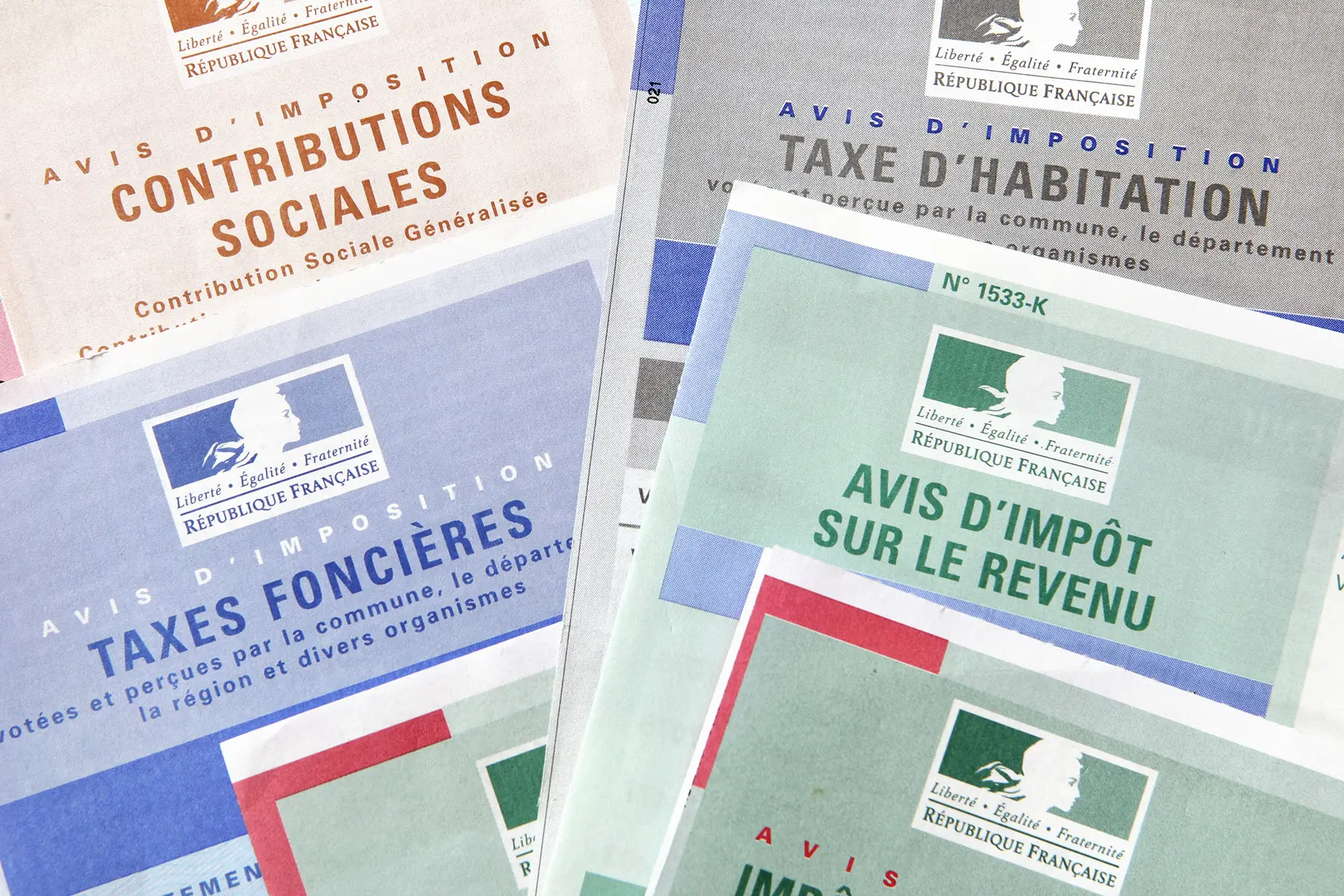
It also helps to know your French tax identification number (TIN), explained in ID numbers in France: TIN, national registration, and more, and to keep your avis d’impôt, the annual French tax notice. Your foyer fiscal, or French tax household, also matters because France files income at household level.
Managing money between the UK and France with a Wise Account
Once you understand the treaty, the next problem is often practical. You may still need to hold British pounds (GBP) and euros (EUR), move money between UK and French accounts, pay an advisor or household bill, and keep clean records while tax admin is still in progress.
That is especially true if income arrives in pounds but everyday life in France is paid in euros.
A Wise Account is one option for holding GBP and EUR, converting funds when needed, and sending money between the UK and France. Wise is a financial institution, not a bank, and it does not determine treaty treatment, replace professional advice, or remove every local banking requirement. Some expats will still want a French current account with major local banks such as BNP Paribas, Crédit Agricole, or Société Générale, while bringing money to France from abroad and opening a bank account in France in 2026 remain separate decisions.

This section is general information only. Wise can help with holding, converting, sending, receiving, or spending money across currencies, but it does not change your tax outcome.
Next steps
Start with your tax residence, then work through each UK income stream separately because the treaty can apply differently to pensions, rent, salary, investments, and property gains. Keep residence evidence, income statements, and proof of tax already paid so you can match the UK and French filing requirements. If your position is complex, check current official guidance or get advice from a qualified tax advisor before filing. For the practical side of holding, converting, or moving pounds and euros while you manage the admin, a Wise Account can be one option.
FAQ
Frequently asked questions about the UK-France double tax treaty
Do I still need to file a UK tax return if I live in France? 
Possibly. You may still need a UK tax return if you keep UK-source income, have UK reporting duties, or need to reconcile tax already withheld. The final amount due can still be nil or reduced even when a return is required.
How do I claim relief under the UK-France tax treaty?
Usually, you need proof of residence, the right income classification, and the correct UK or French process for that income type. It is not always one universal form.
Does the treaty cover inheritance tax?
No. The UK-France inheritance tax treaty is separate from the income tax treaty discussed here. For the French side of succession rules, see Inheritance and estate taxes in France.
Sources
Expatica’s experts are all about providing the most up to date and accurate information. All guides are fact checked, and whenever we use external sources (like government websites or research papers) we’ll make a note of them here so you can check them out too.
- Official UK treaty hub for France, including the treaty page and Multilateral Instrument status, checked on 2 October 2026., France: tax treaties – GOV.UK
- Primary treaty text used for residence, pensions, interest, dividends, rental income, capital gains, and elimination of double taxation, checked on 2 October 2026., 2008 UK and France Double Taxation Convention – in force – GOV.UK
- HMRC guidance and form page for France Individual double-taxation relief and repayment routes, checked on 2 October 2026., Double Taxation: UK-France (SI 2009 Number 226) (Form France-Individual) – GOV.UK
- Official French tax authority guidance on France-side residence tests and treaty tie-breaker framing, checked on 2 October 2026., Résident de France – impots.gouv.fr
- Official guidance on foreign-source income reporting, tax credits, and form 2047 context, checked on 2 October 2026., Comment sont imposés mes revenus perçus de l'étranger ? – impots.gouv.fr
- Official page for the main French income tax return form, checked on 2 October 2026., Formulaire n°2042 – impots.gouv.fr
- Official page for the French foreign-source income form, checked on 2 October 2026., Formulaire n°2047 – impots.gouv.fr
- Official page for foreign account reporting, checked on 2 October 2026., Formulaire n°3916 – impots.gouv.fr
- French administrative commentary confirming entry into force and the France-side interpretation structure, checked on 2 October 2026., BOI-INT-CVB-GBR-10 – Convention fiscale entre la France et le Royaume-Uni – bofip.impots.gouv.fr
- France-side commentary used to cross-check treatment themes for property income and gains, checked on 2 October 2026., BOI-INT-CVB-GBR-10-20 – Règles d’imposition prévues pour certains revenus – bofip.impots.gouv.fr
- Official Wise France account page used to support limited product information about holding currencies, account details, and cross-border money management, checked on 2 October 2026., Wise Account
- Official Wise France pricing page reviewed for local pricing references, checked on 2 October 2026., Wise Fees and Pricing