
'%20id='ico-down'%20stroke='%23000000'%20stroke-width='1.5'%3e%3cg%20transform='translate(1092.250000,%20254.750000)'%3e%3cpolyline%20id='Path-2-Copy-4'%20transform='translate(5.500000,%202.750000)%20scale(1,%20-1)%20rotate(-180.000000)%20translate(-5.500000,%20-2.750000)%20'%20points='0%200%205.5%205.5%2011%200'%3e%3c/polyline%3e%3c/g%3e%3c/g%3e%3c/g%3e%3c/svg%3e)


Healthcare
Healthcare Services
Hospitals in Belgium
Find out how hospitals in Belgium work, including advice on accessing treatment and emergency care, as well as details on costs.

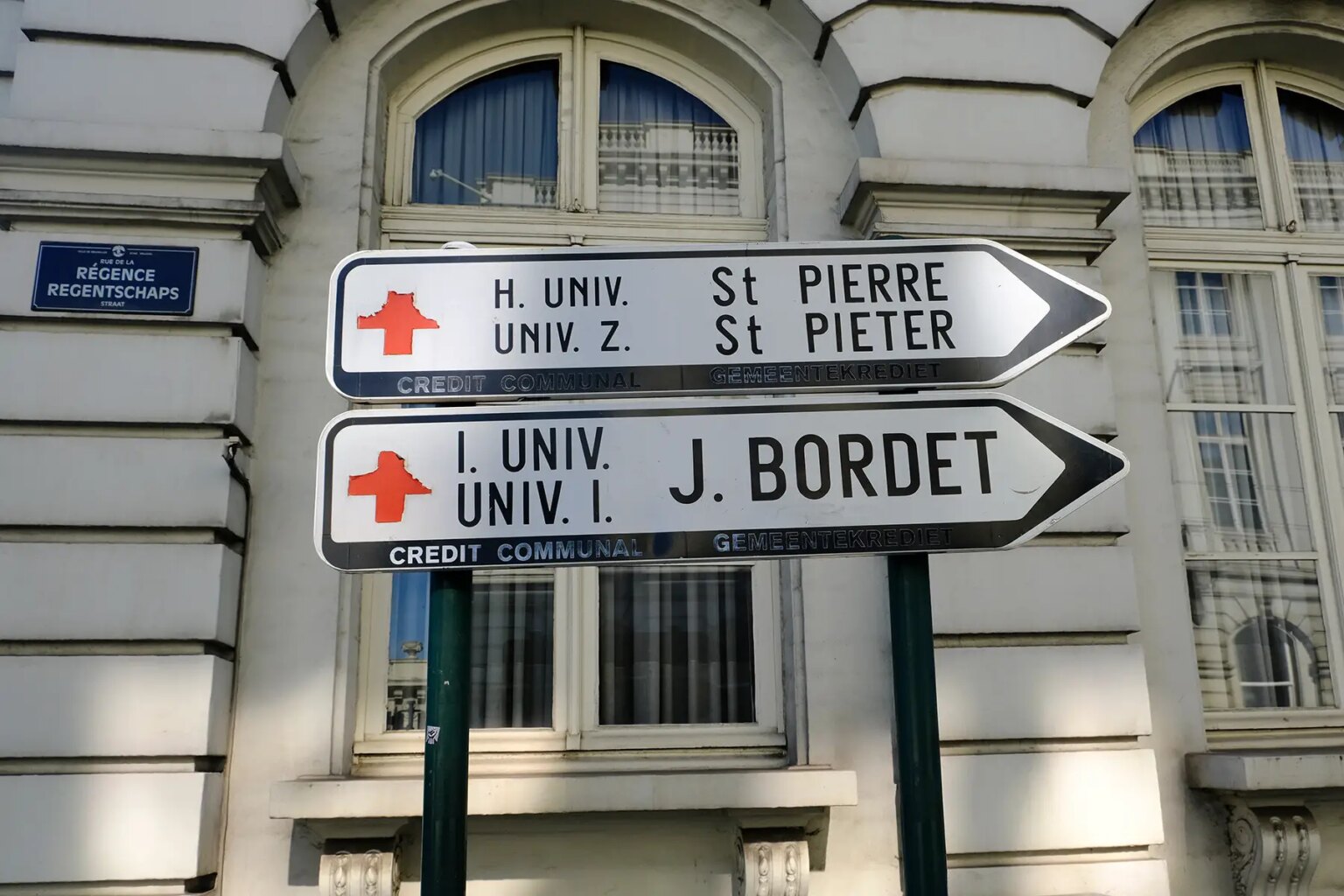
When moving to a new country, registering for and accessing healthcare services can be stressful, especially if you have children or medical conditions.
This guide to hospitals in Belgium includes advice on the following:
Business & Expats Health Insurance
Looking for expat-friendly health insurance in Belgium? Business & Expats Health insurance provides a dedicated service for families, individuals, and businesses moving to Belgium. With competitive benefits, expert advice, and fast reimbursements on all treatments, choose Business & Expats today.

Hospitals in Belgium
Belgium’s hospital system consists of public, private, university hospitals, and polyclinics.
Most hospitals (Dutch: ziekenhuis, French: hôpital) are public (or not-for-profit) and have staff on duty 24 hours a day. In a public hospital, the staff will look after you, while in a private clinic, your general practitioner may be in charge of your care.
Some doctors in Belgium work in both the private and public systems. If you wish to see a specialist, you’ll need to ensure this is covered by your health insurance. Then, you can claim a refund on the cost.
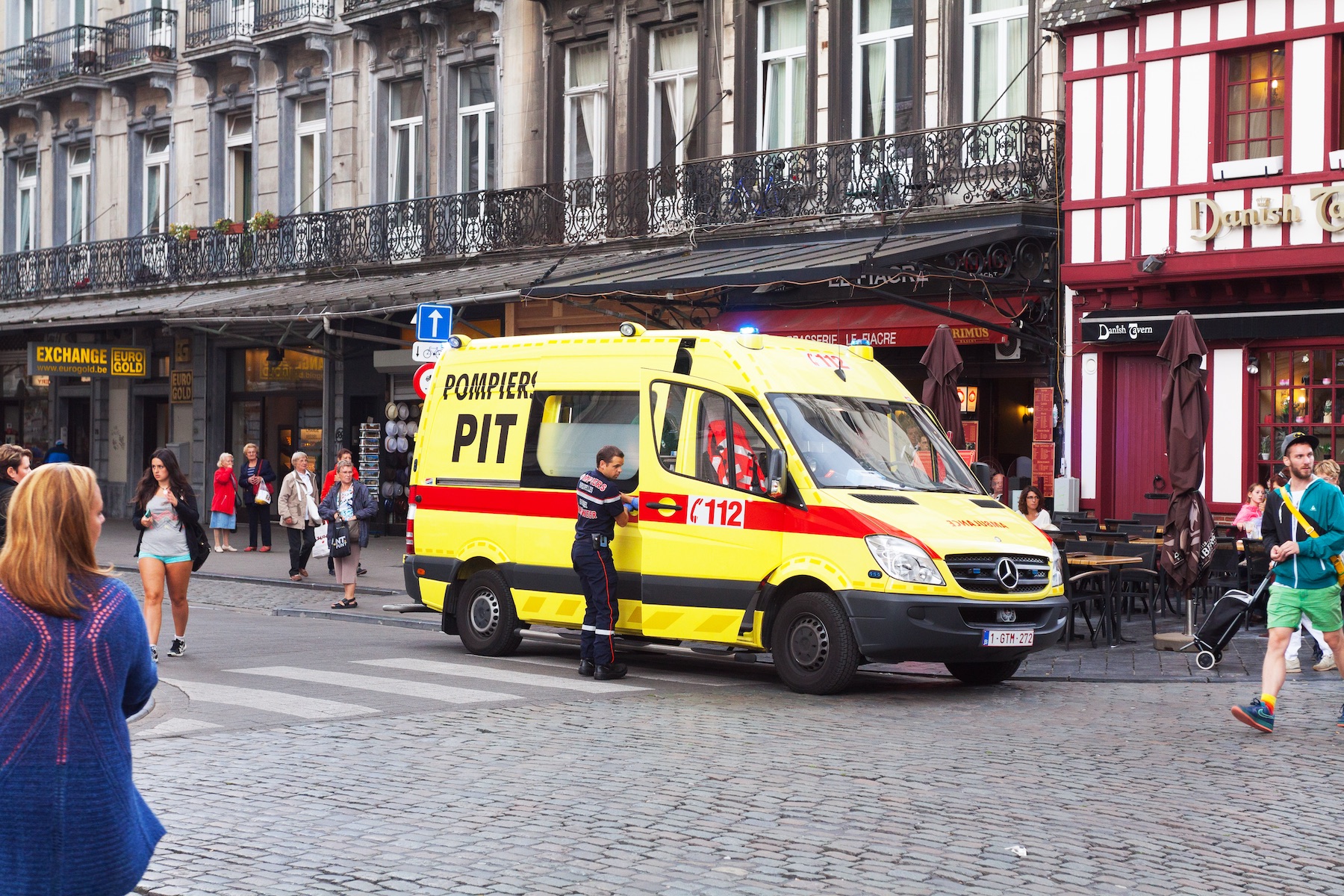
Belgium has one of the best healthcare systems in Europe, but the number of hospitals has fallen in the last 20 years. In 2023, there were 103 hospitals in the country.
A report by the European Commission found that Belgium has just under six hospital beds per 1,000 residents. Although this is higher than the EU average, there are fewer hospital beds than 20 years ago. The number of hospital admissions and the average length of stay (just over seven days) are close to the EU average.
How to access hospital treatment in Belgium
In most cases, you’ll need a doctor’s referral for hospital treatment. In theory, you can choose your own hospital, but you’ll need to ensure your health insurance will cover it.
To find a hospital near you, check the website of the Belgian Association of Hospitals (Dutch: Belgische Vereniging der Ziekenhuizen, French: Association Belge des Hôpitaux).
Inpatient stays are usually subject to a daily fee, but how much you’ll pay depends on how long you stay and whether you qualify for a lower rate (for example, if you’re unemployed).
When you attend the hospital or clinic, you’ll need to provide your passport or national ID card. You’ll also need either your Belgian social security card (if you’re using state healthcare) or proof of private insurance.
Emergency treatment in Belgium
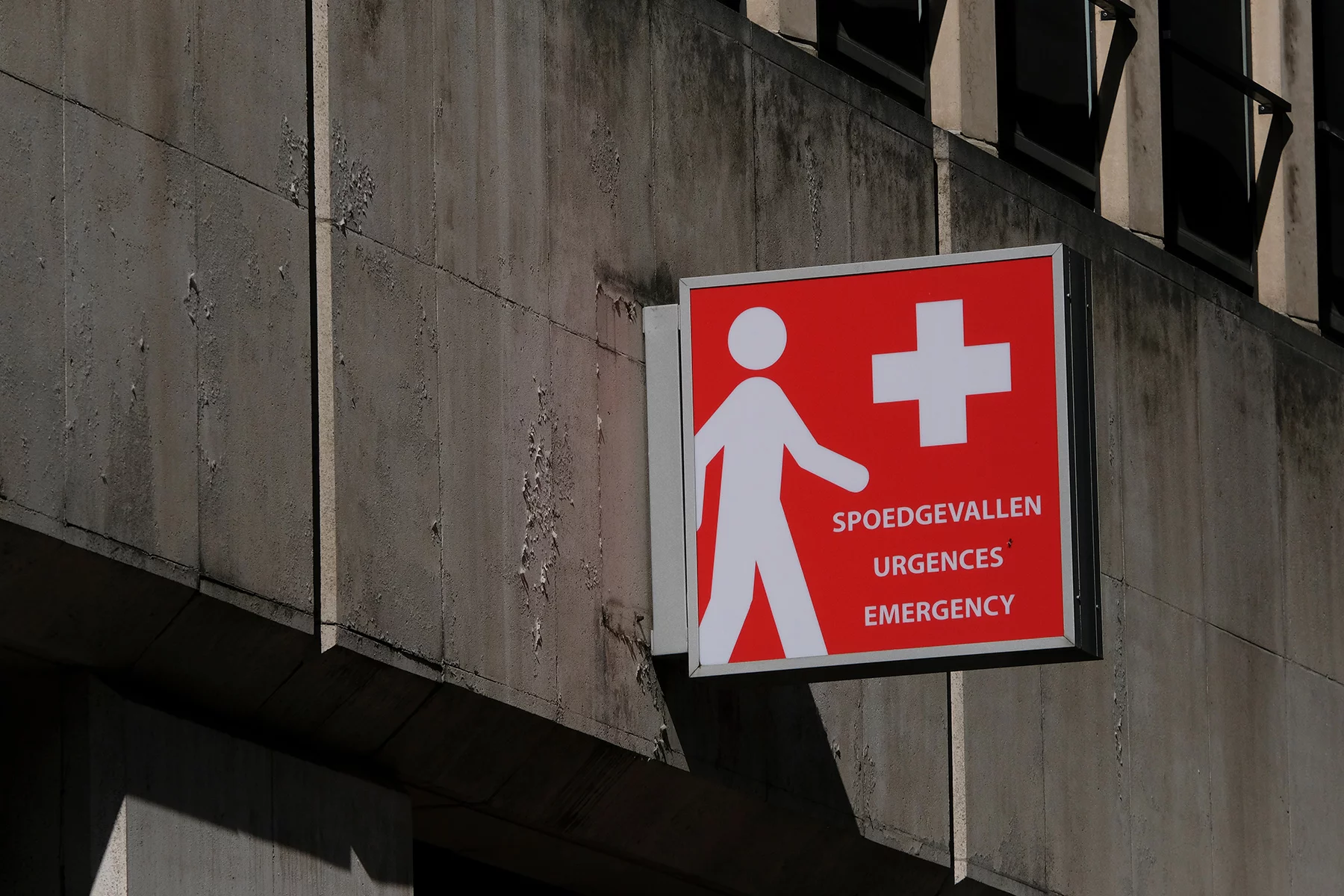
You should only go to your hospital’s accident and emergency department (Dutch: spoedeisende hulp, French: urgences) if you have an urgent illness or injury.
For all other medical needs, however, it’s best to make an appointment with your doctor or seek advice from an out-of-hours doctor at your surgery. If you attend the emergency department without a referral, you may need to pay a non-refundable fee.
In an emergency, you can call 100 for an ambulance (Dutch: ambulance, French: ambulance) or 112 for the emergency services. Most operators speak English.

The ambulance takes the patient to the nearest hospital with an accident and emergency department. Even though you pay for the ambulance journey, private healthcare insurance should refund the cost.
Some health insurers insist on a doctor’s referral before calling an ambulance (apart from in life-threatening situations). Therefore, if the issue doesn’t need immediate help, it’s best to speak to your doctor before calling the emergency services.
Hospital stays in Belgium: what to expect
If you’re going to the hospital for inpatient treatment, you should take your own sleepwear, toiletries, and towels. However, in an emergency, you should ask a friend or family member to bring these items for you.
You’ll also require some money to pay for phone calls and television.
If you stay in a shared room, you’ll pay a set fee, which, in most instances, can be fully reimbursed. However, a single room costs more.
Hospital costs in Belgium
You’ll need to pay a deposit when you’re admitted to the hospital. If your hospital doesn’t have a direct billing agreement with your insurance provider, you’ll usually need to settle your bill on a weekly basis.
Aside from medical treatment costs, as of 2021, most inpatients need to pay a daily fee (Dutch: verpleegdagprijs, French: prix journalier d’hospitalisation), which is between €5.89 and €43.84 per day. The fee depends on when they were taken to the hospital and their work situation. To claim money back from your healthcare provider, you’ll need a receipt (Dutch: getuigschrift voor verstrekte hulp, French: attestation de soins donnés).
A recent report by the Mutualité Chrétienne health insurance fund found hospitals in Brussels were the most expensive in Belgium.
It says doctors in the capital charge higher fees for procedures. In clinics in Brussels, doctors can charge up to 300% on top of the usual rate for patients in a single room. This is because limits are placed on fee supplements in shared rooms but not single rooms.
The cost of childbirth in Brussels is four times higher in some hospitals than in others. One charged €768 for a single room, while another charged as much as €3,000.
The report expressed concerns that some of these costs are borne by the patient as not all insurance packages will refund the supplements.
Health insurance for hospital costs in Belgium
You’ll need some form of private health insurance to receive non-emergency treatment in Belgian hospitals and to cover the costs of urgent procedures.
How much this will cost you depends on the coverage you require, your age, and any pre-existing medical conditions.
Most private health insurance policies in Belgium allow you to choose your own medical professionals and hospital. Most doctors speak English well, so communication shouldn’t be much of an issue.
Here are some of the largest health insurance companies that cover medical treatment for expats in Belgium:
Discharge from hospitals in Belgium
Hospital stays in Belgium are kept as short as possible, with the health department encouraging outpatient care for those with lingering issues that can be managed away from the hospital. In some cases, patients can be transferred to other care centers, such as rest homes and nursing homes.
Visiting someone in hospital in Belgium
The exact visiting times and regulations will vary depending on the hospital the patient is in and the type of ward they’re on.
Some general rules, however, are:
- The number of visitors should be limited to two or three people
- You should leave the room during treatment, visits from doctors/nurses, or maintenance
- Visitors must turn off their mobile phones
- You should comply with the specified hours and avoid long visits
- Visitors shouldn’t use lifts reserved for transporting patients
- Children may sometimes be welcome if you keep an eye on them
- Flowers are allowed in more general wards, but not in acute-care areas or wards with immunocompromised patients
List of hospitals in Belgium
Antwerp
- St Augustinus | 03 443 30 11 | Oosterveldlaan 24, 2610 Wilrijk
- UZ Antwerp | 03 821 30 00 | Wilrijkstraat 10, 2650 Edegem
- ZNA | The ZNA group has three general and six specialized hospitals around Antwerp, including:
- Koningin Paola Kinderziekenhuis (children’s hospital) | 03 280 31 11 | Lindendreef 1, 2020 Antwerp
- Middelheim Ziekenhuis | 03 280 31 11 | Lindendreef 1, 2020 Antwerp
- St-Elisabeth Ziekenhuis | 03 234 40 40 | Leopoldstraat 26, 2000 Antwerp
- St-Erasmus Ziekenhuis | 03 270 80 11 | Luitenant Lippenslaan 55, 2140 Borgerhout
Brussels
- Chirec | A full list of Chirec’s medical centers can be found on their website, including:
- Edith Cavell Clinic | 02 434 41 11 | Rue Edith Cavell 32, 1180 Uccle
- Parc Leopold Clinic | 02 434 51 11 | Rue Froissart 38, 1040 Etterbeek
- CHU Brugmann | 02 477 21 11 | Site Victor Horta (the main of three sites for Brugmann)
- CHU Saint-Pierre | 02 535 31 11 | Rue Haute 322, 1000 Brussels
- Cliniques de l’Europe
- St-Elisabeth | 02 614 20 00 | Avenue de Frélaan 206, 1180 Brussels
- St-Michel | 02 614 30 00 | Rue de Linthoutstraat 150, 1040 Brussels
- Cliniques Universitaires St Luc UCL | 02 764 11 11 | Avenue Hippocrates 10, 1200 Brussels
- Hôpital Erasme ULB | 02 555 31 11 | Route de Lennik 808, 1070 Brussels
- Hôpital Universitaire Des Enfants Reine Fabiola (children’s hospital) | 02 477 33 11 | Avenue Crocq 15, 1020 Brussels
- Institut Jules Bordet | 02 541 31 11 | Boulevard de Waterloo 121, 1000 Brussels
- Les Hôpitaux Iris Sud | There are four hospitals (see the website for details of all four), including:
- Site Etterbeek-Ixelles | 02 641 41 11 | Rue Jean Paquot 63, 1050 Brussels
- Universitair Ziekenhuis Brussel | 02 477 41 11 | Laarbeeklaan 101, B-1090 Brussels
Gent
- Algemeen Ziekenhuis Maria Middelares | 09 260 6060 | Kliniekstraat 27, 9000 Gent
- Algemeen Ziekenhuis Sint-Lucas | 09 224 61 11 | Groenebriel 1, 9000 Gent
- AZ Jan Palfijn | 09 224 71 11 | Henri Dunantlaan 5, 9000 Gent
- UZ Gent | 09 332 21 11 | De Pintelaan 185, 9000 Gent
Liège
- CHU de Liège | 04 242 52 00 | Domaine Universitaire du Sart Tilman, Bâtiment B35, B-4000 Liège
- CHC Saint-Joseph | 04 224 81 11 | Rue de Hesbaye 75, 4000 Liège
- Hôpital CHR Citadelle | 04 225 61 11 | Boulevard du Douzième de Ligne 1, 4000 Liège
Other major hospitals in Belgium
- AZ Groeninge | 56 63 63 63 | Pres. Kennedylaan 4, 8500 Kortrijk
- UZ Leuven | 16 33 22 11 | Herestraat 49, 3000 Leuven
- Ziekenhuis Oost-Limburg | 89 32 50 50 | Four sites, including Sint-Jan Scheipse Bos 6, 3600 Genk
Useful resources


Did you find this guide helpful?